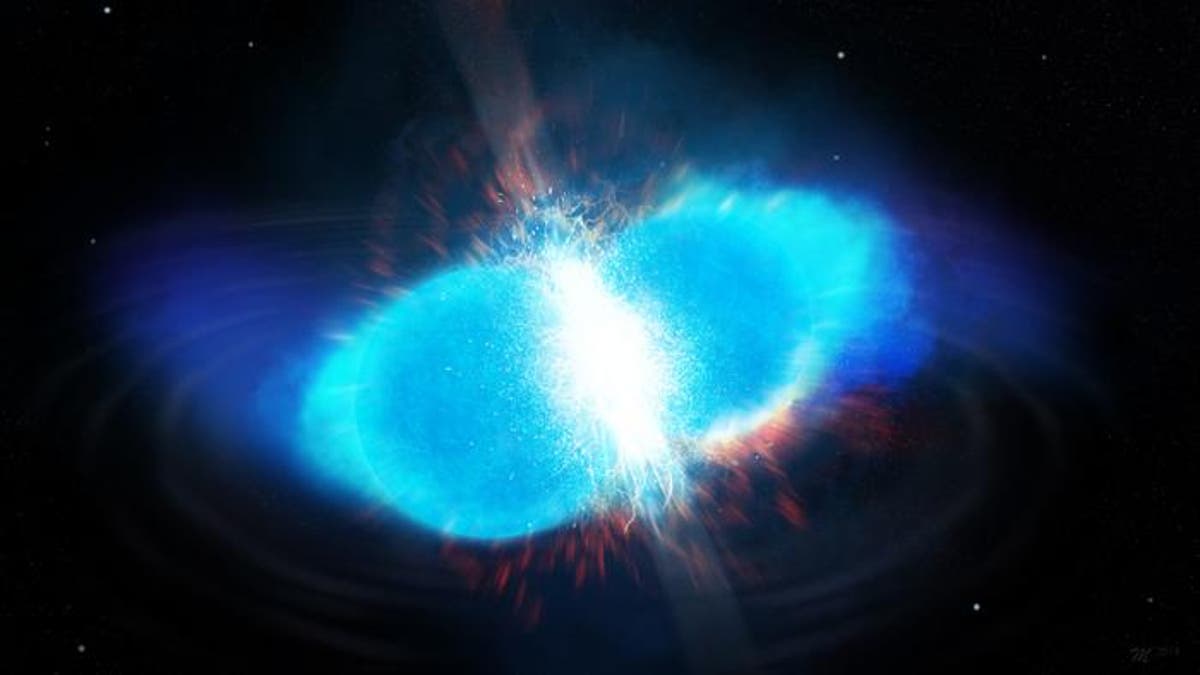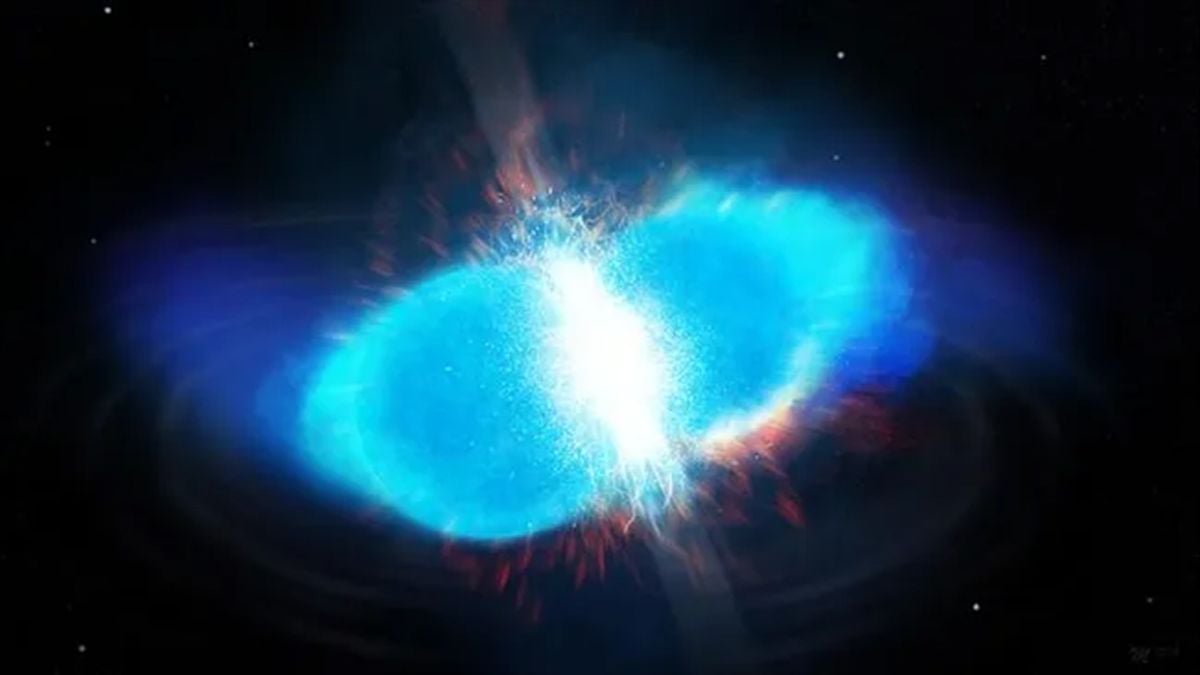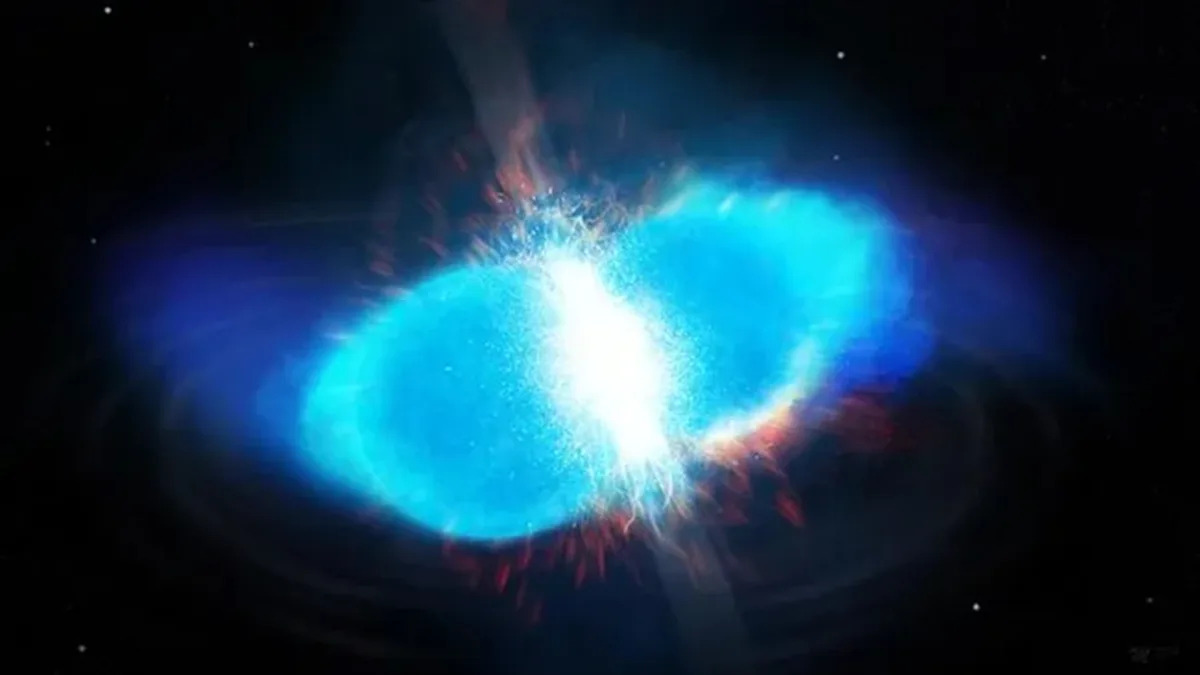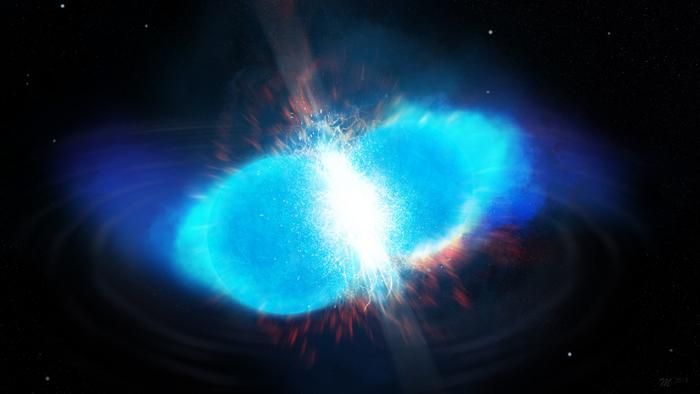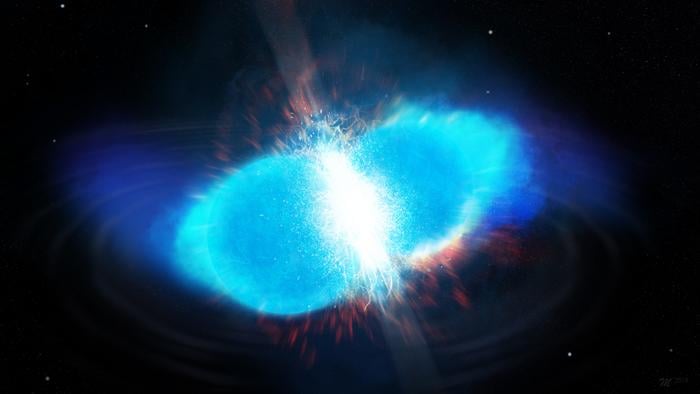
Simulations show that neutrino flavor transformations during neutron star mergers significantly influence the production of heavy elements like gold and platinum, potentially increasing their yield and affecting gravitational wave brightness, highlighting the importance of including neutrino physics in astrophysical models.
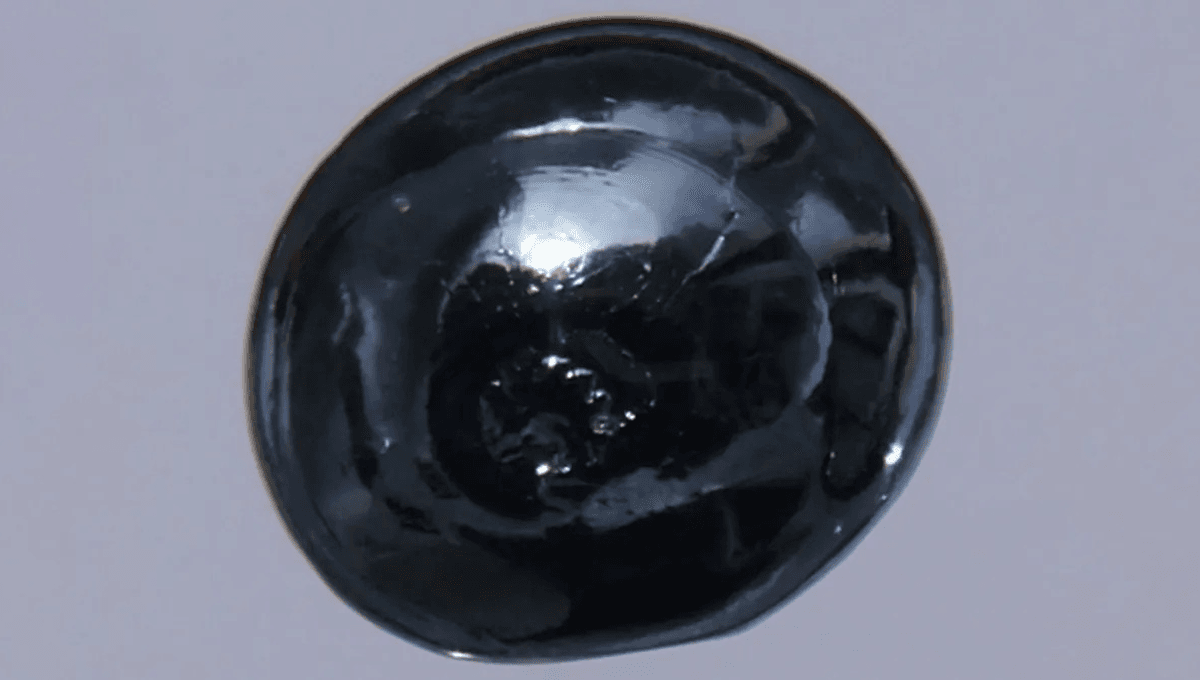
A study suggests that asteroid 33 Polyhymnia may contain ultra-dense, possibly unknown heavy elements beyond the current periodic table, potentially classifying it as a Compact Ultradense Object (CUDO) with a composition that includes stable superheavy elements, which could have implications for space mining and our understanding of matter in the universe.
Scientists at Michigan's FRIB are experimentally recreating how heavy elements beyond iron are formed in stars, focusing on the intermediate neutron-capture process (i-process), which fills gaps in understanding of element formation like gold and platinum, using advanced isotope experiments to identify where and how these processes occur in stellar environments.
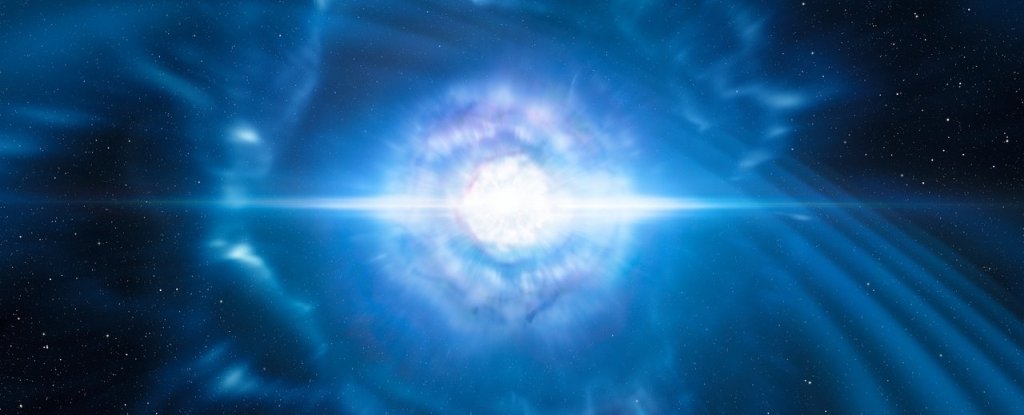
In 2017, scientists observed a kilonova explosion from colliding neutron stars, providing insights into the creation of heavy elements like strontium and yttrium. This event, similar to the Big Bang, involved a hot, expanding fireball where particles combined to form atoms, akin to the Universe's Epoch of Recombination. By analyzing data from multiple telescopes, researchers have detailed the kilonova's evolution, confirming its role as a source of heavy elements and offering a miniature model for studying early Universe processes.
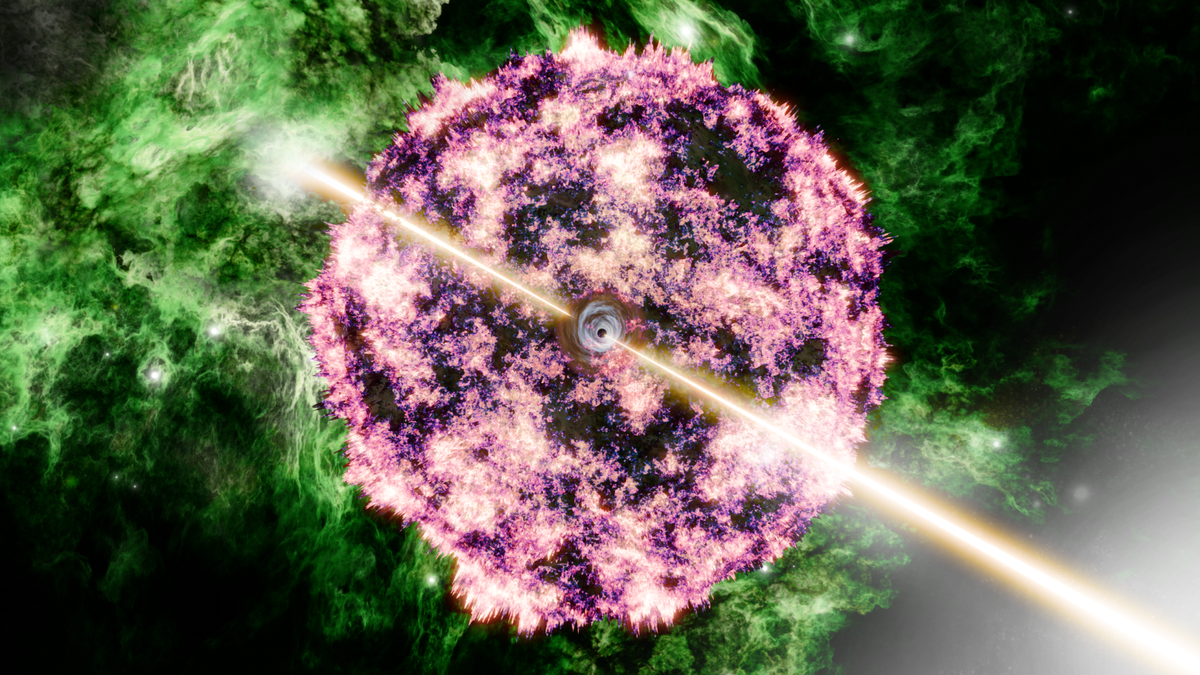
While gamma-ray bursts (GRBs) are known to be the universe's most powerful explosions and potential sources of heavy elements, recent studies, including observations of the brightest GRB ever recorded (GRB 221009), suggest they may not be the primary source of these elements. The findings indicate that another, yet unidentified, source must be responsible for the abundance of heavy elements in the universe.
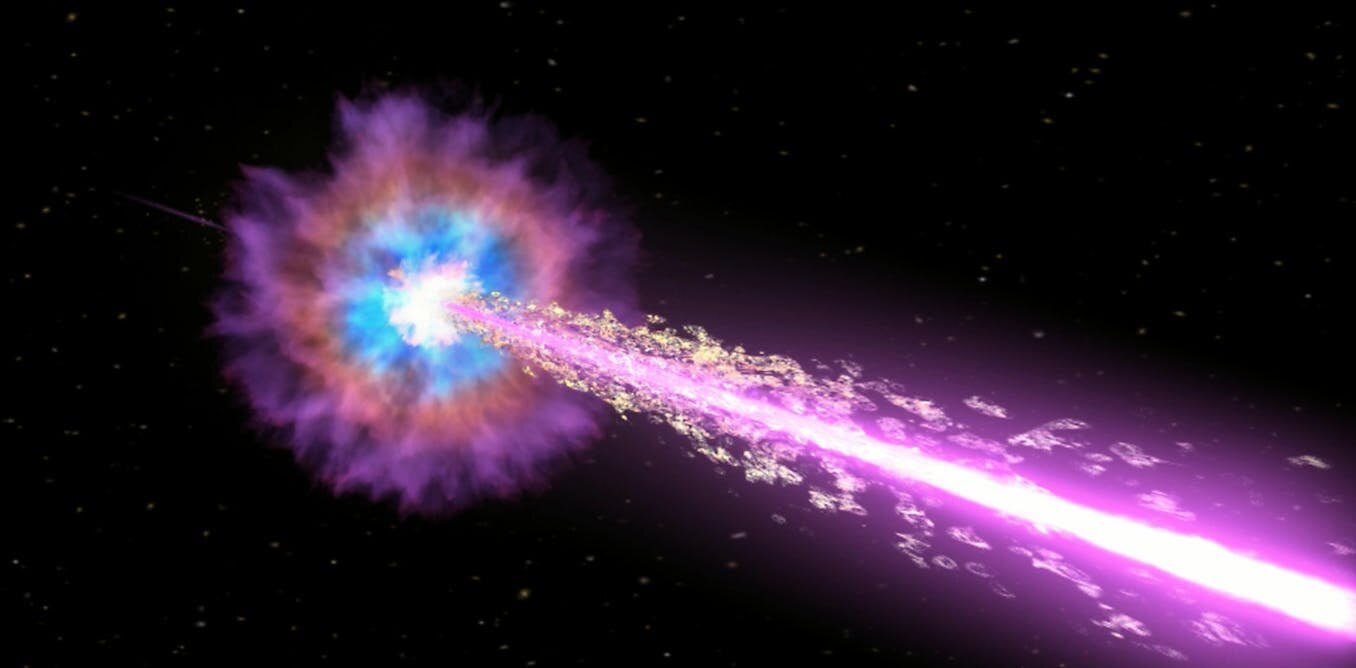
Gamma-ray bursts (GRBs), the universe's most powerful explosions, have been studied to understand the creation of heavy elements. While short GRBs from neutron star collisions have shown evidence of heavy element production, recent observations of the brightest long GRB, dubbed the BOAT, revealed no such elements. This suggests that GRBs may not be the primary source of the universe's heavy elements, indicating another unknown source.
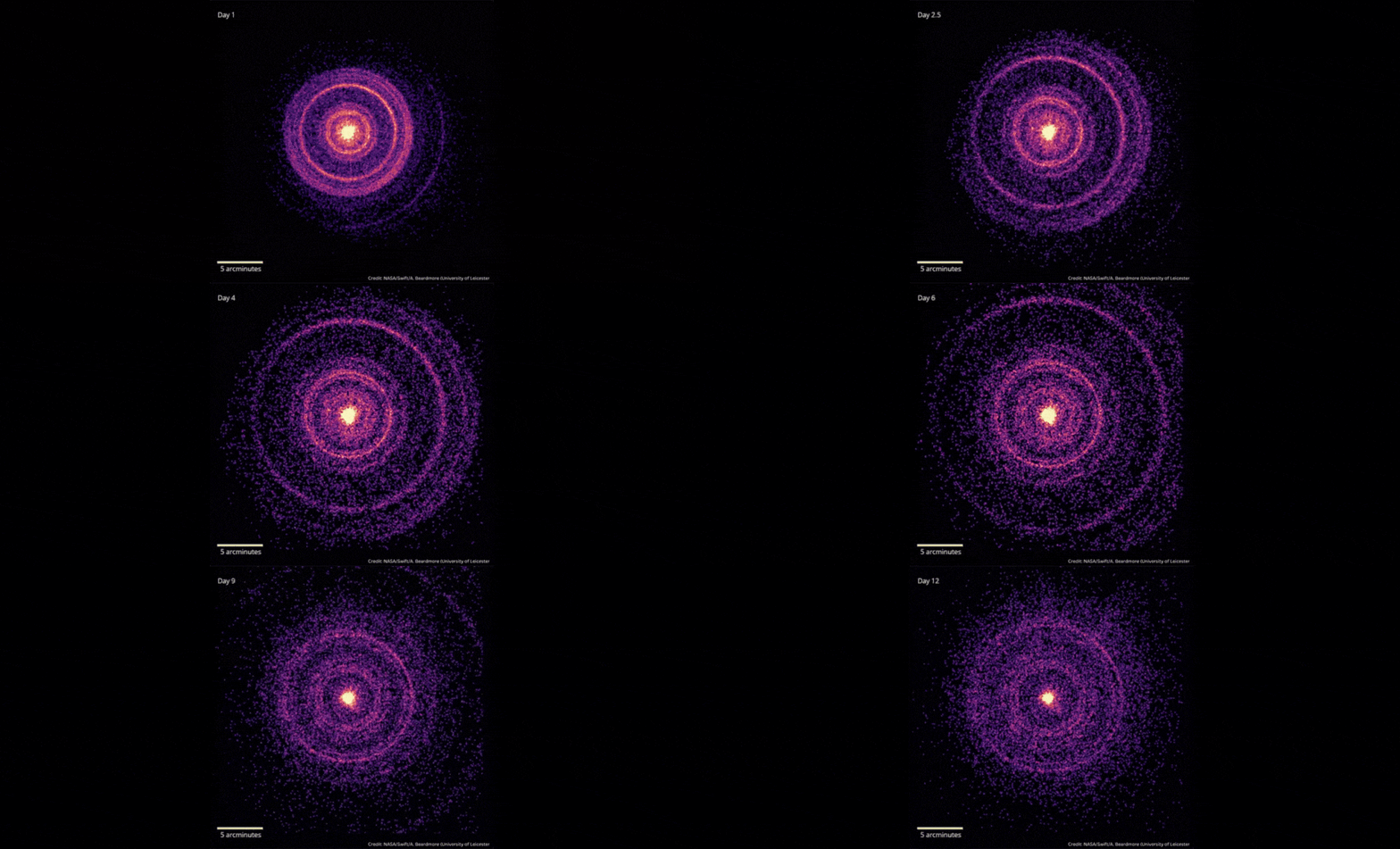
The most powerful space explosion ever recorded, GRB 221009A, was surprisingly ordinary in terms of its associated supernova, challenging previous expectations. Despite its extreme brightness, the explosion did not show signs of heavy element production, suggesting that extremely energetic gamma-ray bursts like the BOAT may not be responsible for creating these elements. Future observations with the James Webb Space Telescope will help determine if other gamma-ray bursts produce heavy elements.
Researchers have determined that the extremely bright cosmic explosion known as the Brightest Of All Time (BOAT) was caused by a supernova, but found no signs of heavy elements like gold and platinum, deepening the mystery of their origins. The event, observed with the Webb Space Telescope, lasted 10 hours and emitted gamma-rays with energies reaching up to 13 teraelectronvolts. The findings challenge previous hypotheses about the production of heavy elements and point to alternative channels for their creation, prompting astronomers to rework their models of cosmic phenomena.
Astronomers have discovered evidence of nuclear fission occurring in stars, providing insight into the formation of elements heavier than those found naturally on Earth. Previously, it was believed that such elements were created through cataclysmic events like neutron star mergers. However, new research suggests that fission, the process behind nuclear reactors on Earth, is also operating in the cosmos and contributing to the creation of heavy elements. This discovery could help explain the origin of elements with atomic masses over 260, which have not been detected in space or on Earth before.
A new study provides the first compelling evidence of nuclear fission in the cores of massive stars, suggesting that elements heavier than iron, such as silver and gold, are formed through this process. The analysis of 42 ancient stars in the Milky Way reveals a consistent pattern of elements that are likely products of fission. This finding suggests that nature may forge elements with atomic masses greater than 260 before breaking them down again. The research provides "direct evidence" of this heavy-duty fission process, which has never been produced on Earth.
A new study provides the first compelling evidence of nuclear fission occurring in the cores of massive stars, suggesting that elements heavier than iron, including silver and gold, may be the result of this process. The research analyzed the chemical composition of 42 ancient stars in the Milky Way and found a consistent pattern indicating that nuclear fission plays a role in creating heavy elements. This finding suggests that nature may produce elements with atomic masses greater than 260 before breaking them down again. The study provides "direct evidence" of this process and reveals elements that have never been produced on Earth.
Scientists have discovered evidence of nuclear fission occurring amongst the stars, supporting the theory that neutron stars produce "superheavy" elements through collisions, which then undergo nuclear fission to create rare elements. This finding could help explain the origin of heavy elements in the universe. The research team observed a correlation between certain light precision metals and rare earth nuclei in stars, suggesting the presence of nuclear fission. The study also suggests the existence of elements with atomic masses greater than 260 around neutron star mergers. This is the first evidence of fission operating in the cosmos, confirming a theory proposed several years ago.
Scientists have discovered the first evidence of nuclear fission occurring among the stars, supporting the theory that when neutron stars collide, they create "superheavy" elements that then undergo nuclear fission to produce elements like gold. This discovery provides insight into the origin of heavy elements in the universe and confirms a theory proposed several years ago. The research also suggests that elements with atomic masses greater than 260 may exist around neutron star collisions.
Scientists have discovered the first evidence of nuclear fission occurring among the stars, supporting the theory that when neutron stars collide, they create superheavy elements that then undergo nuclear fission to produce elements like gold. This discovery provides insight into the origin of heavy elements in the universe. The research team found a correlation between light precision metals and rare earth nuclei in stars, confirming the occurrence of nuclear fission. The study suggests that elements with atomic masses greater than 260 may exist around neutron star mergers. This finding confirms a theory proposed several years ago and sheds light on the process of nucleosynthesis in extreme stellar environments.
Scientists have discovered the first evidence of nuclear fission occurring among the stars, supporting the theory that when neutron stars collide, they create superheavy elements that then undergo nuclear fission to produce elements like gold. This discovery provides insight into the origin of heavy elements in the universe. The research team found a correlation between light precision metals and rare earth nuclei in stars, confirming the occurrence of nuclear fission. The study suggests that elements with atomic masses greater than 260 may exist around neutron star mergers. This finding confirms a theory proposed several years ago and sheds light on the process of heavy element formation in the cosmos.