Google Ads clarified that ads can appear either above/below or within AI Overviews, but not both simultaneously, with placement depending on match types; exact match keywords prioritize above/below placements, while broad match can serve within AI Overviews, affecting campaign planning as these features expand globally.
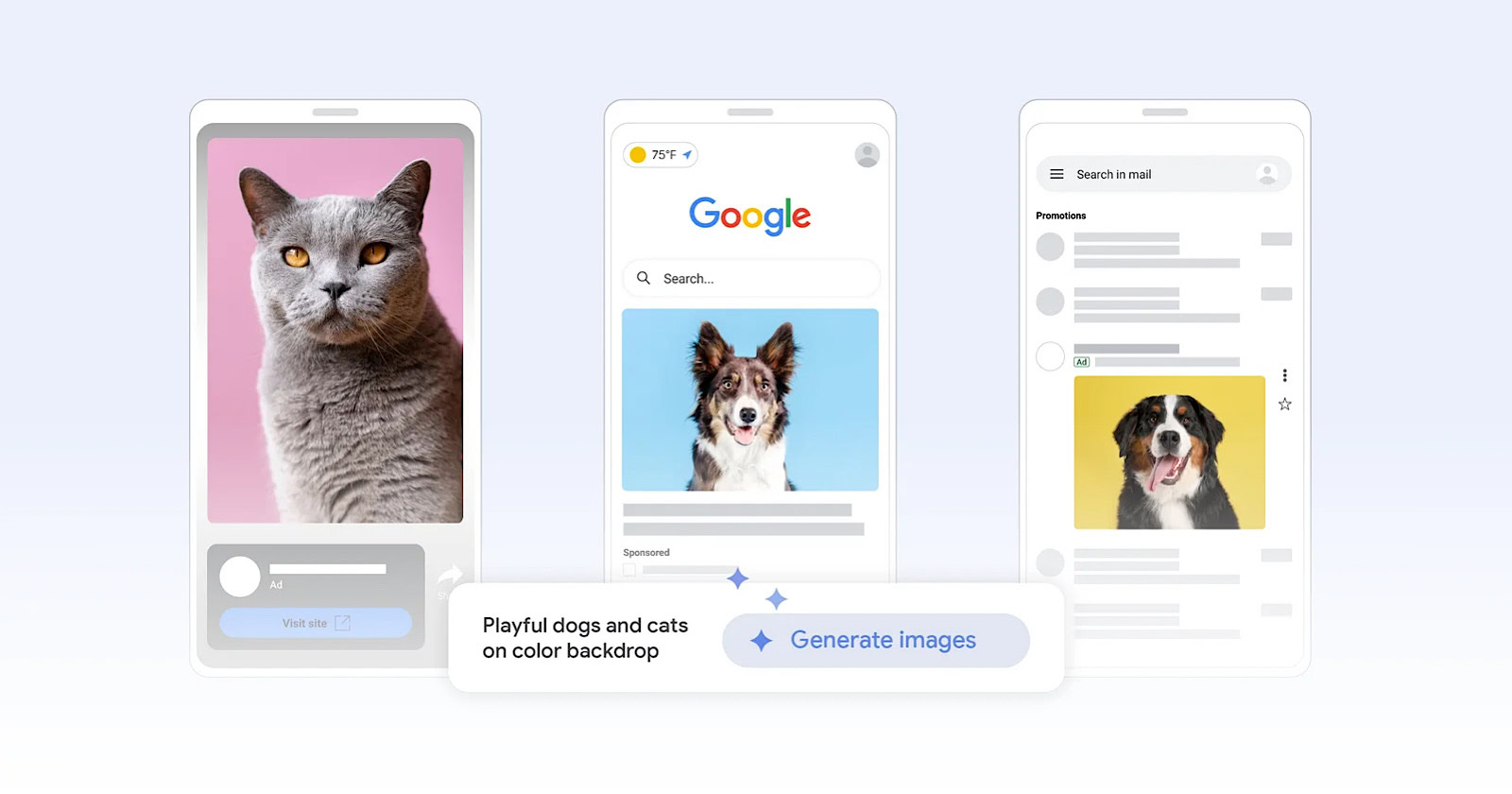
Google Ads introduces new generative AI tools powered by artificial intelligence for Demand Gen campaigns, allowing advertisers to create high-quality image assets using text prompts to enhance visual storytelling across Google platforms. The tools aim to help brands diversify their creative strategy and efficiently test new concepts, with a responsible AI development approach and best practices provided by Google. This capability offers brands new creative possibilities, streamlining production and enabling rapid iteration on visual ideas, while emphasizing the need for responsible and strategic use of AI-generated assets.
Google is rolling out a conversational experience powered by its Gemini AI model in Google Ads, allowing advertisers to generate relevant ad content from a website URL. Early tests show that advertisers have built higher quality search campaigns with less effort, leading to increased Ad Strength scores. Small business advertisers using this experience are more likely to publish search campaigns with "Good" or "Excellent" Ad Strength, and those who improve ads from "Poor" to "Excellent" see 12% more conversions on average. Google plans to add a capability for the conversational experience to suggest images using generative AI and images from landing pages. The impact of generative AI on Google and the advertising market is expected to be significant, with estimates suggesting it will eventually impact more than $40 billion per year in ad revenue.
A malvertising campaign is distributing the PikaBot malware disguised as popular software like AnyDesk. PikaBot, previously distributed via malspam campaigns, is a loader and backdoor that allows threat actors to gain unauthorized remote access to compromised systems. The malware is being leveraged by the cybercrime threat actor TA577, who has previously delivered QakBot, IcedID, and Cobalt Strike. The initial infection vector involves a malicious Google ad for AnyDesk that redirects victims to a fake website hosting a malicious MSI installer. The attacks bypass Google's security checks and employ fingerprinting techniques to ensure the victim is not in a virtualized environment. This malvertising campaign is reminiscent of previous chains used to distribute FakeBat malware. Additionally, there has been a rise in malicious ads targeting popular software searches, including the use of a Chrome extension framework called ParaSiteSnatcher to intercept and exfiltrate sensitive information.
A threat actor has been using Google Ads to distribute a trojanized version of the CPU-Z tool, which delivers the Redline info-stealing malware. The malicious advertisement is hosted on a cloned copy of the legitimate Windows news site WindowsReport. Clicking on the ad redirects users to a fake Windows news site, where they are prompted to download a digitally-signed CPU-Z installer containing a malicious PowerShell script. The script downloads the Redline Stealer payload, which can collect sensitive data from web browsers and cryptocurrency wallets. Users are advised to be cautious when clicking on promoted results in Google Search and to verify the legitimacy of the loaded site and domain.
A malvertising campaign targeting users searching for the popular Notepad++ text editor has been active for several months, evading detection. The campaign utilizes Google Ads to promote fake software websites that distribute malware. The final payload is believed to be Cobalt Strike, which often precedes ransomware attacks. The campaign tricks users with misleading titles in Google Search result advertisements, redirecting them to a decoy site or a malicious website that mimics the real Notepad++ site. Victims who meet certain criteria are served an HTA script, likely enabling the attackers to track their infections. To avoid downloading malware, users are advised to skip promoted results on Google Search and verify the official domain of the software they are looking for.
Google Ads is implementing a new Limited Ads Serving policy to combat scams and prevent misleading ads. The policy will limit the impressions received by unfamiliar advertisers during a "get-to-know-you" period. It will also apply when the relationship between the ad and brand is unclear. The gradual rollout aims to curb bad actors while giving legitimate advertisers time to clarify their branding strategies. Stricter ad policies could build user trust and reduce the reach of low-quality advertisers. Google Ads will notify impacted advertisers and provide guidance on meeting the requirements for "qualified status." Advertisers' trustworthiness will be measured based on user feedback, advertising history, and completion of advertiser identity verification. Google Ads will also offer advice on creating clear ads.
Google Ads is testing an AI-generated solution for help guides and answers, inviting some advertisers to try the feature. The AI assistant in the help section comes with a disclaimer acknowledging that it is still learning and may make mistakes. Users are encouraged to provide feedback to improve the quality and accuracy of the AI-generated content. This early technology preview aims to optimize campaign setup, address conversion tracking issues, and provide assistance with specific queries.
To optimize Google Ads campaigns, marketers should focus on providing the best data possible to AI, use value rules to focus engines on what matters to their business, layer audience and business insights on top of a data-centric foundation, use CPA or ROAS as a campaign's steering wheel, set minimum and maximum bids for automated strategies, consolidate data to minimize fragmentation, use RSA variant testing, and always add audiences and exclusions. Additionally, labels should be used for monitoring purposes when implementing changes.
Google Ads has launched a new design featuring a main menu on the left of the screen and pages organized into high-level categories to make navigation easier for new and experienced advertisers. The new design will be rolled out to all users by the end of the year, with the option to revert back to the old design until 2024. The five high-level categories are Campaigns, Goals, Tools, Billing, and Admin. Google has encouraged users to share feedback to help build a better Google Ads.
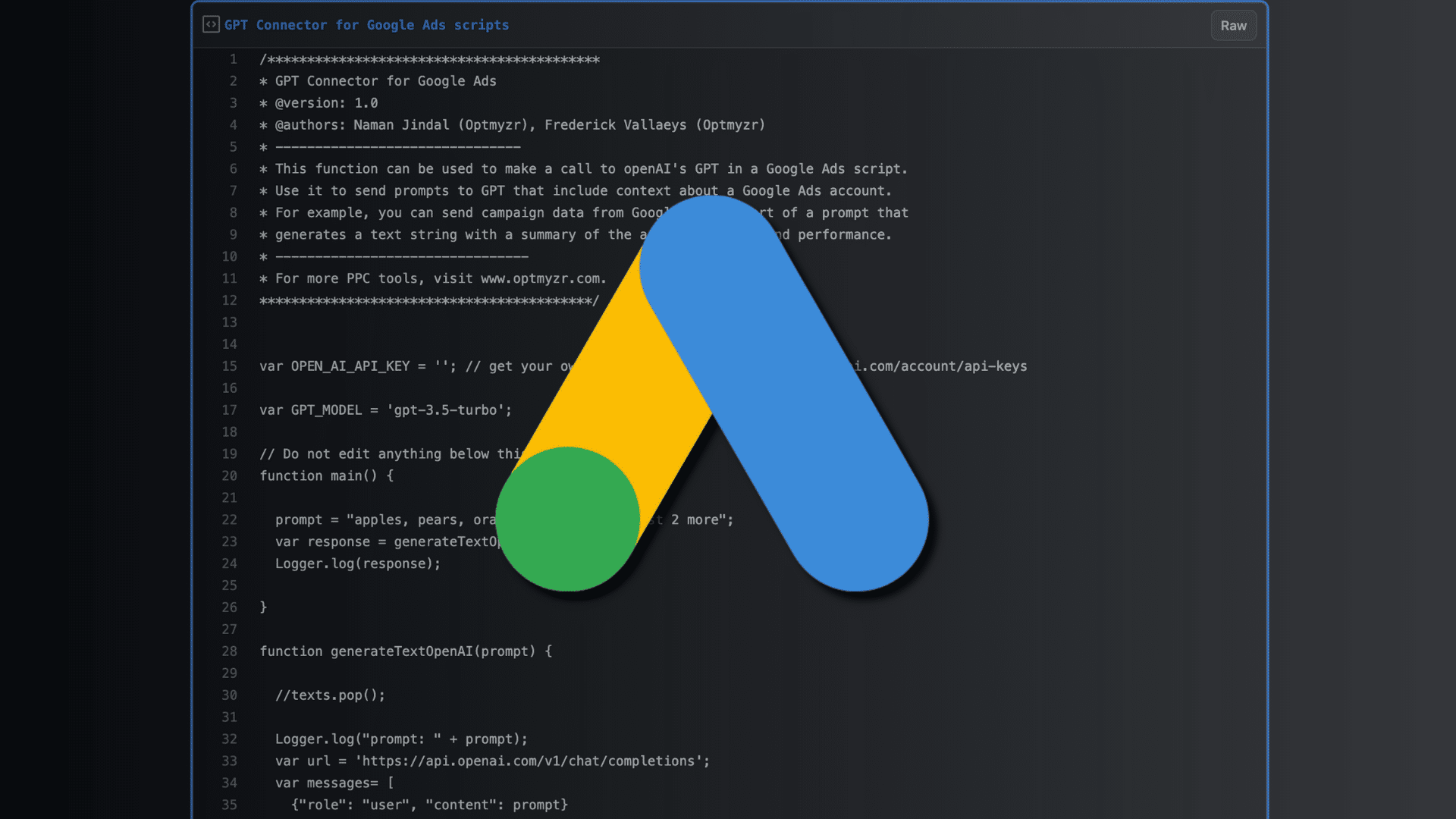
A Google Ads script that uses OpenAI's GPT to write an account performance summary and optimization suggestions has been developed. The script uses a table of campaign performance data to provide GPT with facts about the account's performance and optimization methodology. The prompt is engineered to provide GPT with precise instructions, and the resulting code is used to pull CSV data and send it to GPT for a summary. The script can be customized with target metrics and optimization suggestions, and the resulting summary can be shared with clients and stakeholders.
Google is reportedly working on generative AI tools, powered by PaLM 2, that will help advertisers and YouTube creators create media assets. The tools will generate media assets, including titles and descriptions, based on relevant topics. Amazon and Meta are also testing generative AI for advertisers. The integration of generative AI by Google will be worth testing to see if it helps improve performance, especially with conversion rates down and CPLs up. The official announcement of these AI solutions may be made at the upcoming Google Marketing Live event.
Google plans to integrate generative AI into its advertising business through Performance Max, a program that uses an algorithm to determine ad placement, budget allocation, and simple ad copy creation. Advertisers can submit creative content, and the AI will "remix" these materials to generate ads that target specific audiences and meet objectives like sales targets. However, concerns have been raised about the potential for the tool to disseminate misinformation. Google intends to implement strict safeguards to prevent such errors as it rolls out its new generative AI features.