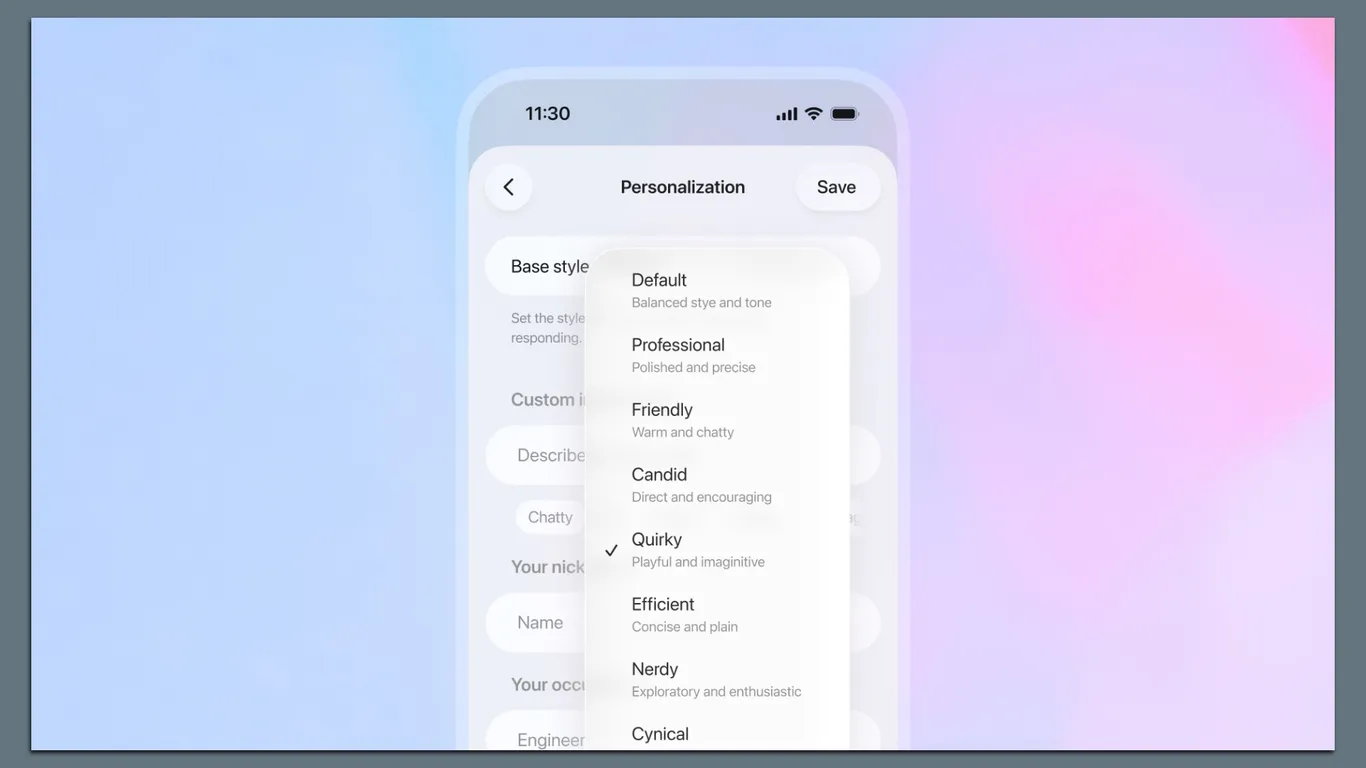
OpenAI has updated ChatGPT with GPT-5.1, making it more natural, faster for simple tasks, and better at handling complex ones, while offering new personality presets to enhance user experience. The company emphasizes creating AI that is both enjoyable and beneficial, while also acknowledging concerns about emotional attachments to chatbots and working with experts to promote healthy interactions.

Snap Inc. and Perplexity are partnering to integrate Perplexity’s AI-powered answer engine into Snapchat, starting in early 2026, allowing users to ask questions and receive verifiable, conversational answers within the app, expanding Snapchat's AI capabilities and user engagement.
Israeli AI startup AUI has raised $20 million in a SAFE round at a $750 million valuation cap, developing a hybrid symbolic-generative AI platform that excels in task-based conversations and is already used by Fortune 500 companies. The funding will support expansion and strategic partnerships, including a collaboration with Google, to scale its multi-client AI model and reduce operational costs.
Google has launched Gemini for Home, enhancing smart speakers and displays with advanced AI, improved voice interactions, and a redesigned Home app that offers faster performance, new automation features, and better camera integration, all rolling out globally on Android and iOS.
OpenAI's study reveals that most ChatGPT users are young women aged 18-25, and the majority of interactions are not work-related, providing insights into how people engage with the AI tool.
The article explores whether AI chatbots like ChatGPT truly 'think,' with the AI itself clarifying that it operates through pattern recognition and prediction rather than conscious thought, emphasizing the distinction between human cognition and AI processing.
The article highlights why the author prefers Claude over other AI chatbots, emphasizing its thoughtful problem-solving, ability to create interactive quizzes, sense of humor, capacity to handle large documents, and its human-like conversational style, making it a versatile and engaging AI assistant.
YouTube Premium users are getting a new AI-powered search carousel to enhance content discovery, while non-Premium users are gaining access to the platform's existing conversational AI, Gemini, for easier interaction with video content.
YouTube is introducing AI-powered features, including a search results carousel for Premium users in the US that suggests videos and provides AI-generated descriptions, and is testing a conversational AI tool that offers content summaries and recommendations, aiming to enhance user experience but raising concerns about creator engagement.
OpenAI has updated ChatGPT's search feature to enhance its ability to handle longer conversations, understand complex queries, and follow instructions more effectively, resulting in smarter, more comprehensive responses and new functionalities like image-based web searches.
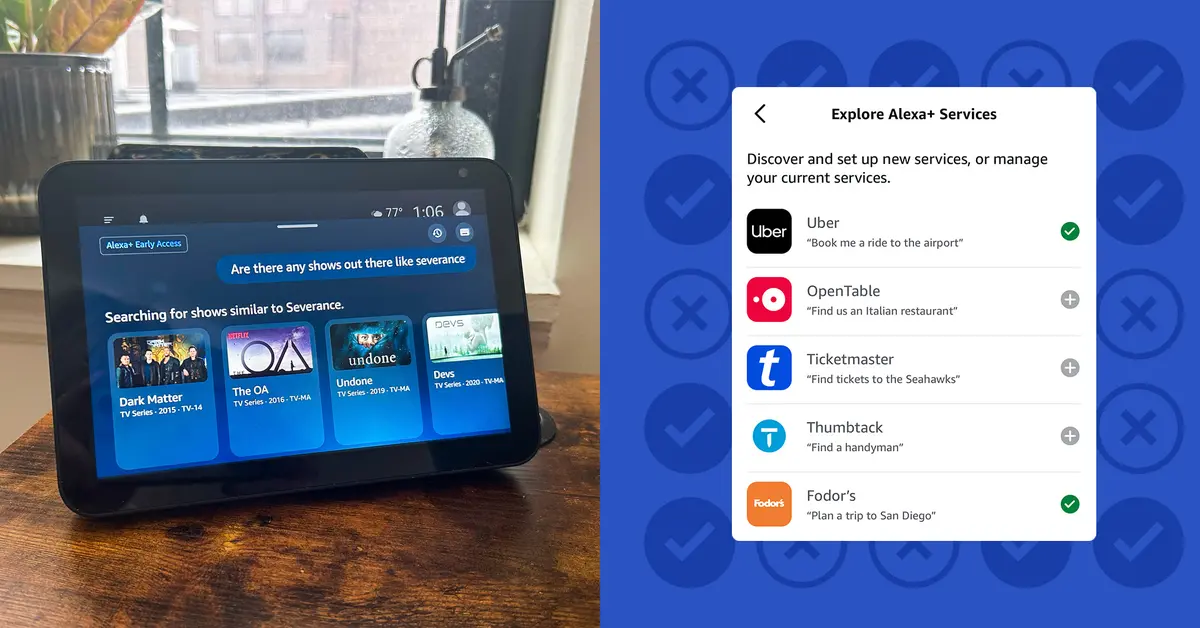
Amazon's early access to Alexa+ introduces a more conversational, personalized AI assistant capable of longer chats, smarter smart-home control, and deeper third-party integrations, though it still has bugs and ethical concerns about its emotional responses and human-like interactions.
OpenAI has announced a significant upgrade to ChatGPT's GPT-4 Turbo model, available to paying users, making it smarter in writing, math, logical reasoning, and coding, with improved conversational language. The training data now extends to December 2023, enhancing topical knowledge. The upgrade aims to make responses more direct and less verbose, and the AI now recognizes more recent events. The momentum in AI development continues, with Meta and Google also making strides in the field.
OpenAI has rolled out a major upgrade for paying ChatGPT users, introducing the GPT-4 Turbo model to enhance the chatbot's capabilities. Subscribers can expect more direct and concise responses, improved writing, math, logical reasoning, and coding skills, as well as access to a more recent knowledge base trained on data up to December 2023.
Startup Hume claims to have developed emotionally intelligent conversational AI that can interpret over 24 distinct emotional expressions in a person's voice and respond accordingly, attracting over 1,000 developers and companies like SoftBank and Lawyer.com. The New York-based startup has raised $50 million in a series B funding round and launched "Hume EVI," a conversational voice API that can detect emotional nuances in audio and text and adjust its responses. While the technology aims to mimic human conversation, using AI to interpret complex emotional expressions through voice and text remains an imperfect science, with potential biases and challenges in accurately capturing nuances of emotion and context. Hume's AI has been integrated into applications in industries like health and wellness, customer service, and robotics, showing potential for tracking mental health conditions and providing expanded context in productivity chatbots.
Ubisoft is working on a project called NEO NPC, aiming to use generative AI to create non-playable characters (NPCs) that can engage in more realistic and dynamic conversations with players. The project involves using prewritten backstories and personalities to generate responses on the fly, with the goal of creating a "real conversation" experience. While the NPCs will have limitations based on their role and character arcs, the project is still in the prototype stage and requires further development before being implemented in video games.