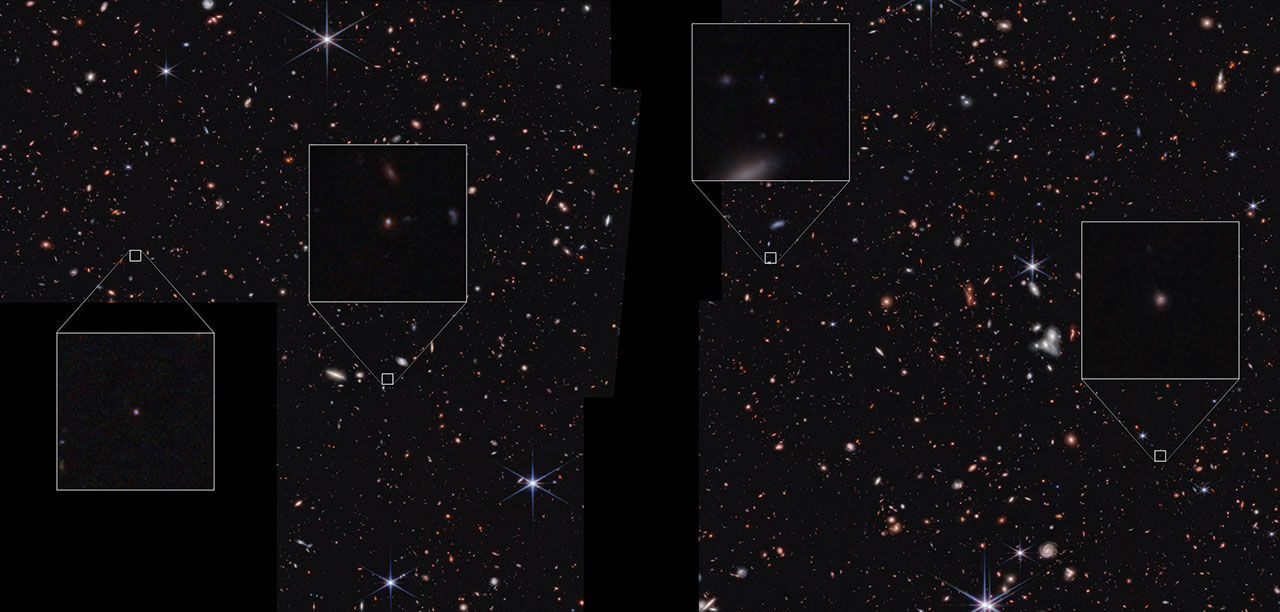
Scientists using NASA's James Webb Space Telescope have identified a unique group of tiny, point-like galaxies from 12 to 12.6 billion years ago that defy current classification, resembling a cosmic 'platypus' due to their unusual combination of features, and raising questions about early galaxy formation.
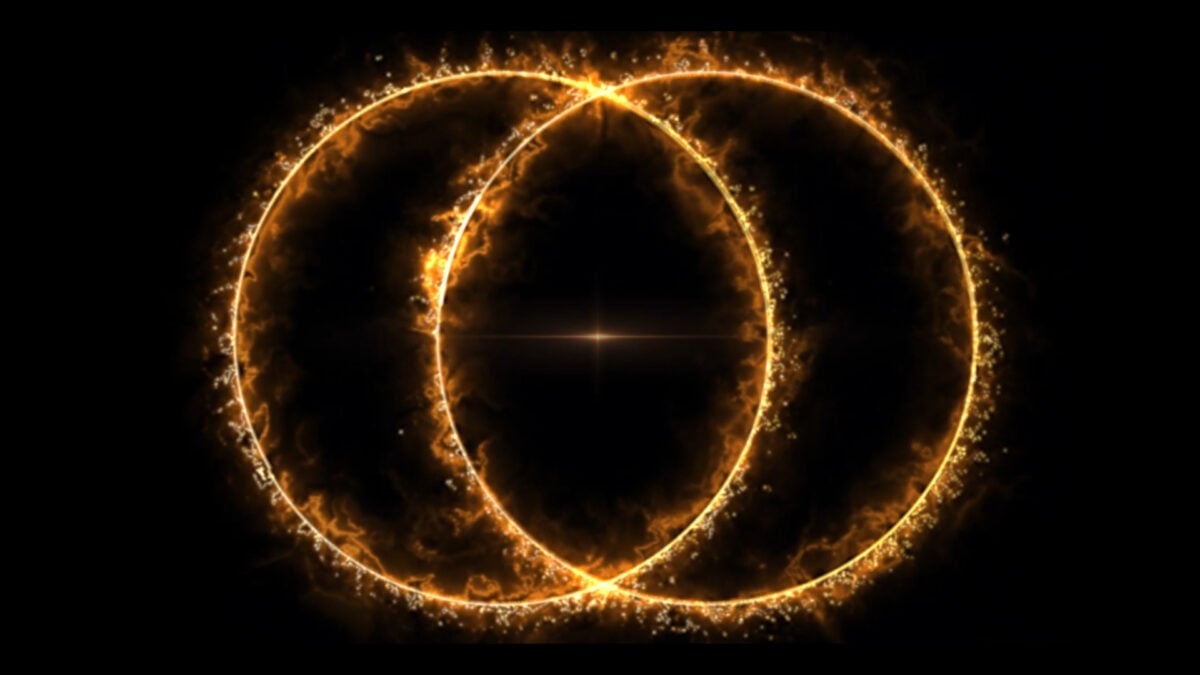
Citizen scientists discovered two crossing rings of extragalactic radio signals forming a near-perfect Venn diagram, identified as 'odd radio circles' (ORCs), which are vast, magnetized plasma rings visible only at radio wavelengths. These findings, among the most distant and powerful, suggest ORCs may result from galactic superwinds and black hole activity, providing insights into galaxy and black hole co-evolution. The discovery underscores the value of human pattern recognition in scientific research.
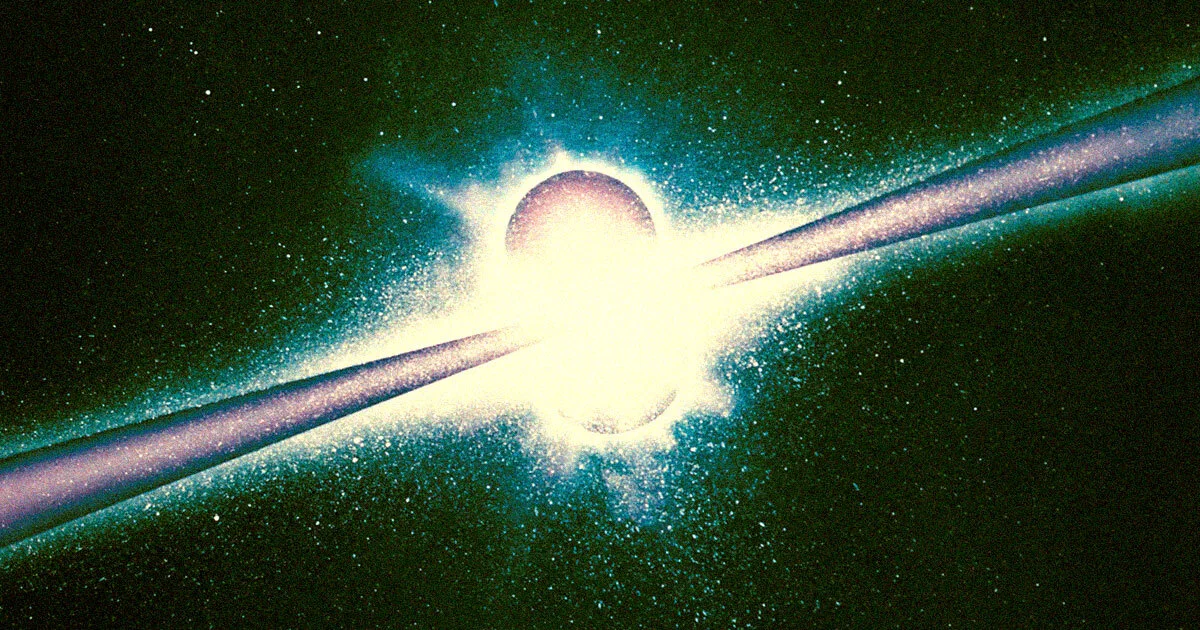
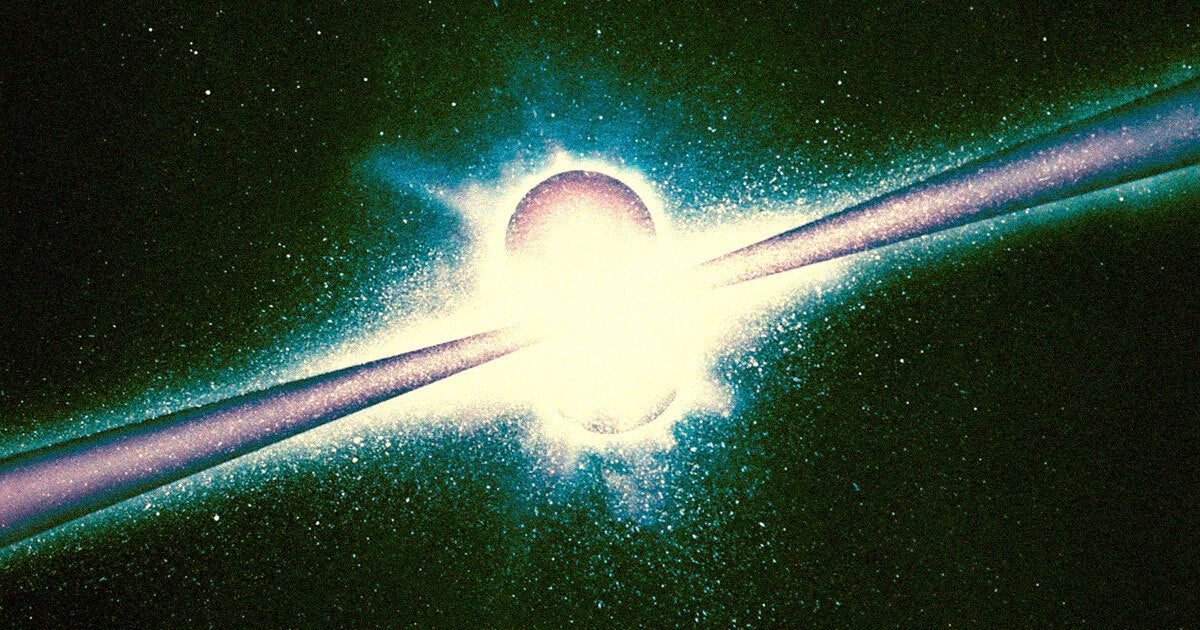
Astronomers observed an unprecedented gamma-ray burst, GRB 250702B, lasting nearly a day with multiple outbursts, originating from beyond our galaxy, possibly caused by a black hole disrupting a star or a white dwarf passing near an intermediate-mass black hole, challenging existing models of gamma-ray bursts.
Scientists detected an unprecedented gamma ray burst, GRB 250702B, which repeated multiple times over a day and appeared to originate outside our galaxy, challenging existing theories about stellar explosions and black holes, with no current explanation fully accounting for its unique properties.
Scientists detected an unprecedented repeating gamma ray burst, GRB 250702B, which lasted much longer and was more periodic than typical bursts, and likely originated outside our galaxy, but its exact cause remains unknown, with theories including a massive star implosion or a tidal disruption event involving an intermediate-mass black hole.
Astronomers have discovered a unique repeating gamma-ray burst, GRB 250702B, which lasted about a day and originated outside the Milky Way, challenging current understanding of such cosmic explosions and suggesting a potentially new type of astrophysical event.
Astronomers observed an unprecedented, day-long, repeating gamma-ray burst in another galaxy, possibly caused by an intermediate mass black hole or a unique stellar death, challenging existing understanding of such cosmic explosions.
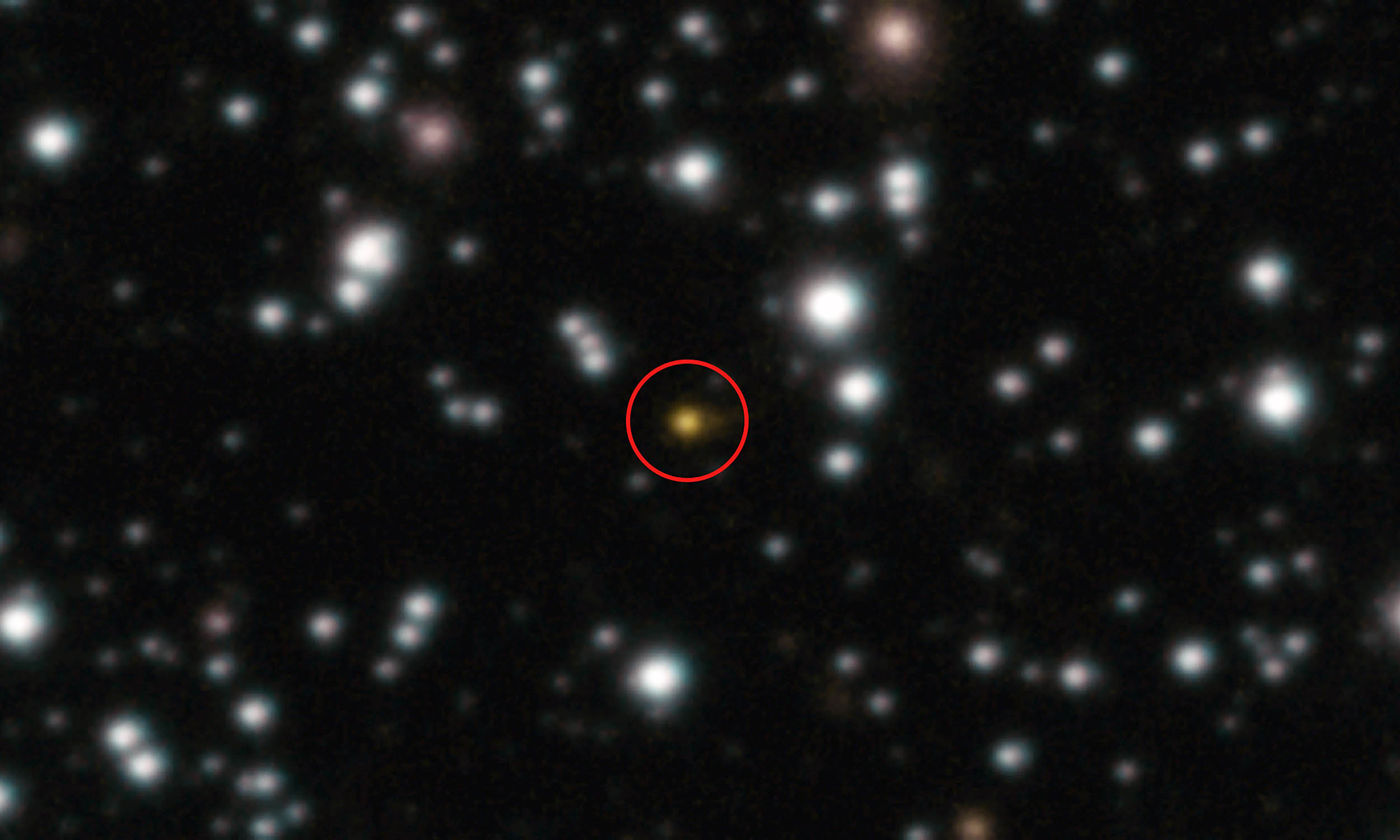
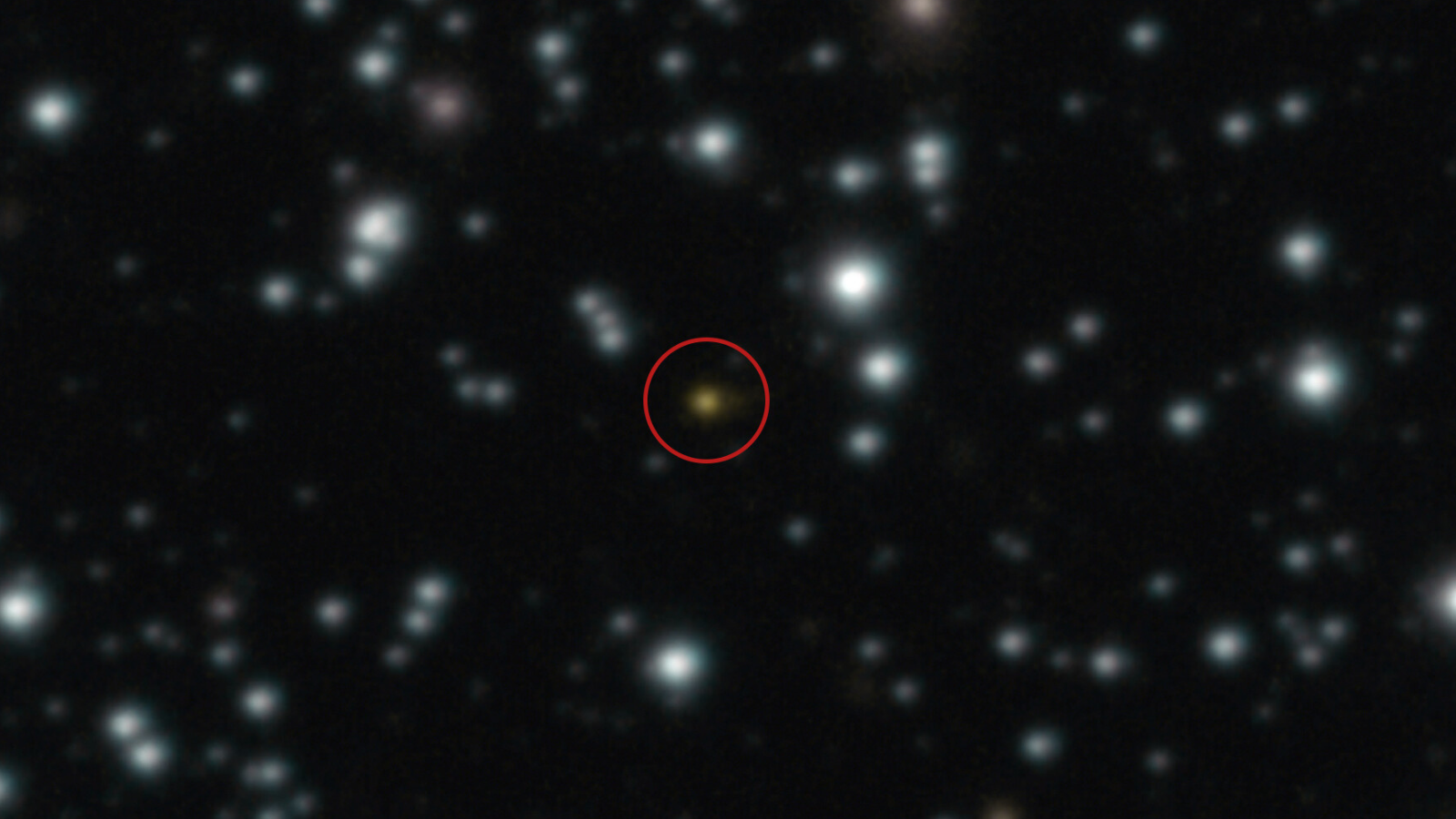
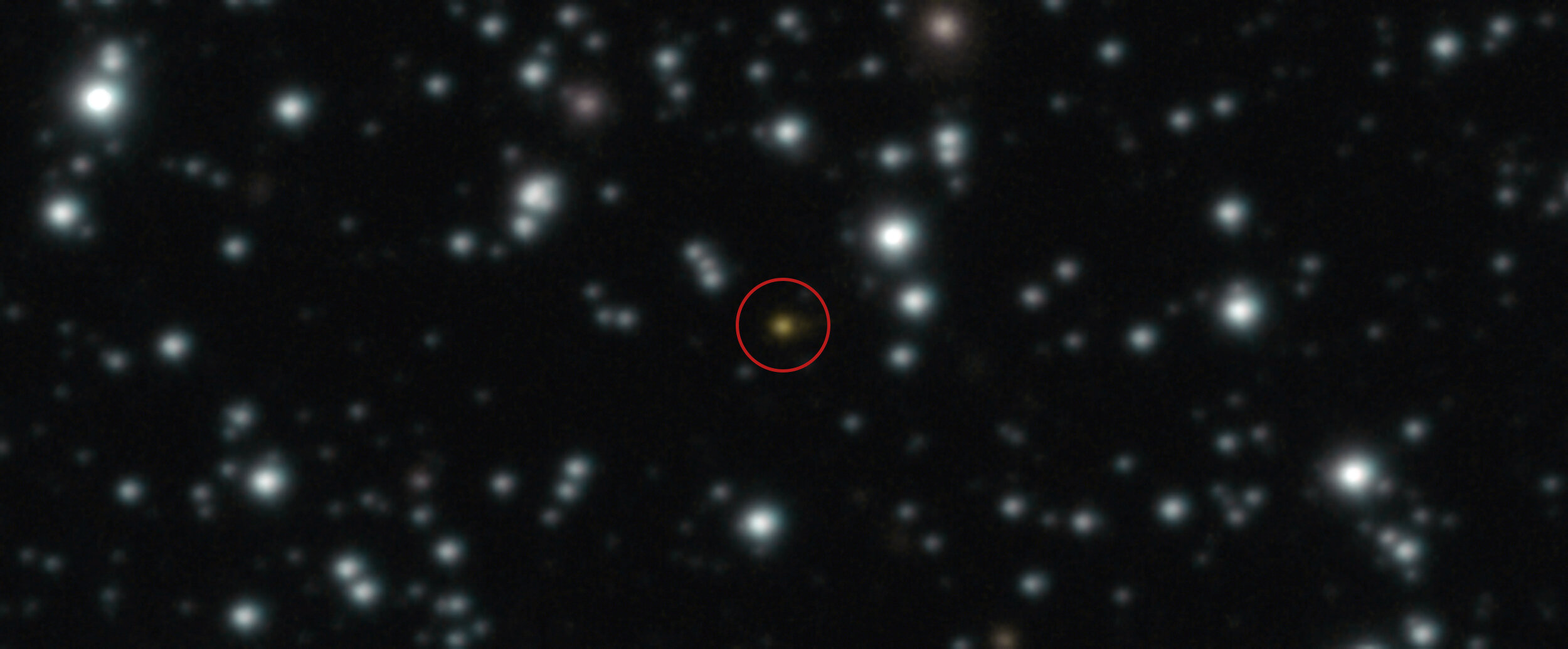
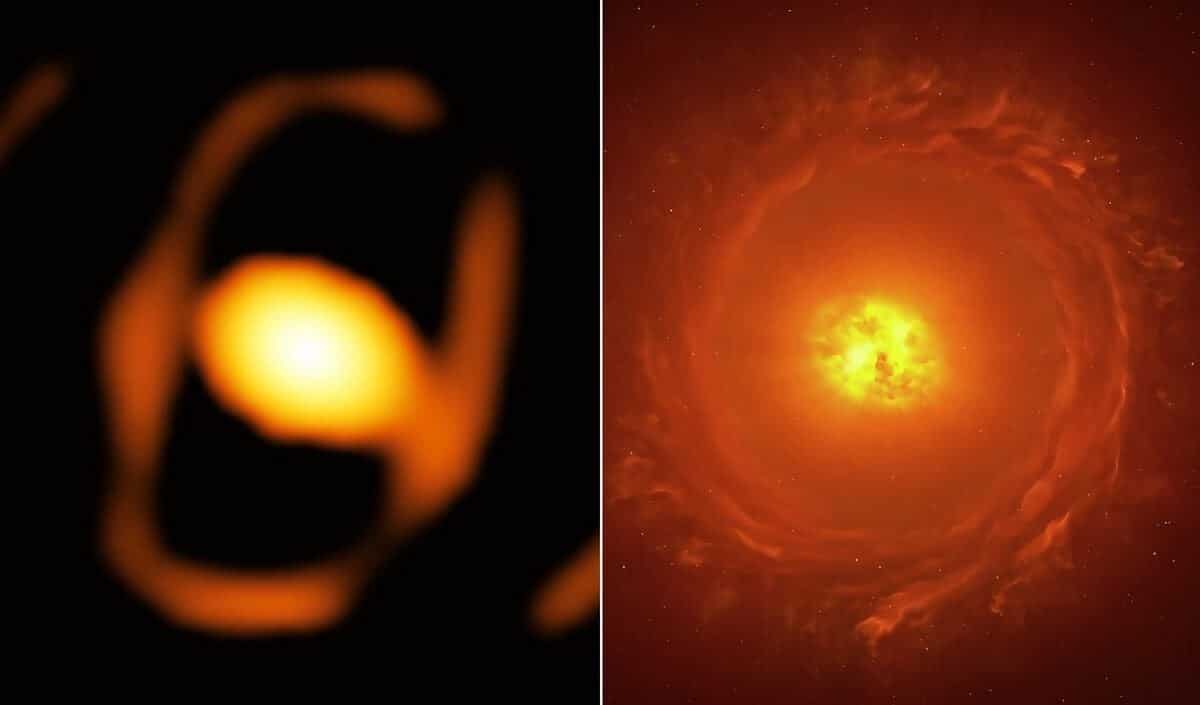
For the first time, astronomers have captured a clear image of a star in another galaxy, WOH G64, using the European Southern Observatory's Very Large Telescope. This red supergiant, located in the Large Magellanic Cloud, is encased in a unique gas and dust cocoon, offering insights into stellar evolution and death. The GRAVITY instrument, which combines light from multiple telescopes, enabled this breakthrough, paving the way for future discoveries in astrophysics and the potential study of exoplanets for signs of extraterrestrial life.
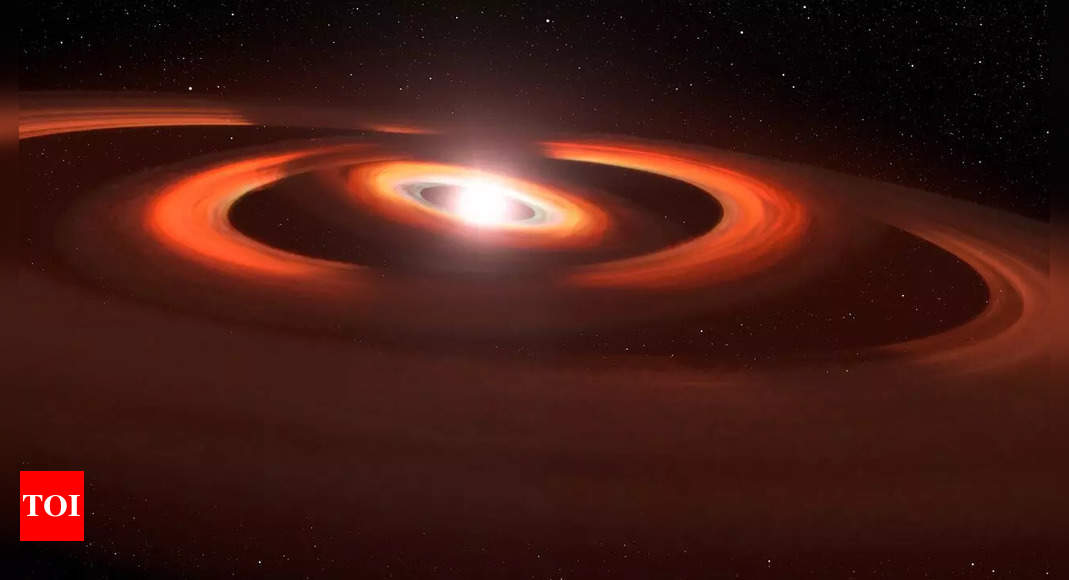
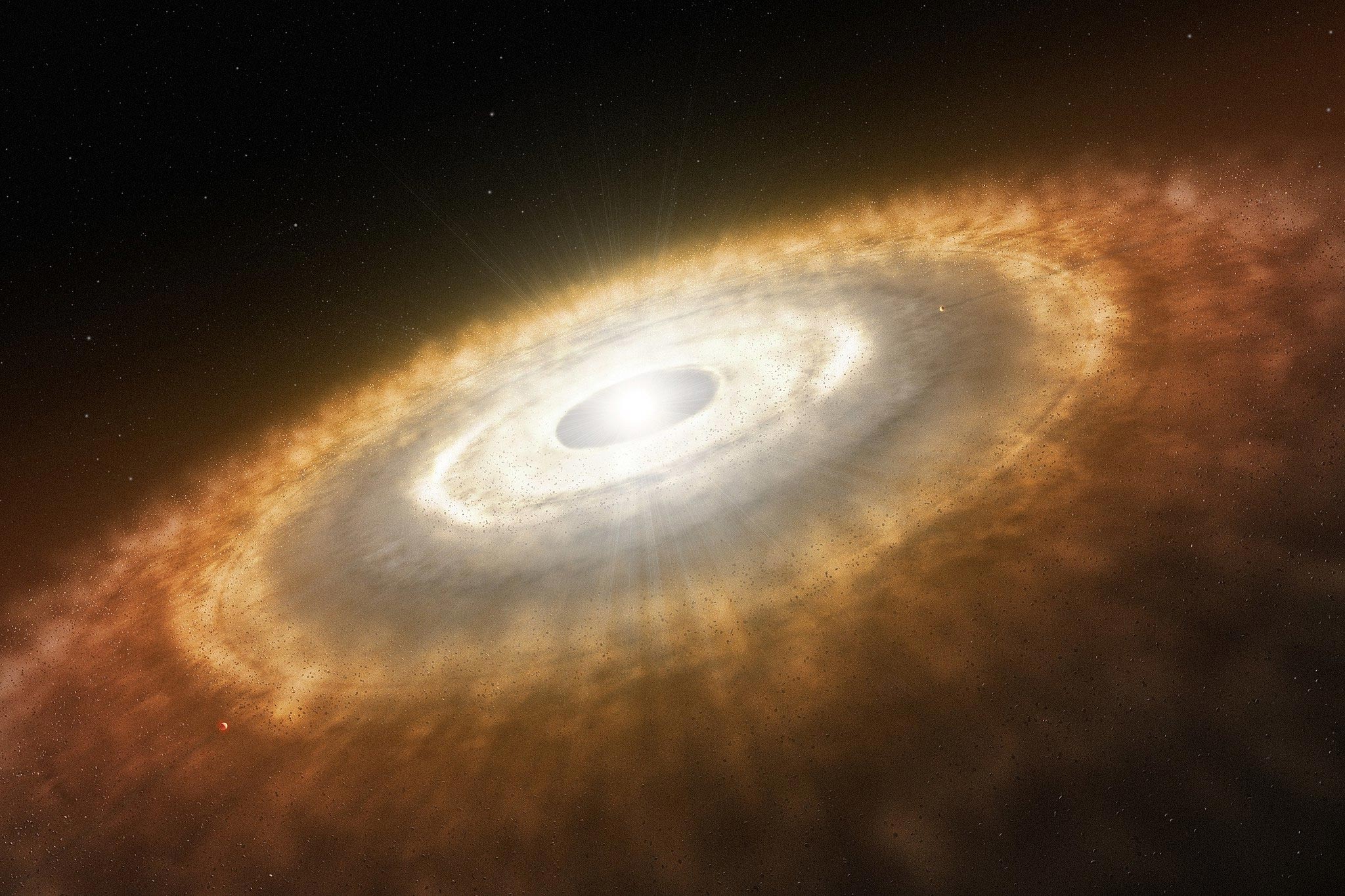
Scientists have made a groundbreaking discovery of an extended disk composed of dust and gas orbiting a star in a distant galaxy, the Large Magellanic Cloud. This marks the first observation of such a phenomenon beyond our Milky Way. The discovery sheds light on star formation processes in diverse environments and provides insights into the constraints imposed by varying environments on the overall process. The finding was made possible by the ALMA radio telescope, revealing a very young and massive star still feeding from its surrounding disk. This breakthrough opens up new possibilities for studying star formation in different galaxies.
Astronomers have made a groundbreaking discovery by detecting a rotating disk around a high-mass star in the Large Magellanic Cloud, marking the first-ever observation of a circumstellar disc beyond the Milky Way. This finding provides valuable insights into the star formation process in different galaxies, highlighting the differences in dust and metal content between the Large Magellanic Cloud and our own galaxy. The discovery was made using the ALMA observatory and has significant implications for understanding stellar origins in diverse galactic environments.