
Webb’s Tiny Red Dots Might Be Early-Phase Supermassive Black Holes
TL;DR Summary
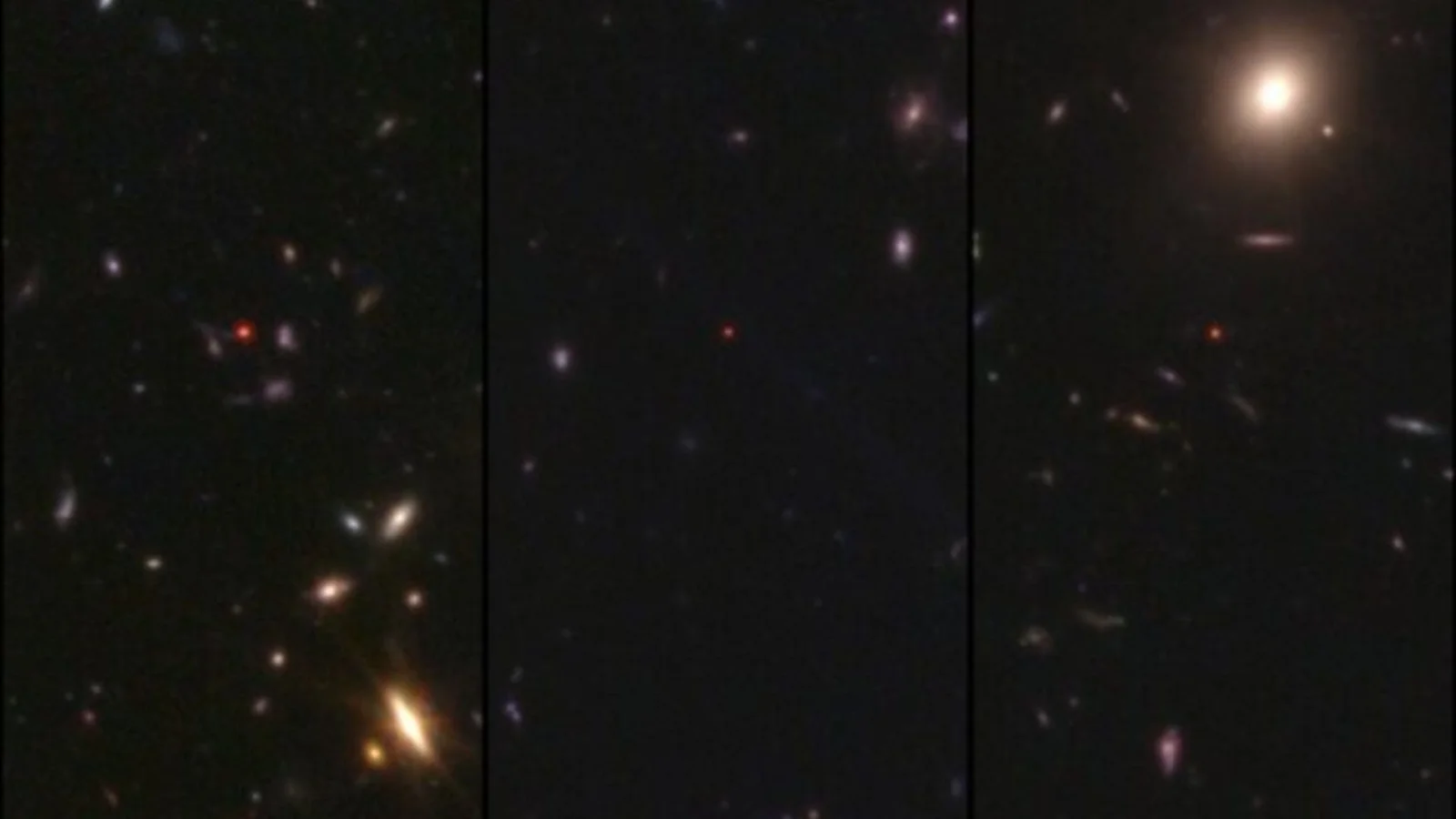
NASA’s James Webb Space Telescope studied 12 ancient galaxies and found that the mysterious “little red dots” are likely supermassive black holes in their youth, not star-rich galaxies. They are extremely luminous yet incredibly compact (more than 250 billion suns in brightness but less than a third of a light-year across), implying black holes roughly 100,000 to 10 million solar masses. Their absence of X-ray/radio emission is explained by surrounding dense gas cocoons that scatter light. If confirmed, these objects could shed light on how massive black holes form in the early universe; the study appears in Nature.
Topics:science#astronomy#black-holes#early-universe#galaxies#james-webb-space-telescope#little-red-dots
- James Webb Space Telescope's mysterious 'little red dots' may be black holes in disguise Space
- Little red dots as young supermassive black holes in dense ionized cocoons Nature
- Black hole butterflies? James Webb telescope spots dozens of black hole 'cocoons' in early universe. Live Science
- Researchers solve mystery of universe's 'little red dots' Phys.org
- Little red dots in other galaxies may be black holes wrapped in gas-cloud cocoons Scimex
Reading Insights
Total Reads
0
Unique Readers
19
Time Saved
46 min
vs 47 min read
Condensed
99%
9,240 → 98 words
Want the full story? Read the original article
Read on Space