Tag

False Positives

All articles tagged with #false positives

Advances in Blood Tests Promise Early Detection and Improved Cancer Outcomes

Originally Published 20 days ago — by Live Science

Featured image for Advances in Blood Tests Promise Early Detection and Improved Cancer Outcomes
Source: Live Science

New blood tests capable of detecting multiple cancers simultaneously show promise for earlier diagnosis and improved cancer care, but currently face challenges such as high false-positive rates, lack of standardization, and integration into clinical practice. Experts believe these tests will improve over time and could revolutionize cancer diagnostics, though more research and validation are needed.

Debate Over Prostate Cancer Testing Methods and Efficacy

Originally Published 7 months ago — by OregonLive.com

Featured image for Debate Over Prostate Cancer Testing Methods and Efficacy
Source: OregonLive.com

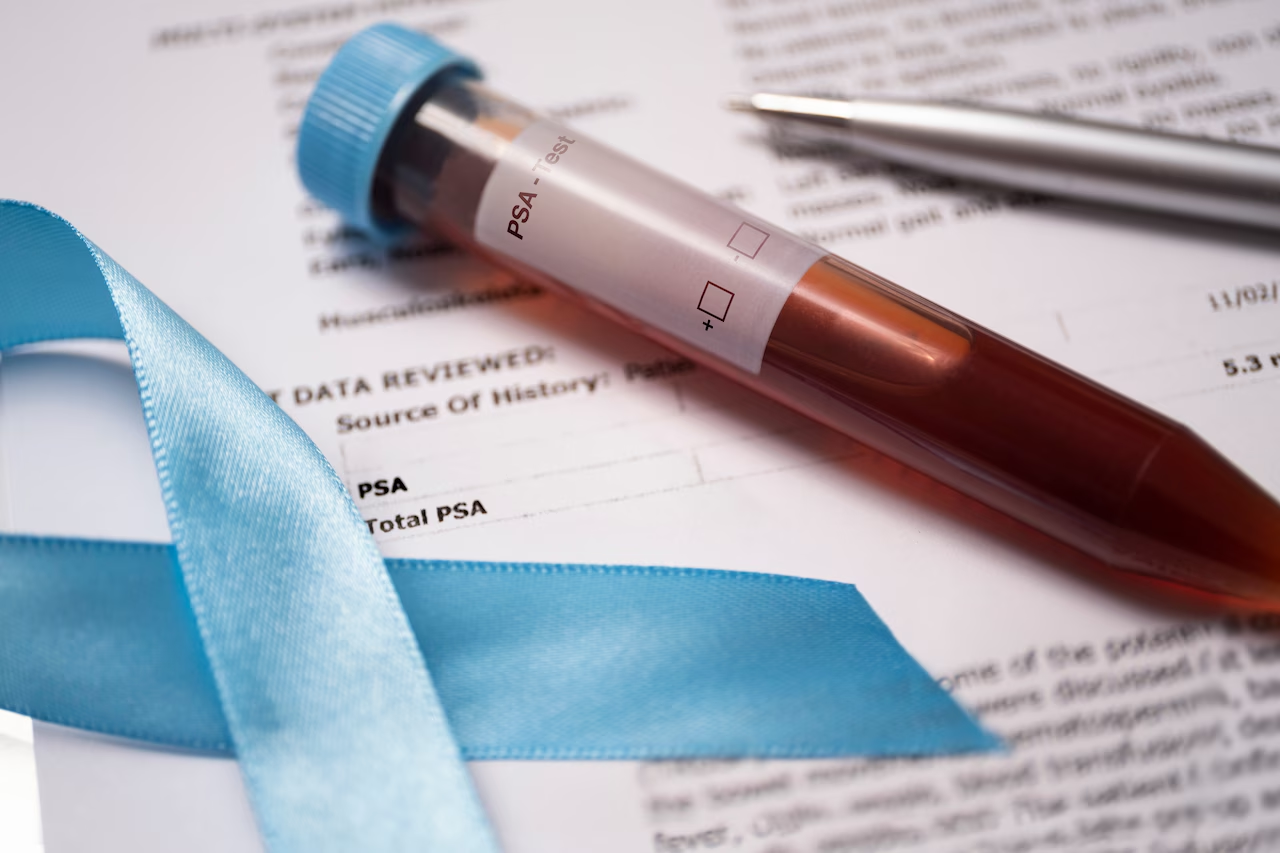
The article discusses the pros and cons of PSA testing for prostate cancer, emphasizing that while it can produce false positives leading to unnecessary procedures, careful testing and risk assessment can help identify high-risk cases and save lives. The author supports PSA screening for men aged 50-70 and suggests that digital rectal exams add little value and often result in false positives, but individual discussions with doctors are important.

DNA Tests Show Bias in Accuracy Across Different Ethnicities

Originally Published 1 year ago — by University of Oregon

A University of Oregon study highlights the limitations of forensic DNA analysis, particularly when dealing with DNA mixtures from groups with low genetic diversity. The research found that such mixtures are more prone to false positives, potentially implicating innocent individuals. This issue is exacerbated when more contributors are involved. The study underscores the importance of understanding the technique's limitations and the ethical challenges in genetic research, especially regarding informed consent.

Doctors Advise Against Costly $1,000 Cancer Blood Tests

Originally Published 1 year ago — by Daily Mail

Featured image for Doctors Advise Against Costly $1,000 Cancer Blood Tests
Source: Daily Mail

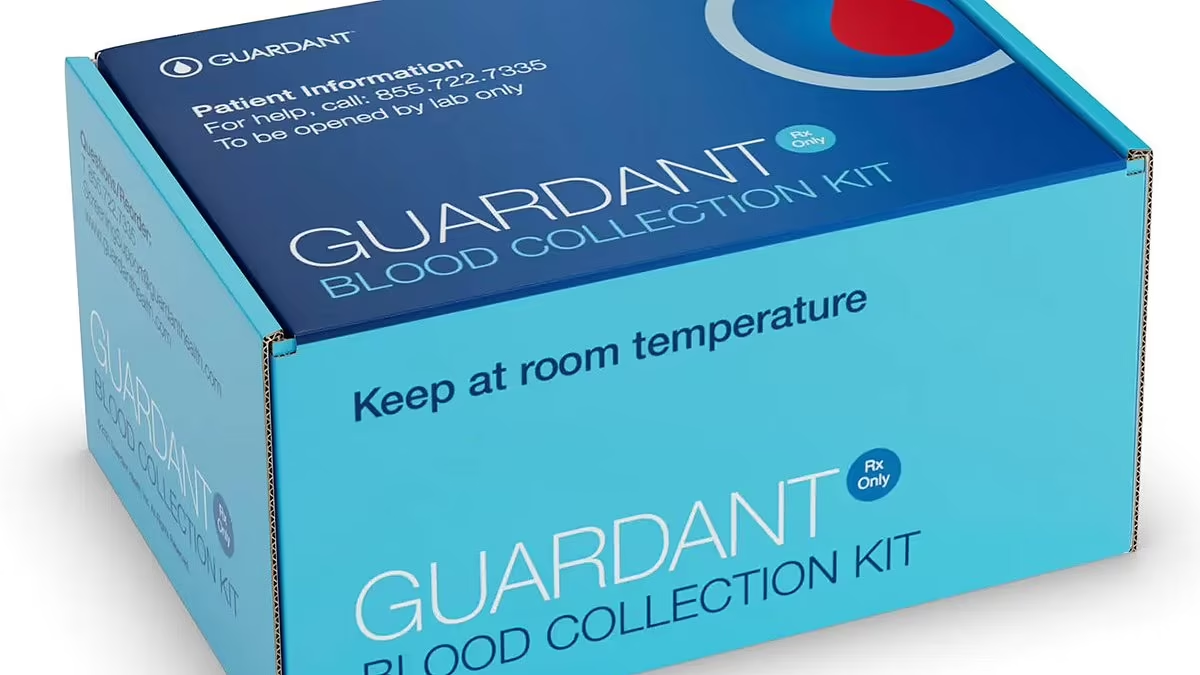
Top doctors are cautioning against $1,000 multi-cancer detection blood tests, citing insufficient evidence and the risk of false positives leading to unnecessary procedures. While early studies show promise, experts recommend sticking to regular screenings until more research validates these tests' efficacy and safety.

"Star Trek's Planet Vulcan Proven to Be an Astronomical Illusion"

Originally Published 1 year ago — by ScienceAlert

Featured image for "Star Trek's Planet Vulcan Proven to Be an Astronomical Illusion"
Source: ScienceAlert

Astronomers have confirmed that the signals previously thought to indicate the existence of a planet orbiting the star 40 Eridani A, known as Vulcan in Star Trek, were false positives caused by the star's own activity. This finding underscores the importance of advanced tools in accurately identifying exoplanets and ruling out false signals.

Revolutionary $1K Blood Test Disrupts Cancer Treatment

Originally Published 2 years ago — by Newser

Featured image for Revolutionary $1K Blood Test Disrupts Cancer Treatment
Source: Newser

Grail's Galleri test, a multicancer early detection test that screens for over 50 types of cancer, is gaining popularity among wealthy patients despite concerns from some doctors. The $949 test, not covered by most insurance plans, has shown potential in early detection but has also raised red flags due to a significant number of false positives and false negatives. The test is not yet FDA-approved, and the American Academy of Family Physicians does not recommend mass screenings. Additionally, a recent software error resulted in false negative reports being sent to customers. Grail is working on independent studies to track its accuracy and seeking wider insurance coverage.

AI Writing Detectors Fail to Distinguish Between Human and AI Authors

Originally Published 2 years ago — by Ars Technica

Featured image for AI Writing Detectors Fail to Distinguish Between Human and AI Authors
Source: Ars Technica

OpenAI confirms that AI writing detectors, including their own discontinued AI Classifier, do not reliably distinguish between AI-generated and human-generated content. These detectors often yield false positives and can be defeated by rephrasing. OpenAI also clarifies that ChatGPT itself cannot determine if text is AI-written or not and warns about the model's propensity to confabulate false information. While humans can sometimes detect AI writing through changes in style or tell-tale signs, it is safest to avoid automated AI detection tools as they have high false positive rates.

The Pros and Cons of Body Scanning for Hidden Dangers

Originally Published 2 years ago — by Newser

Featured image for The Pros and Cons of Body Scanning for Hidden Dangers
Source: Newser

Full-body preventative scans, which are not ordered due to specific medical concerns but rather to detect potential health issues early, are growing in popularity among wealthy patients. However, these scans come with caveats such as the risk of false positives and potential complications. The American College of Preventive Medicine and the American College of Radiology recommend against them in asymptomatic patients. Despite this, proponents argue that if these scans become more accessible and standardized, they have the potential to revolutionize primary care and prevent late-stage diagnoses. Prenuvo, a leading player in the field, aims to transform healthcare by offering full-body scans and has diagnosed thousands of medical conditions that were previously unknown.

The Impact of Cancer Screenings on Life Expectancy

Originally Published 2 years ago — by CNN

Featured image for The Impact of Cancer Screenings on Life Expectancy
Source: CNN

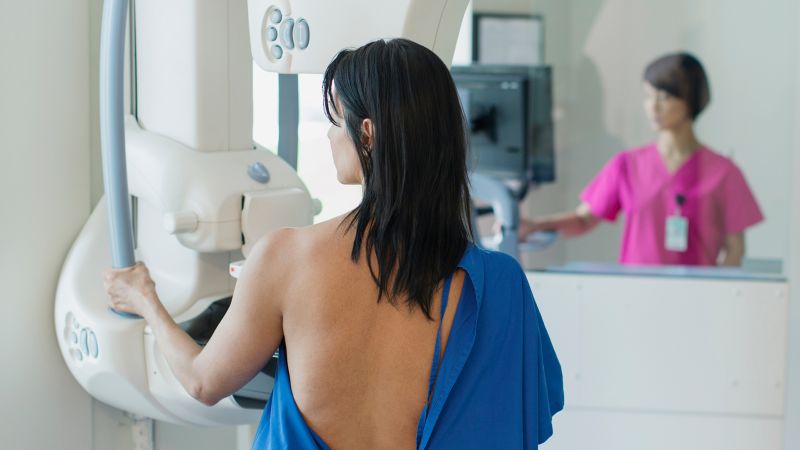
A review of clinical trials involving over 2.1 million people found that most cancer screenings do not extend a person's lifespan beyond their regular lifespan. However, experts emphasize that this does not mean canceling routine screenings, as early diagnosis has been shown to improve cancer outcomes. The study found that only colorectal cancer screening with sigmoidoscopy seemed to make a difference in extending someone's life, by a little over three months. The researchers suggest that doctors should be clearer about the absolute benefits, harms, and burdens of screenings. While screenings may not increase longevity, they can catch cancer early and improve a person's chance of survival within their normal lifespan.

"Identifying False Positives in Toxic Relationships"

Originally Published 2 years ago — by YourTango

Featured image for "Identifying False Positives in Toxic Relationships"
Source: YourTango

Having great chemistry, great sex, or being together for a long time are not necessarily indicators of a great relationship. These "false positives" can lead to complacency and prevent individuals from building a strong foundation of trust and commitment. While chemistry and sex are important components of a relationship, they should not be the sole focus. Building a strong relationship requires more than just these factors.

Yearly checkups may not reduce mortality and carry risks, warn experts.

Originally Published 2 years ago — by EL PAÍS USA

Featured image for Yearly checkups may not reduce mortality and carry risks, warn experts.
Source: EL PAÍS USA

Experts warn that routine annual checkups may not be beneficial and can even cause harm in some people. A systematic review of 17 clinical trials involving 230,000 people found that general checkups had "little or no effect" on total mortality or cancer, cardiovascular, heart disease, and stroke mortality. False positives and overdiagnosis can lead to unnecessary interventions or treatments. Instead, experts suggest focusing on structural interventions aimed at reducing disease, such as higher taxes on tobacco and alcohol or restricting corporate advertising of harmful products.

Microsoft Defender misidentifies legitimate URLs as malware

Originally Published 2 years ago — by The Register

Featured image for Microsoft Defender misidentifies legitimate URLs as malware
Source: The Register

Microsoft Defender is causing headaches for IT admins by flagging legitimate URLs, such as Zoom and Google, as potentially dangerous, triggering a flood of alerts. The Defender portal is also experiencing issues, making it difficult to investigate the alerts. Microsoft is aware of the problem and investigating the issue, which is affecting hundreds of accounts and tenants worldwide. The root cause is being isolated by poring over service monitoring. The false alerts were caused by recent additions to the SafeLinks feature, which have since been reverted to fix the issue.

Microsoft Defender mistakenly flags legitimate links as malware

Originally Published 2 years ago — by Neowin

Featured image for Microsoft Defender mistakenly flags legitimate links as malware
Source: Neowin

Microsoft Defender is flagging legitimate URLs as malicious files or links, causing a high volume of false email security alerts for sysadmins. Microsoft has confirmed the bug and is investigating the issue, which can be tracked under "DZ534539" in the Microsoft 365 Admin Center portal. The bug is causing some alerts to not show content as expected, and Microsoft is reviewing service monitoring telemetry to isolate the root cause and develop a remediation plan.