An experimental drug called NU-9 developed at Northwestern University shows promise in preventing Alzheimer's disease by targeting toxic amyloid beta oligomers early in the disease process, potentially delaying or stopping memory loss and neurodegeneration.
Acting within the first two years of a prediabetes diagnosis through lifestyle modifications such as weight loss, increased physical activity, and healthy eating can significantly reduce the risk of progressing to type 2 diabetes, emphasizing the importance of early detection and intervention.
Researchers at Case Western Reserve have identified social inference—the ability to interpret social cues—as a key target for treating early-stage schizophrenia. Strengthening this skill through structured social training programs could improve functional recovery, prevent long-term disability, and offer a personalized approach beyond traditional medication, especially when implemented early during adolescence.
A large international study has developed a genetic test that predicts the risk of obesity, especially in children, with higher accuracy for individuals of European ancestry. The test uses a polygenic risk score that accounts for genetic variants linked to higher BMI, potentially enabling early interventions. However, its effectiveness varies across different populations, and lifestyle factors remain crucial in obesity risk management.
A large-scale study has developed a genetic test that can predict a child's risk of obesity in adulthood, potentially enabling early interventions. The test, based on a polygenic risk score, is more effective than previous methods, especially for individuals of European ancestry, and highlights the importance of combining genetic insights with lifestyle factors to address obesity. Further research is needed to improve accuracy across diverse populations.
A study using advanced MRI techniques found that the brain's white matter structure at three months old can predict an infant's emotional development by nine months, with specific neural pathways linked to positive or negative emotional growth, highlighting potential for early detection of emotional challenges.
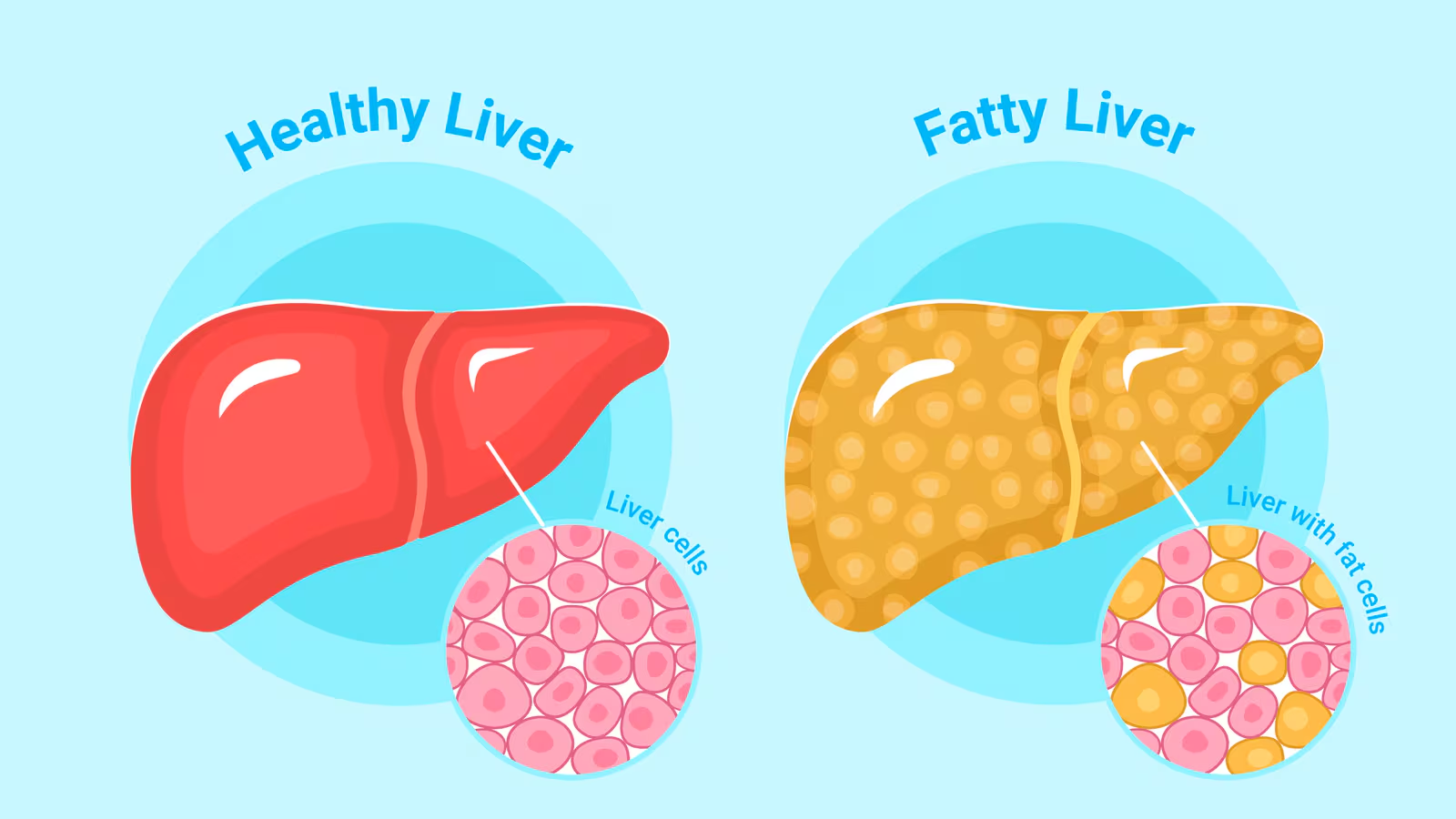
Fatty liver disease, increasingly common due to sedentary lifestyles and obesity, can progress from fat buildup to irreversible scarring and liver failure if not treated early. Dr. Wendi emphasizes the importance of early action to prevent serious liver damage and highlights the stages of disease progression, including fibrosis and cirrhosis.
A study by the University of Edinburgh found that preschoolers who struggle with emotional regulation are more likely to exhibit ADHD symptoms and mental health issues by age seven. Analyzing data from the UK Millennium Cohort Study, researchers linked slower emotional development to conduct problems and internalizing behaviors like sadness. The findings suggest that early monitoring of emotional regulation could help identify children at risk for mental health challenges, allowing for targeted interventions.
Researchers have developed a machine-learning tool that uses MRI brain scans to accurately identify individuals at high risk of psychosis, achieving an 85% accuracy rate in training and 73% using new data. This innovative approach offers a promising avenue for early intervention in psychosis, potentially improving treatment outcomes. The study involved over 2,000 participants from 21 global locations, highlighting the tool’s potential in diverse clinical settings. By detecting structural brain differences before the onset of psychosis, this tool marks a significant advancement in psychiatric care, aiming for better prediction and prevention strategies.
A study led by the University of Toronto found that 50% of youth accessing mental health services exhibit Psychosis Spectrum Symptoms (PSS), indicating a higher prevalence than anticipated. The study aims to identify early predictors of psychosis spectrum disorder and improve intervention effectiveness by integrating research assessments into clinical practice and involving youth in a patient-facing dashboard. The goal is to develop new strategies for early identification and better characterize the mental health needs of at-risk youth, with the ultimate aim of improving youth mental health outcomes.
A study led by researchers from A*STAR’s Singapore Institute for Clinical Sciences found that children exposed to early life adversity (ELA) exhibit accelerated brain development during the preschool years as an adaptive mechanism to adverse circumstances. This acceleration may lead to reduced neuroplasticity and increased risk of cognitive and mental health issues later in life. The study highlights the importance of early intervention to improve outcomes for children exposed to ELA and suggests potential areas for future investigation, including the effects of ELA on premature brain aging and the effectiveness of intervention strategies.
A comprehensive study analyzing over 75 studies involving more than eight million children reveals that moderate preterm birth (32-38 weeks) is associated with an increased risk of developmental disorders such as cerebral palsy, cognitive impairment, and language delay. While the risks for each child are small, the population-level impact is significant, given the prevalence of moderately preterm births. The study emphasizes the need for better understanding, support, and early intervention for these children, highlighting the role of healthcare professionals and educators in providing tailored assistance.
Higher levels of visceral abdominal fat in midlife are associated with an increased risk of developing Alzheimer's disease, according to a study presented at the annual meeting of the Radiological Society of North America. The research, involving brain scans of 54 participants, suggests that this type of fat is linked to early brain changes and inflammation, highlighting its potential as a target for early intervention in Alzheimer's disease. The findings may contribute to earlier diagnosis and intervention strategies for the disease.
Infants with stunted growth show disruptions in cognitive abilities as early as six months, according to a study from the University of East Anglia. The research reveals that these infants have compromised visual working memory, leading to higher distractibility and poorer cognitive outcomes by age one. This is the first study to link stunted growth to functional brain differences in infancy, highlighting the importance of early intervention to counter cognitive disadvantages later in life.
Carpal Tunnel Syndrome is a commonly misunderstood medical condition that affects millions of people in the United States. Often referred to as an invisible condition, its symptoms are not always readily apparent, leading many to underestimate its impact. Early warning signs, such as tingling or numbness in the hand, are often brushed aside, and some adopt a wait-and-see approach, hoping the discomfort will resolve on its own. However, neglecting Carpal Tunnel Syndrome can lead to nerve damage, muscle atrophy, pain, discomfort, and sleep disturbances. Early intervention is crucial for effective treatment and a better quality of life.