Tag

Dna Mutations

All articles tagged with #dna mutations

Research Explains Why Most Long-Term Smokers Avoid Lung Cancer

Originally Published 7 months ago — by The Brighter Side of News

Featured image for Research Explains Why Most Long-Term Smokers Avoid Lung Cancer
Source: The Brighter Side of News

New research using advanced genomic techniques reveals that while smoking increases DNA mutations in lung cells, most smokers do not develop lung cancer, possibly due to protective genetic mechanisms that limit mutation accumulation, opening new avenues for early detection and prevention.

"The Impact of Age on Cancer Risk"

Originally Published 1 year ago — by BBC.com

Featured image for "The Impact of Age on Cancer Risk"
Source: BBC.com

As we age, our cells accumulate DNA damage and mutations, leading to an increased risk of cancer. The decline in repair mechanisms and the impairment of immune cells contribute to this heightened risk. Additionally, age-related changes in cells may lead to increased randomness and instability in the genome, potentially triggering cancer. Scientists are exploring new treatments, such as targeting senescent cells and restoring normal tumour-suppressing functions, in hopes of reversing age-related changes and reducing the healthcare burden associated with an aging population.

"Targeting Tumour Weakness: A Promising Breakthrough in Cancer Treatment"

Originally Published 1 year ago — by Daily Mail

Featured image for "Targeting Tumour Weakness: A Promising Breakthrough in Cancer Treatment"
Source: Daily Mail

Scientists have discovered a "vital weak spot" in certain types of cancers, linking DNA mutations in mitochondria to the effectiveness of immunotherapy drugs. By "rewiring" the DNA of mitochondria, tumors can become up to two and a half times more likely to respond to drugs like nivolumab. This breakthrough could help doctors identify which patients will benefit most from immunotherapy before starting treatment and potentially make treatment-resistant cancers more sensitive to these drugs. The technology behind the discovery is now being patented to develop new treatments that disrupt the energy sources cancer uses to spread and grow.

"Cracking the Code: David Sinclair's Groundbreaking Theory on Aging"

Originally Published 2 years ago — by Lifespan.io News

Featured image for "Cracking the Code: David Sinclair's Groundbreaking Theory on Aging"
Source: Lifespan.io News

Geroscientist David Sinclair presents his "Information Theory of Aging," which argues that epigenetic changes, rather than DNA mutations, are the underlying cause of aging. The theory suggests that the loss of regulatory epigenetic information leads to cellular confusion and dysfunction, contributing to the manifestations of aging. Sinclair highlights the potential of cellular reprogramming techniques to reverse epigenetic dysregulation and rejuvenate cells. The theory draws inspiration from Claude Shannon's information theory of communication and proposes the existence of "passive" and "active" observer molecules that could preserve and correct epigenetic changes.

Smoking's DNA Mutations Fuel Cancer Growth, Study Finds

Originally Published 2 years ago — by Interesting Engineering

Featured image for Smoking's DNA Mutations Fuel Cancer Growth, Study Finds
Source: Interesting Engineering

A new study confirms that smoking tobacco can cause DNA mutations, known as "stop-gain mutations," that lead to cancer. These mutations instruct the body to stop producing specific proteins, hindering their ability to protect against cancer. The study also found that tumor-suppressor genes, which produce proteins that block abnormal cell growth, were particularly affected by these mutations, resulting in uncontrolled cancer cell proliferation.

Smoking hinders cancer defenses, making treatment more difficult: Study

Originally Published 2 years ago — by Medical Xpress

Featured image for Smoking hinders cancer defenses, making treatment more difficult: Study
Source: Medical Xpress

A study conducted by scientists at the Ontario Institute for Cancer Research has revealed that tobacco smoking causes cancer and makes it more difficult to treat by interfering with the body's cancer-fighting proteins. The study found that smoking leads to harmful changes in DNA known as 'stop-gain mutations,' which disrupt the formation of tumor suppressor proteins that prevent abnormal cell growth. The researchers also discovered that the amount of smoking directly correlates with the number of these mutations, making cancer more complex and resistant to treatment. The study highlights the damaging effects of smoking on DNA and emphasizes the importance of quitting smoking to reduce the risk of cancer.

"DeepMind's AI Revolutionizes Genetic Mutation Assessment for Disease Prevention"

Originally Published 2 years ago — by The Guardian

Featured image for "DeepMind's AI Revolutionizes Genetic Mutation Assessment for Disease Prevention"
Source: The Guardian

Scientists at Google DeepMind have developed an AI program called AlphaMissense that can predict whether genetic mutations are harmless or likely to cause disease. The program focuses on missense mutations, where a single letter is misspelled in the DNA code, which can disrupt protein function and lead to various disorders. AlphaMissense outperforms existing prediction programs and provides a score indicating the riskiness of a mutation. The researchers have released a free online catalogue of predictions to aid geneticists and clinicians in studying mutations and diagnosing rare disorders. While the model shows promise, further verification and understanding of its complexity are needed before it can be widely used in clinical settings.

Enhancing Genome Editing with the NICER Method

Originally Published 2 years ago — by Phys.org

Featured image for Enhancing Genome Editing with the NICER Method
Source: Phys.org

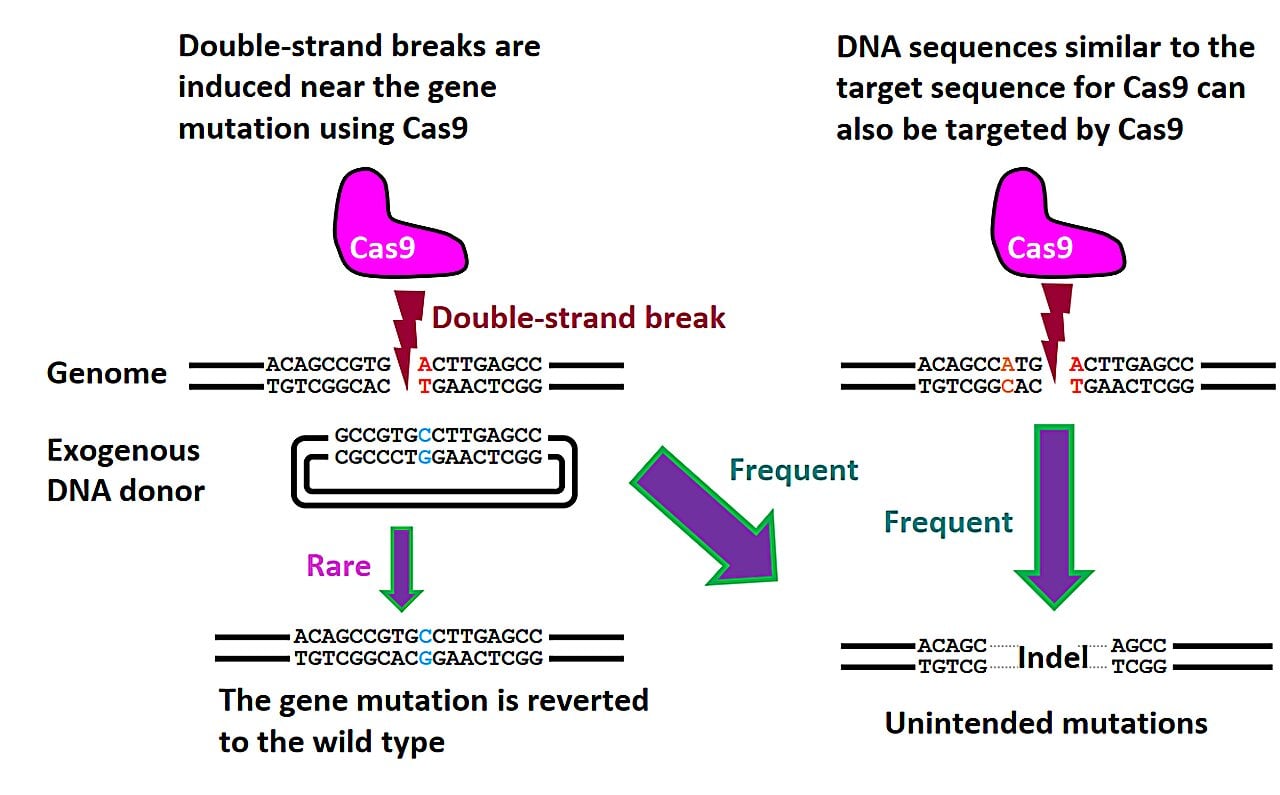
Researchers in Japan have developed a new gene editing technique called NICER, which significantly reduces unintended DNA mutations compared to the conventional CRISPR/Cas9 method. NICER involves creating multiple small cuts in single DNA strands using an enzyme called a nickase, which induces single-strand breaks that are typically repaired without causing mutations. The technique has shown promising results in correcting heterozygous mutations in cells and restoring the expression of disease-causing genes. NICER may provide a safer alternative for treating genetic diseases caused by mutations.

The Genetic Factors Behind Cancer Susceptibility

Originally Published 2 years ago — by Study Finds

Featured image for The Genetic Factors Behind Cancer Susceptibility
Source: Study Finds

Australian researchers have discovered a significant link between a person's risk for cancer and circular RNAs (circular genetic fragments) found within our cells. These circular RNAs can bind to DNA, leading to DNA mutations that can cause cancer. The study found that a specific circular RNA was present at higher levels in infants who later developed leukemia, suggesting that the abundance of circular RNA molecules within certain individuals' cells is a major determining factor in why some individuals develop cancer-causing genes while others do not. This breakthrough opens doors for using circular RNAs as therapeutic targets and disease markers, potentially leading to improved treatment options.

Uncovering the Catalyst for Human Brain Evolution

Originally Published 2 years ago — by Boing Boing

Featured image for Uncovering the Catalyst for Human Brain Evolution
Source: Boing Boing

A new study suggests that the genes for large brain size in humans emerged from random mutations in DNA sequences called human accelerated regions (HARs), which act as gene enhancers controlling brain formation during embryonic development. The study found that 30% of HARs in humans were in areas of the genome where the DNA was folded differently, indicating that structural variations in the human genome likely came from a random mutation during reproduction. This theory suggests that human large brain size occurred by discontinuous random mutation, which was then selected for, rather than natural selection gradually acting on normal variation in brain size.