Tag

Crisprcas9

All articles tagged with #crisprcas9

science-and-technology1 year ago

"Controversial Scientist Resumes Genome-Editing Research After Jail Release"

He Jiankui, the controversial Chinese scientist who was jailed for creating genetically modified babies, has resumed his research into human genome embryo editing after his release from prison. He claims that his new experiments comply with ethical standards and will focus on treating rare genetic disorders. While expressing some regrets about the haste of his previous work, He remains resolute about its safety and validity, stating that the children born from his experiments have shown no signs of illness or off-target genetic changes. He also pledged not to create any more modified humans but believes that society will eventually accept genetic engineering of this kind in the future.

health2 years ago

"Early findings raise concerns about the safety of gene editing as an HIV cure strategy"

Gene editing with CRISPR/Cas9, a potential strategy for an HIV cure, may lead to unintended changes in nearby gene sequences, potentially activating genes that could contribute to cancer development, according to Dutch researchers. The study found that while the editing machinery accurately targeted the HIV provirus sequences, the DNA repair process of the cells resulted in the random removal or addition of DNA sequences in the neighboring non-viral regions. These findings highlight the need for further research to fully understand the risks and benefits of gene editing technologies for HIV cure strategies.

science-and-technology2 years ago

Efficient non-transgenic editing of perennial plants using co-editing strategy

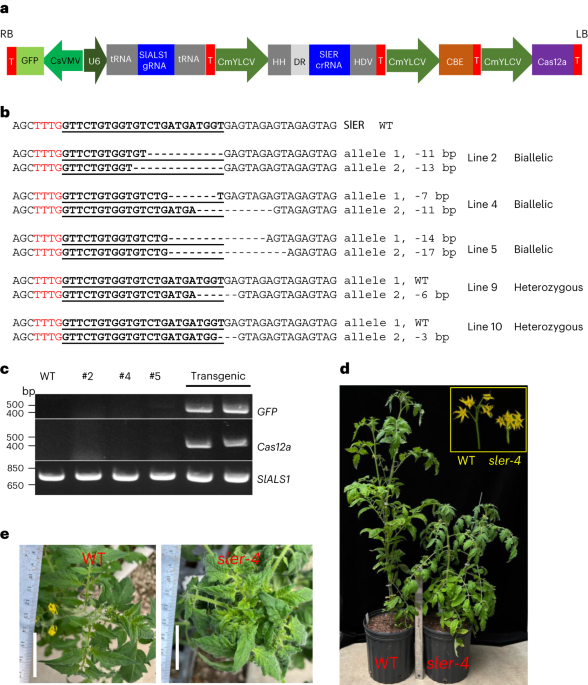
Researchers have developed a co-editing strategy for transgene-free genome editing in vegetatively propagated and perennial plant species in the T0 generation. By utilizing CRISPR/Cas9 technology and transient expression of DNA or RNA, the researchers achieved efficient and precise genome editing in various plant species, including wheat, maize, rice, citrus, tomato, potato, and apple. This approach offers a promising method for generating genetically stable and transgene-free edited plants, with potential applications in agriculture and crop improvement.

science-and-technology2 years ago

Enhancing Genome Editing with the NICER Method

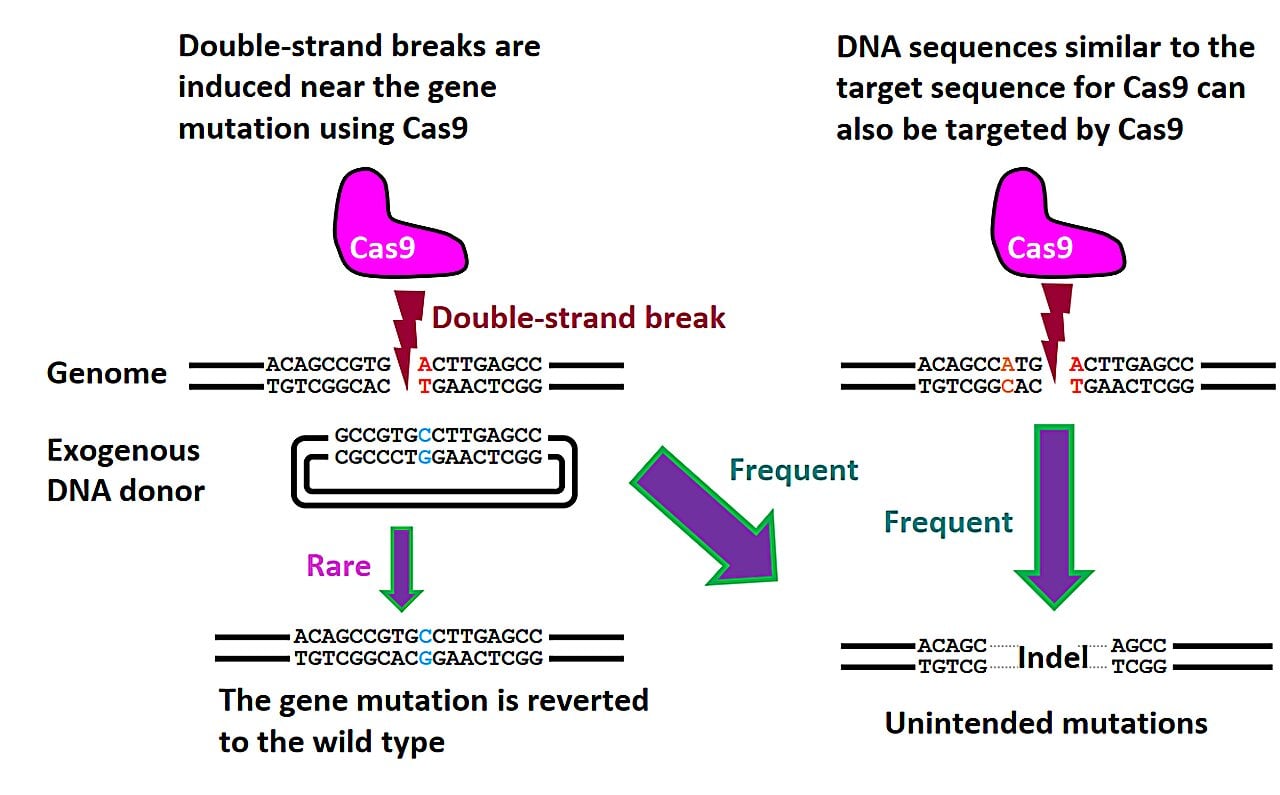
Researchers in Japan have developed a new gene editing technique called NICER, which significantly reduces unintended DNA mutations compared to the conventional CRISPR/Cas9 method. NICER involves creating multiple small cuts in single DNA strands using an enzyme called a nickase, which induces single-strand breaks that are typically repaired without causing mutations. The technique has shown promising results in correcting heterozygous mutations in cells and restoring the expression of disease-causing genes. NICER may provide a safer alternative for treating genetic diseases caused by mutations.

science-and-technology2 years ago

"Serendipitous Discovery Triples CRISPR Efficiency"

Researchers at UC Santa Barbara have developed a method to enhance the efficiency of CRISPR/Cas9 gene editing without using viral material for the delivery of the genetic template. The method employs interstrand crosslinks to stimulate homology-directed repair, increasing the efficiency threefold without raising mutation frequencies. These crosslinks were found to boost the cell’s natural repair mechanisms and improve the likelihood of successful gene editing. The discovery was a happy accident, and the method will find the most use in ex-vivo gene editing applications, such as disease research and preclinical work.

health2 years ago

Revolutionary mRNA Nanoparticles Combat Lung Diseases.

MIT and University of Massachusetts Medical School engineers have developed nanoparticles that can deliver messenger RNA encoding useful proteins to the lungs, with potential applications in treating cystic fibrosis and other lung diseases. The particles facilitated efficient delivery of mRNA encoding CRISPR/Cas9 gene-editing components, paving the way for therapeutic nanoparticles capable of replacing disease-causing genes. The researchers are working on aerosolizing the nanoparticles for inhalation and plan to test the particles in a mouse model of cystic fibrosis and other lung diseases.

health2 years ago

Nanoparticles enable gene editing and protein delivery in lungs.

Researchers at MIT and the University of Massachusetts Medical School have developed a new type of nanoparticle that can be administered to the lungs, where it can deliver messenger RNA encoding useful proteins. The particles could offer an inhalable treatment for cystic fibrosis and other diseases of the lung. The researchers used the particles to deliver mRNA encoding the machinery needed for CRISPR/Cas9 gene editing, which could open the door to designing therapeutic nanoparticles that can snip out and replace disease-causing genes. The new particles also break down quickly, allowing them to be cleared from the lung within a few days and reducing the risk of inflammation.