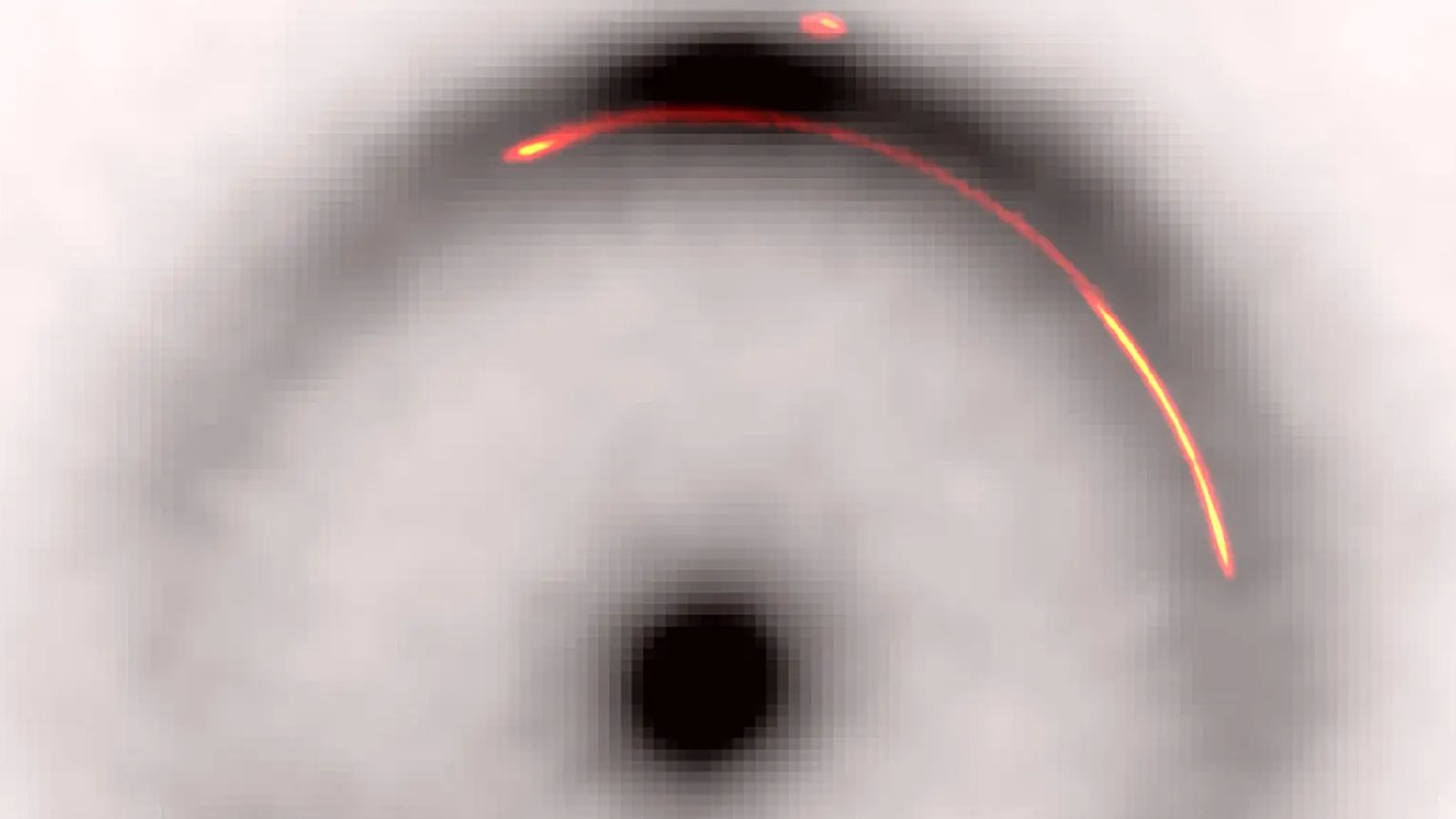
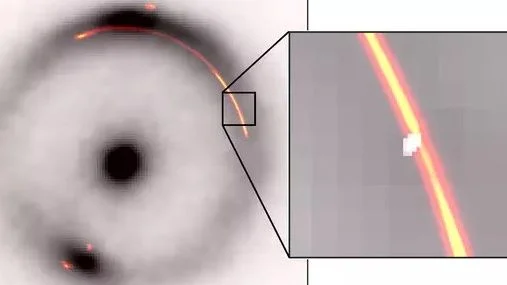
Astronomers discovered a small, likely dark matter clump within a distant Einstein ring, providing new insights into dark matter's properties and distribution, using advanced radio telescope data and novel analysis methods, marking a significant step in understanding the universe's unseen components.
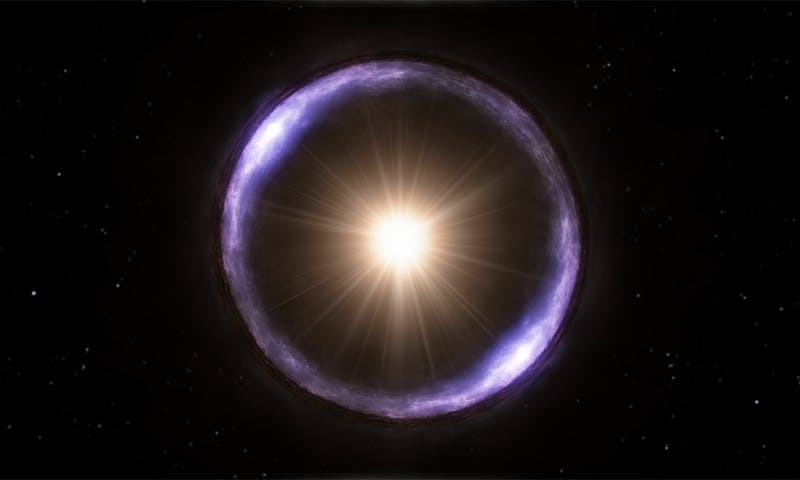
Scientists have potentially identified the smallest clump of pure dark matter ever observed, using gravitational lensing of an Einstein ring, which supports the cold dark matter theory and helps constrain dark matter properties.
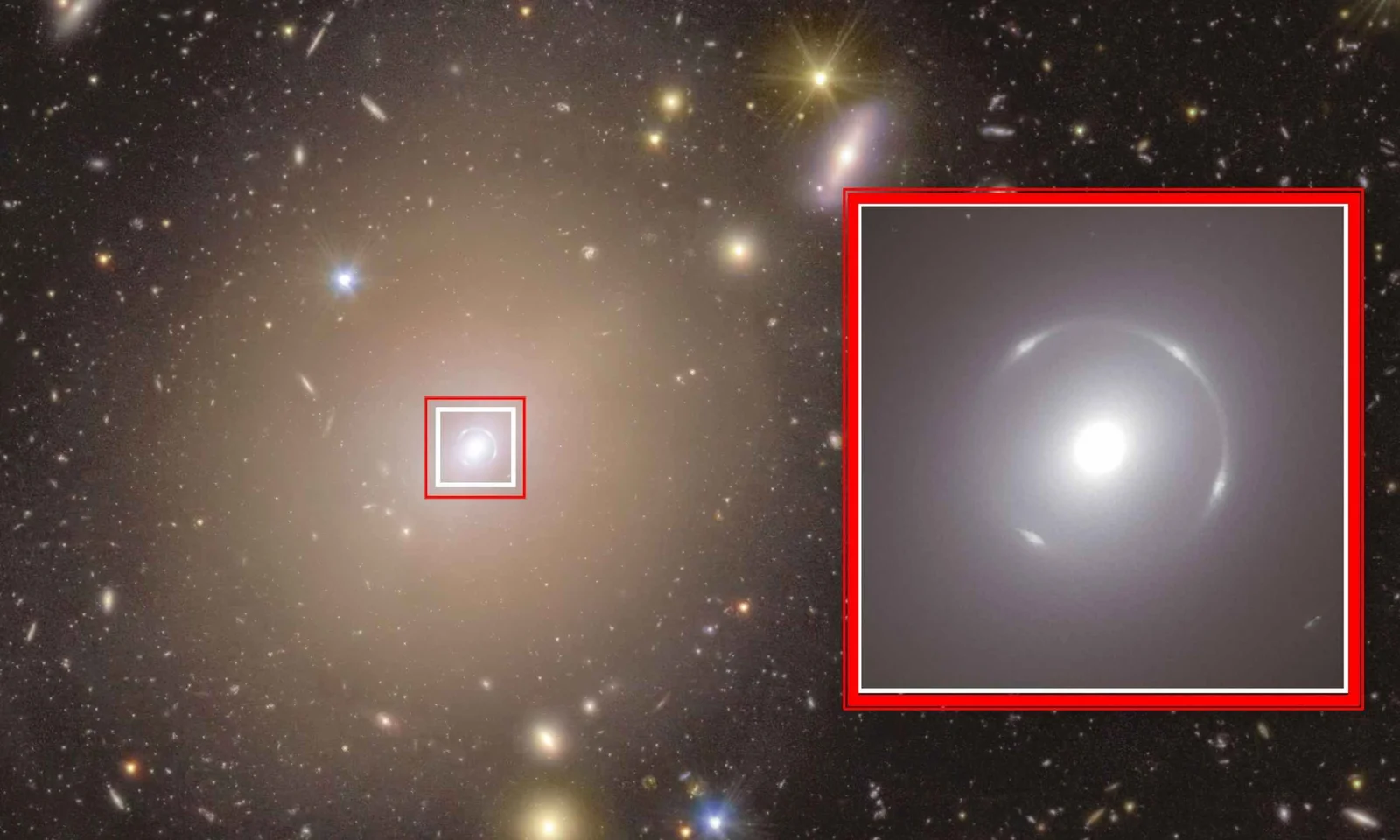
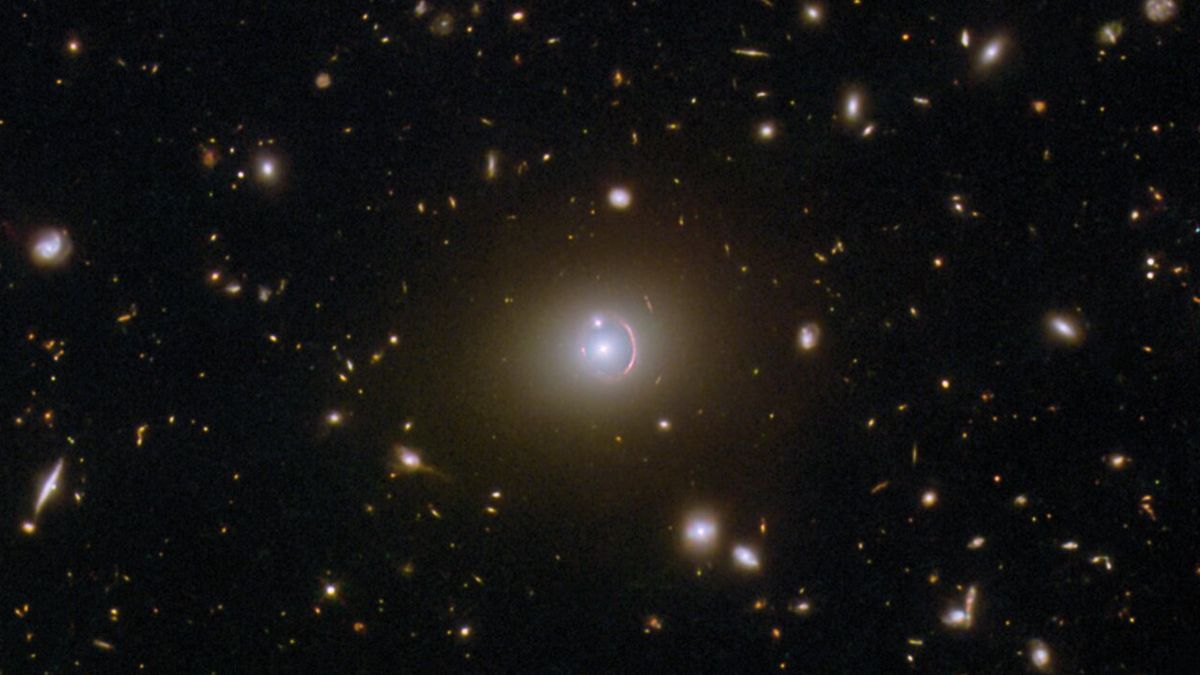
A nearby galaxy, NGC 6505, was found to contain a complete Einstein ring, revealing new insights into the galaxy's mass distribution, dark matter content, and stellar population, thanks to high-quality imaging from the Euclid telescope and follow-up spectroscopy. This discovery enhances understanding of galaxy cores and demonstrates Euclid's potential for future cosmological studies.
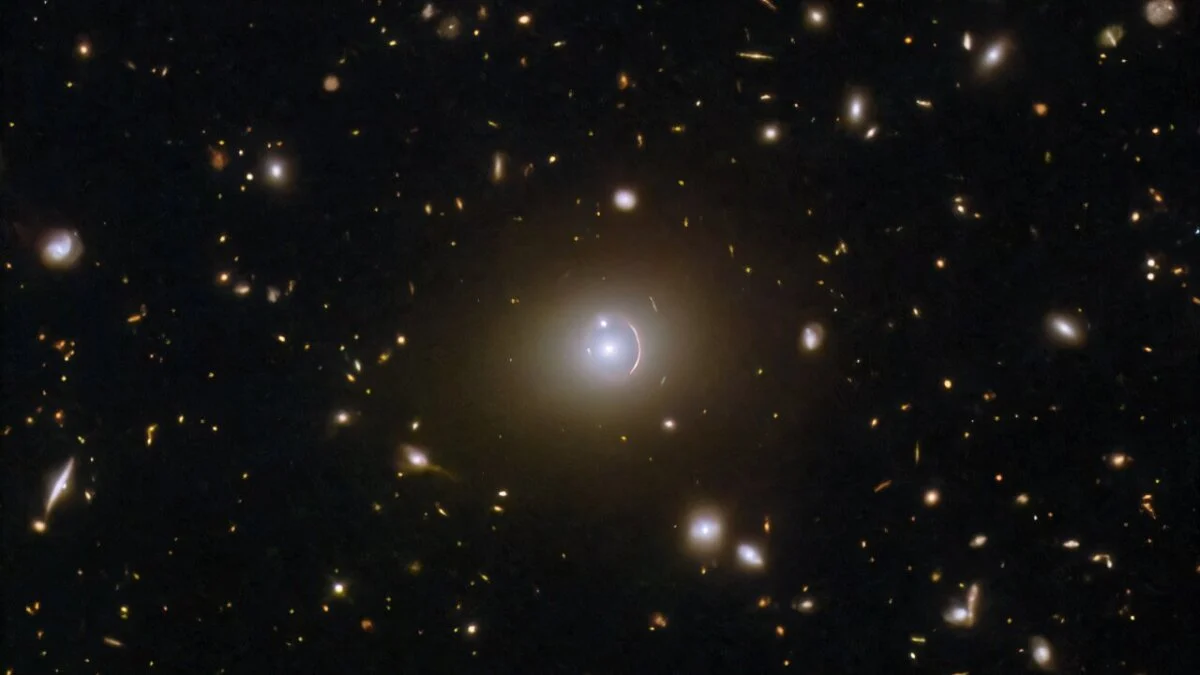
A distant galaxy from 11 billion years ago was captured by the Hubble Space Telescope, revealing a gravitational lensing effect known as an Einstein ring caused by a closer galaxy acting as a magnifying glass, illustrating a natural cosmic optical illusion.
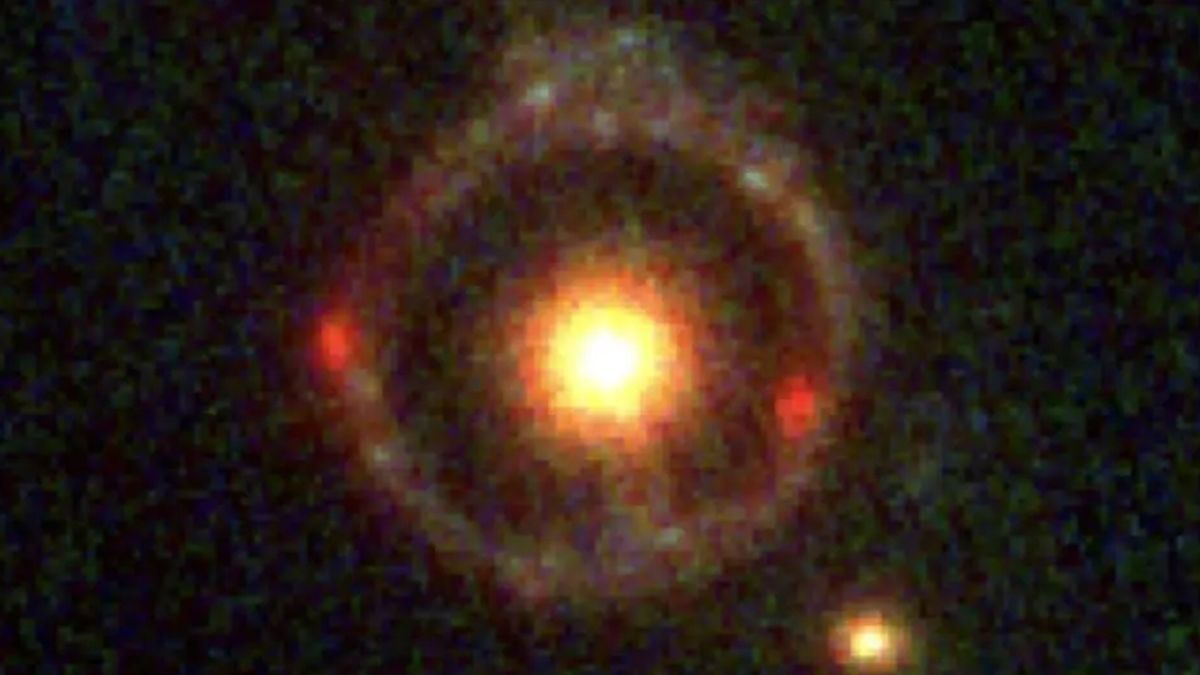
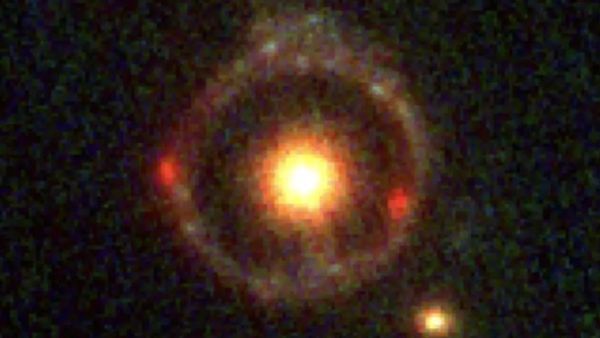
Researchers have discovered a dense galaxy surrounded by an "Einstein ring" using the James Webb Space Telescope (JWST), and have proposed that the galaxy's unusual density is due to a massive halo of dark matter compressing regular matter into it. This explanation could account for the galaxy's high mass, even after considering dark matter. The discovery, named JWST-ER1, is the most distant gravitationally lensed object ever found, and researchers hope to find more such objects to further test their theory.
A dense and compact galaxy, JWST-ER1, observed by the James Webb Space Telescope suggests that dark matter interacts with itself. The galaxy, located 17 billion light-years away, forms a perfect "Einstein ring," providing physicists with a valuable probe for measuring the mass enclosed within the ring's radius. Analysis indicates that dark matter explains only about half of the galaxy's mass, leading to the suggestion that its unusually high density could be due to a higher population of stars or self-interacting dark matter particles. This discovery could provide insights into the nature of dark matter and its behavior, with the hope that the James Webb Space Telescope will reveal more about this mysterious substance.
The James Webb Space Telescope (JWST) has discovered an ancient galaxy, JWST-ER1g, featuring a rare Einstein ring formed through strong gravitational lensing, providing valuable insights into dark matter properties and density. Analysis of the galaxy's dark matter halo suggests a higher density than expected, potentially due to compression by collapsing ordinary matter. This unique lensing object formed 3.4 billion years after the Big Bang and offers a significant opportunity to study dark matter. The JWST's discovery presents an unprecedented chance to observe ancient galaxies and learn more about dark matter.
The Hubble Space Telescope captured a rare Einstein ring, named HerS J020941.1+001557, made of light from a galaxy 19.5 billion light-years away, caused by gravitational lensing. This phenomenon occurs when light from a distant galaxy is bent around a closer galaxy or black hole, magnifying and warping the light. The ring aligns perfectly with another galaxy, resembling a diamond-studded engagement ring. The light's red hue is due to cosmic expansion, and studying these rings can help astrophysicists understand dark matter. The James Webb Space Telescope is expected to find more Einstein rings, providing further insight into the early universe and dark matter.
Astrophysicists have discovered a rare complete Einstein ring, a gravitational lensing phenomenon, using the James Webb Space Telescope. This ring offers insights into the early formation of massive galaxies and the mysterious nature of dark matter. The ring's size suggests the lensing galaxy has more mass than visible stars can account for, leading to speculation about the presence of hidden stars or unaccounted dark matter. This discovery highlights the importance of manual data analysis and inspires a sense of wonder about the universe.
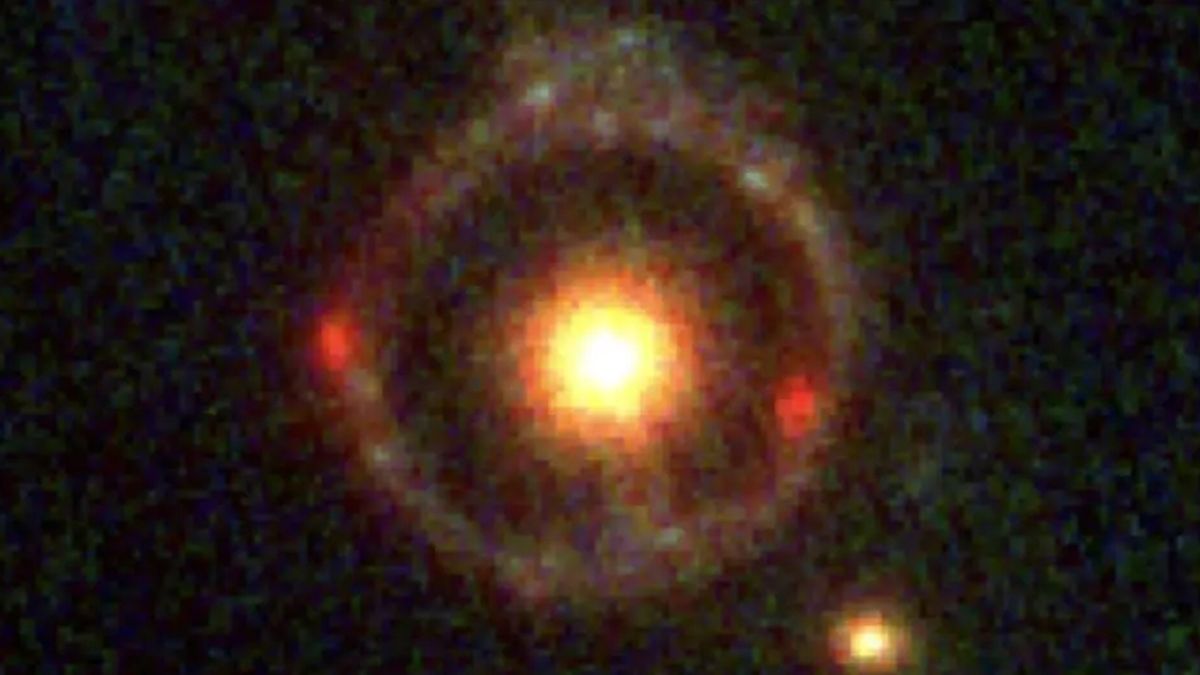
The James Webb Space Telescope (JWST) has captured images of the most distant Einstein ring ever seen, located 21 billion light-years away. An Einstein ring is a rare type of gravitationally lensed object that forms a complete circle around a closer object, resulting in a halo of warped light. The newly discovered Einstein ring, named JWST-ER1, consists of a compact galaxy acting as the lensing object and a more distant galaxy forming the luminous ring. The lensing galaxy is unusually dense, with a mass equivalent to around 650 billion suns, suggesting the presence of additional mass beyond dark matter. Further research is needed to understand the nature of these ancient, massive galaxies.
The James Webb Space Telescope (JWST) has captured images of the farthest-ever Einstein ring, a halo of warped light located 21 billion light-years away. This record-breaking discovery surrounds a dense galaxy and is the most distant gravitationally lensed object ever observed. Gravitational lensing occurs when the gravity of a massive foreground object warps space-time, causing light from more distant objects to appear curved. The complete Einstein ring, named JWST-ER1, was found within the COSMOS-Web survey and consists of a compact galaxy acting as the lensing object and a more distant galaxy forming the luminous ring. The lensing galaxy's unusually high mass suggests the presence of dark matter, but additional mass is still unexplained. Further research is needed to understand the nature of these ancient, dense galaxies.
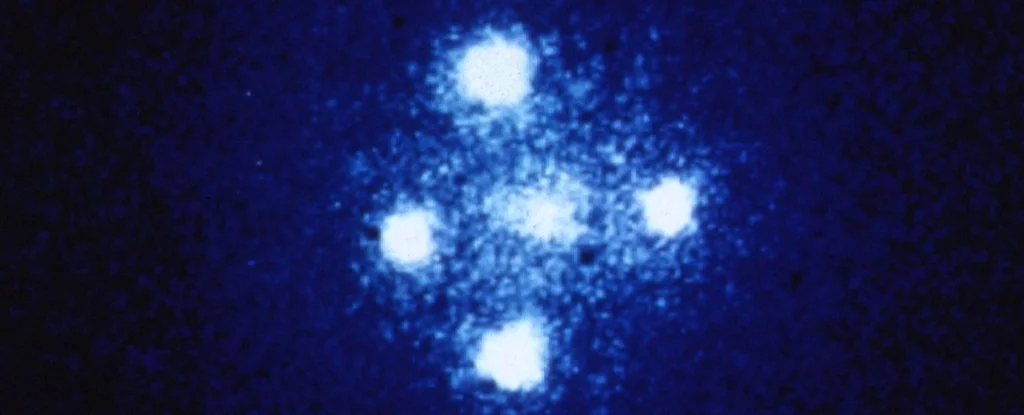
An international team of researchers led by Ariel Goobar of the Oskar Klein Centre at Stockholm University discovered an unusual type Ia supernova, SN Zwicky (SN 2022qmx), and observed an "Einstein ring", an unusual phenomenon predicted by Einstein's theory of general relativity where the presence of a gravitational lens in the foreground amplifies light from a distant object. The team observed two very rare astronomical events that happened to coincide, and the discovery presents numerous opportunities for astronomers, including the ability to study SN Zwicky in greater detail and further investigate the mysteries of gravitational lenses.