Tag

Disease Progression

All articles tagged with #disease progression

health10 days ago

Common Diabetes Treatment May Exacerbate the Disease, Study Finds

A new study warns that long-term use of sulphonylureas, common diabetes drugs, may impair insulin-producing beta cells by causing them to lose their functional identity, potentially accelerating the progression of type 2 diabetes. The research suggests that these drugs could contribute to the decline in treatment efficacy over time, but also highlights that loss of cell identity might be reversible, opening avenues for future therapies.

health1 year ago

Long-term Tysabri use shows sustained disease inactivity in patients

A study from Hungary found that a majority of relapsing-remitting multiple sclerosis (RRMS) patients treated with Tysabri (natalizumab) experienced no evidence of disease activity (NEDA-3) for up to six years. The study, involving 121 patients, showed that 80.2% reached NEDA-3, with the highest rate in the first year. Tysabri stabilized dexterity, walking function, and improved cognition, while maintaining quality of life. Patients with lower disability scores were more likely to achieve NEDA-3, and those previously on injectable therapies were less likely to reach this outcome.

health1 year ago

Gut Microbiome's Role in Rheumatoid Arthritis Uncovered

Research led by the University of Leeds has identified specific changes in the gut microbiome of individuals at risk of rheumatoid arthritis (RA), potentially uncovering mechanisms of disease onset. The study found significant differences in the abundance of Prevotellaceae in individuals who progressed to RA, with gut microbiome instability observed around ten months before clinical arthritis onset. These findings suggest that understanding microbiome dynamics could enhance RA prediction, prevention, and personalized treatment strategies.

health-neuroscience1 year ago

"Predicting Parkinson's Progression with Eye Tests"

Optical coherence tomography, commonly used in eye exams, can monitor neurodegeneration in Parkinson’s disease patients by measuring the thickness of the retina, which often precedes cognitive and motor decline. This method offers a potential early indicator of disease progression, suggesting that routine eye exams could become a non-invasive tool for predicting the future severity of Parkinson’s symptoms and aiding in more targeted treatment strategies.

health1 year ago

"GLP-1 Drug Shows Promise in Slowing Parkinson's Progression, Study Finds"

Researchers have found that a type 2 diabetes medication called lixisenatide may slow the progression of symptoms in Parkinson's disease, supporting the theory that Parkinson's could be associated with insulin resistance in the brain. In a study, participants given lixisenatide showed essentially no progression of motor problems, while those given a placebo showed worsening symptoms. However, some participants receiving lixisenatide reported nausea and vomiting. The findings pave the way for larger phase 3 clinical trials and suggest that GLP-1R agonists have potential for treating Parkinson's.

health-and-medicine1 year ago

"Advanced Methods for Accurate Alzheimer's Progression Prediction"

Researchers at The University of Texas at Arlington have developed a new learning-based framework called DETree to accurately predict the progression of Alzheimer’s disease, surpassing the accuracy of existing prediction models. This tool can predict five clinical groups of Alzheimer’s disease development with high accuracy, providing valuable insights for patients and caregivers to plan future care. The framework has the potential to be applied to other diseases with multiple developmental stages, such as Parkinson’s and Huntington’s disease.

health2 years ago

"Predicting MS Progression: Spinal Cord Atrophy and Chronic Inflammation"

A new study highlights the association of spinal cord atrophy and brain paramagnetic rim lesions with progression independent of relapse activity (PIRA) in people with multiple sclerosis (MS). The research suggests that PIRA, or "silent progression," is accompanied by greater spinal cord atrophy and a higher number of lesions with chronic inflammation. These findings emphasize the need for early recognition of PIRA in clinical practice to prevent irreversible tissue loss and may lead to the development of targeted treatments for patients with PIRA.

medical2 years ago

"Relyvrio's CENTAUR Data Shows Promising Reduction in ALS Inflammatory Biomarkers"

Treatment with Relyvrio, an oral therapy developed by Amylyx Pharmaceuticals, significantly reduced blood levels of neuroinflammatory biomarkers in people with amyotrophic lateral sclerosis (ALS) as early as three months, according to a post hoc analysis of the CENTAUR trial. The reductions in biomarkers, C-reactive protein (CRP) and YKL-40, were correlated with slowing disease progression. Relyvrio also met its primary goal of slowing functional decline and extended median survival in ALS patients. Further analysis of neuroinflammatory biomarkers is planned in the ongoing Phase 3 PHOENIX trial.

medical-research2 years ago

Uncovering Factors Influencing ALS Progression: Groundbreaking Study in 2023

A recent analysis of data from the PRECISION-ALS project has identified genetic and clinical factors that can influence the progression of amyotrophic lateral sclerosis (ALS). Factors such as C9ORF72 genetic mutations, bulbar-onset disease, and faster functional declines were associated with shorter survival times. Variations were observed among different centers in the timing of interventions like feeding tube placement and noninvasive ventilation, highlighting the need for further investigation. The PRECISION-ALS project aims to better understand the natural history of ALS and improve outcomes for patients.

health2 years ago

"Promising Enzyme Inhibitor Halts Parkinson's Progression in Mice"

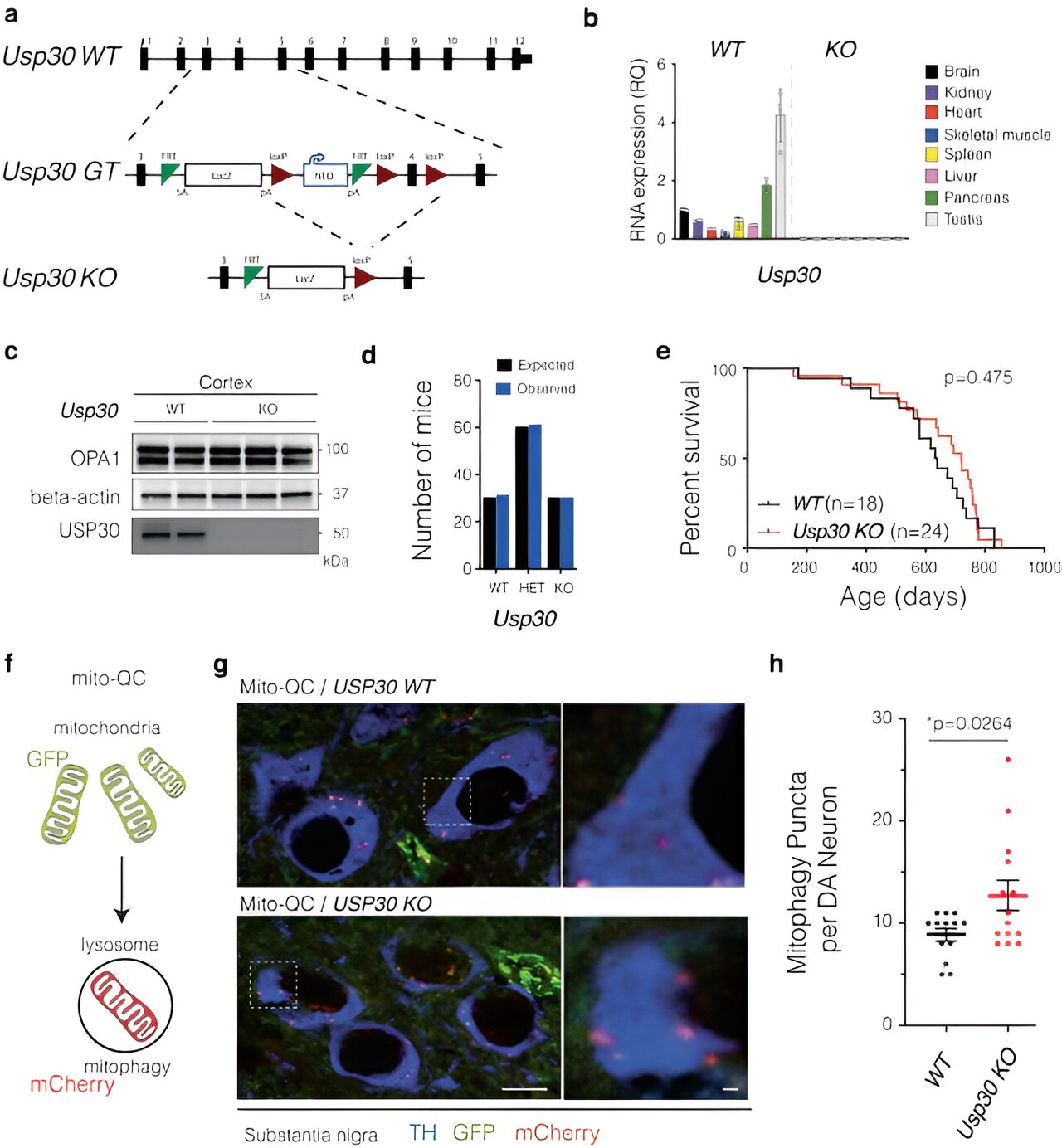
Inhibiting the enzyme USP30 in a mouse model has been found to protect dopamine-producing neurons, which are typically lost as Parkinson's disease progresses. This groundbreaking discovery offers a new therapeutic approach that could potentially slow or even prevent the progression of Parkinson's. The study utilized genetic knockout models and a proprietary molecule to block USP30, resulting in increased clearance of damaged mitochondria. These findings provide hope for the development of treatments that could modify the course of Parkinson's disease.

health2 years ago

Breakthrough: Scientists Successfully Stop Parkinson's Disease in Mice

Researchers at Beth Israel Deaconess Medical Center have made significant progress in understanding the progression of Parkinson's disease (PD) by inhibiting a specific enzyme in a mouse model. By targeting the enzyme USP30, which plays a role in the clearance of dysfunctional mitochondria in dopamine-producing neurons, the researchers were able to protect against the loss of these neurons and halt the development of PD-like motor symptoms. These findings offer potential for the development of therapeutics that could slow or prevent the progression of Parkinson's disease in humans.

health2 years ago

Unraveling the Mysteries of Multiple Sclerosis: Immune Cells, Fat Metabolism, and Biomarkers

Changes in immune cell activity, immune signaling molecules, iron regulation, and fat metabolism may explain why multiple sclerosis (MS) progresses differently in individuals. Researchers compared gene expression profiles in secondary progressive MS (SPMS) and benign MS, finding over 200 genes expressed at significantly altered levels in SPMS. SPMS patients showed increased activity in genes associated with B-cells and natural killer cells, as well as differences in cytokines, antigen presentation, lipid metabolism, and iron regulation. These findings provide insights into the molecular mechanisms underlying MS progression and may lead to the identification of new targets for preventing or slowing disease progression.

health2 years ago

Exercise and Tai Chi: Effective Ways to Slow Parkinson's Disease Progression

Researchers at Sacramento State are conducting a study to determine if exercise can slow the progression of Parkinson's disease. Led by Dr. Gwénaëlle Begue and Dr. Matt J.N. Brown, the study involves more than 20 participants who exercise both at home and in person at the Human Performance Research Laboratory. The goal is to find a level of exercise that can potentially slow or stop the symptoms of Parkinson's disease, offering hope for patients like Tony Cepeda, who experiences reduced symptoms when he works out.

health2 years ago

Tai Chi: A Long-Term Solution for Parkinson's Disease Symptoms

Tai chi, a Chinese martial art involving slow controlled movements, may help curb the symptoms and complications of Parkinson's disease for several years. A study found that practicing tai chi was associated with slower disease progression, lower medication doses, and improved overall symptoms, movement, balance, cognition, and quality of life. The prevalence of complications such as dyskinesia, dystonia, hallucinations, mild cognitive impairment, and restless leg syndrome was significantly lower in the tai chi group compared to the control group. However, further research is needed to establish cause and effect.