Tag

Beta Cells

All articles tagged with #beta cells

health10 days ago

Common Diabetes Treatment May Exacerbate the Disease, Study Finds

A new study warns that long-term use of sulphonylureas, common diabetes drugs, may impair insulin-producing beta cells by causing them to lose their functional identity, potentially accelerating the progression of type 2 diabetes. The research suggests that these drugs could contribute to the decline in treatment efficacy over time, but also highlights that loss of cell identity might be reversible, opening avenues for future therapies.


health2 months ago

Understanding and Recognizing Childhood Type 1 Diabetes

Scientists have discovered that type 1 diabetes is more severe in young children because their developing pancreas has smaller, more vulnerable beta cell clusters that are more easily destroyed by the immune system. This finding could lead to new treatments, including immunotherapy drugs like teplizumab, which may delay or prevent the disease in children.

health5 months ago

Mitochondrial Protein Misfolding Linked to Beta Cell Failure in Type 2 Diabetes

A study found that in type 2 diabetes, misfolded proteins accumulate in mitochondria of pancreatic beta cells, impairing their function. The protein LONP1, responsible for clearing damaged proteins, is reduced in diabetic cells, leading to cell death. Restoring LONP1 in mice improved cell health and glucose regulation, suggesting a potential new therapeutic target for the disease.

health1 year ago

New Drug Boosts Insulin Cells by 700%, Potential Diabetes Cure

Researchers from Mount Sinai and City of Hope have developed a drug therapy that significantly increases the number of insulin-producing beta cells in the pancreas, potentially curing diabetes. Using harmine and a GLP1 receptor agonist, the therapy increased beta cell numbers by 700% in mice, effectively reversing diabetes. This breakthrough offers hope for future regenerative therapies to treat diabetes in humans, though further trials and solutions to immune response issues are needed.

health1 year ago

Breakthrough Drug Boosts Insulin Cells by 700%, Reverses Diabetes in Mice

A new drug developed by scientists at Mount Sinai and City of Hope has shown a 700% increase in insulin-producing beta cells in diabetic mice, effectively reversing the disease within three months. The treatment, which combines a DYRK1A inhibitor and GLP1 receptor agonist, maintained its effects even after cessation. While promising, further research is needed to confirm its efficacy and safety in humans.

health2 years ago

"Revolutionary Breakthrough: Stem Cells on the Verge of Curing Type 1 Diabetes?"

A company named Vertex has successfully created beta cells from stem cells, offering hope for a potential cure for type 1 diabetes. In human trials, half-doses of these stem cell-derived beta cells were given to two patients experiencing severe hypoglycemia. One patient became insulin independent, while the other showed some activity but not enough for independence. Four more patients received a full dose, with one achieving insulin independence after a year. All six patients showed positive responses to the treatment, producing insulin and exhibiting positive C-peptide levels. The trial will now expand to include more patients, although the small sample size and variation in response highlight the need for further research. Side effects were related to immunosuppression. Overall, this development process shows promise for future therapies in treating type 1 diabetes.

health2 years ago

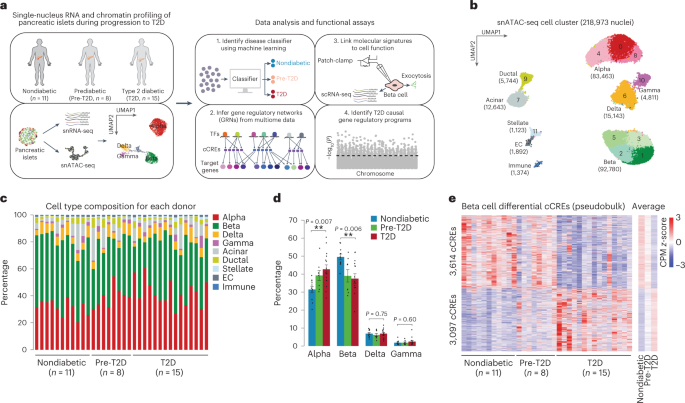
Uncovering Mechanisms of Beta Cell Dysfunction in Type 2 Diabetes through Multiomic Measurements and Genetics Integration.

Integrating genetics with single-cell multiomic measurements across disease states has identified mechanisms of beta cell dysfunction in type 2 diabetes. The study found that beta cells in type 2 diabetes patients have reduced expression of genes involved in insulin secretion and glucose metabolism, and increased expression of genes involved in stress response and inflammation. The findings provide insights into the underlying mechanisms of beta cell dysfunction in type 2 diabetes and could lead to the development of new treatments.

health2 years ago

Vitamin K's protective role against diabetes uncovered in new study.

Canadian researchers have identified a new role for vitamin K and gamma-carboxylation in beta cells and their potentially protective role in diabetes. The study explains how vitamin K helps prevent diabetes and could lead to new therapeutic applications for type 2 diabetes. Vitamin K is a micronutrient known for its role in blood clotting, and it has been suspected for several years that this vitamin may have other functions as well. The discovery is a welcome advance in the understanding of the mechanisms underlying diabetes, a disease that affects one in 11 people worldwide and has no cure.