Tag

Biologics

All articles tagged with #biologics

2025 FDA Approvals and Their Impact on Biopharma and Ophthalmology

Originally Published 9 days ago — by Nature

Featured image for 2025 FDA Approvals and Their Impact on Biopharma and Ophthalmology
Source: Nature

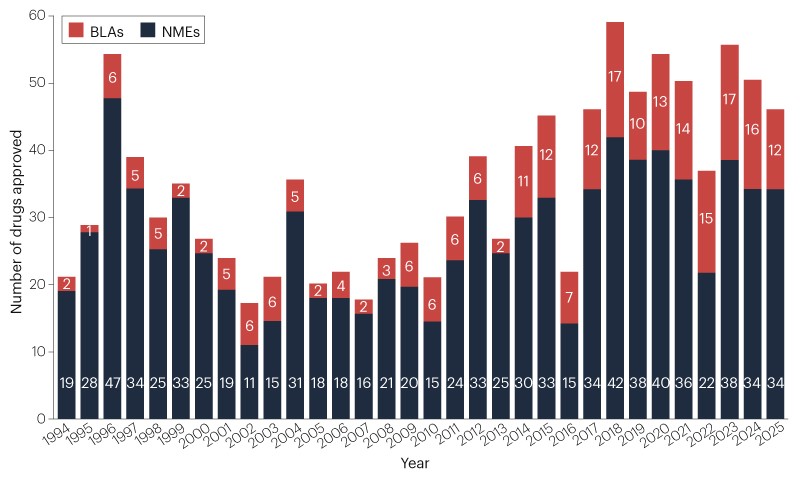
In 2025, the FDA approved 46 new therapeutic agents, including a diverse range of modalities such as biologics, kinase inhibitors, and gene therapies, with cancer remaining the most common therapeutic area. The year was marked by policy changes, staffing challenges, and the launch of new approval pathways, reflecting a tumultuous but innovative period for drug development.

FDA Accelerates Approval of Generic Biologics to Cut Drug Costs

Originally Published 2 months ago — by fda.gov

Featured image for FDA Accelerates Approval of Generic Biologics to Cut Drug Costs
Source: fda.gov

The FDA announced new measures to streamline the development and approval of biosimilar drugs, aiming to lower costs and increase access to affordable biologic treatments by simplifying testing requirements and promoting interchangeability, thereby fostering market competition and reducing healthcare expenses.

"FDA's 2023 Surge in Drug Approvals Marks a Record Year for Pharmaceuticals"

Originally Published 2 years ago — by Nature.com

Featured image for "FDA's 2023 Surge in Drug Approvals Marks a Record Year for Pharmaceuticals"
Source: Nature.com

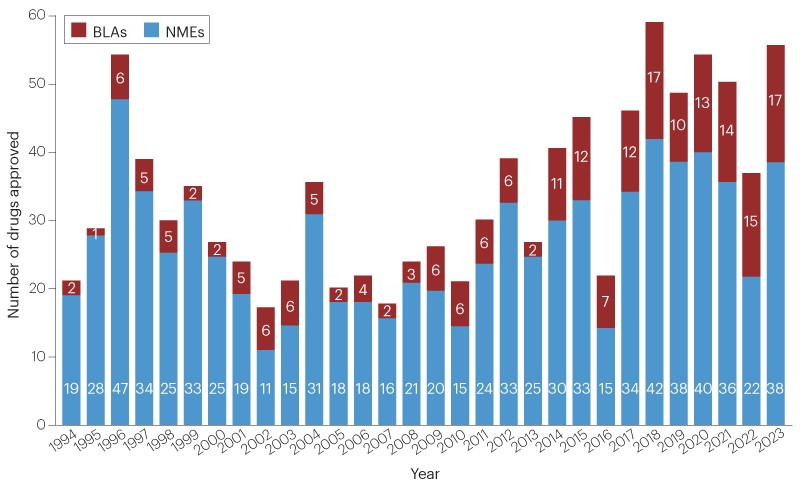
The FDA approved 55 new drugs in 2023, marking a significant increase from the previous year and setting a 10-year rolling average high. Oncology led with 24% of the approvals, followed by neurology. Notable approvals included the first CRISPR–Cas9-based gene editing product, two RSV vaccines, and a burst of gene therapies. AstraZeneca's capivasertib became the first AKT inhibitor approved for breast cancer, and several first-in-class cancer therapies were greenlit. In neurology, Biogen and Ionis's tofersen received accelerated approval for SOD1-mutated ALS, and Eisai and Biogen's lecanemab was approved for Alzheimer's disease. The approvals spanned various modalities, including nucleotide-based therapeutics and T-cell engaging bispecific antibodies.

"Enhancing Targeted Biologic Delivery to T Cells through Genetically Encoded Extracellular Vesicles"

Originally Published 2 years ago — by Nature.com

Featured image for "Enhancing Targeted Biologic Delivery to T Cells through Genetically Encoded Extracellular Vesicles"
Source: Nature.com

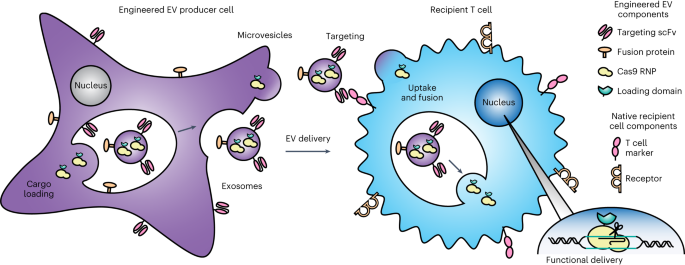
Scientists have developed a method to genetically encode multiple functionalities into extracellular vesicles (EVs) for targeted delivery of biologics to T cells. EVs, such as exosomes, have shown promise as vehicles for therapeutic cargo delivery, but their targeting capabilities have been limited. By engineering EVs to express specific ligands or antibodies on their surface, researchers were able to enhance their binding and uptake by T cells. This approach could potentially improve the efficacy of T cell-based therapies and expand their applications in treating various diseases.

Biden administration designates multiple regions as biotech and tech hubs

Originally Published 2 years ago — by KSHB 41 Kansas City News

Featured image for Biden administration designates multiple regions as biotech and tech hubs
Source: KSHB 41 Kansas City News

The Kansas City area has been chosen by the Biden administration as one of 31 technology hubs in the United States, with the aim of promoting innovation and job creation. The Kansas City Inclusive Biologics and Biomanufacturing Tech Hub (KC BioHub) will focus on the development and manufacturing of vaccines and related technologies. Led by BioNexus KC, the nonprofit organization will have the opportunity to receive up to $75 million in federal funding, attract additional investments, and expand the development of cutting-edge medicines and vaccines. The tech hubs program was established through bipartisan legislation, allocating $10 billion over five years.

Revolutionary German Guidelines Transform Asthma Treatment

Originally Published 2 years ago — by Medscape

Featured image for Revolutionary German Guidelines Transform Asthma Treatment
Source: Medscape

New German guidelines on the management of asthma aim to shift the paradigm from relying on inhalers to a symptom-prevention approach. The guidelines emphasize the use of anti-inflammatory therapy as the primary treatment option, with inhaled glucocorticoids being the cornerstone of therapy. Allergen immunotherapy and biologics are also effective anti-inflammatory treatments. The guidelines recommend the use of biomarkers, such as eosinophils, IgE levels, and the FeNO test, for diagnosis. Biologics are highlighted as highly effective for severe asthma cases, and a diagram is provided to help choose the most suitable biologic for each patient. The guidelines also address asthma management in children and adolescents, including advice on career choices and the interrelation between asthma and mental health.

Continuous Dosing with a Single Injection: The Future of Drug Delivery?

Originally Published 2 years ago — by WIRED

Featured image for Continuous Dosing with a Single Injection: The Future of Drug Delivery?
Source: WIRED

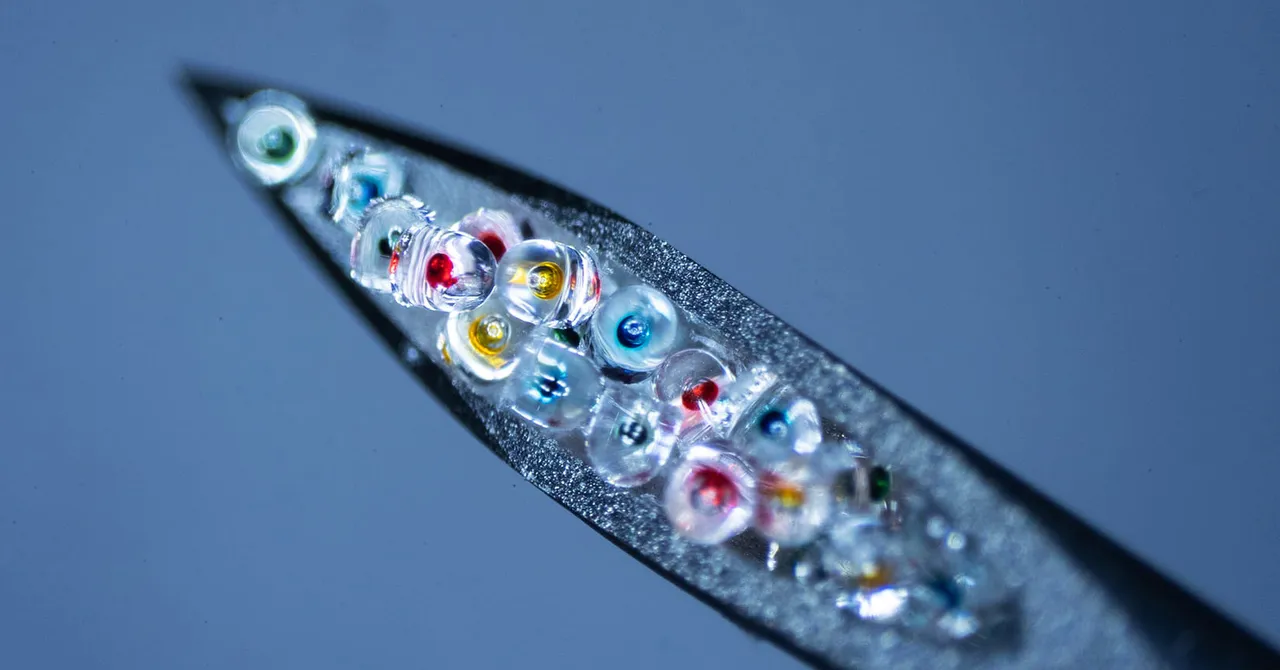
Researchers at Rice University have developed a drug-delivery system that uses microparticles to release medication in timed delays that can span days or even weeks. The system involves injecting hundreds of tiny microplastic particles, each encapsulating a small dose of a drug, into the body. By adjusting the molecular weight of the polymer used for each capsule, the scientists can control how fast they erode and release medication. The team envisions designing a library of these particles that can mimic different dosing schedules: daily, weekly, monthly, or something in between, depending on the patient.