Scientists using Europe's largest X-ray laser discovered a new form of ice, ice XXI, which remains solid at room temperature under extreme pressure, potentially impacting our understanding of icy worlds in space.
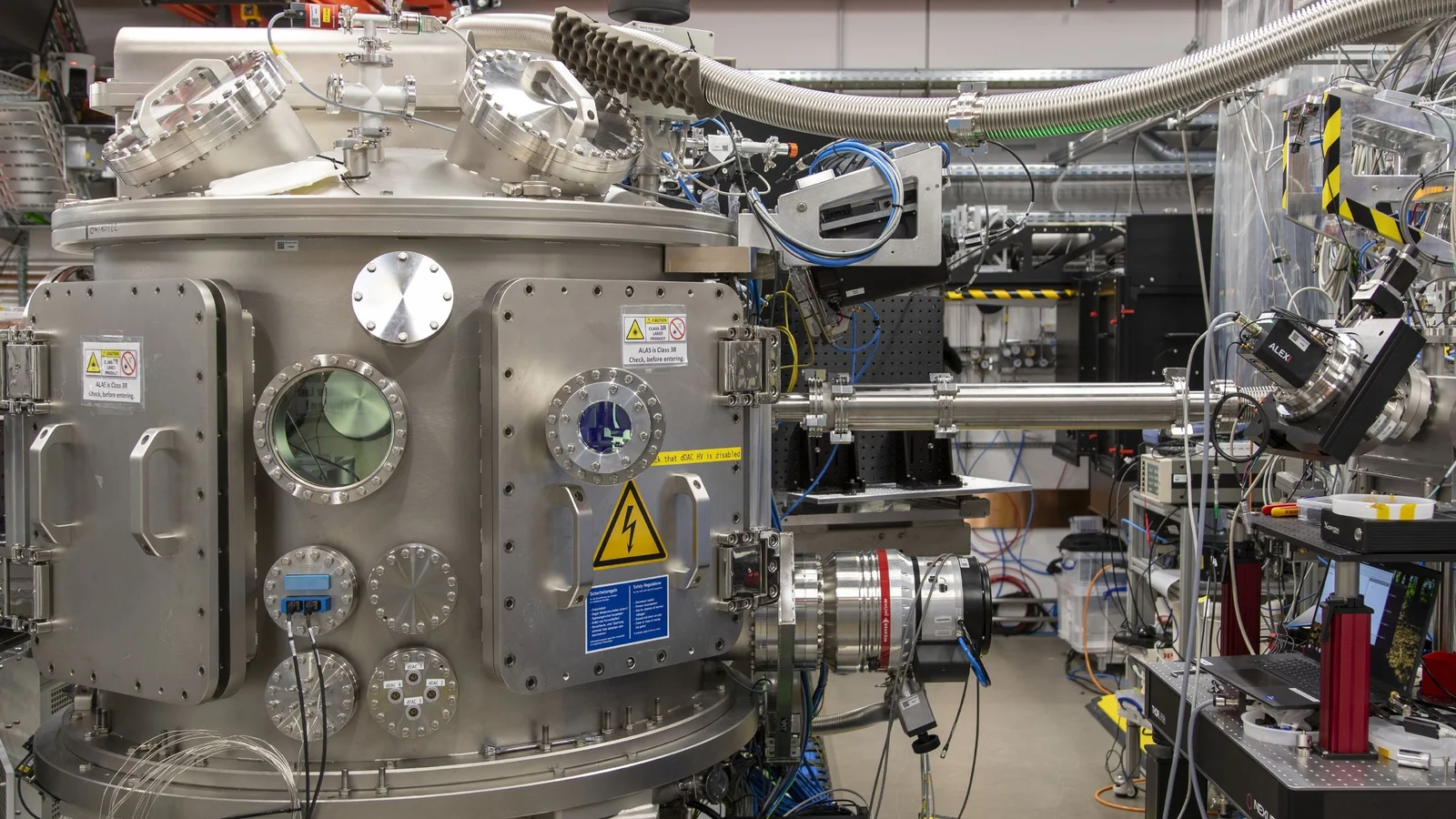
Scientists discovered a new phase of ice, called ice XXI, that forms at room temperature under extreme pressure using an X-ray laser experiment, suggesting more unknown ice phases could exist on icy planets and moons.
Scientists at Goethe University have directly measured the zero-point motion of atoms in molecules at their lowest energy state using advanced X-ray laser techniques, revealing coordinated atomic vibrations that classical physics cannot explain, thus providing new insights into quantum behavior.
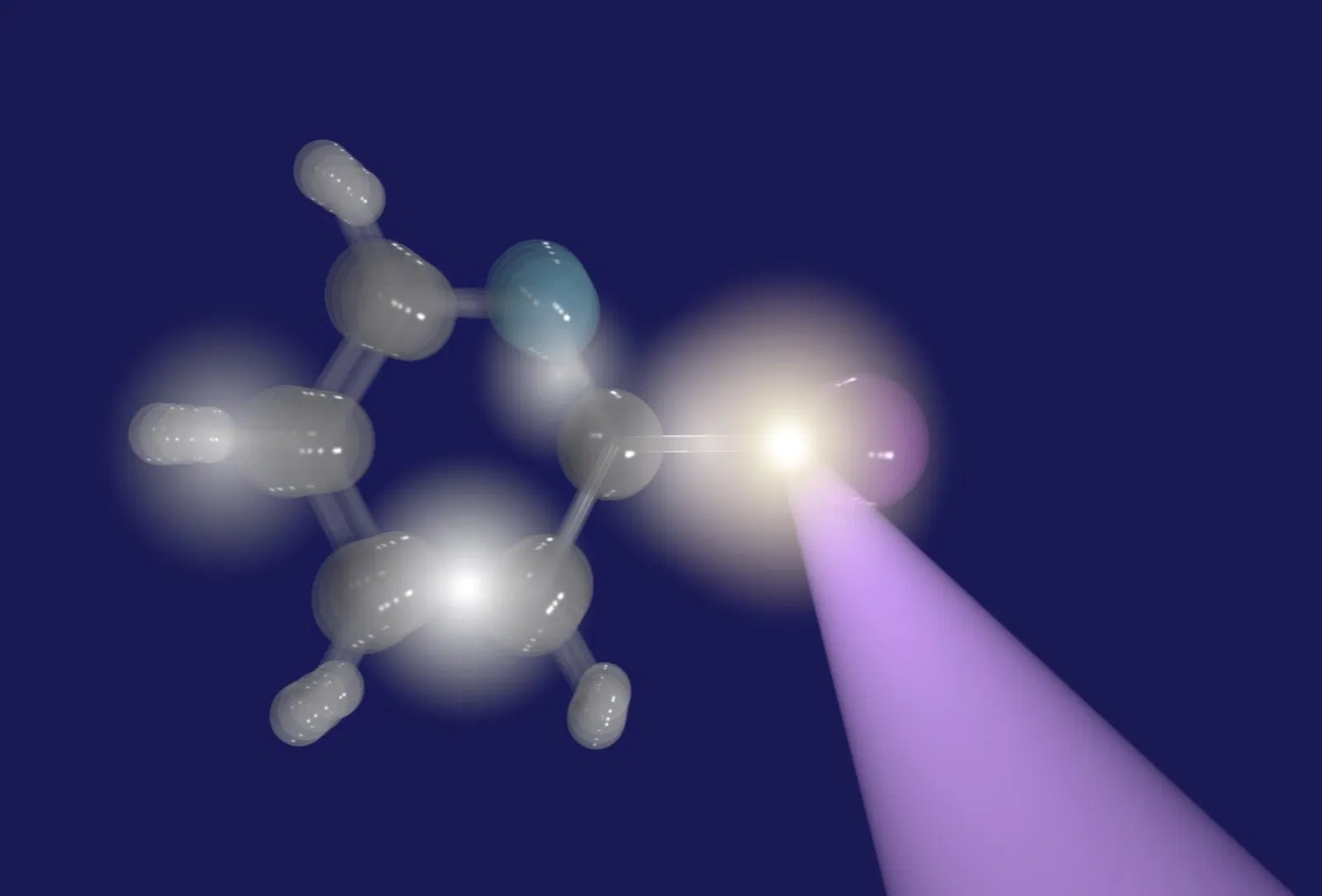
Scientists have directly visualized the quantum zero-point motion in complex molecules using ultrashort X-ray laser pulses and Coulomb Explosion Imaging, revealing the intricate, coupled vibrational patterns of atoms even at absolute zero, providing new insights into quantum phenomena.
Researchers at the Helmholtz-Zentrum Dresden-Rossendorf (HZDR) are preparing an experiment to detect quantum fluctuations in the vacuum, which could provide insights into new laws of physics. The experiment involves using an ultra-powerful laser to manipulate the vacuum fluctuations and change the polarization of an X-ray flash. By shooting two optical laser pulses simultaneously into an evacuated chamber, the researchers hope to increase the chances of measuring the effect. If successful, the experiment could confirm quantum electrodynamics (QED) or reveal deviations that suggest the existence of new particles and undiscovered laws of nature. The first trials are scheduled for 2024 at the European XFEL in Hamburg.
An international research team has made a significant breakthrough in the development of atomic clocks by creating a pulse generator based on scandium that is a thousand times more precise than the current standard atomic clock based on cesium. Using the X-ray laser at the European XFEL, the team achieved an accuracy of one second in 300 billion years, compared to the current standard of one second in 300 million years. Atomic clocks have numerous applications, including precise positioning using satellite navigation, and the breakthrough opens up possibilities for ultrahigh-precision spectroscopy and the measurement of fundamental physical effects.
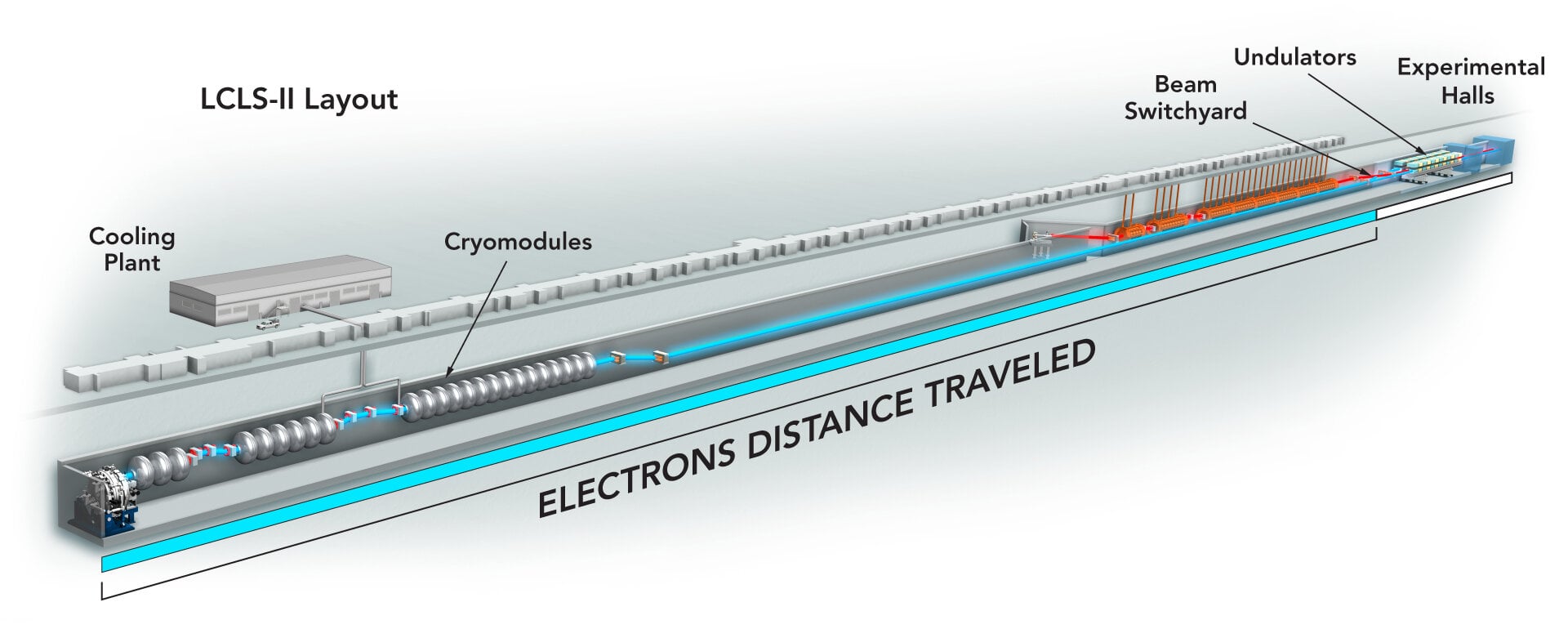
California's SLAC National Accelerator Laboratory has announced the "first light" of the Linac Coherent Light Source (LCLS) II, the world's most powerful X-ray laser. Capable of producing a million X-ray flashes per second, the LCLS II offers unprecedented detail at the atomic scale, potentially enabling new discoveries in fields such as quantum events, chemical processes, and drug development. The laser's advanced technology includes a superconducting accelerator, cryogenic modules, and undulators. The LCLS II is expected to attract researchers from around the world and facilitate groundbreaking experiments in various scientific disciplines.
Stanford's upgraded particle accelerator, the LCLS-II, has produced its first X-rays, emitting up to a million X-ray pulses per second and a beam 10,000 times brighter than its predecessor. The cooling abilities of the accelerator, with cryogenic modules cooled to negative 456 degrees Fahrenheit, allow for boosted electrons with minimal energy loss. The upgraded accelerator will enable unprecedented research into atomic-scale phenomena, quantum computing, clean energy, and medicine, attracting researchers from around the world. The project involved multiple institutions and has gone through $1.1 billion in funding.
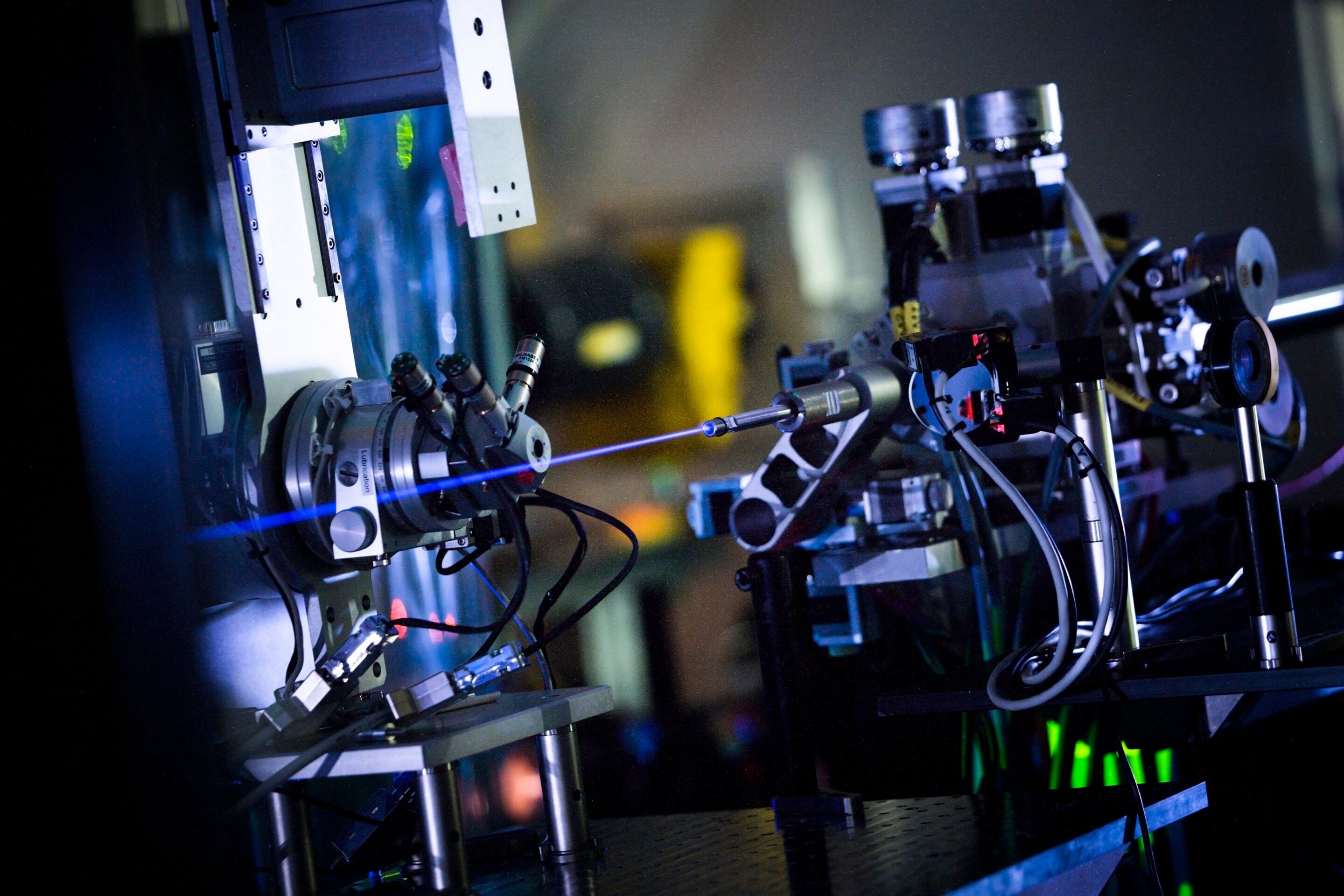
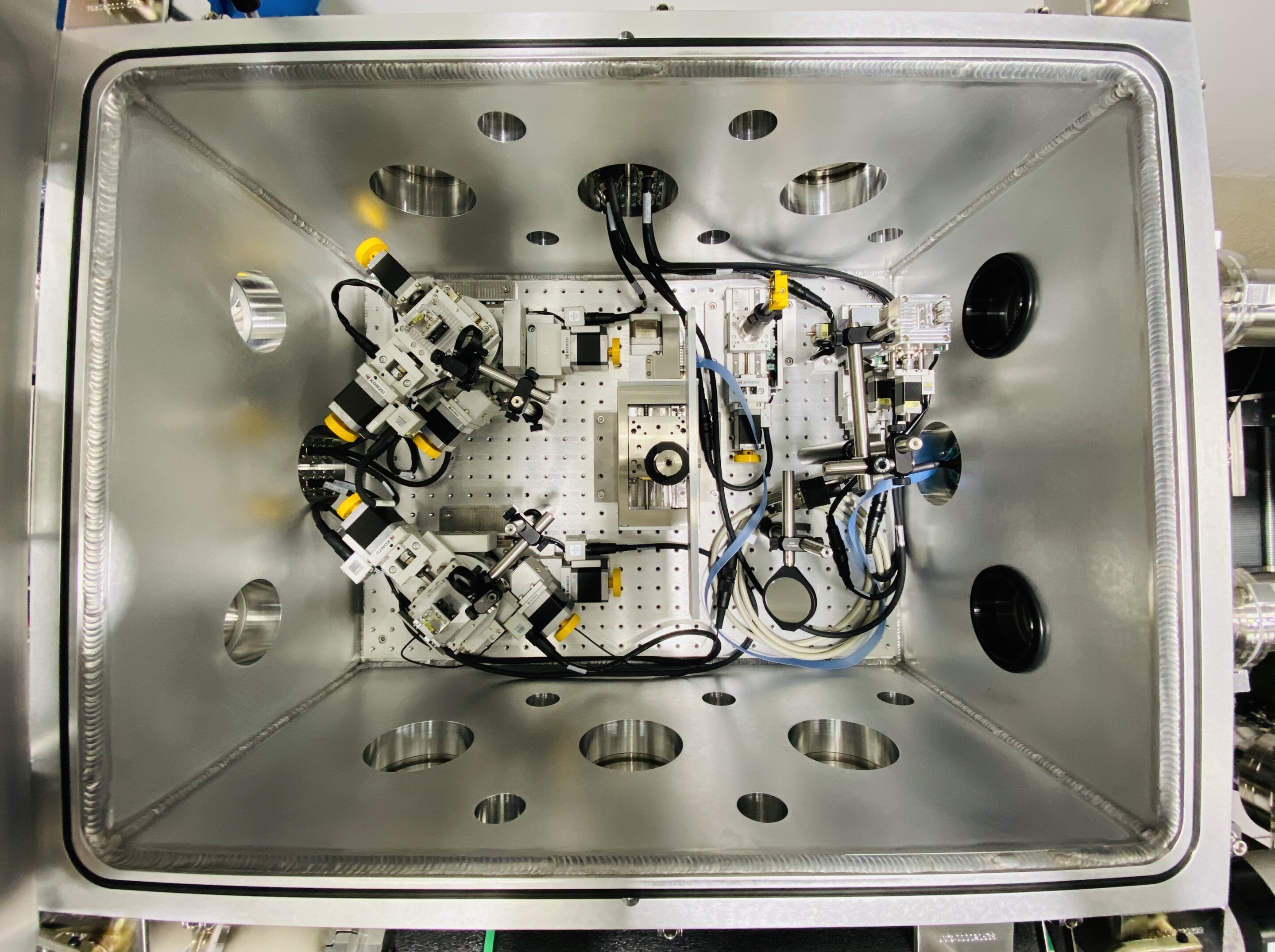
Researchers at SLAC National Accelerator Laboratory have made significant progress in the development of cavity-based X-ray free-electron laser technology. They used high-quality synthetic diamond mirrors to steer X-ray laser pulses around a rectangular racetrack inside a vacuum chamber. This approach aims to make X-ray laser pulses brighter and cleaner, similar to regular laser beams. The successful delivery of a cavity-based X-ray free-electron laser will revolutionize X-ray science by providing a significant improvement in beam performance. The research team is already working on the next version of the experimental cavity system in collaboration with Argonne National Laboratory.
Electrons are now flowing through SLAC's new superconducting accelerator, bringing the Linac Coherent Light Source II (LCLS-II) project one step closer to powering the world's most powerful X-ray free electron laser. This achievement marks a major milestone in the decade-long effort to build the facility, which will produce X-rays 10,000 times brighter than its predecessor, enabling groundbreaking scientific research at the atomic level. The accelerator's use of niobium cavities and extremely cold operating temperatures allows for highly efficient electron acceleration, while meticulous dust control measures ensure optimal performance. Although more work is needed to improve the electron beam quality, the team is optimistic about the project's progress.
Scientists from SLAC National Accelerator Laboratory and Lawrence Berkeley National Laboratory, along with other institutions, have used SLAC’s Linac Coherent Light Source and the SPring-8 Angstrom Compact free electron LAser to capture the final moments leading up to the release of breathable oxygen in Photosystem II, a protein complex in plants, algae and cyanobacteria that produces oxygen through photosynthesis. The data reveal an intermediate reaction step that had not been observed before, shedding light on how nature has optimized photosynthesis and helping scientists develop artificial photosynthetic systems that mimic photosynthesis to harvest natural sunlight to convert carbon dioxide into hydrogen and carbon-based fuels.