Tag

X Class Flare

All articles tagged with #x class flare

science1 year ago

Massive Solar Flares Cause Global Radio Blackouts

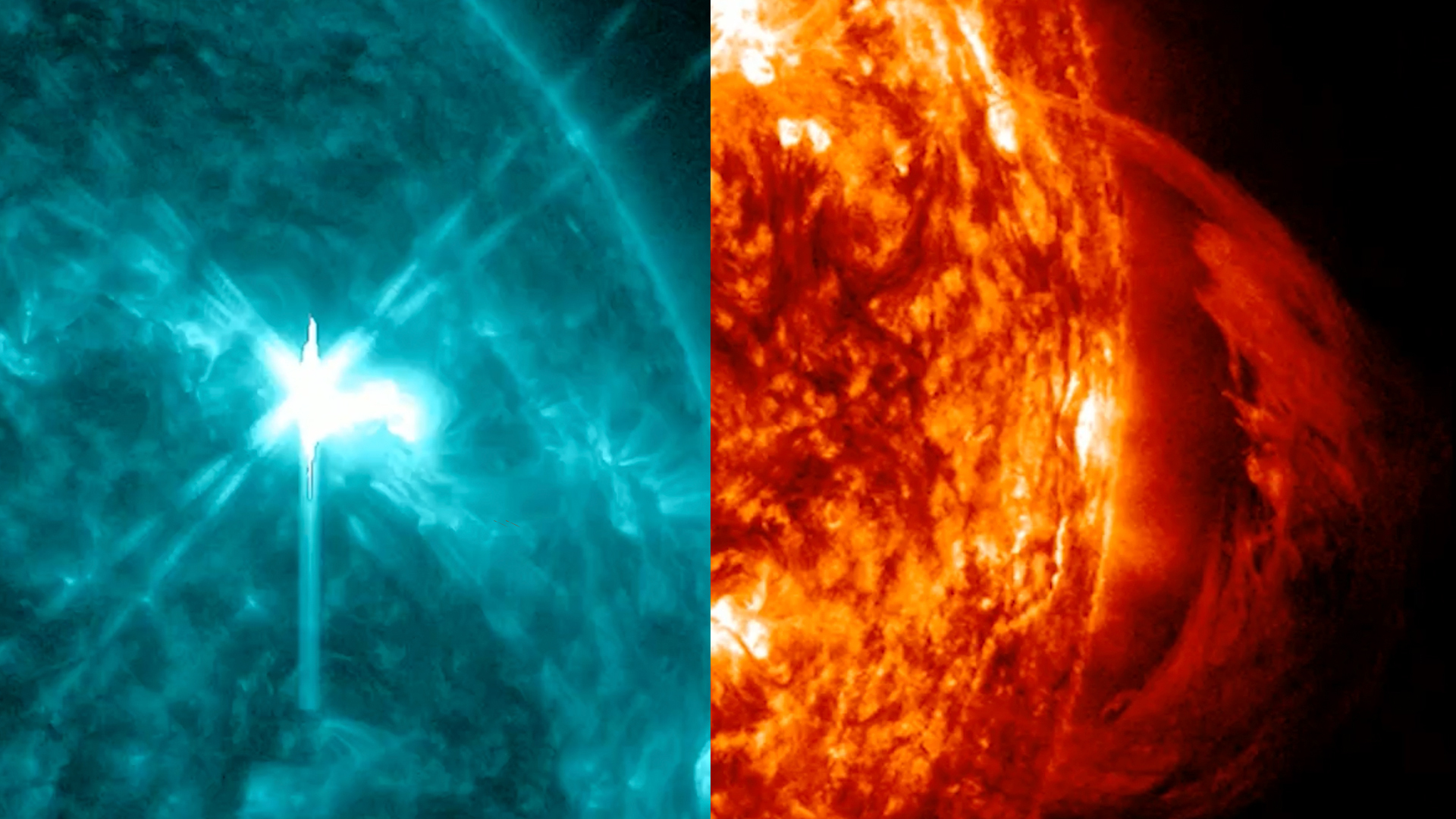
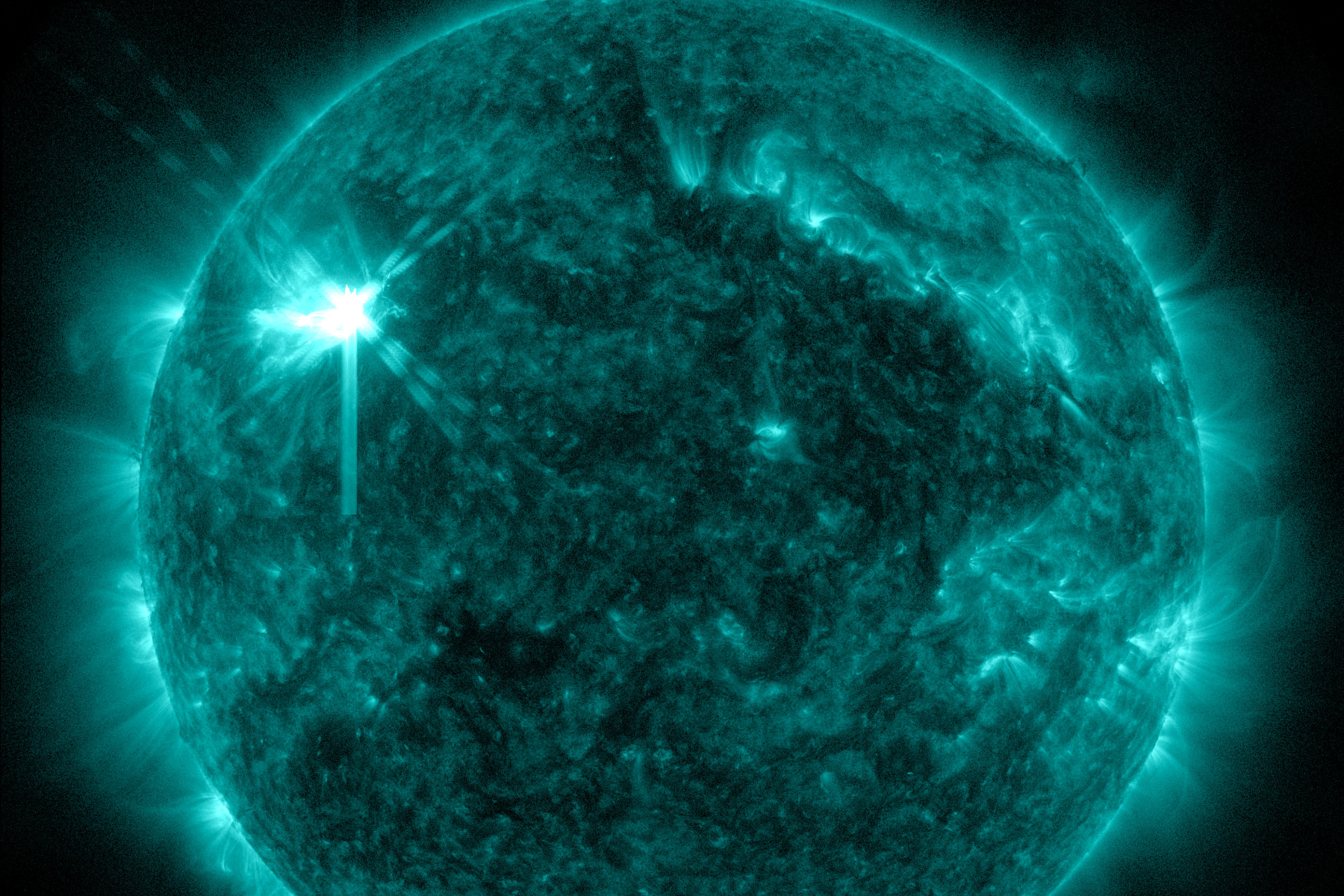
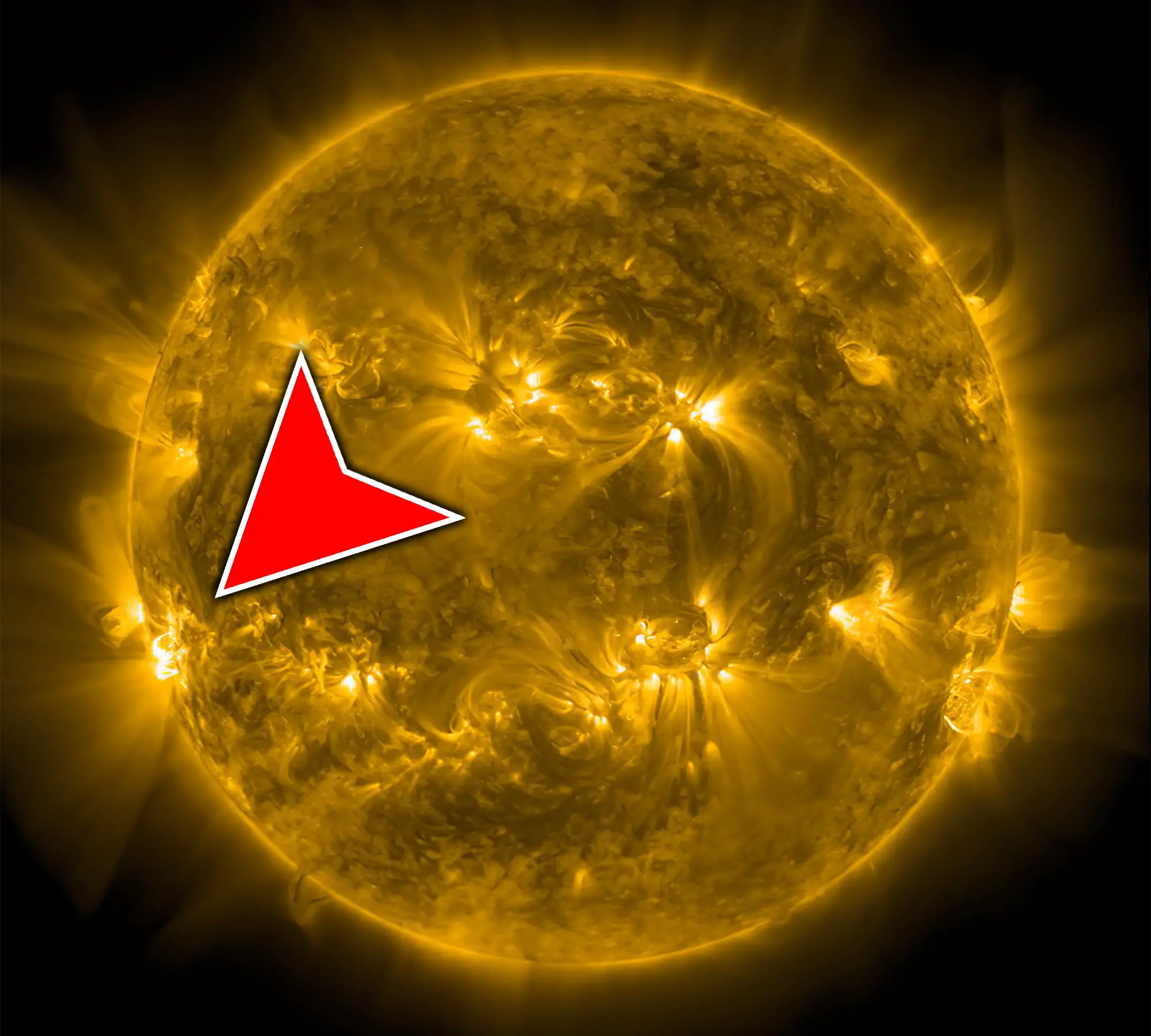
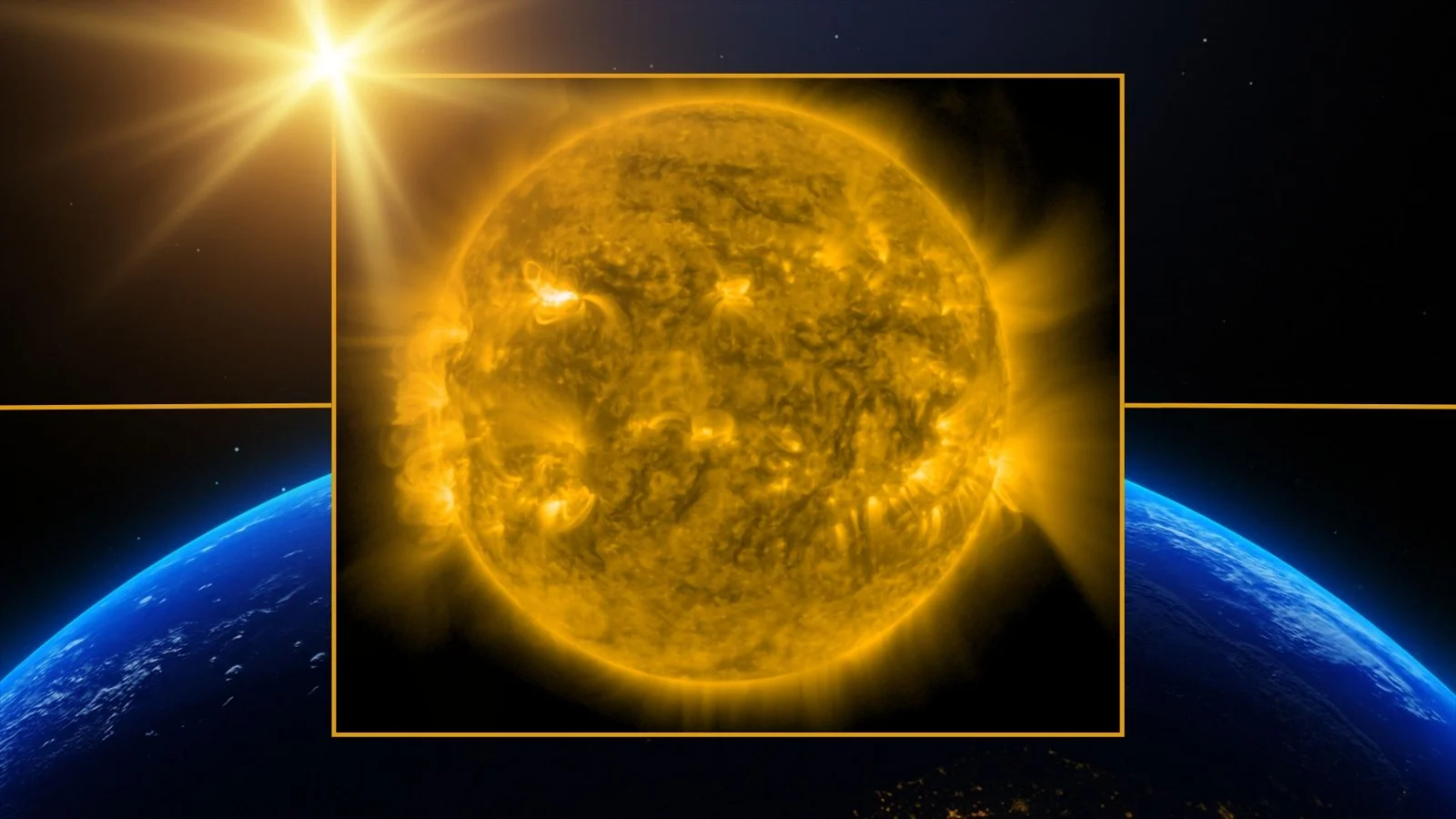
NASA's Solar Dynamics Observatory captured a powerful X2.3 solar flare on November 6, 2024, which could disrupt Earth's radio signals, navigation systems, and power grids, and pose risks to astronauts and spacecraft. Solar flares, caused by twisted magnetic fields on the Sun, release intense radiation that can affect technology and space exploration. The SDO, equipped with advanced instruments, plays a crucial role in monitoring solar activity and predicting space weather events.

space-and-astronomy1 year ago

"Solar Storm Triggers Radio Blackout and Intense Flare Eruption"

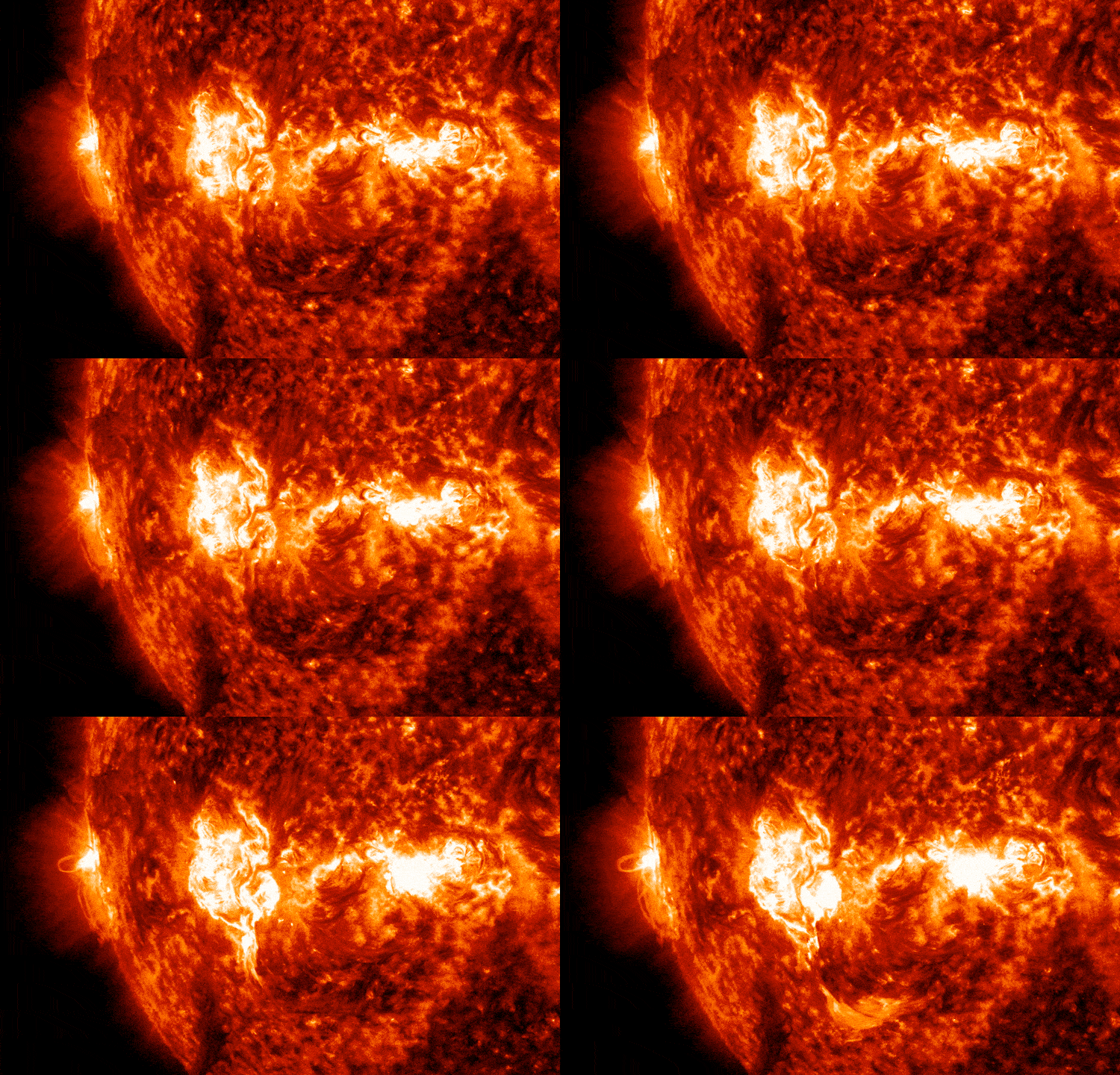
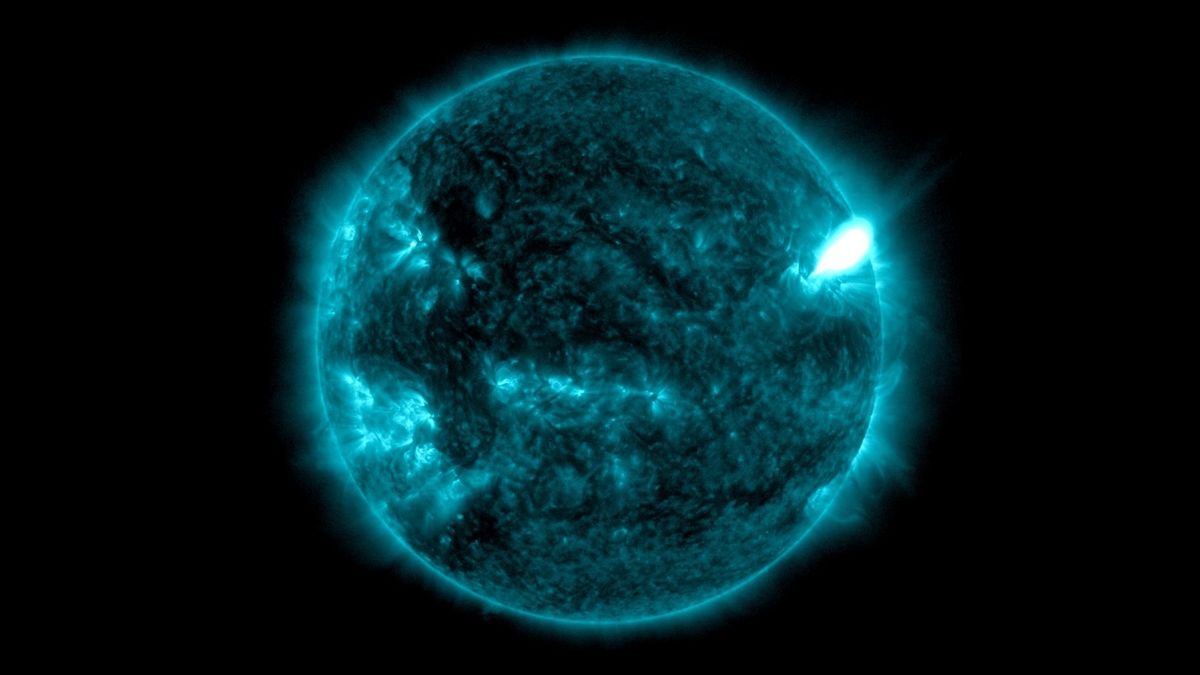
A powerful X1.1 solar flare erupted from the sun, causing a deep shortwave radio blackout over the Pacific Ocean and triggering concerns about a potential geomagnetic storm. The flare, accompanied by a coronal mass ejection, was detected by NOAA satellites and comes after a recent "double" X-class flare. Scientists speculate that the sun may have entered its peak activity phase earlier than expected, as seven X-class flares have already occurred in 2024.

science-and-technology1 year ago

Intense Solar Flare Causes Radio Blackout and Spectacular Eruption

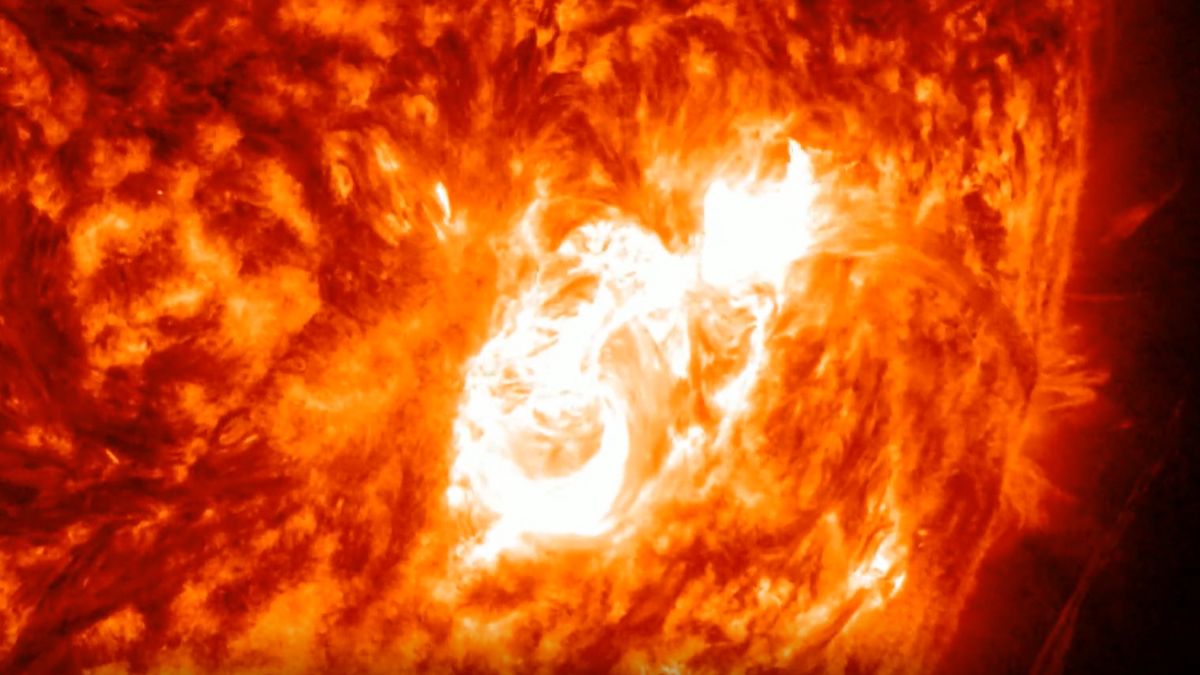
A powerful X-class solar flare from sunspot AR3590 caused radio blackouts over the U.S. West Coast and the Pacific Ocean. Solar flares are sudden bursts of radiation from the sun's surface, and X-class flares are the most powerful. These flares can disrupt radio communication and navigation systems on Earth, and also pose risks to satellite activity and air travel. While the chances of a severe Carrington Event-level flare hitting Earth are low, the impact could be significant due to our reliance on technology.

space1 year ago

"Intense X-Class Solar Flare Disrupts Radio Signals and Causes Blackouts Across Australia and Southeast Asia"

The sun unleashed a powerful X-class solar flare on Feb. 9, triggering shortwave radio blackouts across South America, Africa, and the Southern Atlantic. The flare erupted from sunspot AR3576 and was accompanied by a coronal mass ejection (CME). While Earth is unlikely to be directly affected, the flare caused extensive radio blackouts due to the strong pulse of X-rays and extreme ultraviolet radiation. Solar and space weather scientists are monitoring the sun carefully as energetic solar flares and CMEs can be problematic for satellites in space and electronic technology on Earth.

space2 years ago

Sun's Powerful Solar Flares Cause Radio Blackouts and Signal Interruptions on Earth

A massive sunspot, AR3354, erupted on July 2, unleashing a powerful X-class solar flare that caused a radio blackout over parts of the U.S. and the Pacific Ocean. The flare, classified as the strongest type of solar flare, ionized the Earth's atmosphere and lasted for about 30 minutes. Solar physicist Keith Strong shared footage of the flare, noting that June 2023 marked the highest monthly average for sunspot numbers in 21 years. While the flare triggered a coronal mass ejection, no significant plasma ejection has been observed.

science-and-technology2 years ago

Sun's Radiant Fury Sparks Geomagnetic Storm Warning for Earth and Neighboring Planets

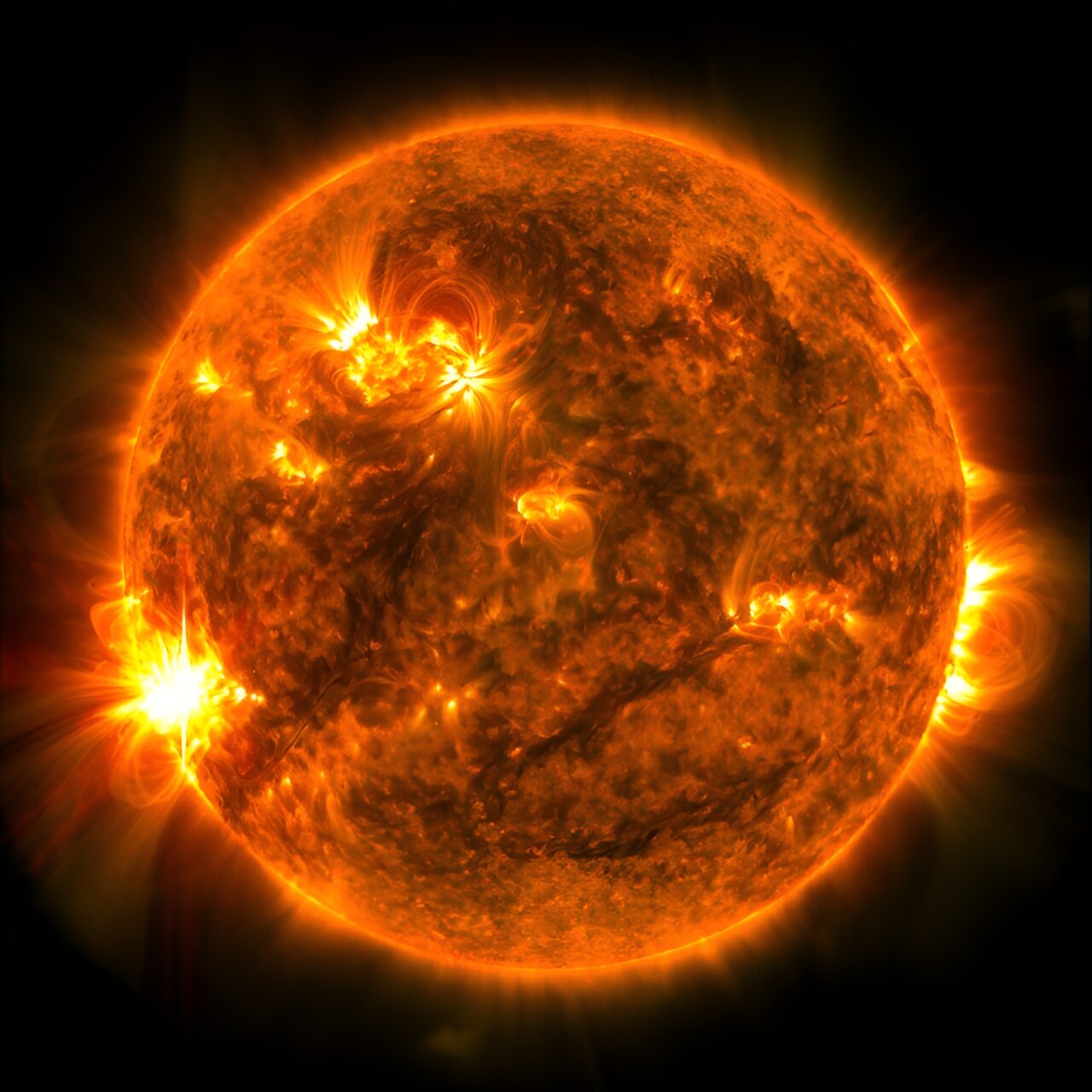
NASA's Solar Dynamics Observatory captured an X1.0 class solar flare on June 20, 2023. Solar flares are violent eruptions of high-energy particles and gases ejected from the sun's magnetic field into space. They are classified into three categories based on their x-ray intensity: X-class, M-class, and C-class. Solar flares can cause radio communication disruption, geomagnetic storms, auroras, radiation risk, and damage to satellites. NASA's Solar Dynamics Observatory is a mission dedicated to studying the Sun and its influence on Earth and near-Earth space.