Scientists are using fast radio bursts (FRBs) to locate the universe's missing baryonic matter, which is difficult to detect with traditional methods. Recent discoveries suggest that FRBs can serve as cosmic probes to map the distribution of ordinary matter, helping to solve the longstanding 'missing baryon problem' and improve understanding of cosmic evolution.
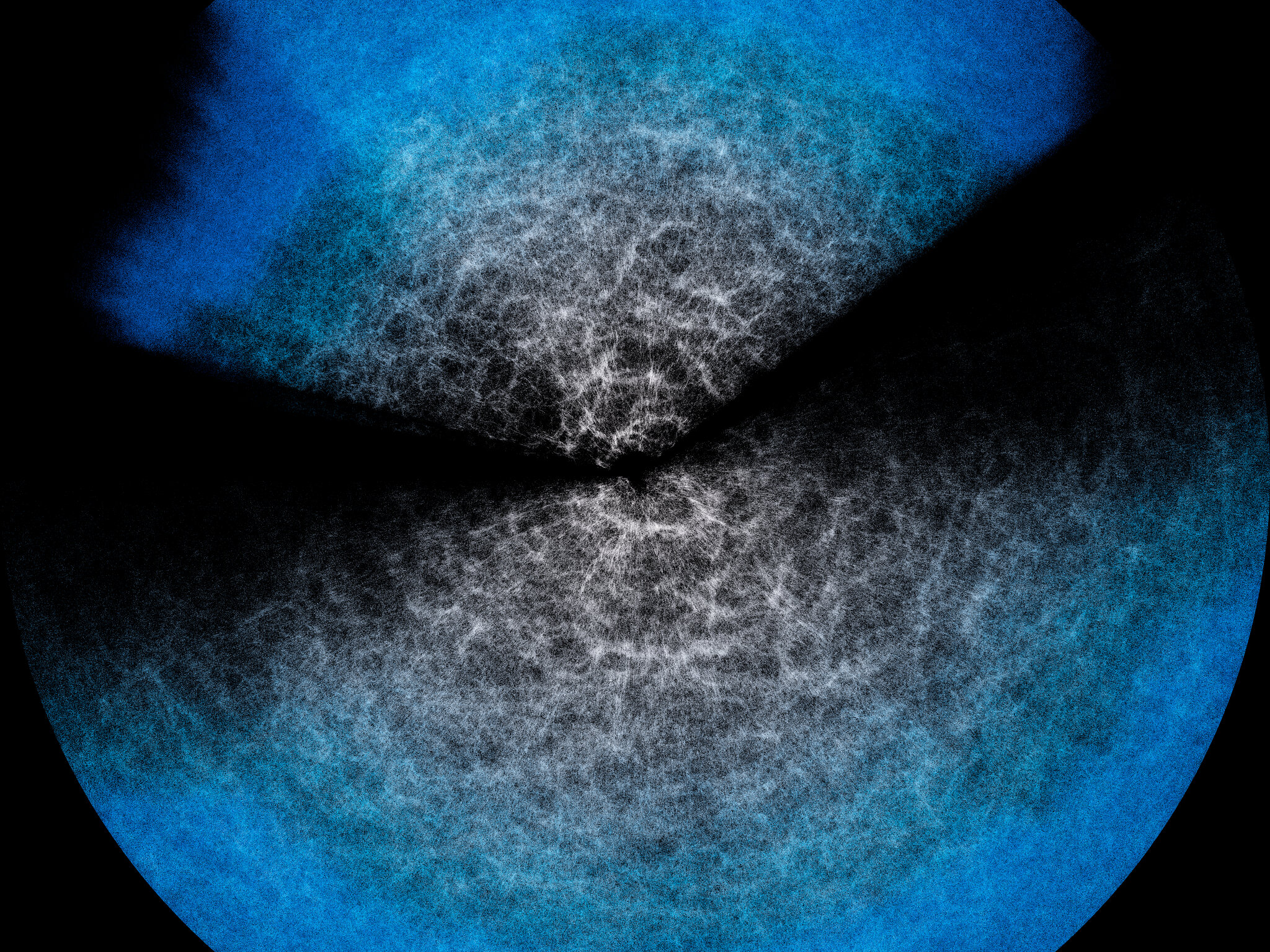
Scientists have developed Effort.jl, a fast and accurate emulator that mimics complex models of the universe's large-scale structure, enabling faster analysis of cosmic data from surveys like DESI and Euclid without sacrificing precision.
The Dark Energy Spectroscopic Instrument (DESI) has analyzed its first-year data, providing unprecedented measurements of the expanding universe. With 5,000 robots, DESI is mapping the cosmos 11 billion years into the past, aiming to unravel the mysteries of dark energy. The data, six times larger than previous surveys, offers insights into the expansion rate and composition of the universe, potentially shedding light on the nature of dark energy and the early universe.
Scientists have created the largest 3-D map of the universe using the Dark Energy Spectroscopic Instrument (DESI), revealing potential differences in the behavior of dark energy. The map suggests that dark energy may be evolving and weakening, contrary to the long-held belief that it is a constant force, potentially challenging Einstein's theory of general relativity. If confirmed, this discovery could lead to a deeper understanding of the universe and its accelerating expansion, marking a significant development in the field of cosmology.
Scientists have created the largest ever supermassive black hole map, featuring over 1.3 million quasars, with the furthest black hole existing when the universe was only 1.5 billion years old. The map, showcased in a video, was built using data from the Gaia space telescope and provides insights into the early universe's matter clustering. This feat, accomplished with data from multiple sources, may help answer long-standing questions about the cosmos, but the sheer number of black holes in the universe might give you nightmares.
The European Space Agency's Gaia space telescope, originally intended to map stars within the Milky Way, has inadvertently provided data on objects beyond our galaxy, including quasars and distant galaxies. Scientists have used this data to create a groundbreaking map detailing approximately 1.3 million active supermassive black holes in three-dimensional space, offering unprecedented insights into the vast expanse of the universe and revolutionizing our understanding of cosmic evolution. This unexpected treasure trove of data has led to the creation of a comprehensive catalogue of quasars, shedding light on the distribution of dark matter throughout the cosmos and catalyzing new discoveries and inquiries for astronomers worldwide.
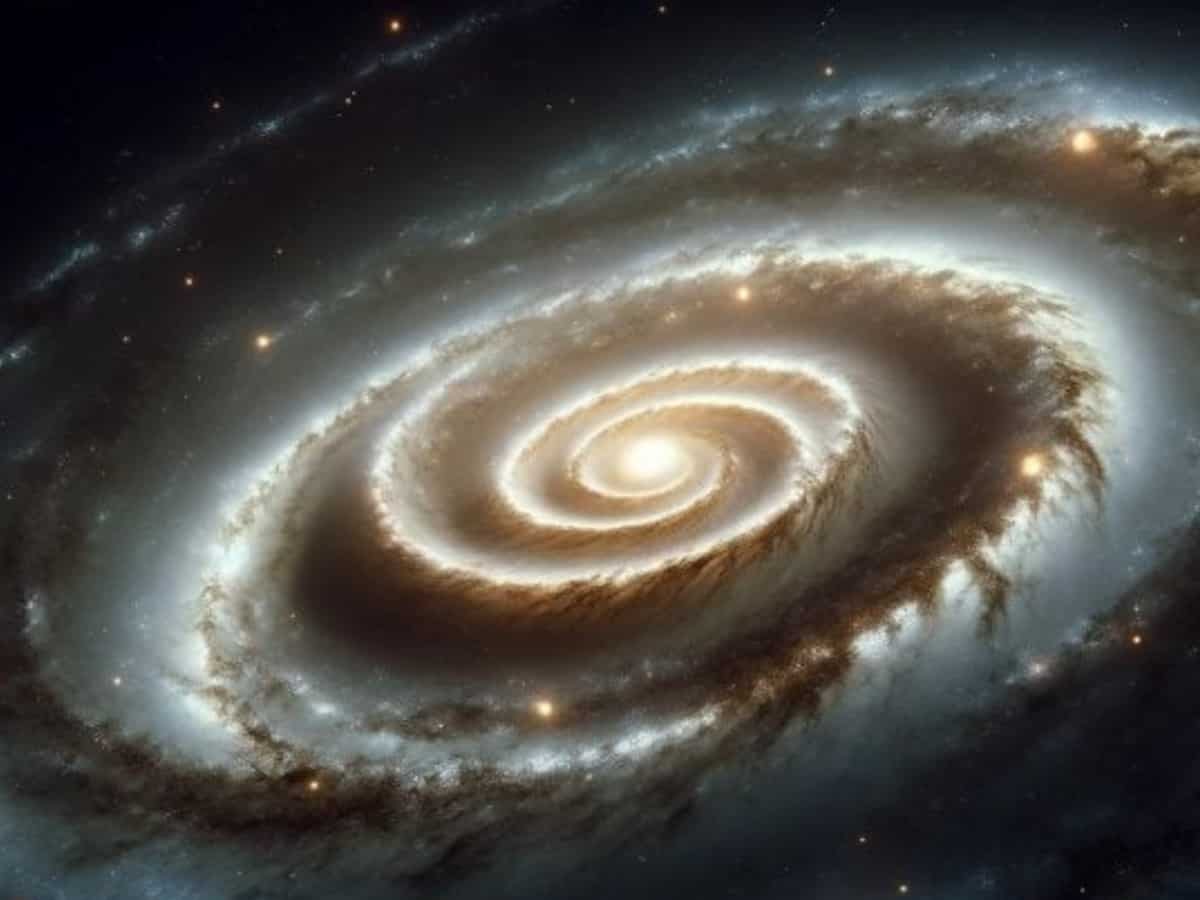
Scientists have revealed a 3D map of supermassive black holes, comprising 1.3 million quasars, the largest volume of the universe ever charted. The map, called Quaia, provides a catalog of quasars based on data from the Gaia space telescope and other sources, offering insights into the evolution of supermassive black holes and their host galaxies. This groundbreaking map also presents an opportunity to study dark matter and its influence on the distribution of regular matter across the universe.
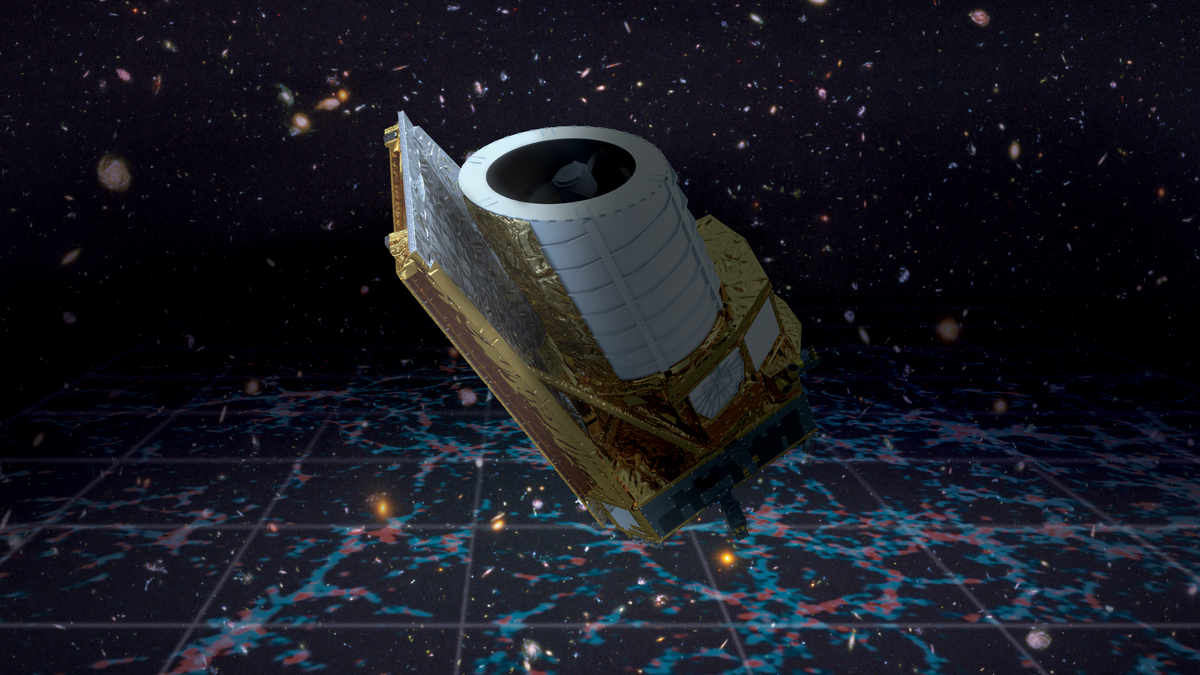
The Euclid Space Telescope, designed to conduct the most detailed three-dimensional mapping of the universe, has released its first color images from space. Euclid has the capability to measure the positions of billions of galaxies in three dimensions, spanning almost the entire observable universe. The images demonstrate the telescope's potential to unlock the secrets of dark matter and dark energy, which make up approximately 95% of the universe. Euclid will observe the shapes, distances, and movements of galaxies up to 10 billion light years away over the next six years, creating the most comprehensive three-dimensional map of the visible universe ever created.
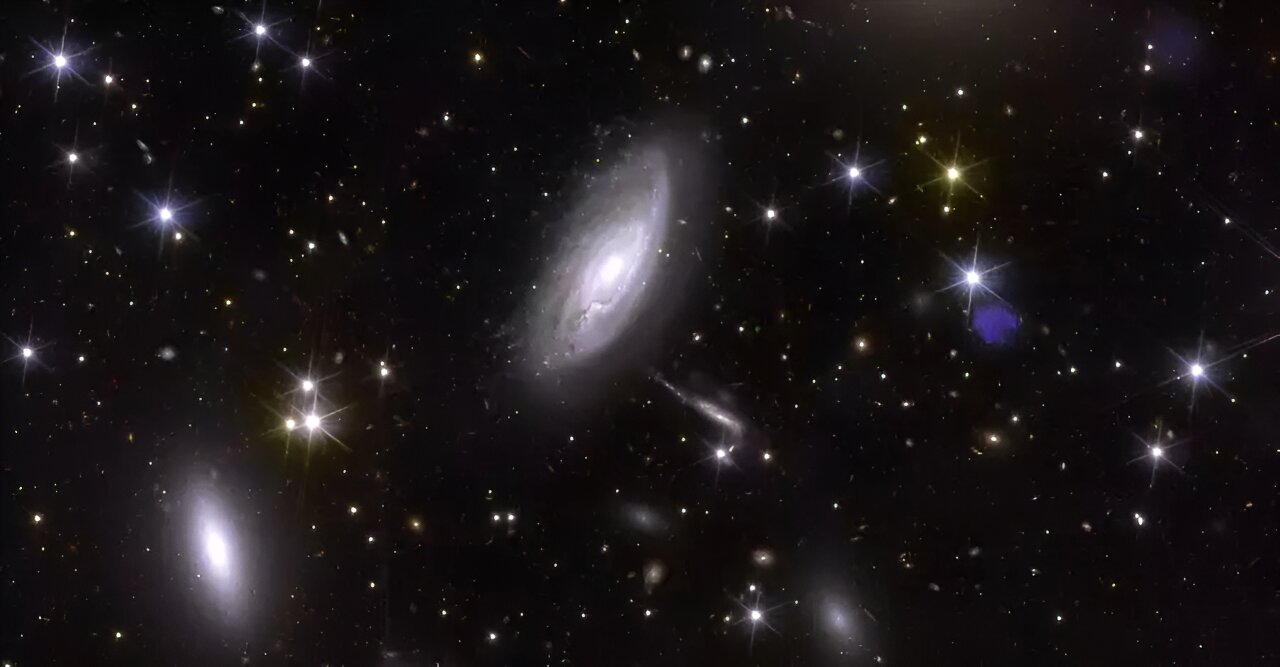
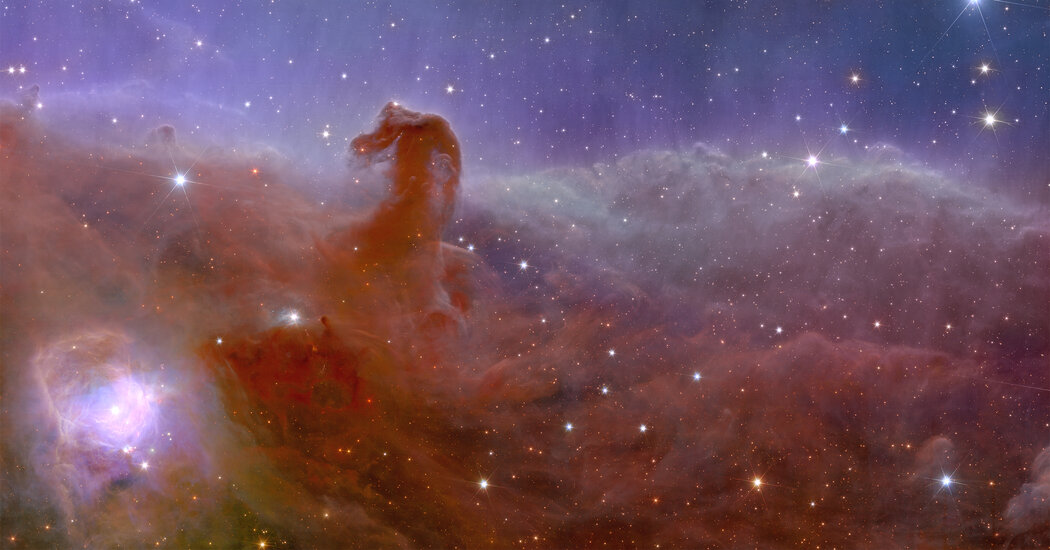
The European Space Agency's Euclid telescope has released its first images of the universe, showcasing its ability to capture detailed views of space. Euclid aims to map a third of the extragalactic sky and study the influence of dark matter and dark energy on the structure of the universe. The images include the Horsehead Nebula, the Perseus Cluster, spiral galaxy IC 342, irregular dwarf galaxy NGC 6822, and the globular cluster NGC 6397. Euclid's wide-field imaging capabilities will aid in the search for free-floating worlds and help scientists understand the distribution of galaxies and the force of dark energy. The telescope is expected to provide a wealth of data over the next six years.
The European Space Agency's Euclid space telescope, designed to reveal the dark universe, will reveal its first images live on Tuesday. Euclid's main objective is to produce a 3D map of the universe, helping scientists understand the evolution of the cosmos since the Big Bang. The telescope will provide insights into the distribution of dark matter and the role of dark energy in the universe's expansion. Euclid's images will be four times sharper than ground-based surveys, and its visible light camera will complement its near-infrared observations. Despite some initial issues, the telescope is now ready to unveil its new images.
The Euclid space telescope, launched by the European Space Agency, has captured its first test images, revealing scintillating views of galaxies. The telescope's visible instrument, or VIS, will take images of billions of galaxies, while the Near-Infrared Spectrometer and Photometer instrument, or NISP, will capture images of galaxies in infrared light. Euclid's primary goal is to observe and study dark matter and dark energy, which make up a significant portion of the universe. The telescope will create the largest and most accurate three-dimensional map of the universe, observing billions of galaxies to understand the evolution of the universe over the past 10 billion years.
The Euclid telescope, a €1.4-billion mission led by the European Space Agency (ESA), is set to launch on July 1st to map the Universe and probe the mysteries of dark energy and dark matter. By mapping the positions of 1.5 billion galaxies, Euclid aims to understand the nature and properties of dark energy, which is believed to be responsible for the accelerating expansion of the Universe. The telescope will also explore the distribution of dark matter, which is more abundant than ordinary matter and forms the scaffolding of the cosmic structure. Euclid is part of a new generation of observatories that will provide valuable data for cosmological research and could revolutionize our understanding of the physical laws of nature.