Tag

Dark Universe

All articles tagged with #dark universe

science-and-technology1 year ago

"ESA's Euclid Telescope Unveils Stunning Dark Universe Images"

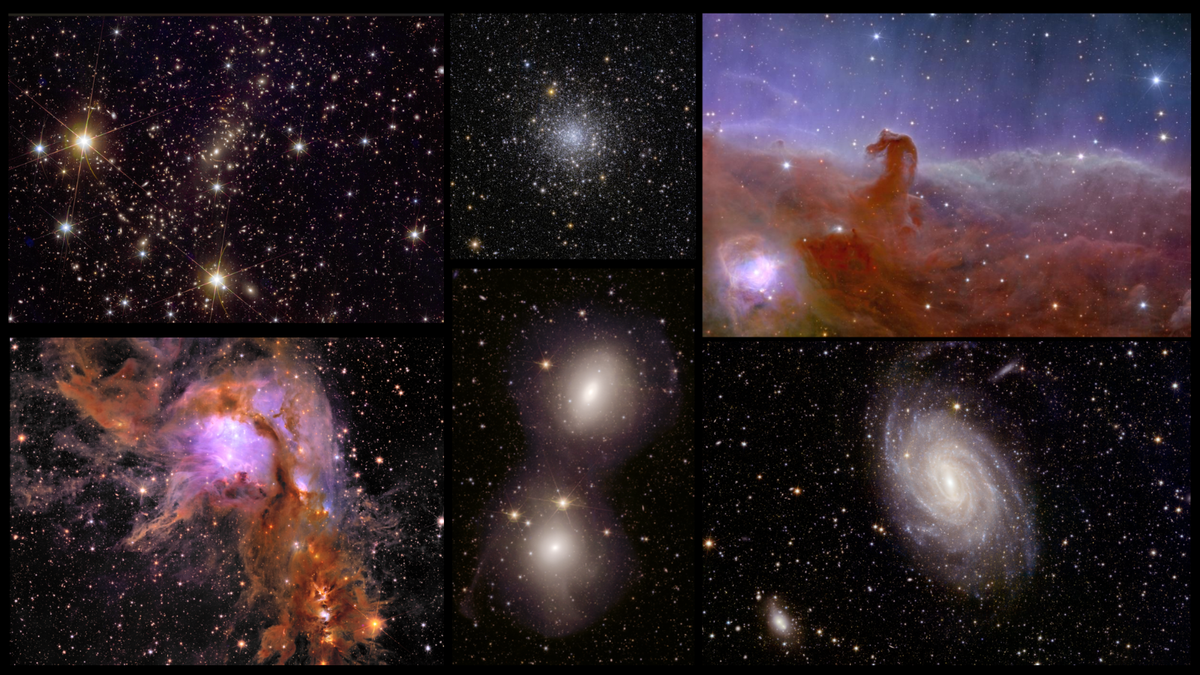
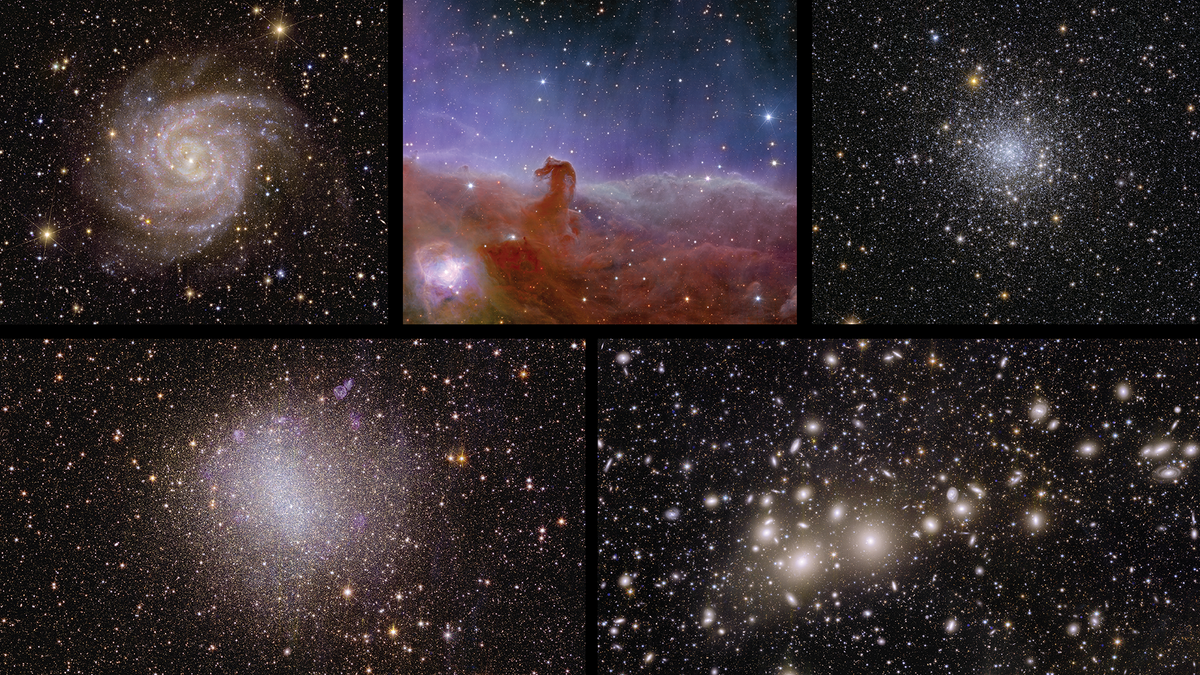
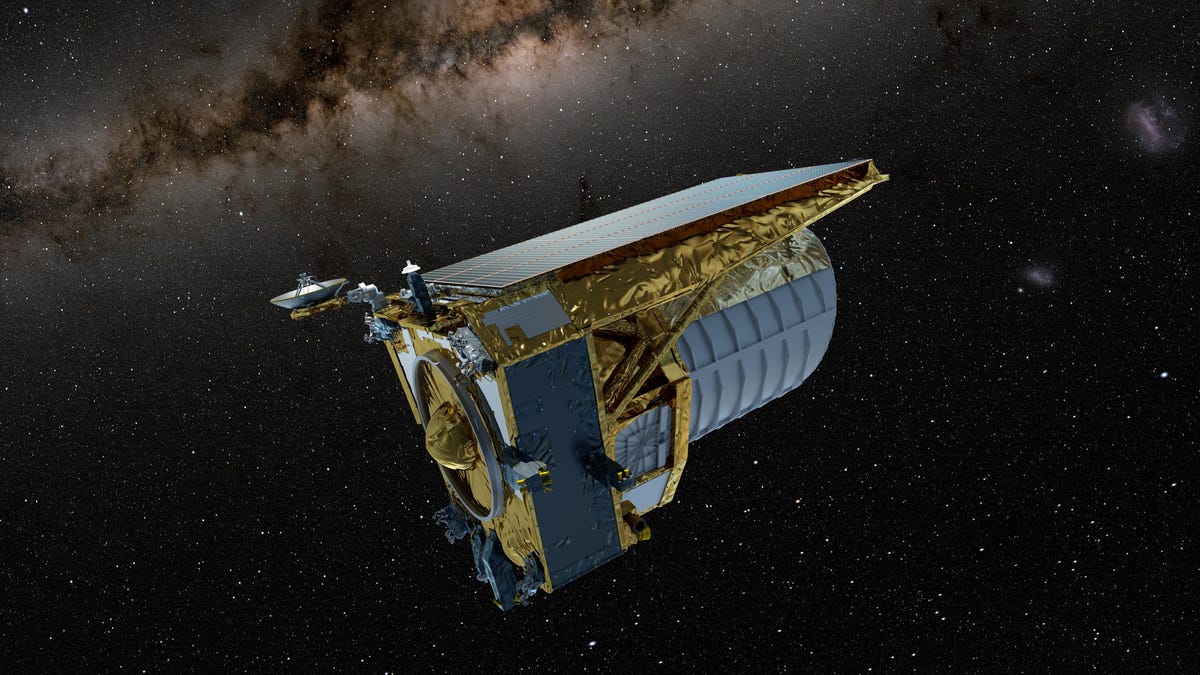
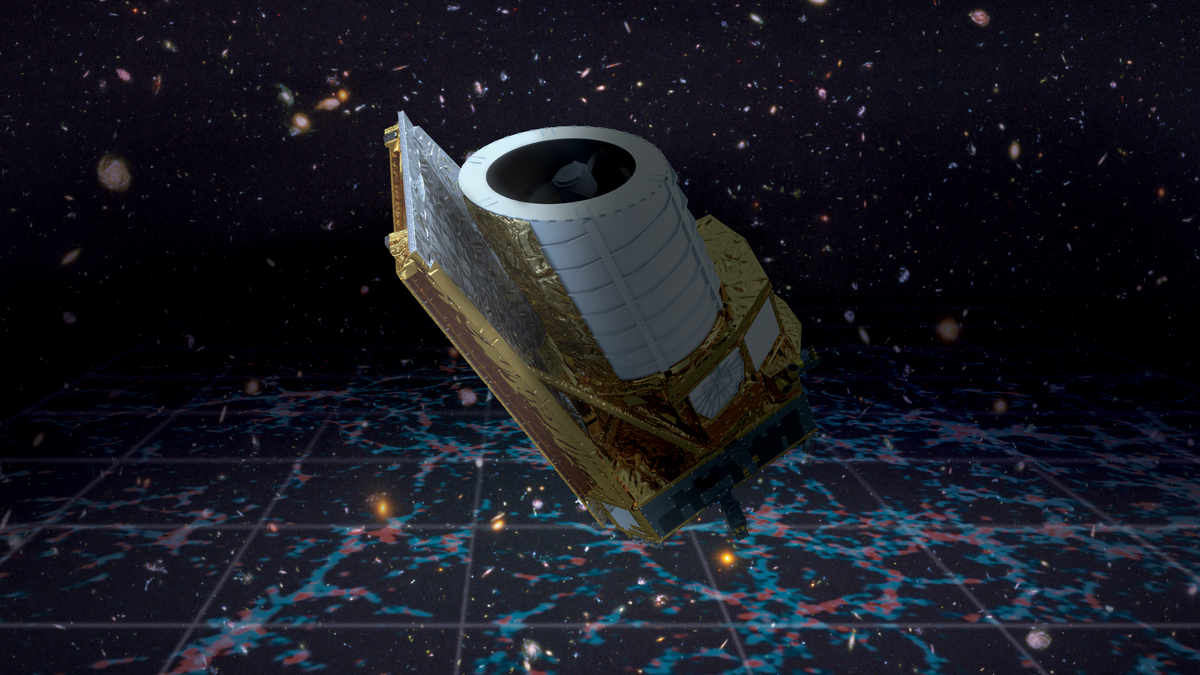
The European Space Agency's Euclid telescope has released two sets of stunning images, showcasing its potential to explore dark matter and dark energy. Scientists have shared their favorite images, highlighting the telescope's ability to capture detailed views of galaxy clusters and other cosmic structures. These early images promise significant future discoveries about the universe's dark components.

science-and-technology1 year ago

"ESA's Euclid Telescope to Reveal Stunning New Cosmic Images on May 23"

The European Space Agency (ESA) will unveil five new full-color images from the Euclid space telescope on May 23, showcasing its early observations of the cosmos. The images will be revealed at 05:00 EDT (12:00 CEST) and can be watched live on ESA's YouTube channel. Euclid, launched in July 2023, aims to investigate dark energy and dark matter, which make up 95% of the universe. The telescope's previous images have already provided stunning views of galaxies and nebulae, and the upcoming release is highly anticipated.

spacescience1 year ago

"Euclid Space Telescope's Vision Restored Through De-icing Campaign"

The European Space Agency successfully restored the vision of the Euclid "dark universe" telescope by conducting an experimental deicing campaign, which evaporated ice from the telescope's mirrors. Ice layers as thin as a single DNA strand had been affecting the telescope's ability to capture starlight, but heating one of its mirrors from a million miles away resulted in a 15% increase in light capture. While ice accumulation on space telescopes is not uncommon, the Euclid mission team plans to repeat the decontamination procedure every six to 12 months to maintain the telescope's vision as it aims to study dark matter and dark energy.

spacescience1 year ago

"Euclid Telescope's Vision Restored Through De-icing Campaign"

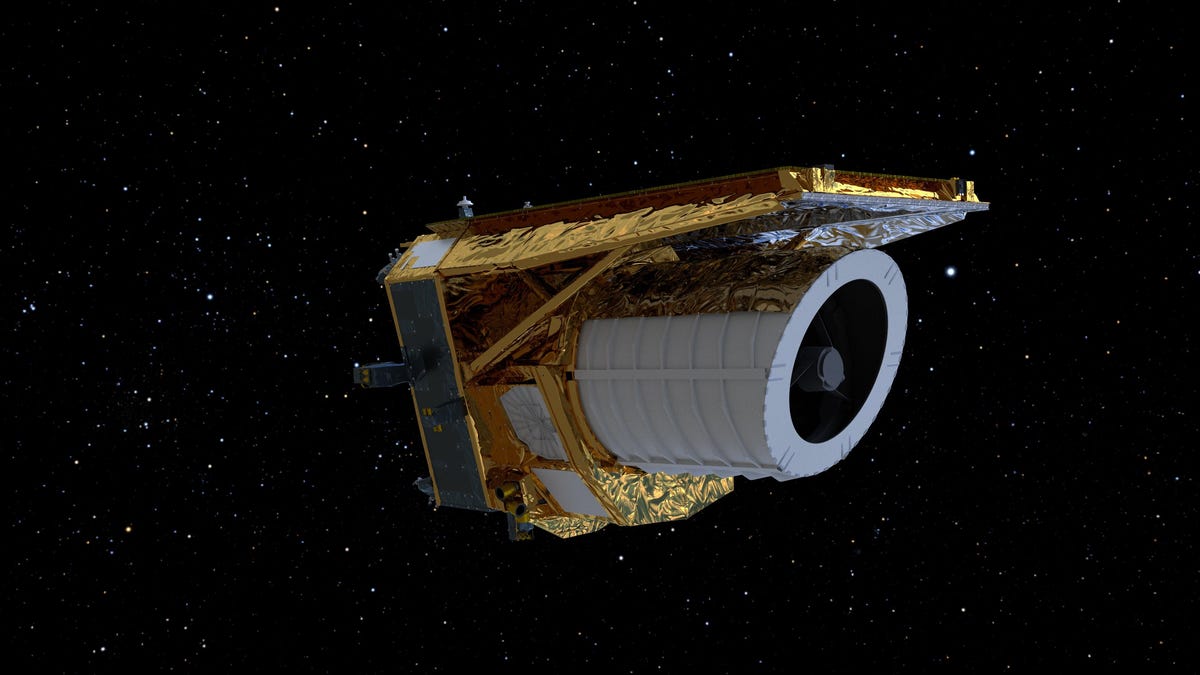
The European Space Agency's Euclid telescope, designed to study the dark universe, has been restored to full functionality after a successful de-icing procedure. Engineers heated parts of the spacecraft to remove frozen water molecules that had accumulated on its mirrors, resulting in a 15% increase in light reception. The telescope, located one million miles from Earth, is expected to face this issue again in the future, prompting the team to plan for regular decontamination procedures to maintain its optical system.

spacetechnology1 year ago

"De-Icing Euclid's Vision: Engineers' Million-Mile Plan"

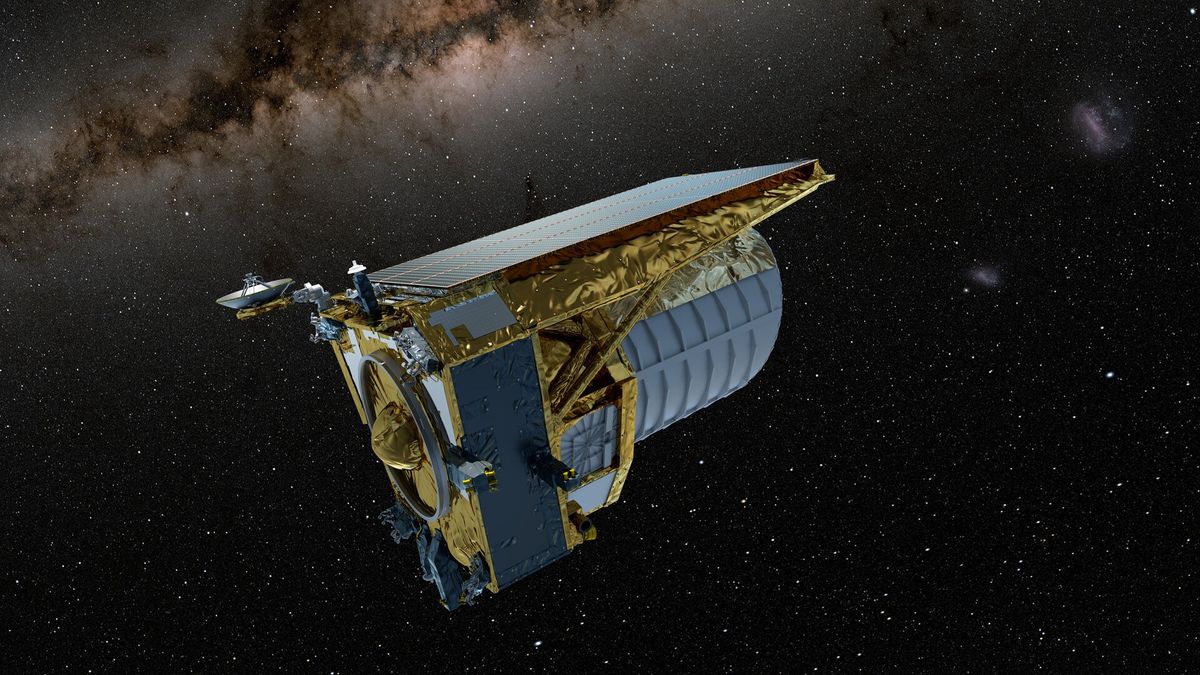
The European Space Agency's Euclid telescope, tasked with observing the dark universe, has been losing vision due to frozen water molecules on its mirrors. Located a million miles from Earth, the telescope's team plans to heat low-risk optical parts to de-ice it, aiming to preserve its ability to survey the sky with unprecedented sensitivity and observe ancient galaxies. This experimental procedure is necessary to prevent the frozen water from jeopardizing Euclid's mission, which has previously recovered from technical glitches shortly after its launch.

science-and-technology1 year ago

"Next-Generation Particle Collider to Unveil Mysteries of the Dark Universe"

The Future Circular Collider (FCC), set to succeed the Large Hadron Collider, is being planned to investigate dark energy and dark matter by smashing particles together with unprecedented energy. The FCC will be over three times the length of the LHC and is expected to reach energies as great as 100 TeV, compared to the LHC's 13 TeV. The FCC's feasibility study is set to conclude in 2025, with construction potentially beginning in the mid-2030s, and the first stage of the FCC-ee expected to start operations in 2045.

Euclid: Unveiling the Mysteries of the Universe

The European Space Agency (ESA) has released the first stunning images from Euclid, its "dark universe detective" mission. Euclid aims to study the mysterious dark matter and dark energy that make up the majority of the universe. The images showcase the capabilities of Euclid's instruments, which will help scientists better understand the nature of these elusive cosmic phenomena.

space-science2 years ago

Euclid Telescope Unveils Stunning First Images of the Dark Universe

The European Space Agency's Euclid space telescope, designed to reveal the dark universe, will reveal its first images live on Tuesday. Euclid's main objective is to produce a 3D map of the universe, helping scientists understand the evolution of the cosmos since the Big Bang. The telescope will provide insights into the distribution of dark matter and the role of dark energy in the universe's expansion. Euclid's images will be four times sharper than ground-based surveys, and its visible light camera will complement its near-infrared observations. Despite some initial issues, the telescope is now ready to unveil its new images.

space-science2 years ago

Euclid Space Telescope Faces Setbacks in Dark Universe Mission

The Euclid space telescope, launched by the European Space Agency, has encountered technical issues during its commissioning phase. The telescope's fine guidance sensors are occasionally losing track of stars, stray sunlight is affecting early images, and X-rays are reaching the detectors due to unwanted sunlight. While these problems do not threaten the mission, they could impact its operations. The Euclid team is working on software fixes and exploring ways to mitigate the issues. Despite the challenges, initial tests are encouraging, and the telescope is expected to begin its survey of the dark universe soon.

science-and-astronomy2 years ago

Euclid Space Telescope Shines with Stunning Images of the Cosmos

The European Space Agency's Euclid telescope has sent back its first images, confirming that its instruments are working well. Euclid's mission is to map out the dark side of the universe by analyzing billions of galaxies up to 10 billion light-years away. The telescope will create a 3D map that includes the element of time to show the evolution of these realms. The images captured by Euclid's Visible Instrument (VIS) and Near-Infrared Spectrometer and Photometer (NISP) reveal cosmic rays, glittering stars, and galaxies that will be further investigated. Euclid aims to shed light on the mysteries of dark energy and dark matter, which make up 95% of the universe.

science2 years ago

"The Dual Explosions: Unraveling the Mystery of Two Big Bangs"

The standard paradigm that the Big Bang was the origin of dark matter and dark energy is incorrect. Dark matter and energy have their own origin story, separate from the visible matter in the universe. The nature of dark matter remains a mystery, and the search for it continues. There is a possibility of a "Dark Big Bang" that occurred after the Hot Big Bang, which converted a second type of vacuum energy into dark matter. Gravitational waves from the Dark Big Bang could be detected through pulsar timing array experiments.

science2 years ago

"Euclid Mission: Unveiling the Dark Universe with SpaceX's Launch"

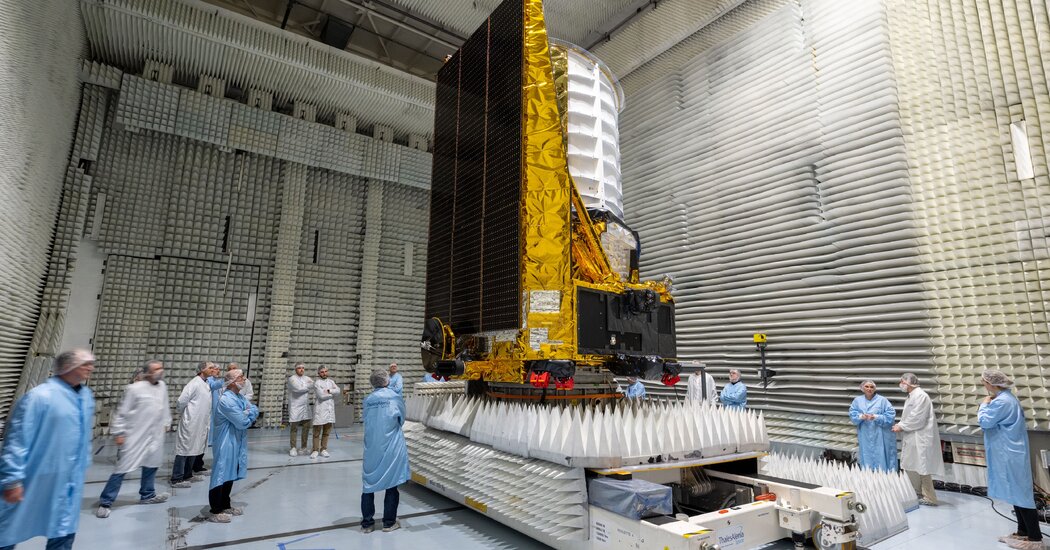
The European Space Agency's Euclid spacecraft is set to launch on a SpaceX Falcon 9 rocket from Cape Canaveral, Florida, on Saturday at 11:12 a.m. Eastern time. The mission aims to create a cosmic map of billions of galaxies to study the influence of dark matter and dark energy on the universe. Euclid will record images of galaxies as young as four billion years old and investigate the distribution of dark matter through weak gravitational lensing. Scientists hope to test the theory of general relativity and gain insights into the nature of dark energy. The spacecraft will orbit the second Lagrange point, or L2, to conduct wide surveys of the sky without obstruction.