Tag

Tyrannosaurus Rex

All articles tagged with #tyrannosaurus rex

Scientists Discover New Tyrannosaur Species, Reshaping Dinosaur History

Originally Published 2 months ago — by Indian Defence Review

Featured image for Scientists Discover New Tyrannosaur Species, Reshaping Dinosaur History
Source: Indian Defence Review

Researchers have confirmed that Nanotyrannus is a distinct, fully grown species of tyrannosaur, not a juvenile T. rex, revealing a more diverse and competitive predator ecosystem at the end of the Cretaceous and reshaping our understanding of dinosaur evolution.

Kids Discover Rare 'Teen Rex' Fossil in North Dakota

Originally Published 1 year ago — by The New York Times

Featured image for Kids Discover Rare 'Teen Rex' Fossil in North Dakota
Source: The New York Times

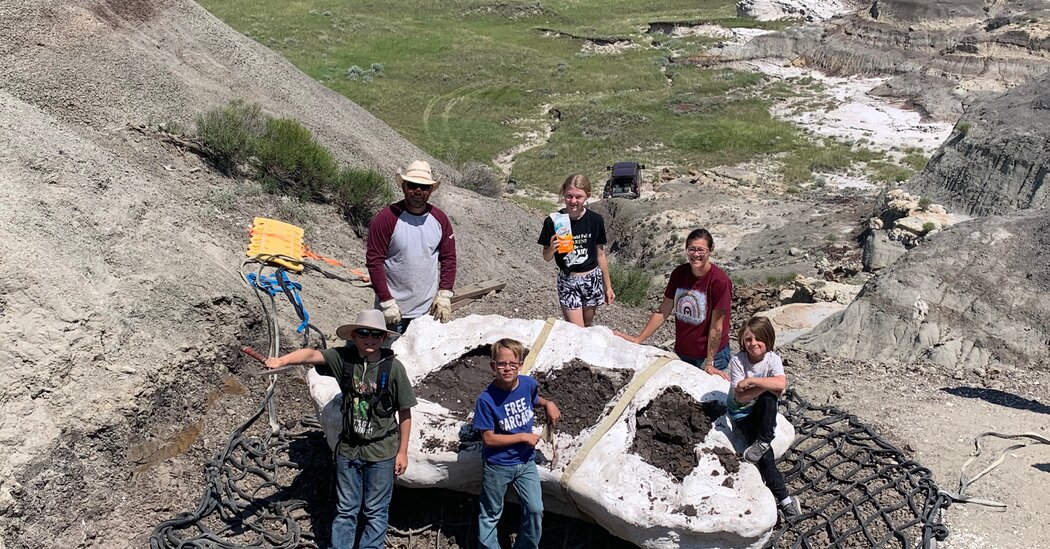
A family hiking in the North Dakota Badlands discovered a rare juvenile Tyrannosaurus rex fossil, which has been identified as the most complete T. rex specimen ever collected by the Denver Museum of Nature & Science. The discovery, made in 2022, has led to an 11-day excavation and plans for further exploration.

Schoolboys Discover Rare T. Rex Fossil in North Dakota

Originally Published 1 year ago — by Daily Caller

Featured image for Schoolboys Discover Rare T. Rex Fossil in North Dakota
Source: Daily Caller

Three boys discovered a rare T. rex fossil in North Dakota's Hell Creek Formation, which has been transported to the Denver Museum of Nature & Science for preparation and display. The fossil, named "The Brothers," includes significant parts of the dinosaur and will be featured in a special exhibit and documentary.

"Newly Identified Tyrannosaurus Species Unearthed in New Mexico"

Originally Published 2 years ago — by Good News Network

Featured image for "Newly Identified Tyrannosaurus Species Unearthed in New Mexico"
Source: Good News Network

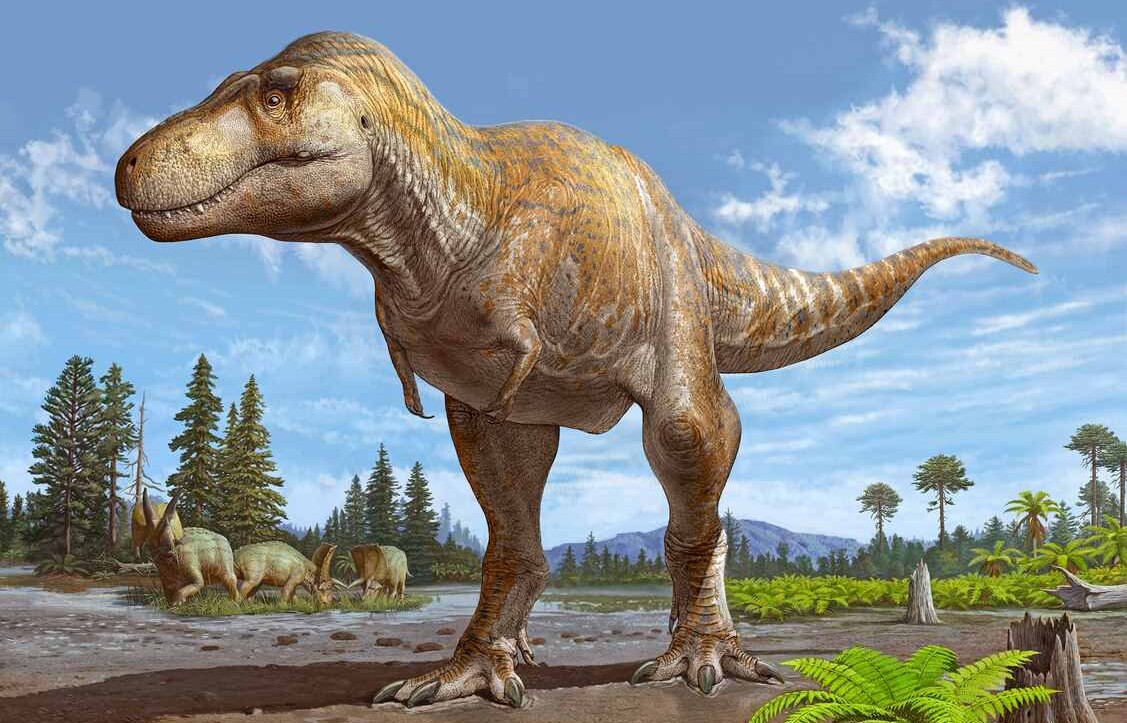
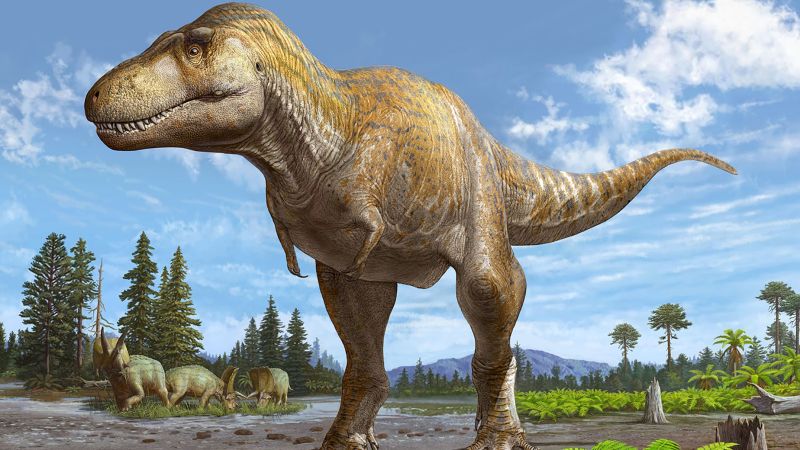
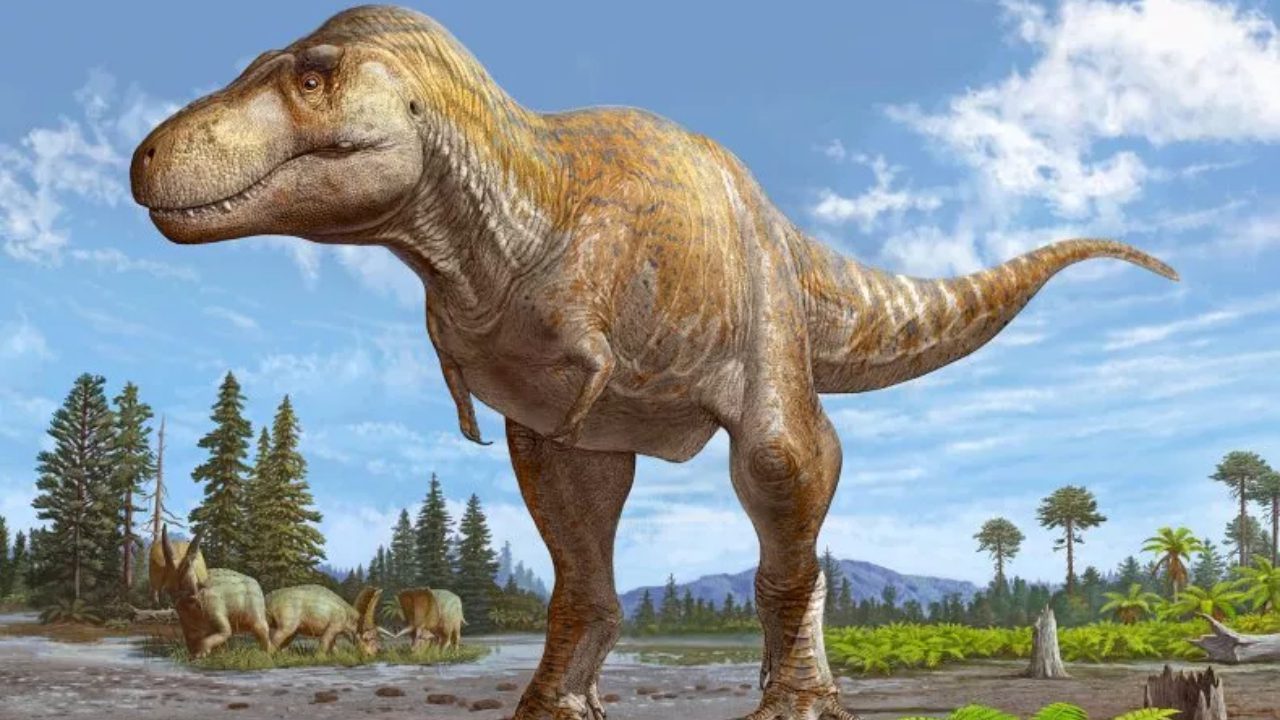
A newly discovered giant dinosaur species, Tyrannosaurus mcraeensis, may be the closest known relative of Tyrannosaurus rex, and could represent the moment the genus experimented with a huge body. The distinction of this new species was confirmed through examinations of its fossilized skull, which was found in New Mexico and lived around five million years before T. rex. The discovery suggests that T. rex may have evolved in Western North America, and the findings also shed light on the evolution of giant body sizes in tyrannosaurids.

"Nanotyrannus: Real Dinosaur or Young T. rex? The Significance of the Debate"

Originally Published 2 years ago — by Slate

Featured image for "Nanotyrannus: Real Dinosaur or Young T. rex? The Significance of the Debate"
Source: Slate

The debate over whether "Nanotyrannus lancensis" was a unique species or a young T. rex continues to stir controversy, with some arguing that the fossils attributed to "Nanotyrannus" are simply those of adolescent T. rex. Despite decades of debate and multiple studies, the consensus among tyrannosaur experts is that there's no solid case for "Nanotyrannus." The controversy has inflated the prices of tyrannosaur fossils at auctions, with a recent skeleton listed for sale at $20 million, reigniting the debate. However, the scientific community remains unconvinced, and the focus on "Nanotyrannus" is seen as a distraction from more meaningful paleontological research and conservation efforts.

"New Mexico Discovery: T. rex's Larger Predecessor Unearthed"

Originally Published 2 years ago — by CNN

Featured image for "New Mexico Discovery: T. rex's Larger Predecessor Unearthed"
Source: CNN

A newly identified relative of the Tyrannosaurus rex, named Tyrannosaurus mcraeensis, has been discovered in New Mexico, dating back 72-73 million years. The creature, which predates T. rex by up to 7 million years, differs in jaw robustness and the absence of a prominent ridge over its eyes. The findings suggest that massive tyrannosaurs likely emerged as an evolutionary adaptation to the availability of large herbivores, but the reasons for the evolution of giant plant-eating dinosaurs remain a mystery. The research team plans to return to the site to search for more bones and understand the environment in which T. mcraeensis lived.

"New Mexico Discovery: Unearthing T. Rex's Bigger, Older Cousin"

Originally Published 2 years ago — by Daily Mail

Featured image for "New Mexico Discovery: Unearthing T. Rex's Bigger, Older Cousin"
Source: Daily Mail

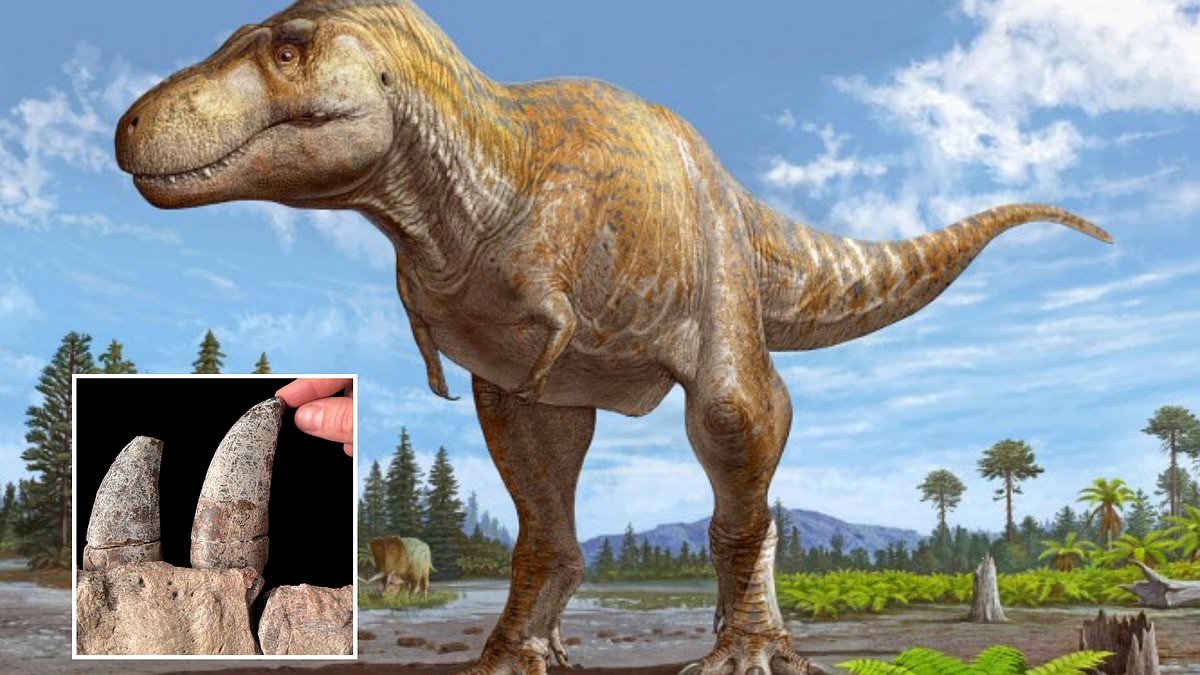
Paleontologists have discovered a newly identified subspecies of tyrannosaur, Tyrannosaurus mcraeensis, in New Mexico, which is believed to be the closest known relative of the T.Rex. This finding reshapes scientists' understanding of how T. Rex might have first arrived in North America, suggesting that tyrannosaurs lived in the southern United States at least 72 million years ago. The newly discovered dinosaur, roughly the size of a T. rex, predates it by about five to seven million years, indicating the presence of larger, more advanced species in the southern United States. The findings, based on a partial skull collected years ago, have been published in the Scientific Reports journal.

"Newly Discovered Dinosaur in New Mexico Could Rewrite T. rex's Origin Story"

Originally Published 2 years ago — by KOB 4

Featured image for "Newly Discovered Dinosaur in New Mexico Could Rewrite T. rex's Origin Story"
Source: KOB 4

A new dinosaur species, named Tyrannosaurus mcraeensis, has been discovered in New Mexico, predating the T. rex by about five million years. The fossil, part of the skull, was found in 1983 and has been studied by scientists for decades. This discovery is changing the timeline of dinosaur presence in North America and is on display at the New Mexico Museum of Natural History and Science.

Ancient Relative of Tyrannosaurus Rex Unearthed in New Mexico

Originally Published 2 years ago — by CBS News

Featured image for Ancient Relative of Tyrannosaurus Rex Unearthed in New Mexico
Source: CBS News

Scientists have identified a new subspecies of tyrannosaur, Tyrannosaurus mcraeensis, which is believed to be an older and more primitive relative of the well-known Tyrannosaurus rex. The fossil evidence, unveiled at the New Mexico Museum of Natural History and Science, suggests that T. mcraeensis predated T. rex by up to 7 million years, indicating that tyrannosaurs were in North America much earlier than previously thought. The differences between the two species are subtle, but the discovery fills a gap in the scientific record and sheds light on how T. rex evolved into a massive super-predator. Further research and analysis of fossils from the Hall Lake Formation in southern New Mexico could provide more insights into the evolutionary history of these iconic dinosaurs.

"Newly Discovered Dinosaur Subspecies in New Mexico Predates Tyrannosaurus Rex"

Originally Published 2 years ago — by Fox News

Featured image for "Newly Discovered Dinosaur Subspecies in New Mexico Predates Tyrannosaurus Rex"
Source: Fox News

Researchers from the New Mexico Museum of Natural History and Science have identified a newly discovered dinosaur subspecies, Tyrannosaurus mcraeensis, as a more primitive and older relative of the Tyrannosaurus rex, reshaping the understanding of when the beast first arrived in North America. The discovery of a partial skull in western New Mexico led to the study, showing that the T. rex was in North America millions of years earlier than previously thought, suggesting it lived in what is now the southern U.S. at least 72 million years ago.

"Uncovering the Evolutionary Origins of a Giant Tyrannosaur: New Mexico Fossil Reveals Closest Relative to T. rex"

Originally Published 2 years ago — by Nature.com

Featured image for "Uncovering the Evolutionary Origins of a Giant Tyrannosaur: New Mexico Fossil Reveals Closest Relative to T. rex"
Source: Nature.com

A new study describes a giant tyrannosaurid, named Tyrannosaurus mcraeensis, from the late Campanian—early Maastrichtian of New Mexico, which predates Tyrannosaurus rex by up to 7 million years. The newly discovered specimen, NMMNH P-3698, represents a distinct taxon and is the closest known relative of T. rex, suggesting that giant Tyrannosaurini evolved in southern Laramidia. The study also discusses the differences in morphology between T. mcraeensis and T. rex, as well as the age of the specimen and the implications for the evolution of tyrannosaurid gigantism.

Unveiling the T. Rex's Bone-Crushing Bite

Originally Published 2 years ago — by The New York Times

Featured image for Unveiling the T. Rex's Bone-Crushing Bite
Source: The New York Times

A recent study analyzed bite forces and skull stress in nine species of tyrannosaurs, shedding light on how the T. rex developed its bone-crushing bite. The research revealed that tyrannosaurs gradually increased their biting power over time. Surprisingly, the shape of the snout did not necessarily correlate with skull stress, indicating that earlier, gracile-snouted tyrannosaurs may not have bitten as hard. The study also found that even as juveniles, T. rex had a strong bite force, allowing them to occupy a different ecological niche. The findings highlight the importance of understanding the evolutionary history and development of these apex predators.

T.rex caught on camera displaying cowardly behavior.

Originally Published 2 years ago — by BBC Science Focus Magazine

The second season of Prehistoric Planet on Apple TV+ shows a scene where a Tyrannosaurus rex backs down from a Quetzalcoatlus, a giant pterosaur predator. Palaeontologist Darren Naish, the series’ lead consultant, explains that every predator behaves conservatively to minimise the risk of injury and death to itself. The answer is based on published research, particularly their anatomy and the behaviour of living animals similar to these extinct ones. The appearance of the Quetzalcoatlus was based on research from 2008 and 2015, which showed that their narrow build, with foldable 9m wings on a leggy body, made them incredibly competent terrestrial predators with the ability to fly.

"Earth Safe from Killer Asteroids for Next 1,000 Years, Study Finds"

Originally Published 2 years ago — by Livescience.com

Featured image for "Earth Safe from Killer Asteroids for Next 1,000 Years, Study Finds"
Source: Livescience.com

A new study has estimated that 1.7 billion Tyrannosaurus rexes roamed the Earth before going extinct, challenging a previous estimate of 2.5 billion. The study's author, Eva Griebeler, believes that the original study overestimated the survival rates and egg-laying capabilities of T. rex, as well as the number of generations that existed during this time. The new estimate is based on updated data and a more realistic model. The question of where all the T. rex bones are remains unanswered, as we have only found the remains of 0.0000002% of these giant dinosaurs.