Tag

Tail

All articles tagged with #tail

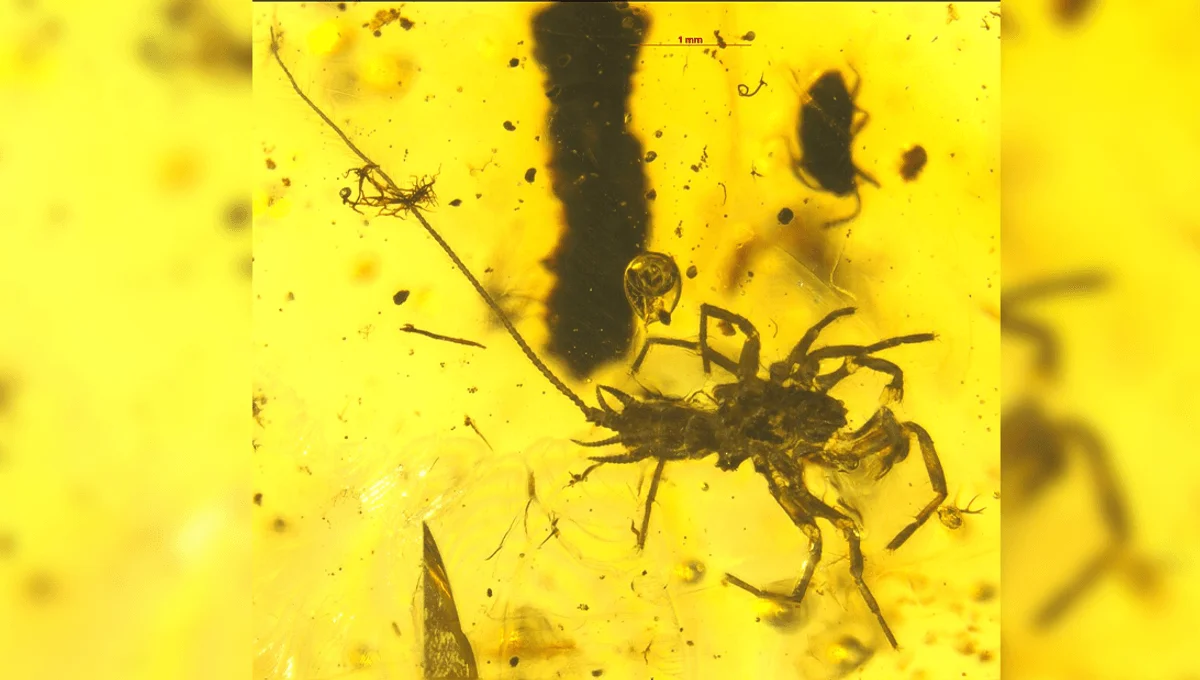
Early Spider Designs Featured Tailed, Eight-Legged Creatures

Originally Published 10 days ago — by IFLScience

Featured image for Early Spider Designs Featured Tailed, Eight-Legged Creatures
Source: IFLScience

Scientists discovered a 100-million-year-old spider-like creature called Chimerarachne yingi with a tail, providing new insights into spider evolution. The fossil shows a mix of modern spider traits and unique features like a segmented abdomen and a whip-like tail, suggesting it was a close relative or early branch of true spiders, highlighting the mosaic nature of their evolutionary development.

"Discovery: Exoplanet WASP-69 b's Enormous 350,000-Mile Tail"

Originally Published 1 year ago — by ScienceAlert

Featured image for "Discovery: Exoplanet WASP-69 b's Enormous 350,000-Mile Tail"
Source: ScienceAlert

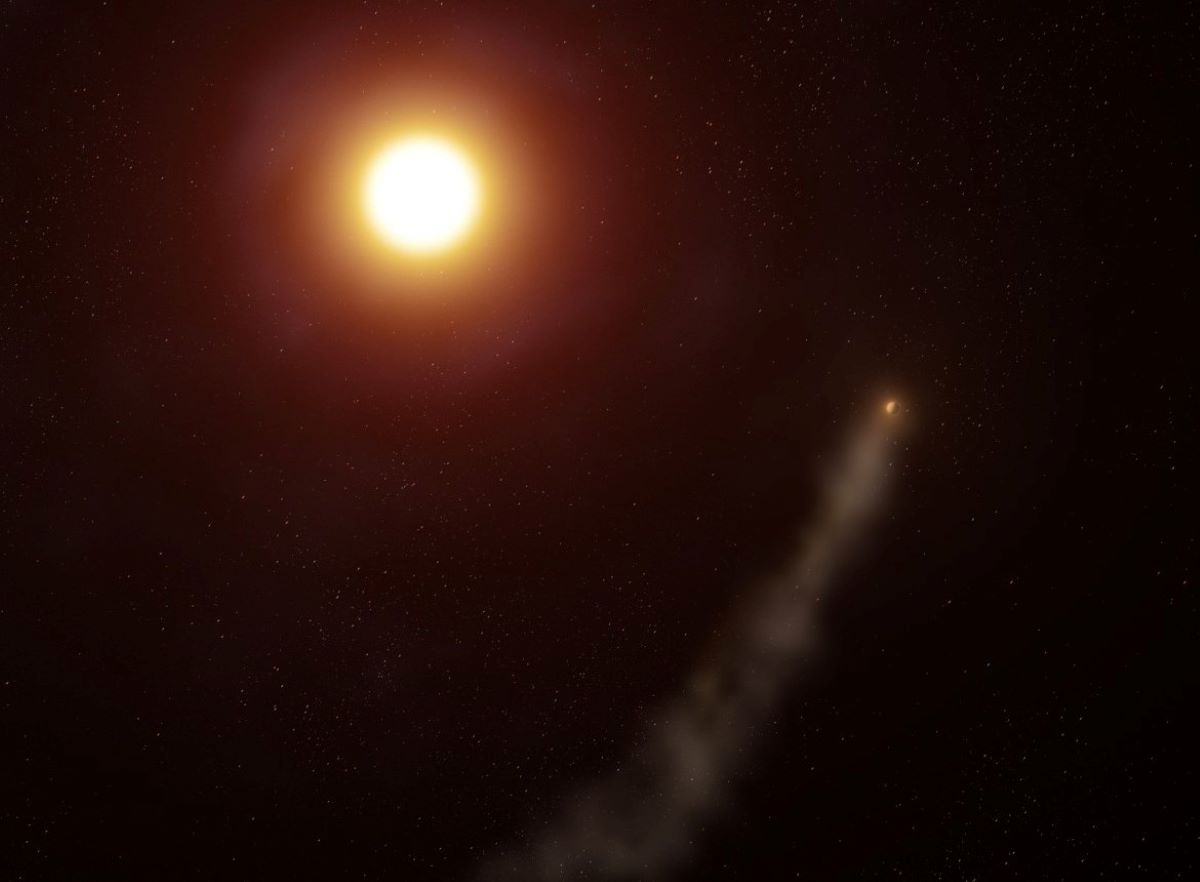
Astronomers have discovered the gas giant exoplanet WASP-69b, located 160 light-years away, with a comet-like tail seven times longer than the planet itself. The tail is formed as the planet's atmosphere is stripped away due to its close proximity to its star, and observations from the WM Keck Observatory in Hawaii have provided valuable insights into the planet's atmospheric mass-loss in real time. Despite losing large amounts of hydrogen and helium, the massive exoplanet is not in danger of losing its entire atmosphere within the star's lifetime.

"Exoplanet's Enormous 350,000-Mile Tail Baffles Astronomers"

Originally Published 2 years ago — by Newsweek

Featured image for "Exoplanet's Enormous 350,000-Mile Tail Baffles Astronomers"
Source: Newsweek

Astronomers have discovered that the exoplanet WASP-69, roughly the size of Jupiter, has a 350,000-mile-long tail formed as its atmosphere seeps away due to its close proximity to its host star. This finding provides insight into how stellar winds affect planets in close orbits and helps astrophysicists understand planetary evolution. Despite losing a significant amount of mass, the planet's resilience in such a hostile environment serves as a reminder of our own capacity to overcome challenges.

Unraveling the Enigma of Asteroid Phaethon's Mysterious Tail

Originally Published 2 years ago — by Space.com

Featured image for Unraveling the Enigma of Asteroid Phaethon's Mysterious Tail
Source: Space.com

Astronomers have long been puzzled by the mysterious tail of the asteroid Phaethon, which is visible when it passes closest to the sun but not when it is farther away. New research using NASA's Spitzer space telescope suggests that Phaethon likely belongs to a rare class of meteorite called the "CY carbonaceous chondrite." The asteroid's emission spectrum reveals minerals consistent with this class, including olivine, carbonates, iron sulfides, and oxide minerals. Thermal modeling shows that as Phaethon approaches the sun, its surface temperatures can rise to 800°C, causing the release of gases from the minerals and the breakdown of the rock, resulting in the formation of a tail.

"The Unique Five-Limbed Terrestrial Animal: Unveiling Earth's Singular Species"

Originally Published 2 years ago — by IFLScience

Featured image for "The Unique Five-Limbed Terrestrial Animal: Unveiling Earth's Singular Species"
Source: IFLScience

The red kangaroo is the only five-limbed terrestrial animal on Earth, according to a study published in the journal Biology Letters. Researchers found that the kangaroo uses its tail as a limb to propel itself forward while walking, in a gait called "pentapedal." The tail of a kangaroo is equipped with highly articulated vertebrae and thick muscle, providing propulsive force equivalent to all four other limbs combined. The study suggests that the red kangaroo is the only vertebrate on the planet with five limbs.

"Nishimura: The Spectacular Rare Green Comet Lighting Up the Sky"

Originally Published 2 years ago — by SciTechDaily

Featured image for "Nishimura: The Spectacular Rare Green Comet Lighting Up the Sky"
Source: SciTechDaily

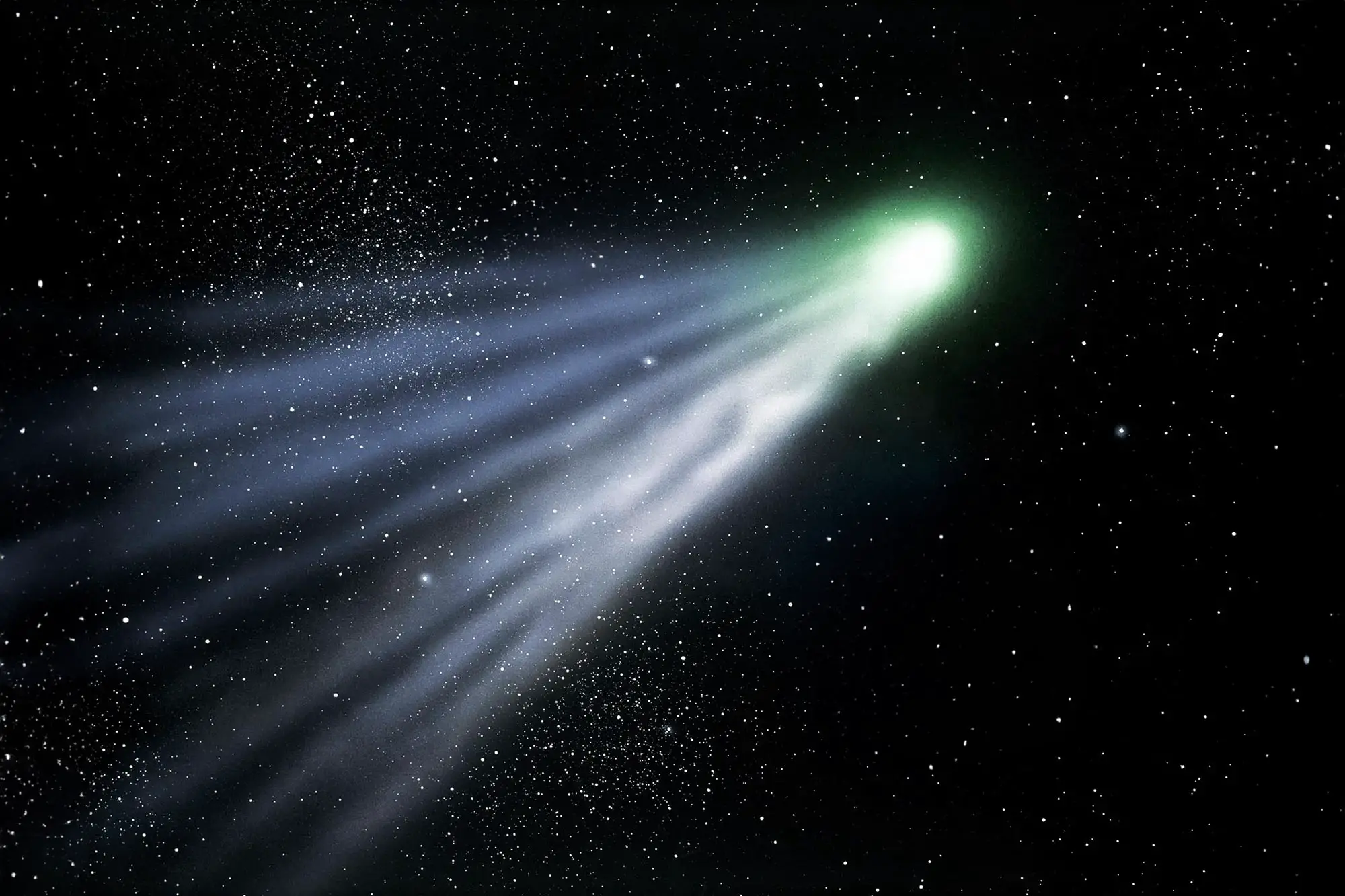
Comet Nishimura, also known as C/2023 P1, is currently passing close to the Sun but is unlikely to provide a spectacular sky display. While it is bright enough to be visible to the naked eye, its proximity to the Sun means it will be difficult to observe, especially in the evening sky. Astronomers are still excited about the comet and there is a chance it may brighten unexpectedly. If not, there is another comet, C/2023 A3 (Tsuchinshan-ATLAS), that could potentially provide a spectacular show next year.

Longest Galactic 'Tail' Found Near Doomed Galaxy Group.

Originally Published 2 years ago — by Yahoo Life

Featured image for Longest Galactic 'Tail' Found Near Doomed Galaxy Group.
Source: Yahoo Life

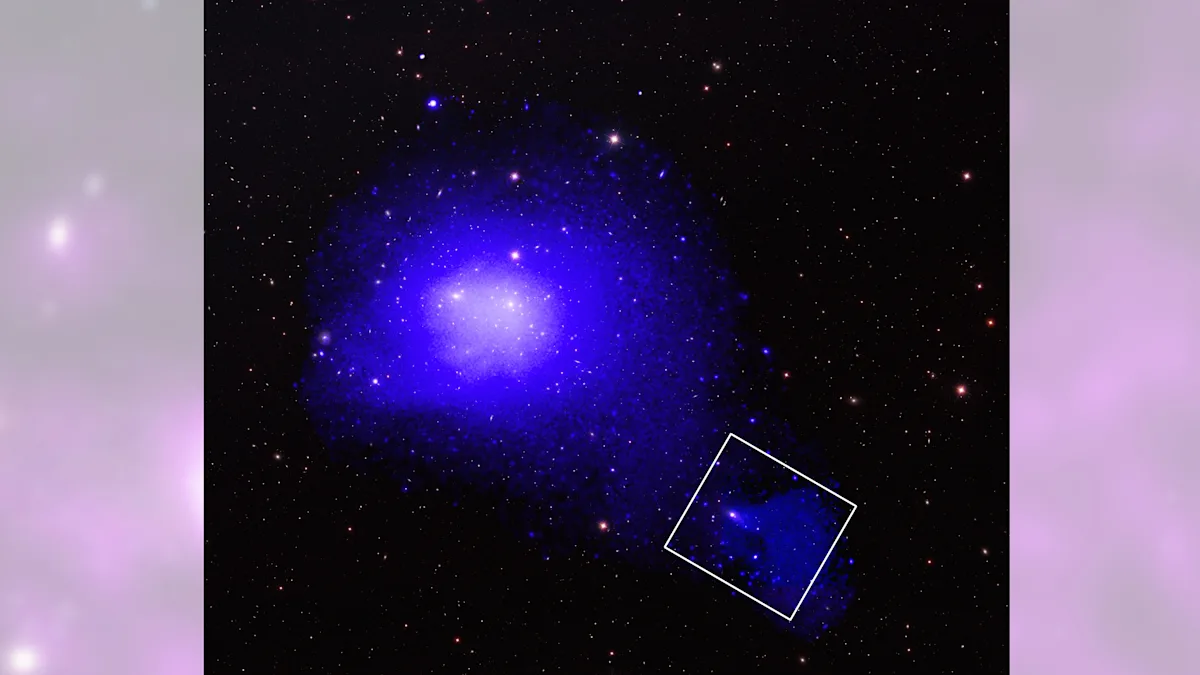
Astronomers have discovered the longest galactic tail ever seen, measuring over a million light-years long, using data from NASA's Chandra X-ray Observatory and the Sloan Digital Sky Survey. The tail was created by a galaxy group called NGC 4839 as it moved through the Coma Cluster, leaving a trail of hot gas in its wake. The discovery provides a rare opportunity to study the mechanics of how galaxy clusters merge and will eventually disperse as the gas mixes with cooler gases in the cluster.