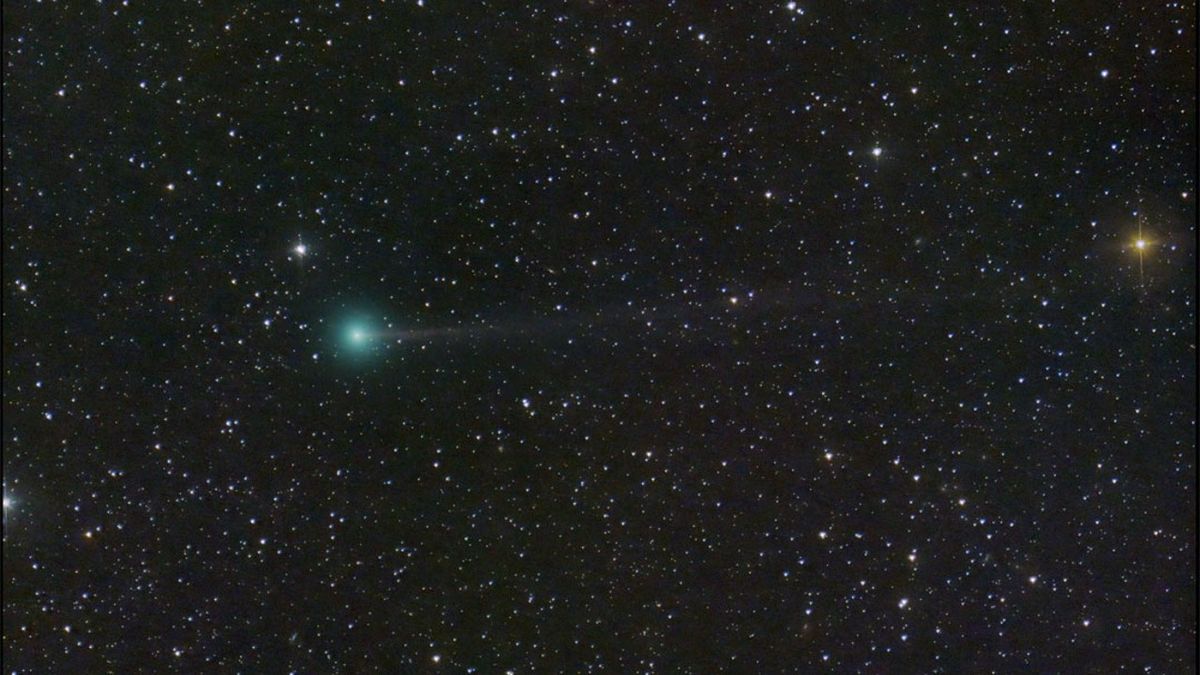
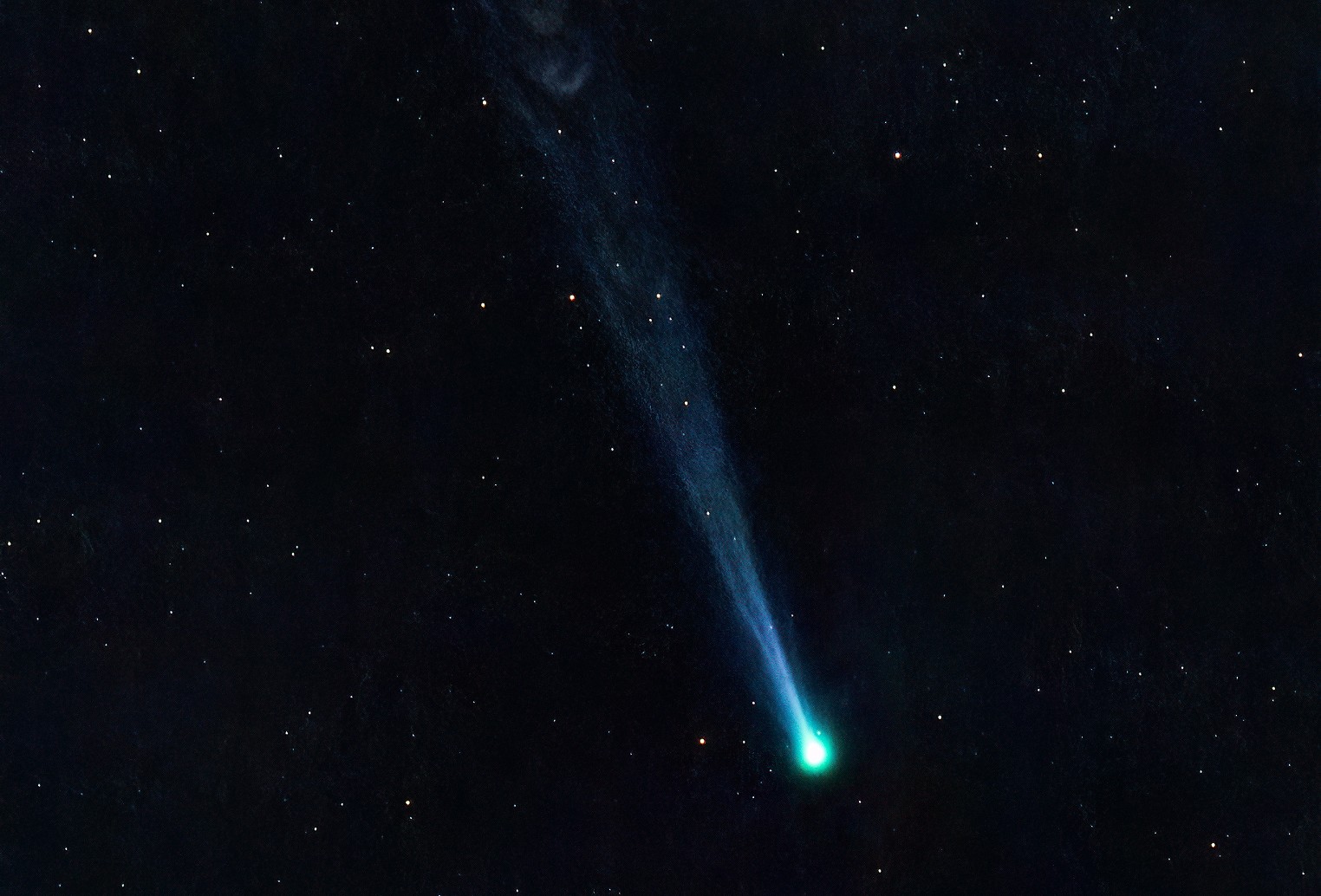
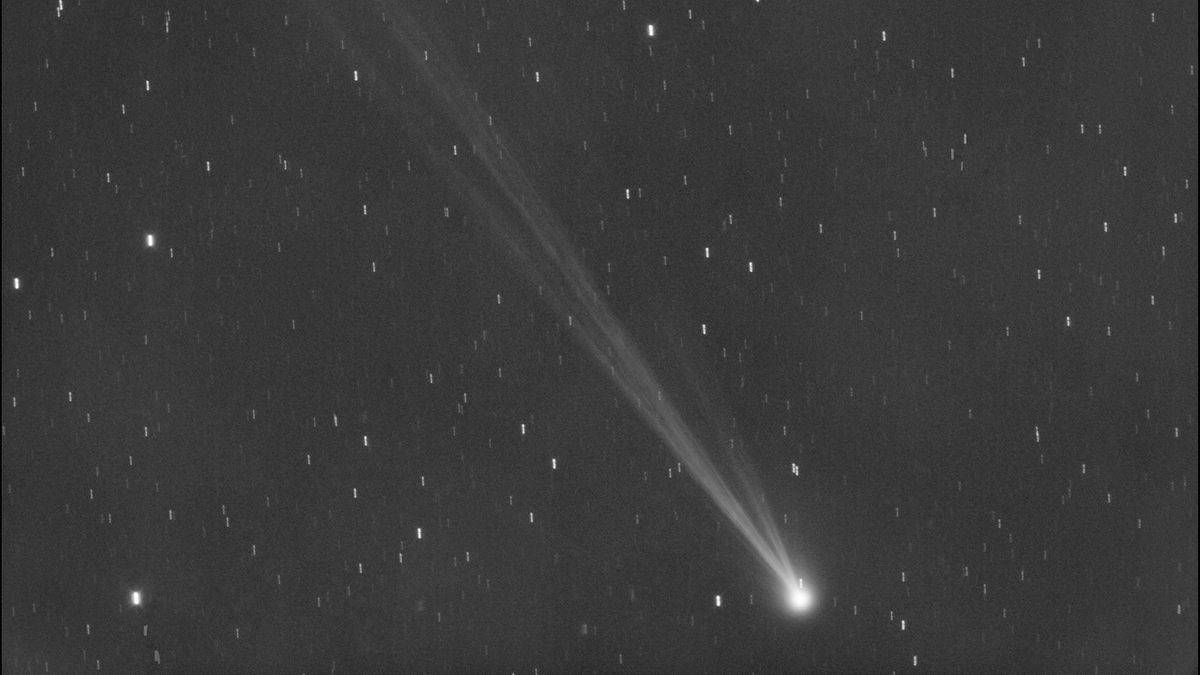
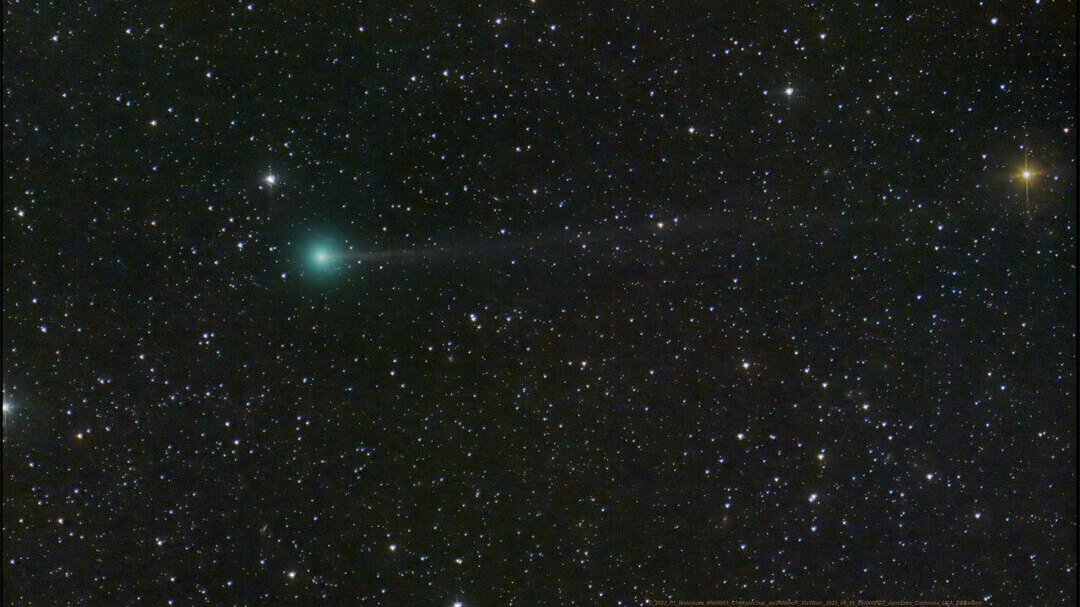
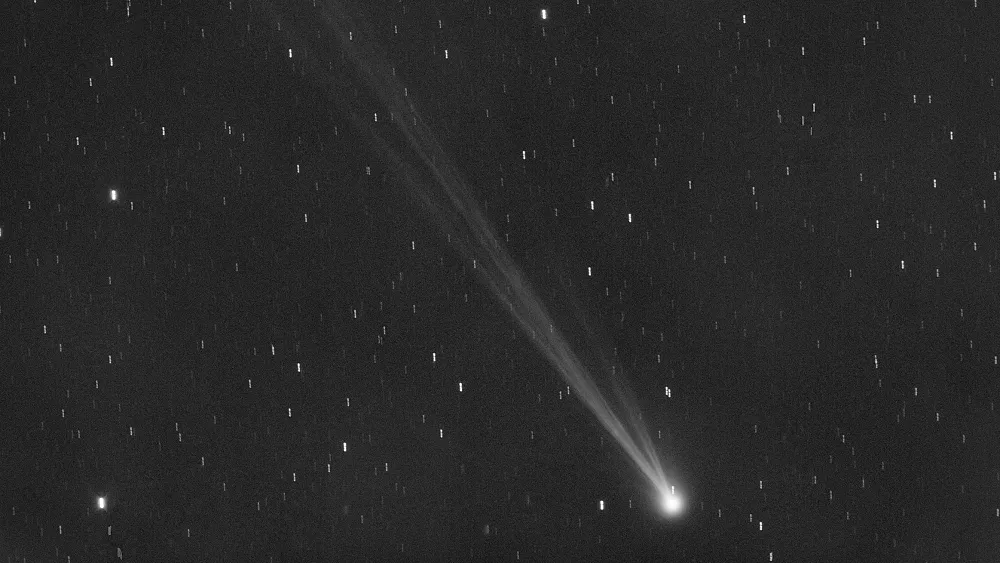
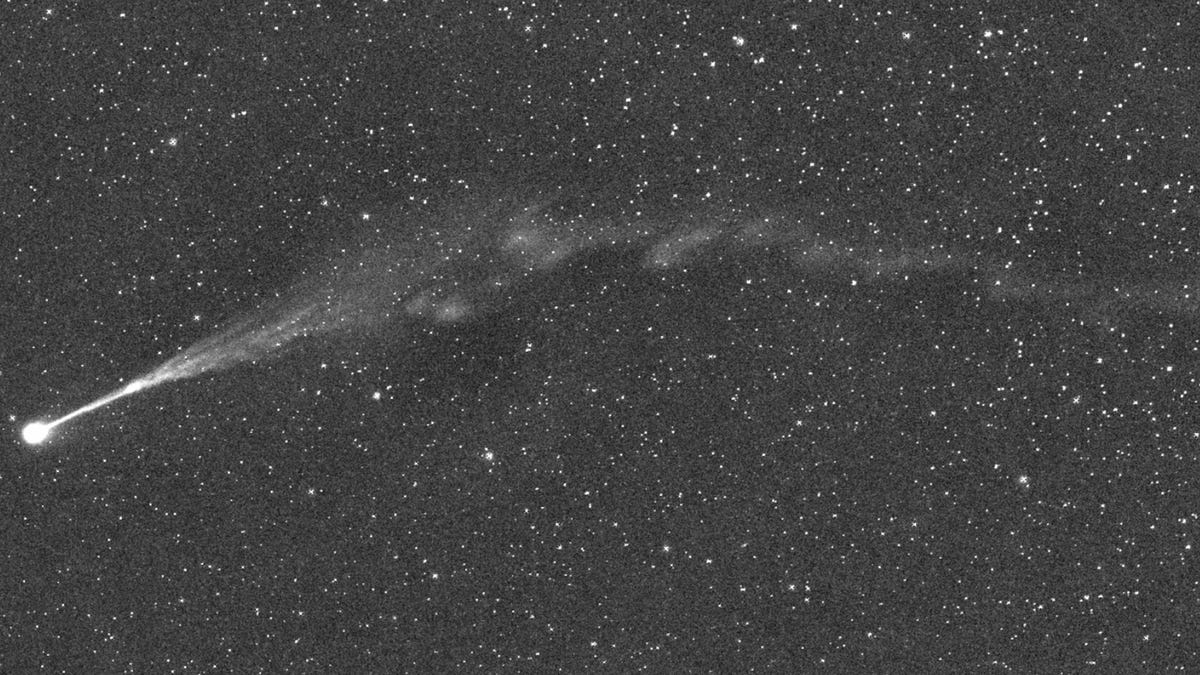
A NASA space telescope captured stunning images of Comet Nishimura moving away from the sun, showcasing the solar wind flicking its tail. Additionally, the article highlights five more remarkable space and astronomy images.
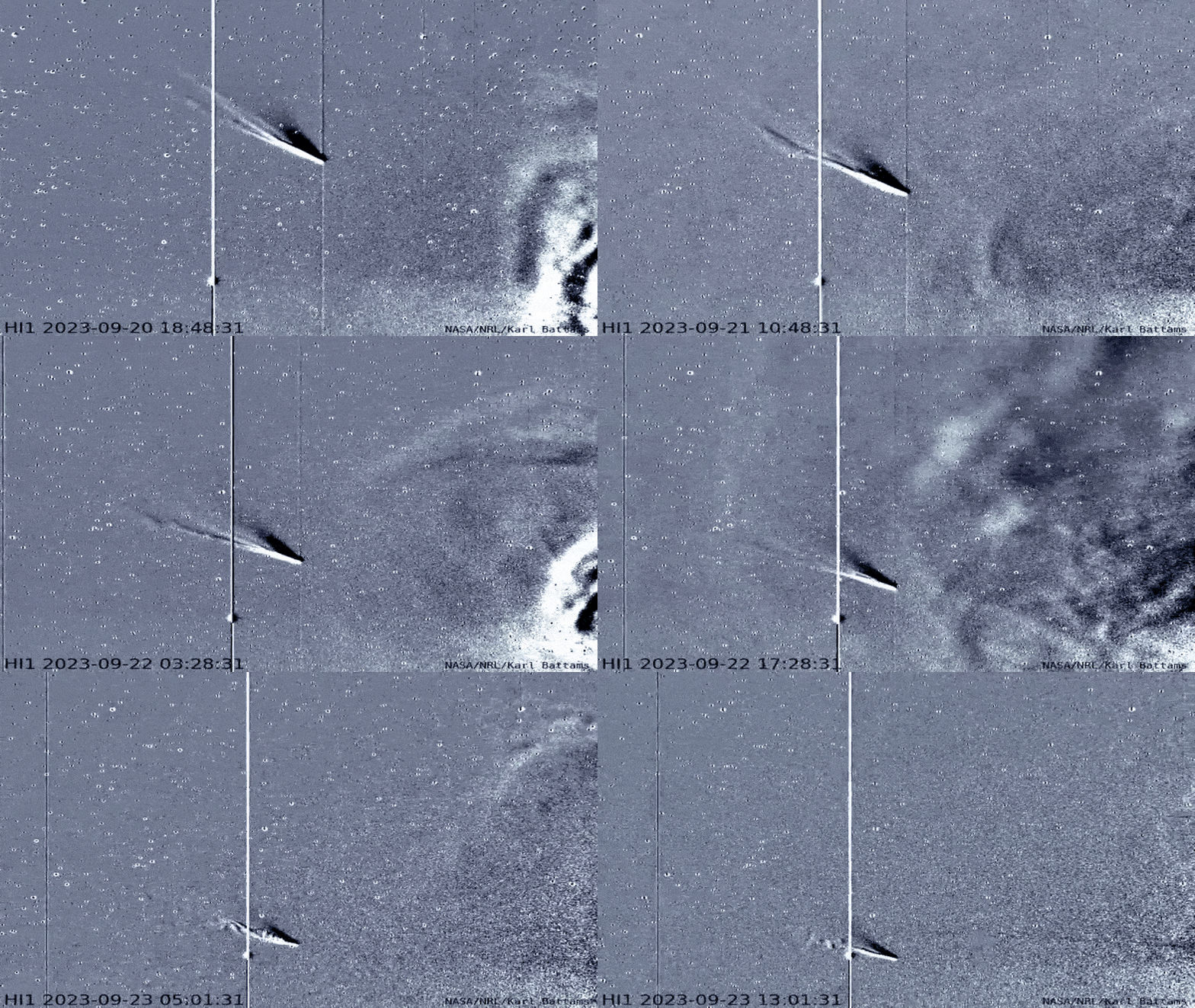
NASA's STEREO-A spacecraft captured video footage of Comet Nishimura being hit by a powerful solar storm, causing its tail to be temporarily blown away. The green comet, discovered by amateur astronomer Hideo Nishimura, survived a close encounter with the sun and has a highly elliptical orbit that brings it into the inner solar system every 430 years. Despite being bombarded by the sun, the comet remains on its original trajectory and may be visible again in the future.
Comet Nishimura, also known as C/2023 P1, surprised scientists by appearing in images taken by NASA's STEREO-A spacecraft as it observed the sun's corona. The comet seems to have survived its close encounter with the sun on September 17, passing within 20.5 million miles of it. While the preliminary images show the comet looking intact, scientists are cautious about drawing conclusions until higher-resolution data is available. The comet will continue to move away from the sun and the spacecraft, growing smaller and fainter in the images.
Green comet Nishimura, also known as C/2023 P1, has survived its close encounter with the sun and is now heading back into the outer reaches of the solar system. It won't return for around 430 years, but it may still be visible over the next few weeks, depending on your location. The comet's trajectory brings it into the inner solar system every 430 years before slingshotting around the sun and returning to the Oort Cloud. Although it has become dimmer and can only be seen near the horizon shortly before sunrise or after sunset, those in Australia have a slightly better chance of spotting it. Additionally, Nishimura could potentially be the source of the annual Sigma-Hydrids meteor shower in December, making this year's shower more active and visually stunning.
Comet Nishimura, also known as C/2023 P1, is currently passing close to the Sun but is unlikely to provide a spectacular sky display. While it is bright enough to be visible to the naked eye, its proximity to the Sun means it will be difficult to observe, especially in the evening sky. Astronomers are still excited about the comet and there is a chance it may brighten unexpectedly. If not, there is another comet, C/2023 A3 (Tsuchinshan-ATLAS), that could potentially provide a spectacular show next year.
Comet Nishimura, discovered by Japanese astronomer Hideo Nishimura, is currently passing close to the sun and could potentially be visible to the naked eye. However, its path will keep it close to the sun in the sky as observed from Earth, making it difficult to see. There is a small window to see the comet from Australia in the week of September 20 to 27, but it will likely be lost in the sun's glare. If the comet brightens unexpectedly or fragments, it could become easier to spot. Another comet, Tsuchinshan-ATLAS, discovered earlier this year, is expected to put on a spectacular show next year.
Comet Nishimura, a recently discovered celestial phenomenon, will be visible in the pre-dawn hours until September 17. To catch a glimpse of this green-tinted comet, viewers will likely need binoculars or a telescope. The best viewing conditions will be in areas with minimal light pollution and unobstructed horizons. Named after the amateur astronomer who discovered it, Comet Nishimura will not be visible again for another 435 years.
Comet Nishimura, a newly discovered green comet, is expected to reach peak brightness on Saturday in Southern California. Viewing the comet may be challenging due to its proximity to the sun, but using binoculars and looking to the west at sunset can increase the chances of spotting it. The best viewing window is from 6:58 p.m. to 7:56 p.m., with the comet scheduled to dip below the horizon shortly afterward. The comet is composed of ice and rocks, and its green color is a result of carbon interacting with high temperatures and ions from the sun.
Comet Nishimura, discovered by amateur astronomer Hideo Nishimura, will be visible in the Northern Hemisphere for a few more days before moving closer to the sun. To spot the comet, look to the east-southeast in the pre-dawn hours and locate the Leo constellation. An unobstructed view of the horizon is necessary, as the comet will be just eight degrees above it. The comet will make its closest approach to the sun on September 18, and if it survives, it may be visible in the Southern Hemisphere.
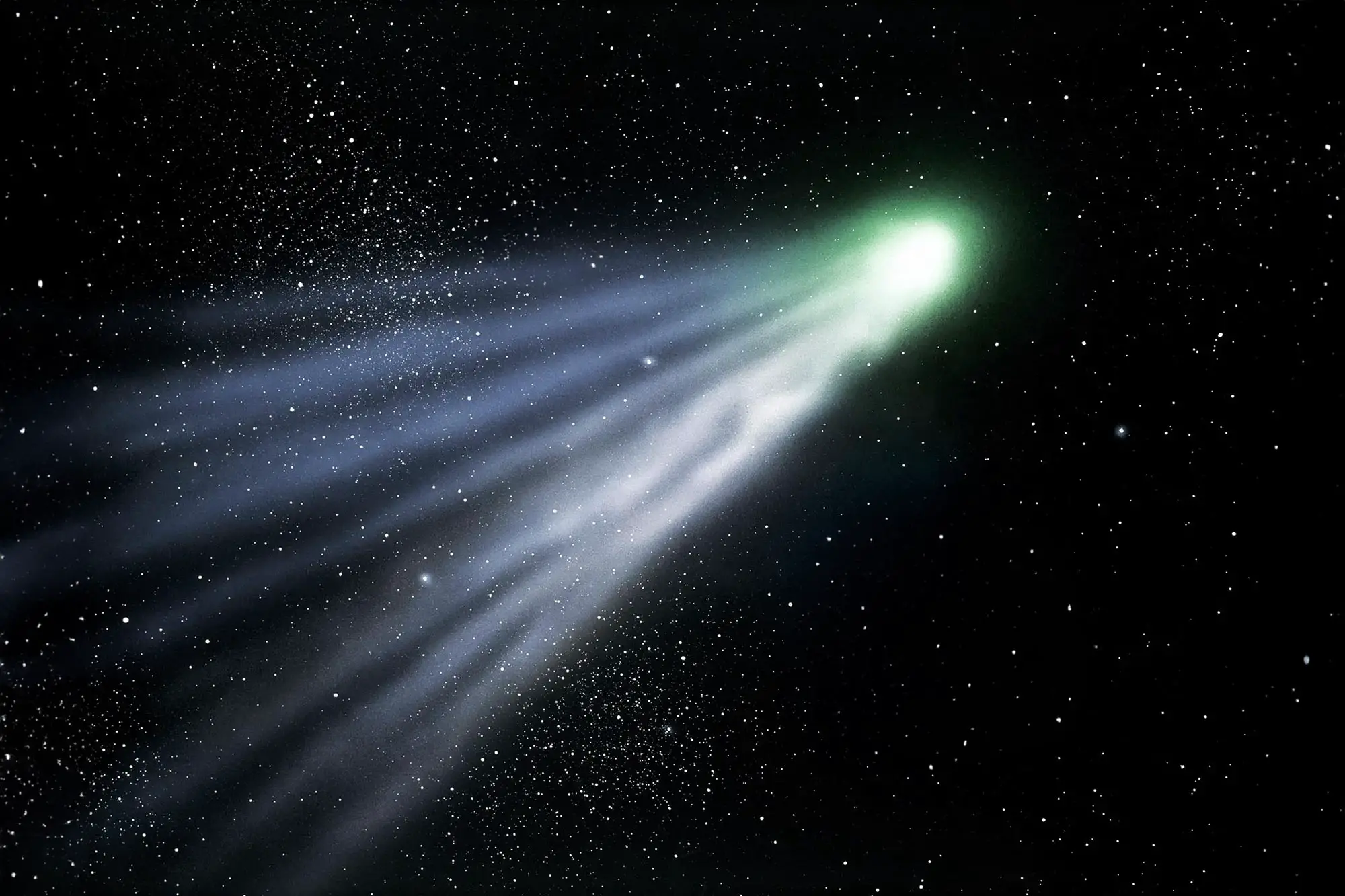
A newly-discovered green comet named Nishimura, after amateur Japanese astronomer Hideo Nishimura who discovered it, is currently visible from the northern hemisphere for the first time in over 400 years. The comet can be seen in the constellation of Leo and appears as a fuzzy white glow to the naked eye, but photographs show a bright lime green color. To spot the comet, observers will need binoculars or a small telescope and should consult star charts from Sky & Telescope for guidance. The comet will be closest to Earth on September 17 before becoming visible from the southern hemisphere.
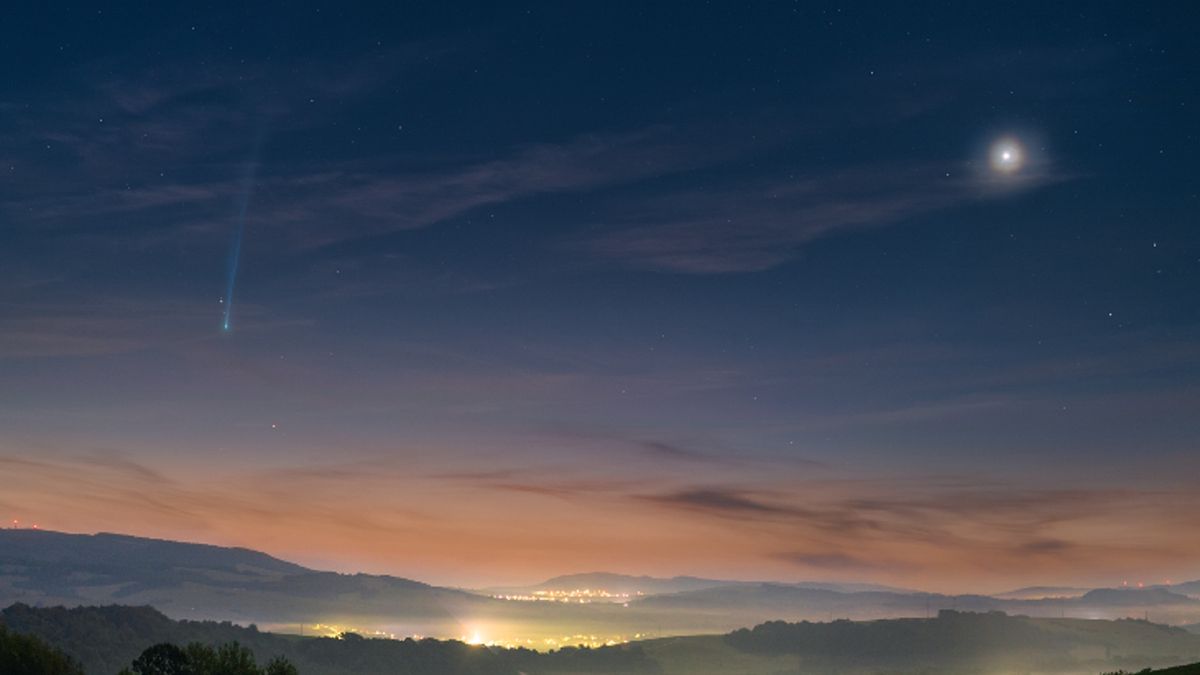
Comet Nishimura, discovered by amateur astronomer Hideo Nishimura, is currently passing Earth and will be visible to stargazers in the Northern Hemisphere for the next couple of days. To spot it, look at the northeastern horizon before dawn, between the constellations Cancer and Leo, and close to Venus. The comet will become brighter as it gets closer to the Sun and will be at its closest point on September 17. If it survives, it will be visible in the Southern Hemisphere by the end of the month.
Comet Nishimura, discovered by Japanese amateur Hideo Nishimura, will make its closest approach to Earth on September 12 before continuing its journey towards the sun. The best chance to spot the comet will be during the 90 minutes before sunrise on Monday morning, with the best sky charts available at skyandtelescope.com or astronomy.com. Although it will be a tough-to-spot object, being away from city lights and having an unobstructed view to the east-northeast will increase the chances of seeing it. After swinging around the sun, the comet will only be visible from the Southern Hemisphere later in the month.
Comet C/2023 P1 (Nishimura) is set to make a close pass by Earth on September 12 and can already be seen with the naked eye. However, it is best observed with binoculars or a telescope. The comet is currently facing challenges from solar storms, which have caused disruptions in its tail. Skywatchers are advised to look for the comet in the constellation Leo, about 60 to 90 minutes before dawn.
Comet Nishimura, set to make a close pass by Earth on Sept. 12, experienced a "disconnection event" caused by a solar storm, which temporarily blew away a portion of its tail. The tail has since grown back, but more coronal mass ejections (CMEs) are heading its way. Skywatchers can start looking for the comet with binoculars or a telescope as it is expected to be visible from Sept. 8, although it will be easier to spot in the early morning skies with magnification. Comets are fragile and unpredictable, but catching a glimpse of Comet Nishimura before it potentially disintegrates is worth the effort.
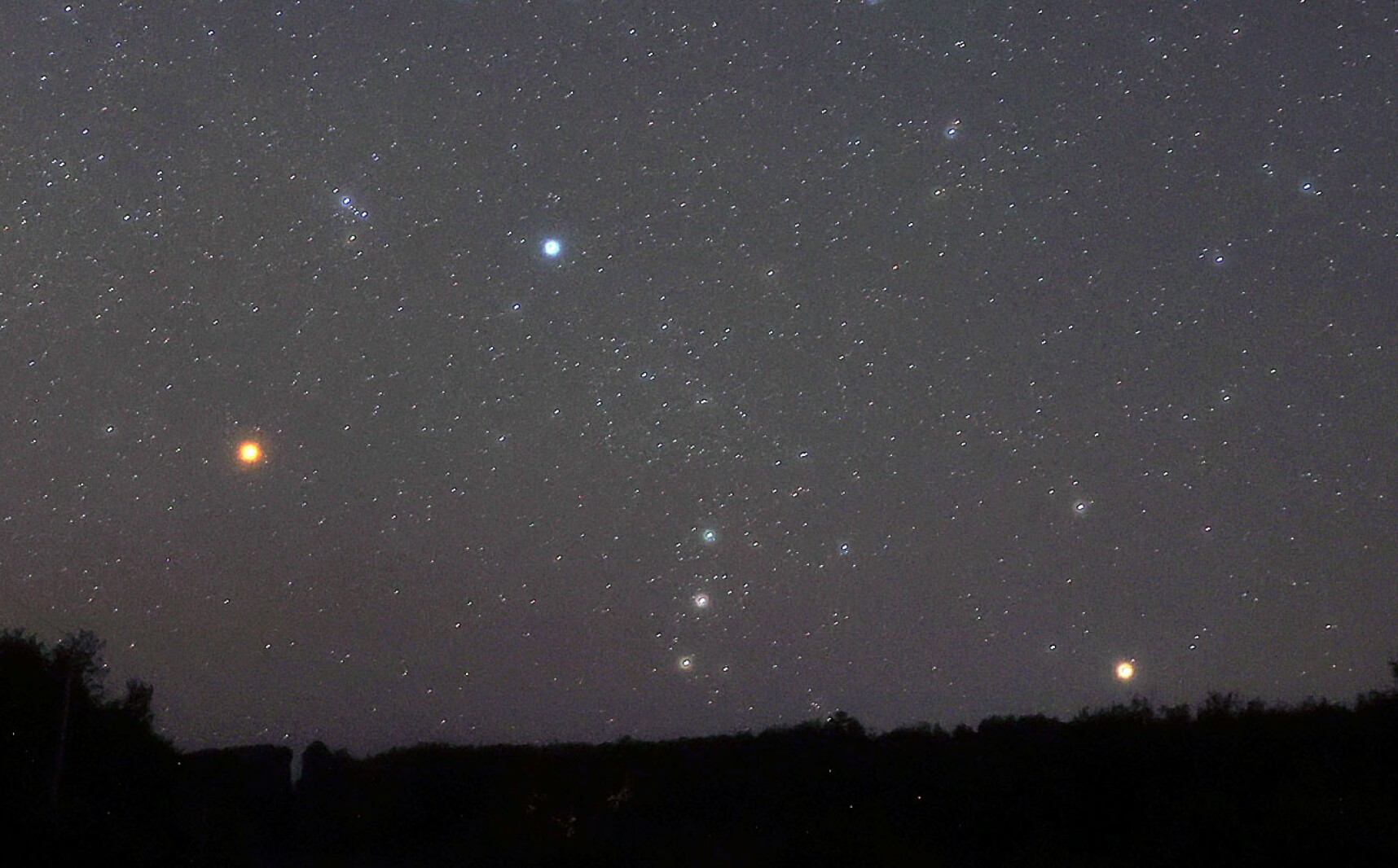
Astronomer Bob King shares his experiences of observing a new comet discovered by Japanese observer Hideo Nishimura, the return of the constellation Orion, and the joy of watching the Perseid meteor shower with others. He also highlights a unique and interactive aurora activity led by park ranger Jenny Martin, which combined science and fun for both kids and adults.