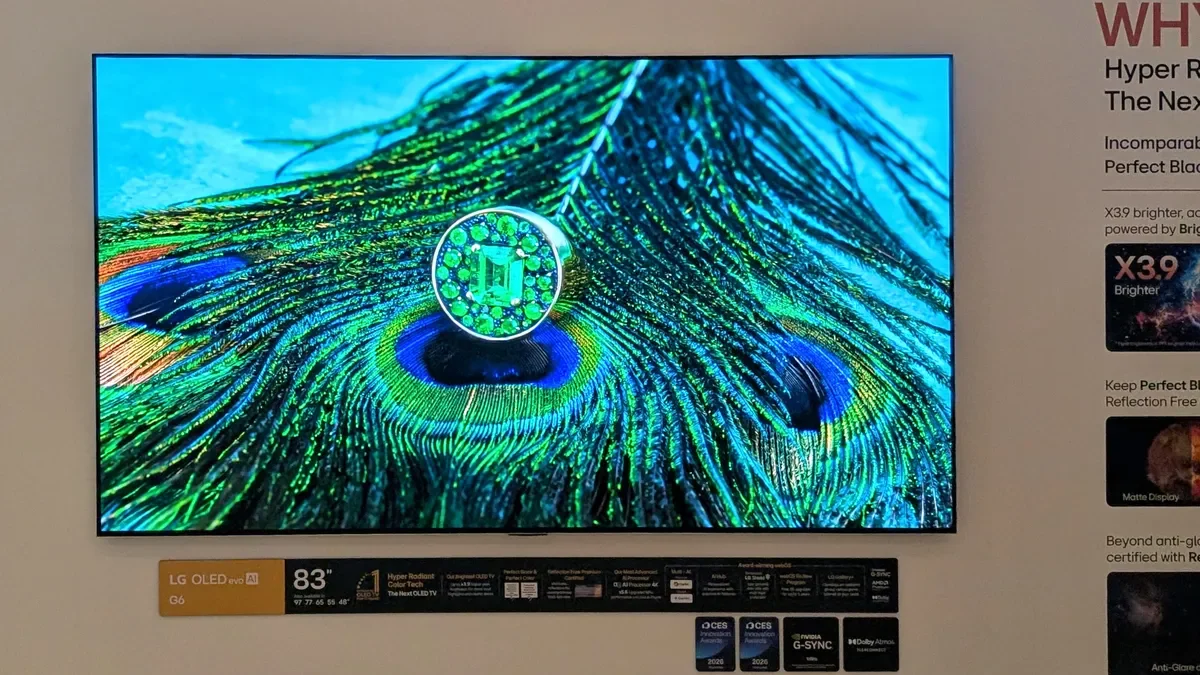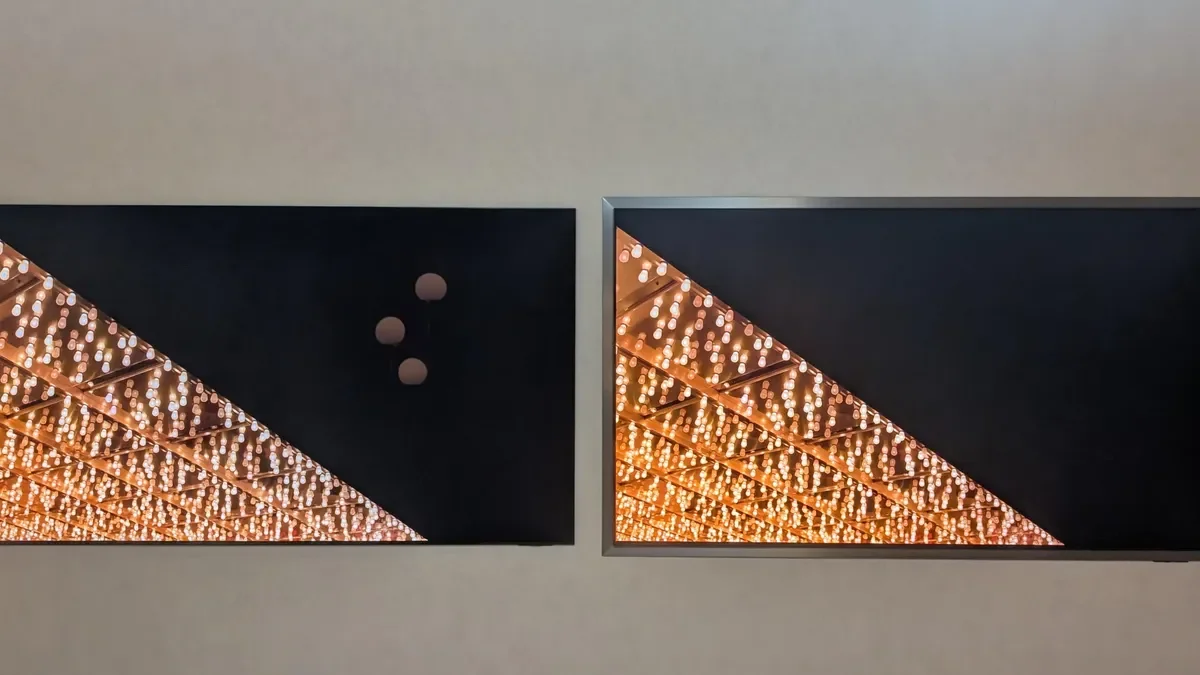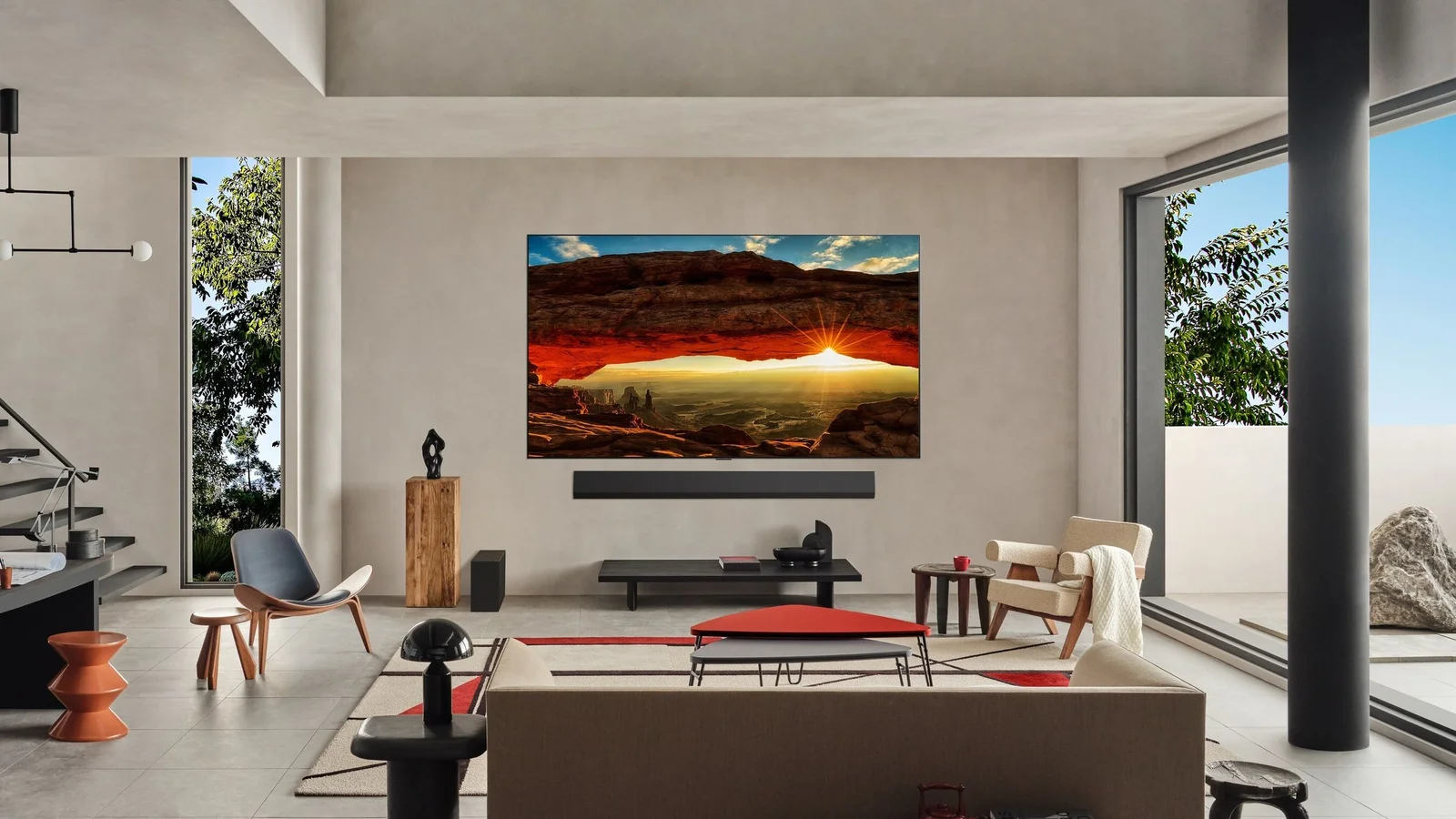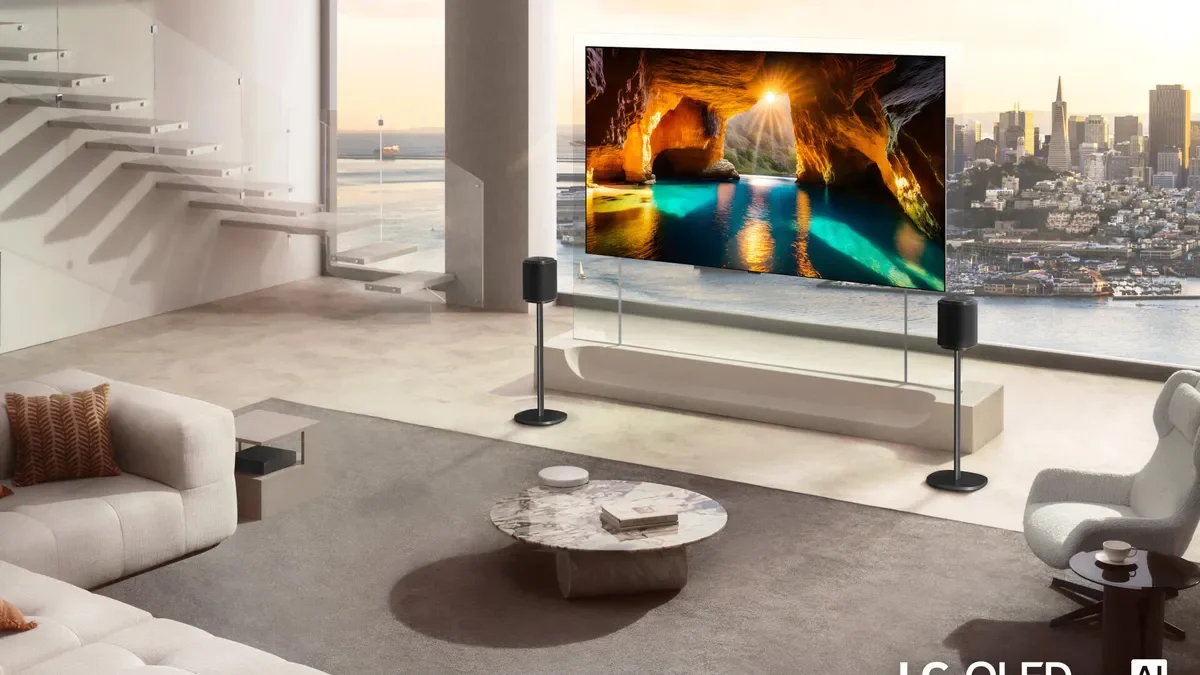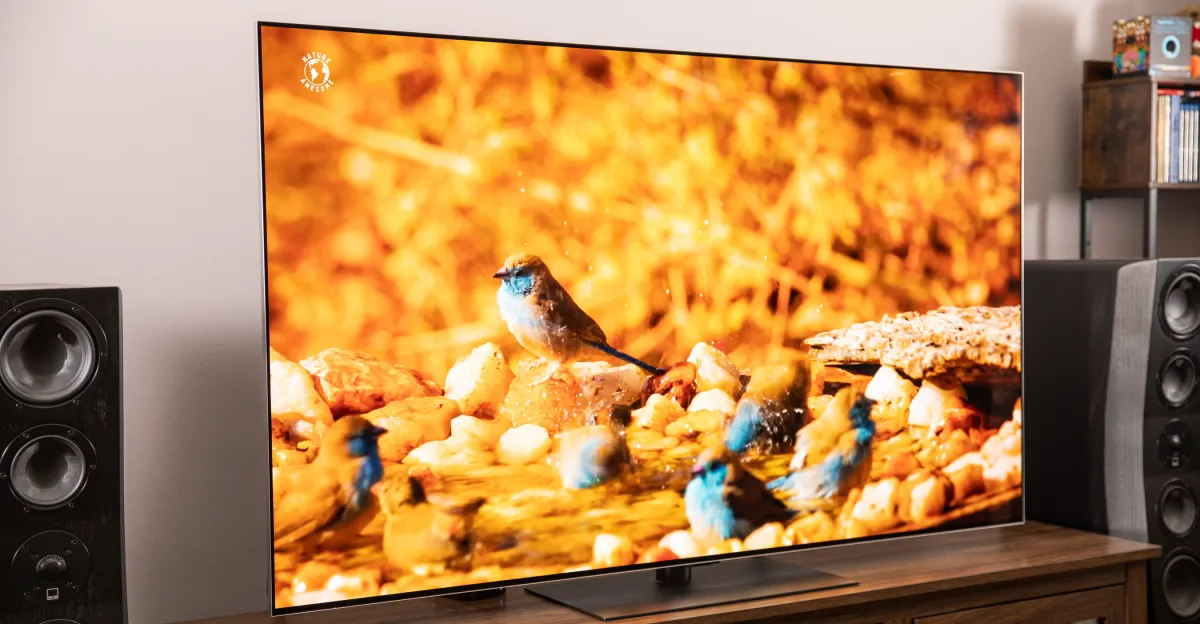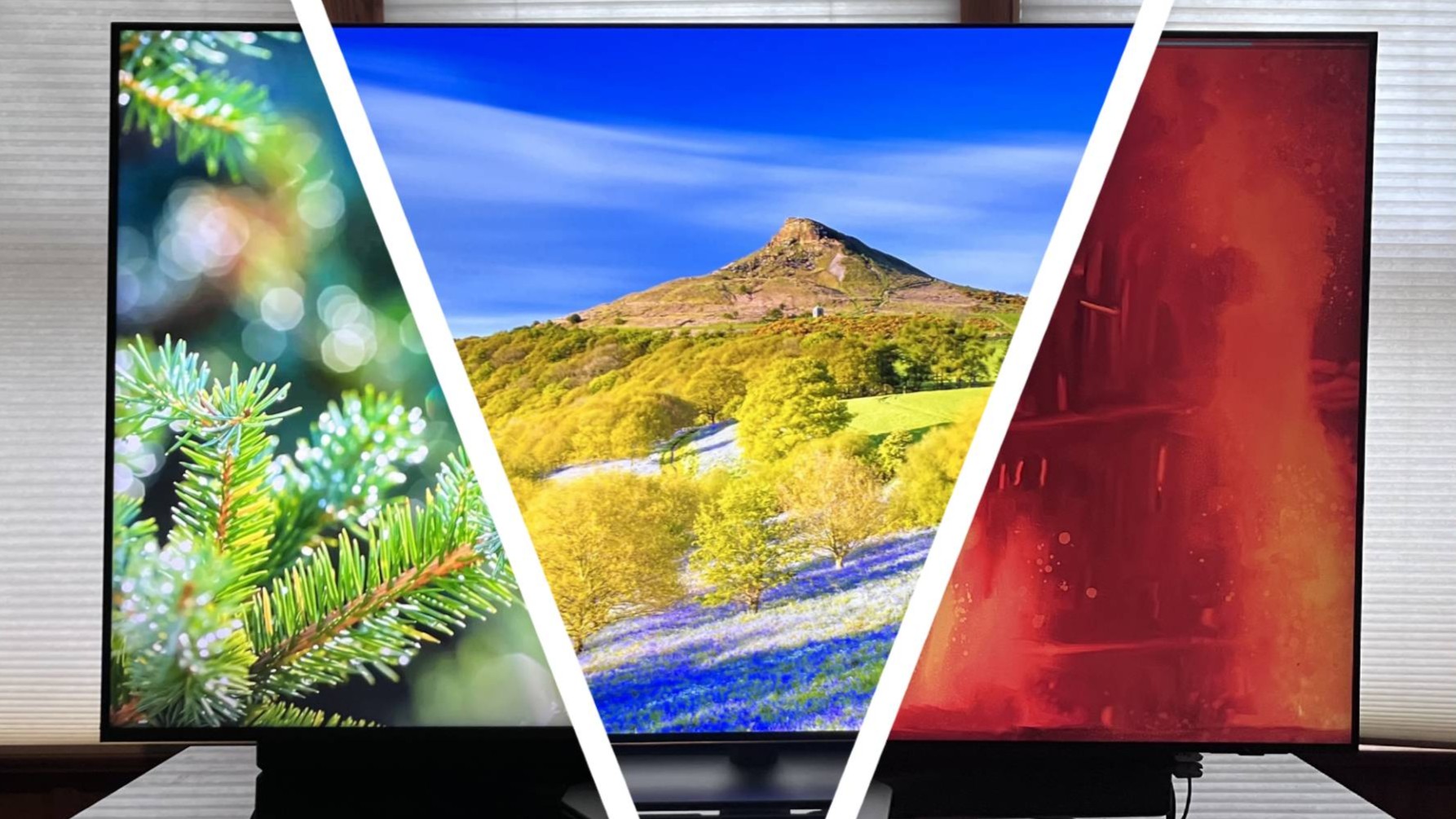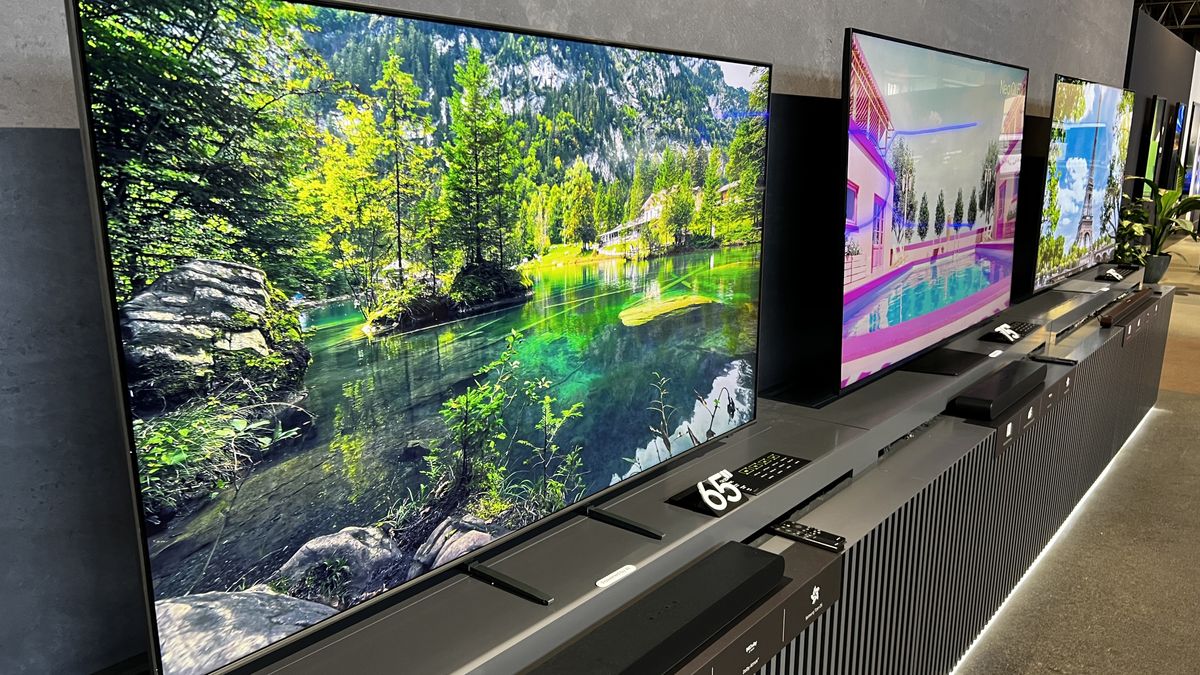
The LG G6 OLED TV has been upgraded with Tandem technology, making it 20% brighter than its predecessor and featuring an anti-reflective coating for better viewing in lit rooms, positioning it as a more affordable and practical alternative to the high-end LG Wallpaper W6, with an expected release later in 2026.
Samsung unveiled the S95H OLED TV at CES 2026, featuring over 35% increased brightness, a new metallic frame, support for artwork modes with access to the Samsung Art Store, and technology to resist burn-in, making it a versatile option for both viewing and displaying static images.
LG has announced the G6 OLED TV for 2026, which is 20% brighter than its predecessor G5 and features improved black levels in bright rooms, thanks to new polariser technology. However, it does not support Dolby Vision, and details about potential software updates for Dolby Vision 2 remain unclear.
LG has introduced the W6 Wallpaper OLED TV at CES 2026, featuring a super slim 9mm design, significantly increased brightness (3.9 times brighter than traditional OLEDs), and improved glare reduction, with sizes of 77 and 83 inches, a wireless connection box, and advanced gaming features. Pricing and availability are still to be announced.
Samsung has upgraded its Freestyle Plus portable projector with a brighter 430 ISO lumens, nearly double the previous generation, improving visibility in ambient light, though the company hasn't disclosed detailed specs or pricing yet. The projector maintains its compact design and smart features like keystone correction and Wi-Fi streaming, but still lacks a built-in battery.
Venus appears so bright in the night sky primarily due to its high albedo, reflecting about 76% of sunlight because of its thick cloud cover of sulfuric acid droplets, and its proximity to Earth, making it the second-brightest object after the Moon. Its brightness varies with its phase, distance from Earth, and the scattering of sunlight by its clouds, sometimes making it visible during the day.
The LG G5 OLED TV features a significant upgrade with its new Primary RGB Tandem OLED panel, offering exceptional brightness (over 2,400 nits), perfect blacks, and vibrant colors, making it a top-tier choice for movie and gaming enthusiasts despite minor issues with sound and interface. Firmware updates have addressed earlier HDR concerns, and it supports advanced gaming features and multiple sizes, positioning it as a leading OLED TV in performance and design.
Samsung announced HDR10+ Advanced, a new HDR format that can reach up to 5,000 nits of peak brightness, offering genre-based optimizations, motion smoothing, and ambient-light adaptation, aiming to enhance visual quality on premium HDR TVs and monitors, with rollout starting in 2026 on Samsung's high-end TVs and initial support from Amazon Prime Video.
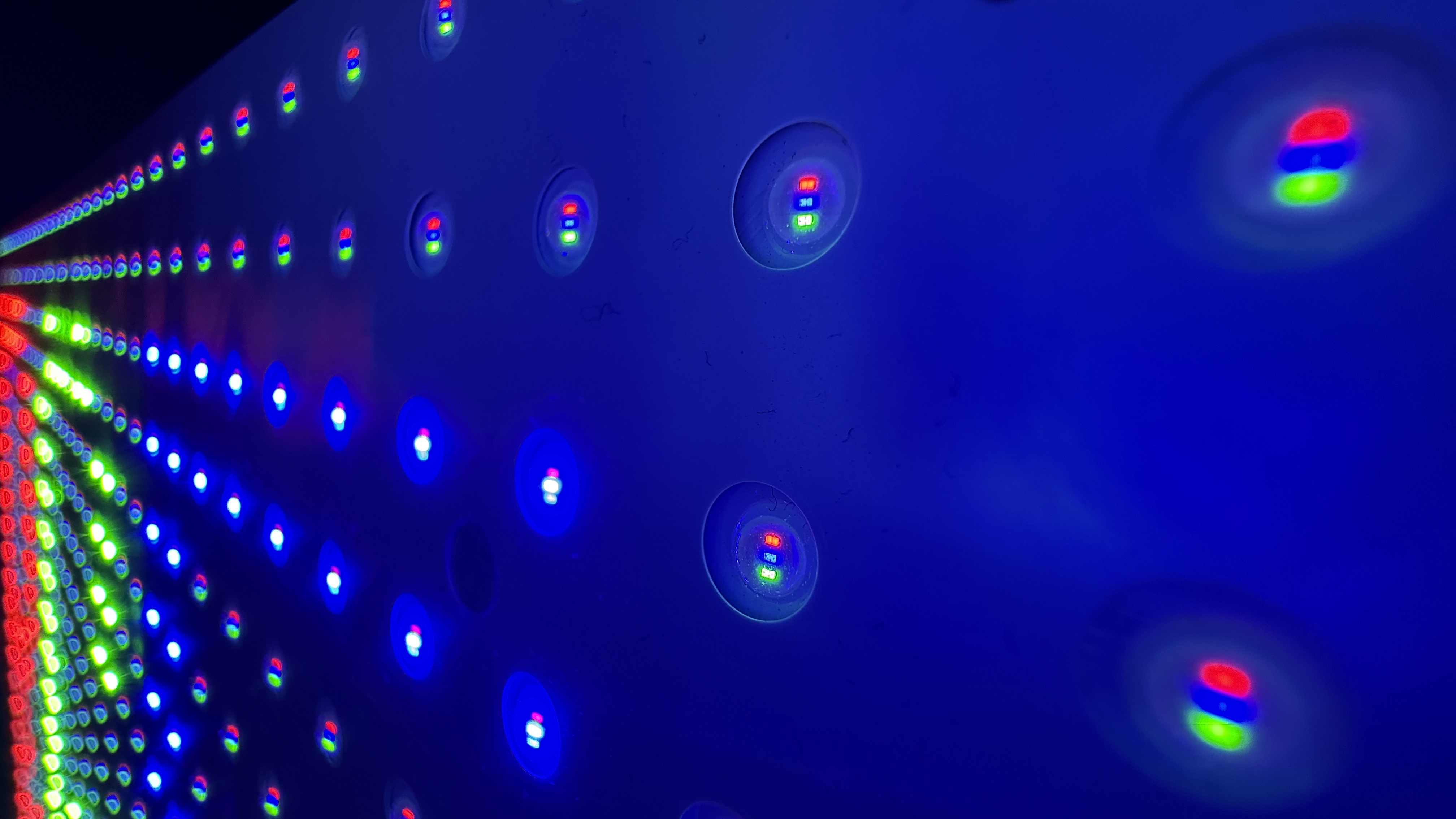
Sony showcased a next-generation RGB mini-LED TV at IFA 2025, featuring individual red, green, and blue LEDs for each pixel, promising brighter images, wider color range, and better dark scene handling compared to traditional mini-LEDs. The technology aims for higher brightness, efficiency, and scalability, with a potential release around 2026, and could significantly impact home cinema and gaming experiences, although OLEDs still lead in contrast and black levels.
In 2025, the top three TVs tested are the LG G5 for its high brightness and gaming features, the Samsung QN90F for its versatility and anti-glare tech, and the Hisense U8QG for its exceptional brightness and gaming capabilities, with early discounts making them more accessible.
CNET's review highlights the LG G5 OLED TV as the brightest OLED tested, with exceptional clarity and contrast that enhance gaming experiences, especially in fast-paced games like Call of Duty. Its advanced four-stack panel technology offers superior brightness and HDR support, making it a top choice for serious gamers despite its high price of $3,400 for the 65-inch model.
The LG C4 OLED TV has achieved a new milestone for OLED technology with exceptional color accuracy, saturation, and peak brightness levels, surpassing expectations and bringing OLED on par with LED-LCD TVs. With a peak brightness of close to 1,150 nits, the C4 OLED is leading the charge in the mid-range market, making it suitable for living room use and changing the conversation around OLED TVs. While there are areas for improvement, such as price and color saturation, the C4 OLED represents a significant advancement in the industry.
The 2024 TV hardware season is shaping up to be transformative, with OLED TVs now boasting unprecedented brightness levels that rival premium LCD TVs. This development challenges the traditional distinctions between the two technologies, as OLEDs close the gap in brightness and color volume while maintaining their contrast-enhancing self-emissive design. However, premium LCD TVs still hold advantages in brightness consistency and potential brightness levels, but they face challenges in addressing issues such as blooming. The future of premium LCD TVs may depend on their ability to maintain a brightness advantage over OLEDs, although the value of chasing extra brightness levels in the consumer market remains uncertain.
Hisense's latest U8N Mini-LED TV has broken brightness records in lab tests, outperforming Samsung's top models with exceptional brightness of around 3,000 nits in HDR and SDR, and a 99% color gamut coverage. Priced at $1,199 for a 55-inch screen, $1,499 for a 65-inch screen, and $1,999 for a 75-inch screen, the U8N offers better brightness and color saturation than its predecessor and comparable Samsung 2023 TVs. However, its upscaling and motion processing capabilities remain to be tested in real-world scenarios.
Scientists have discovered what may be the brightest object in the universe, a quasar generated by a massive black hole, emitting light that's 500 trillion times more intense than the sun, as reported in Nature Astronomy.