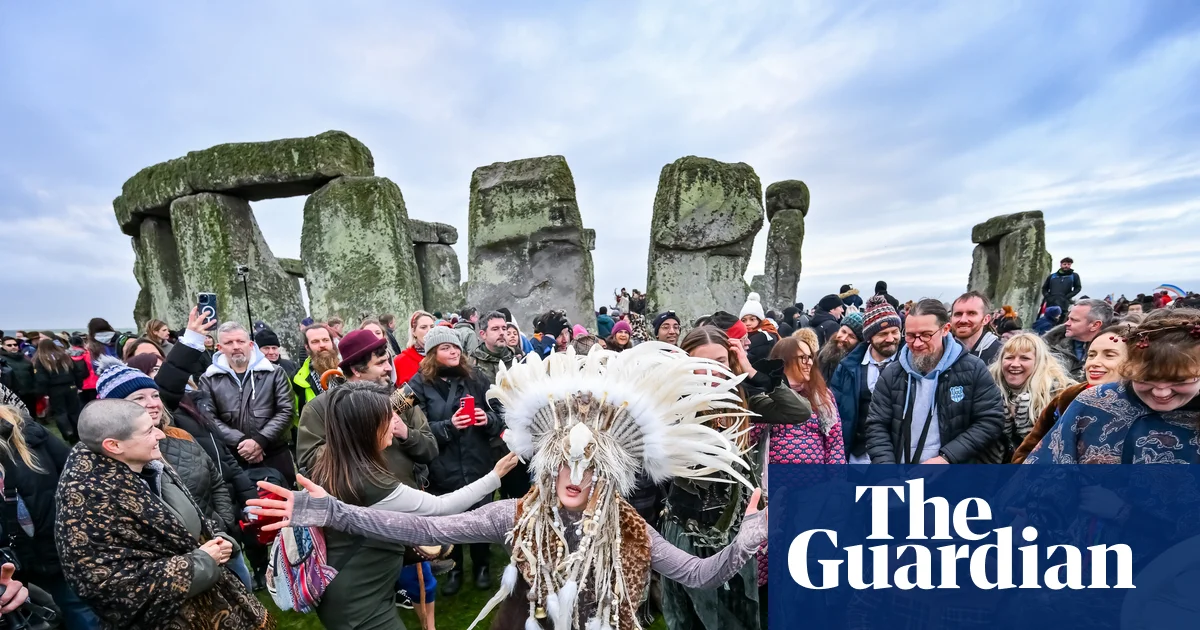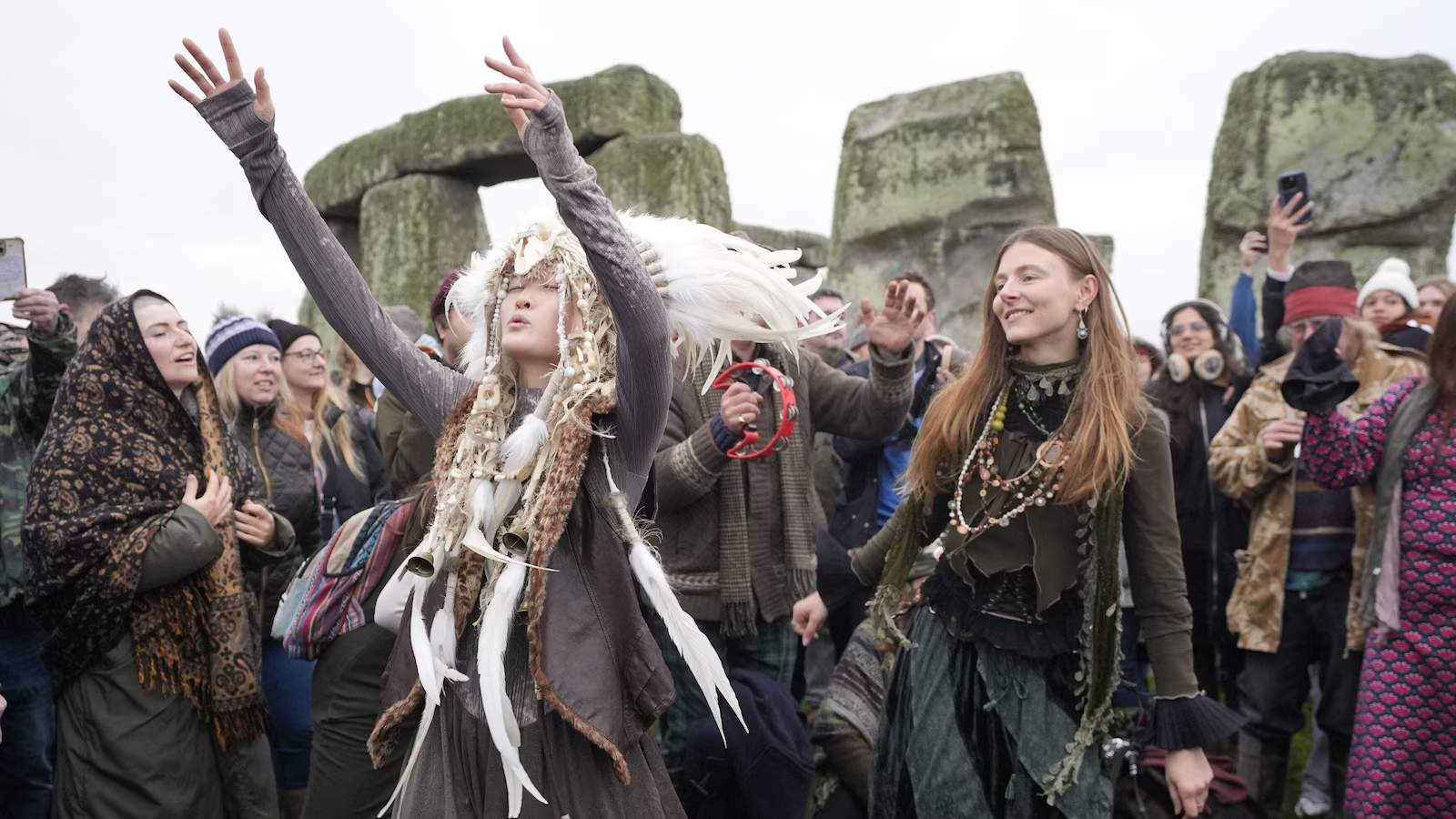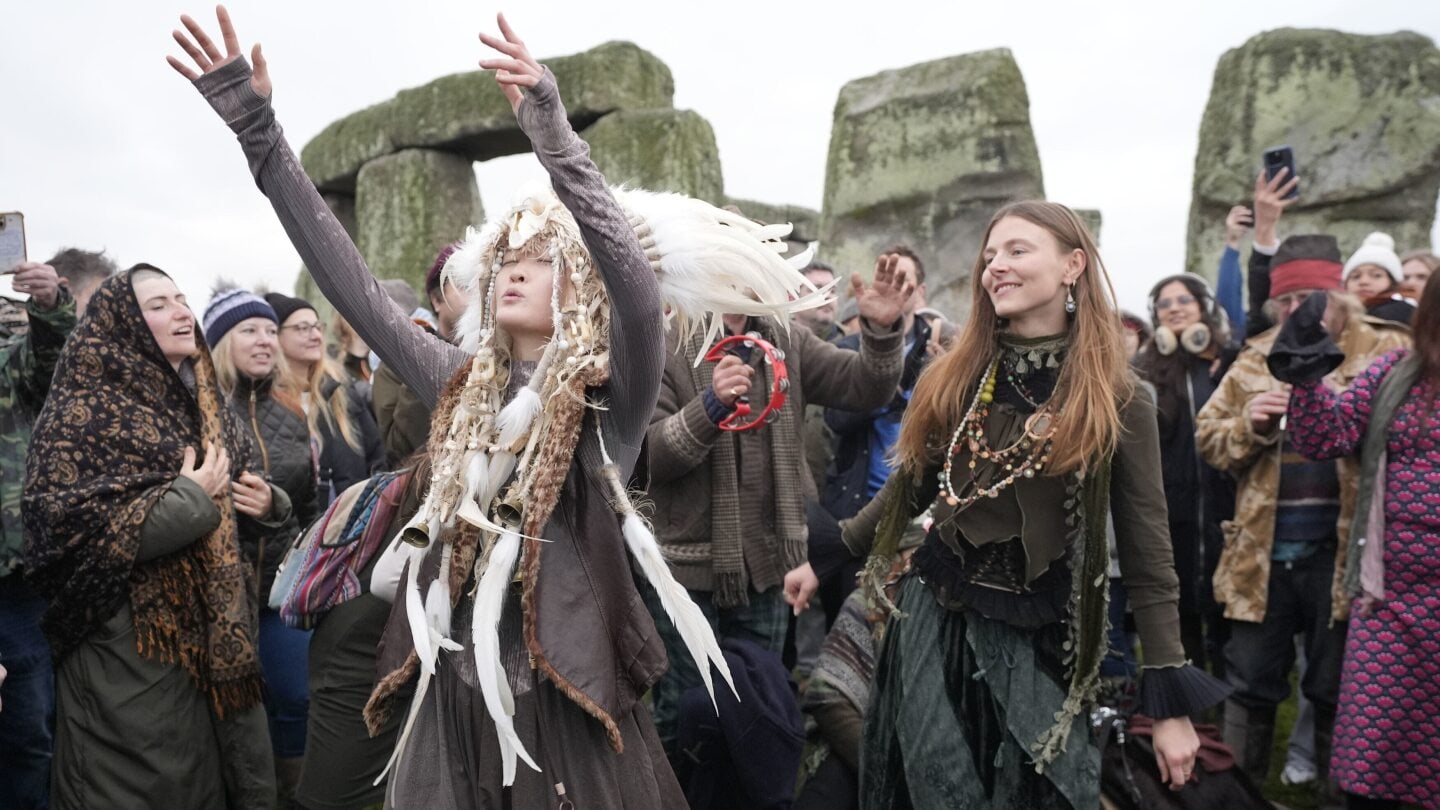
Thousands gathered at Stonehenge to celebrate the winter solstice, marking the shortest day of the year with diverse cultural traditions and a shared appreciation for the site's historical and spiritual significance.
Thousands gathered at Stonehenge to celebrate the winter solstice, marking the shortest day of the year and a time of renewal, with people dancing, singing, and reflecting around the ancient monument.
Thousands gathered at Stonehenge to celebrate the winter solstice, marking the shortest day of the year and the start of astronomical winter, with many viewing it as a spiritual renewal as the sun begins to climb again.
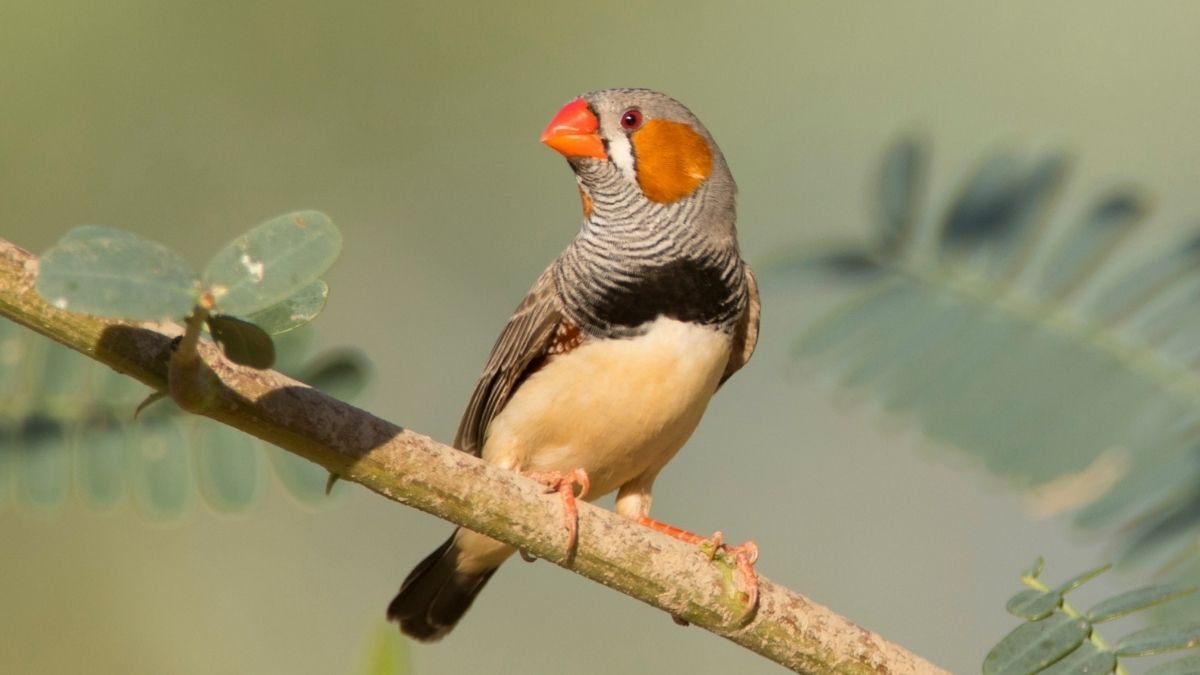
A study on captive zebra finches suggests that their dawn singing intensity is driven by anticipation of sunrise, with their vocal activity increasing in response to delayed dawn and early light triggers, possibly to warm up their vocal cords and enhance reproductive success.
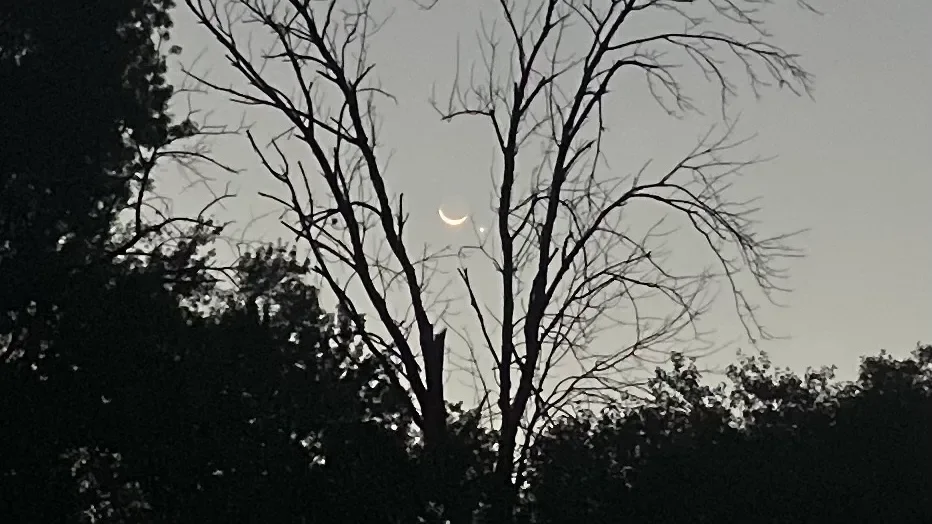
On September 19, early risers in North Jersey witnessed a rare planetary conjunction where the waning crescent moon appeared close to Venus and Regulus in the eastern sky during sunrise, offering a stunning celestial display.
Researchers in India discovered that cicadas begin their dawn chorus when the sun is exactly 3.8° below the horizon, demonstrating an astonishing level of precision in tuning their singing to specific light levels during civil twilight, revealing complex collective decision-making influenced by environmental cues.
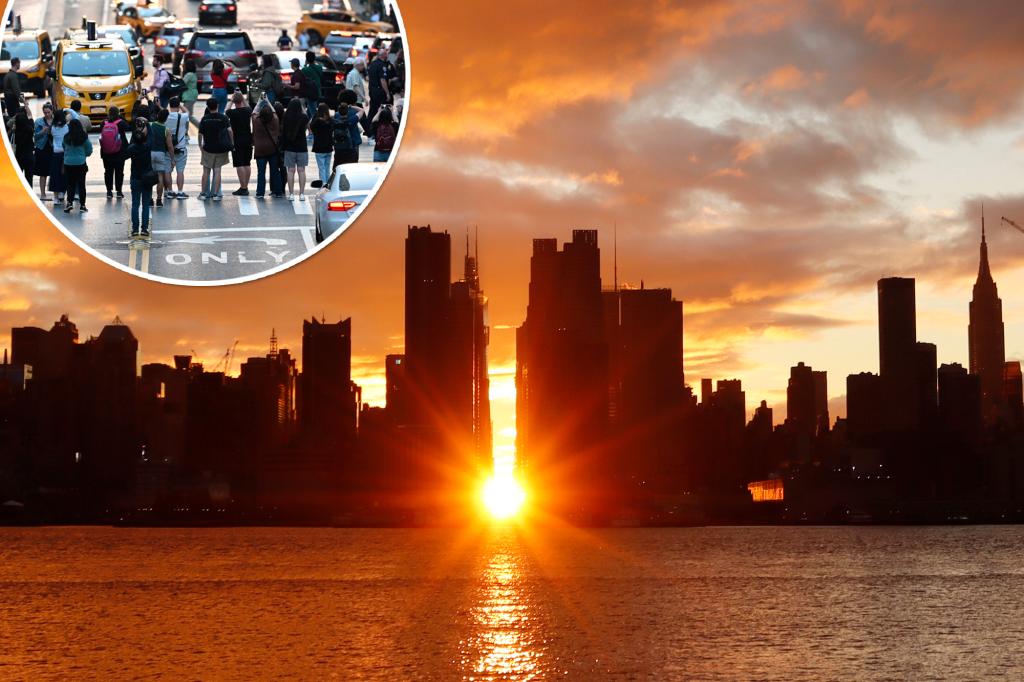
On Thursday morning, a rare "reverse" Manhattanhenge event will occur in New York City as the sun rises between skyscrapers, offering a unique spectacle for early risers. Unlike the traditional westbound Manhattanhenge, this event will be visible from the east and is best viewed at street level around 7:11 a.m. The intersection of 41st Street & 5th Avenue and spots along the Weehawken waterfront are recommended for optimal viewing. Additionally, upcoming full and half-sun Manhattanhenge events are scheduled for May and July, with specific dates and viewing locations provided.
NASA has completed the construction of six small satellites, known as SmallSats, for the Sun Radio Interferometer Space Experiment (SunRISE) mission. These cereal box-size satellites will work together to study solar radio bursts and gain insights into the physics of explosions in the Sun's atmosphere. By monitoring these bursts, scientists hope to better understand how they are created and linked to coronal mass ejections and solar flares. The data collected by the SmallSats will be combined to produce images of the Sun for further analysis. SunRISE will launch as a rideshare aboard a United Launch Alliance Vulcan rocket sponsored by the United States Space Force.
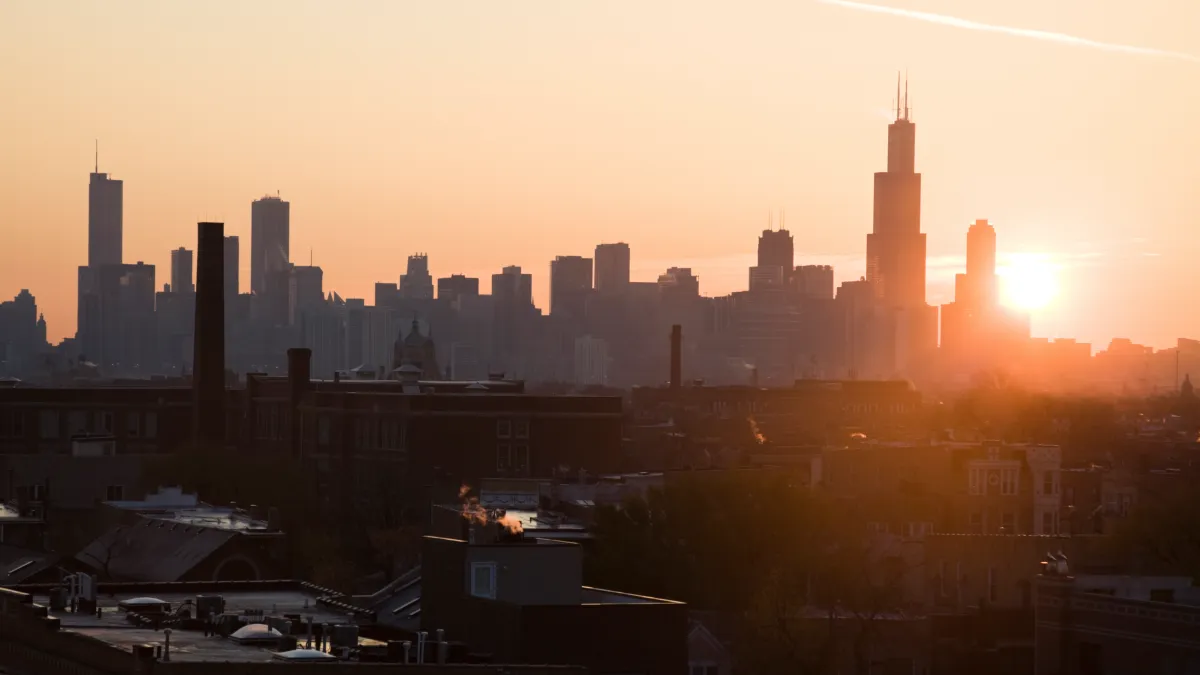
As summer comes to an end in Chicago, the days are getting shorter and the nights longer, signaling the end of daylight saving time. The last sunrise before 6 a.m. was on August 16, and the last sunset after 8 p.m. was on August 8. Daylight saving time will end on November 5, when clocks will be rolled back one hour at 2 a.m. Standard time is recommended by the American Academy of Sleep Medicine, as it aligns better with our body's internal clock and has health benefits.
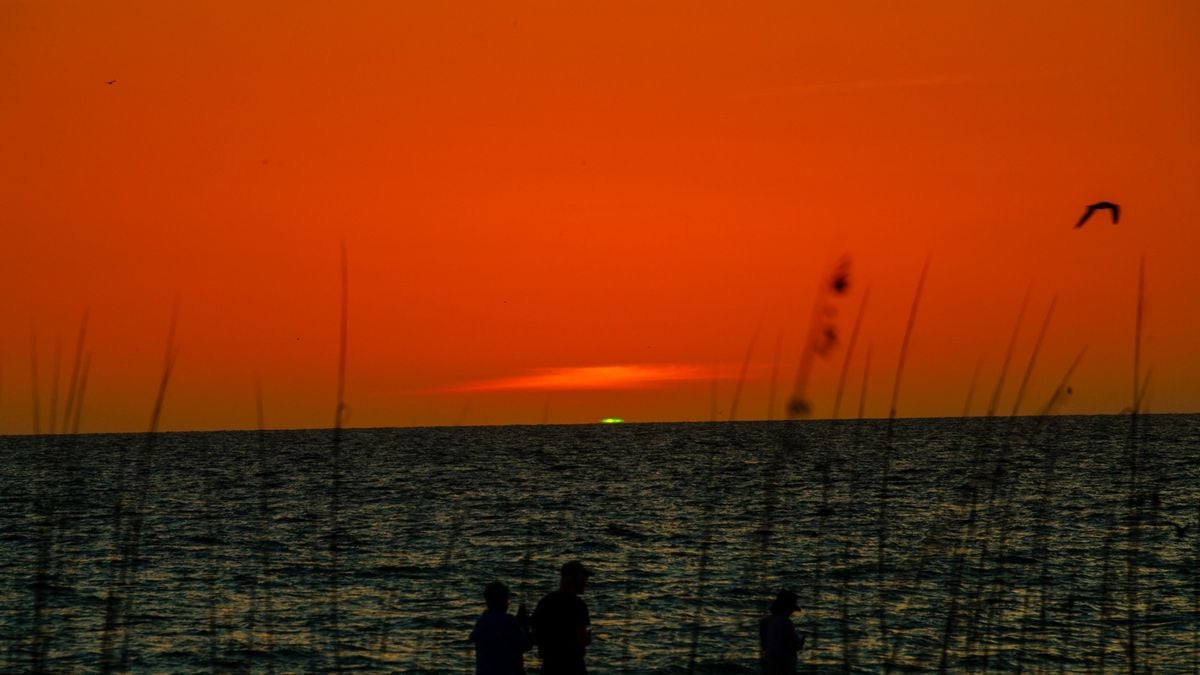
The green flash is a rare phenomenon that occurs during sunset or sunrise when the atmosphere behaves like a prism, separating the stack of different-colored images of the sun. The green color is produced by atmospheric refraction of light, causing objects near the horizon to appear slightly higher in the sky than they really are. The green flash can be elusive, but it can be seen during very clear and exceptionally transparent skies. To catch a glimpse of the green flash, look for a distant, sharply-defined, and low horizon, and avoid looking at the sun until the last moment to avoid eye damage.