Tag

Regulus

All articles tagged with #regulus

Mars Engages in Spectacular Conjunctions and Sky Events This Week

Originally Published 6 months ago — by Live Science

Featured image for Mars Engages in Spectacular Conjunctions and Sky Events This Week
Source: Live Science

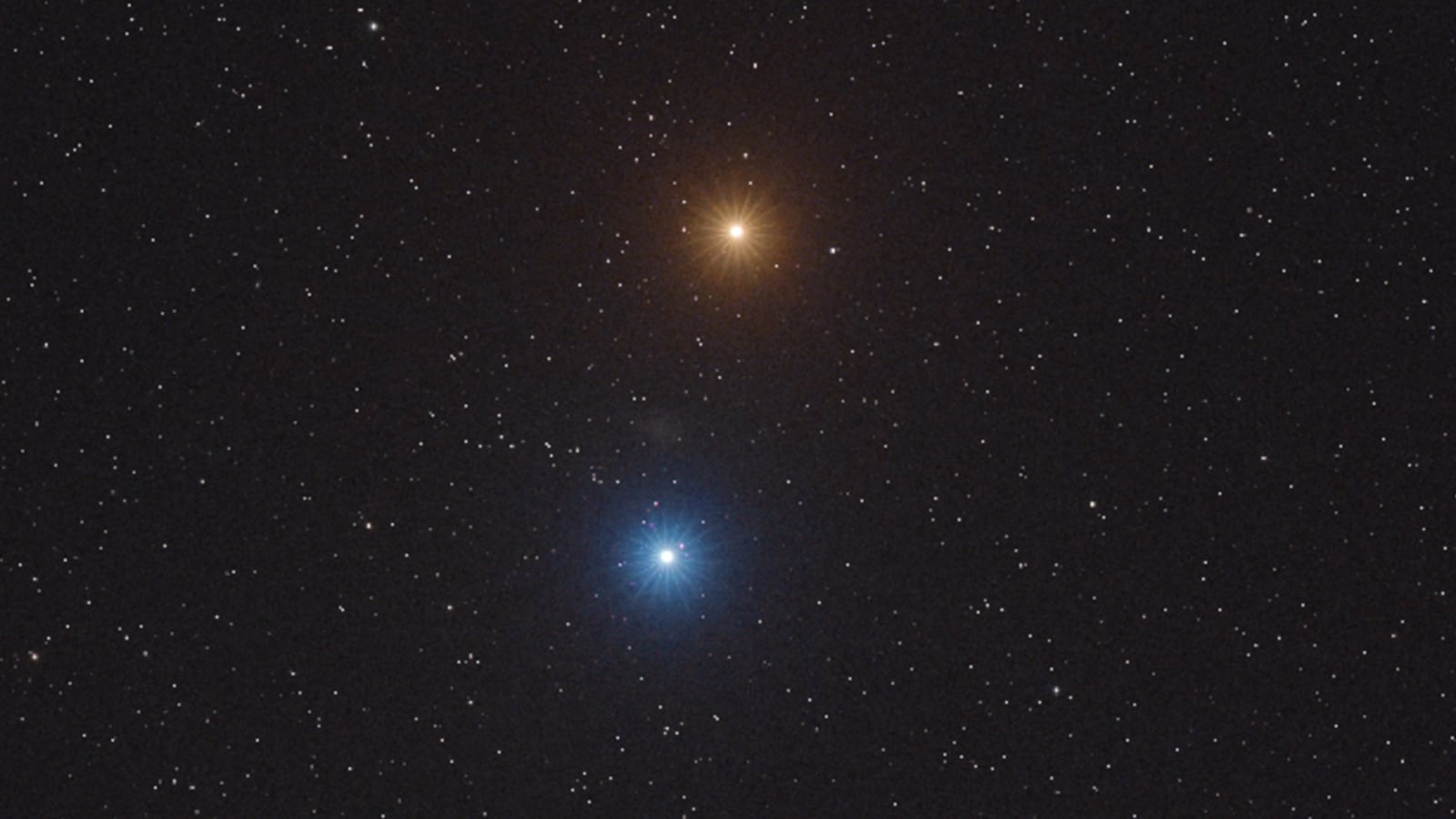
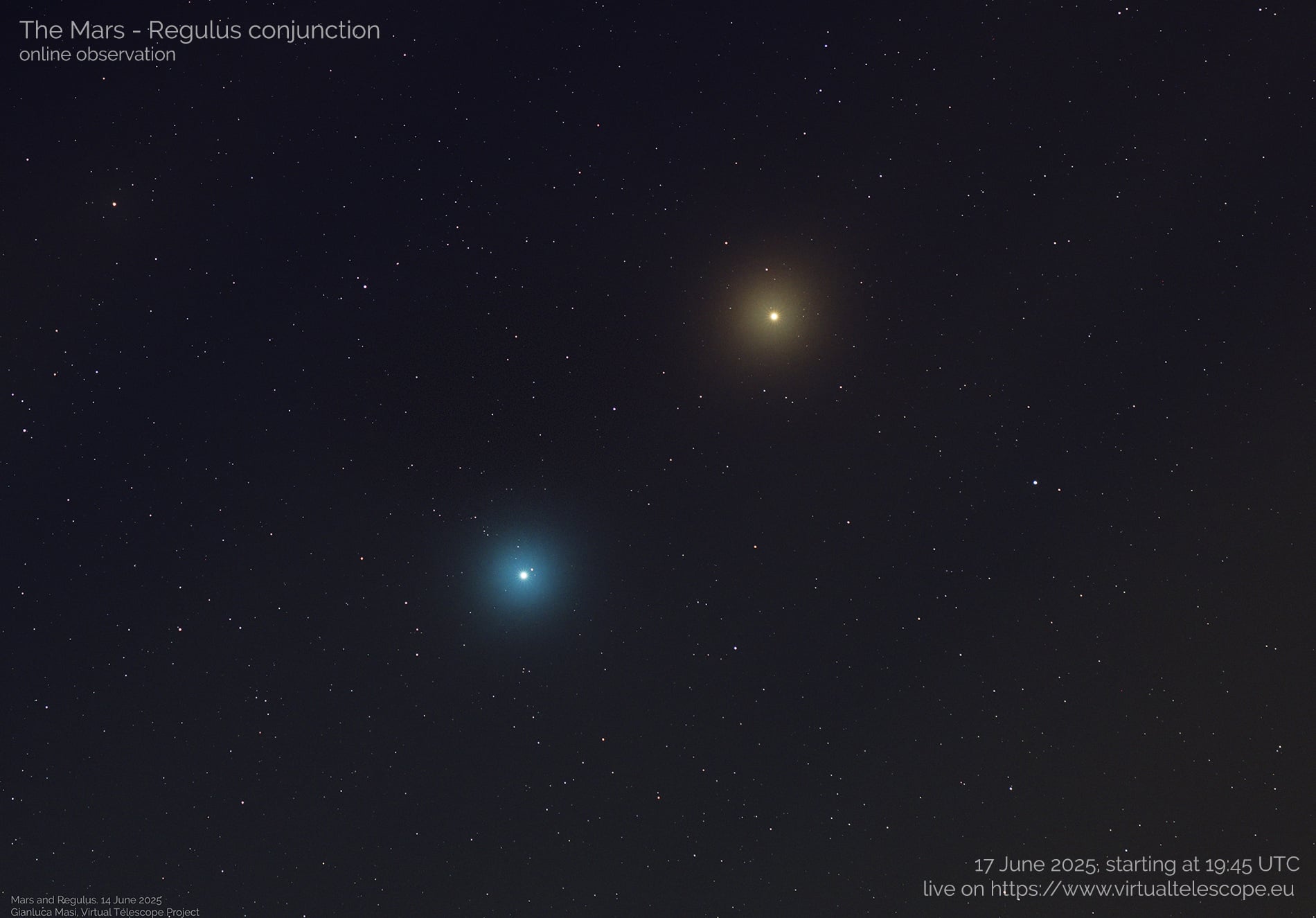
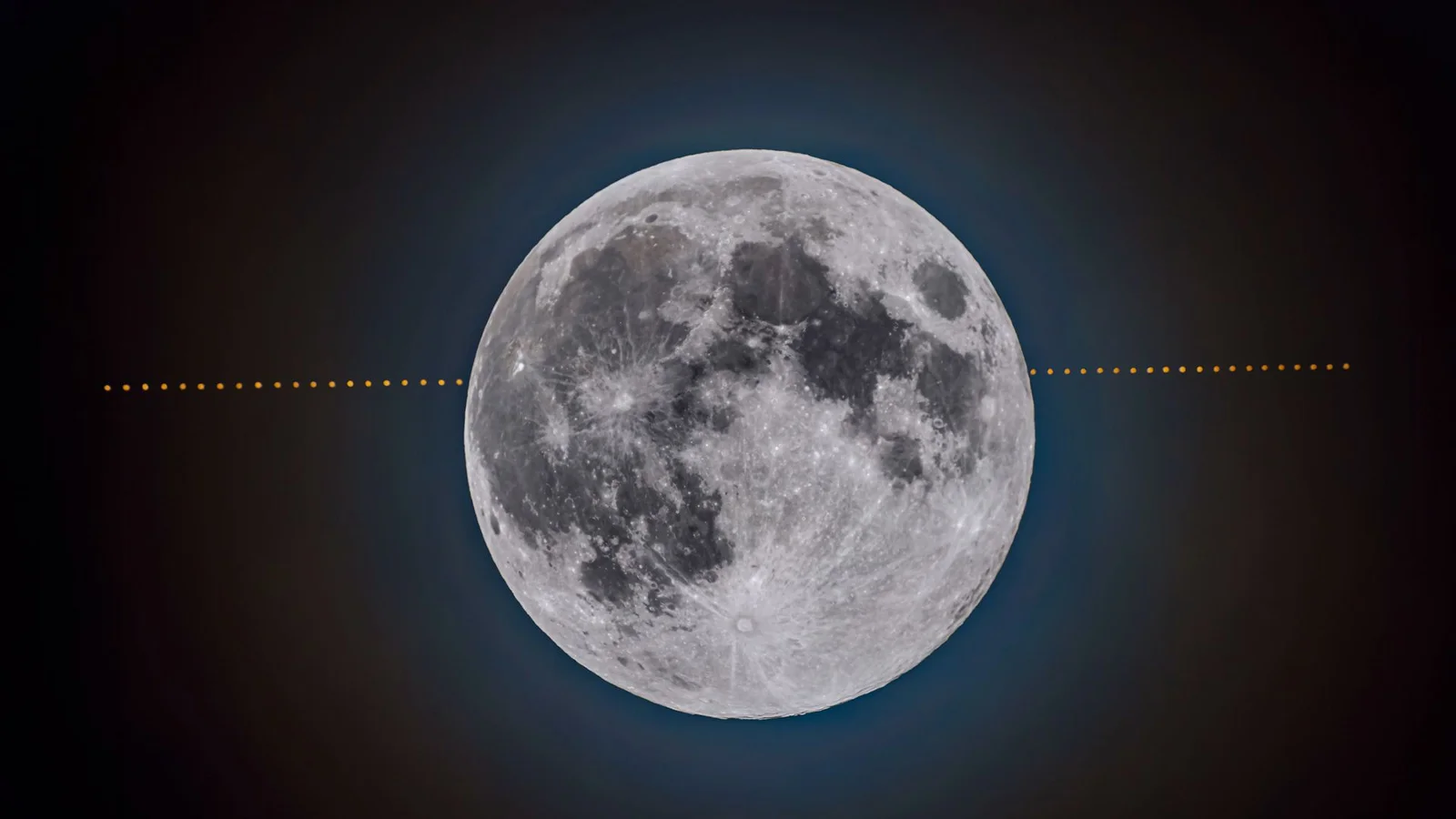
A striking photo captured by the Virtual Telescope Project shows Mars and the star Regulus appearing very close in the night sky on June 16, with the two objects nearly identical in brightness but contrasting in color, highlighting a rare celestial conjunction that can be observed with telescopes or binoculars.

June 2025 Skywatch: Mars, Regulus, Saturn, Venus & the Moon

Originally Published 7 months ago — by Space

Featured image for June 2025 Skywatch: Mars, Regulus, Saturn, Venus & the Moon
Source: Space

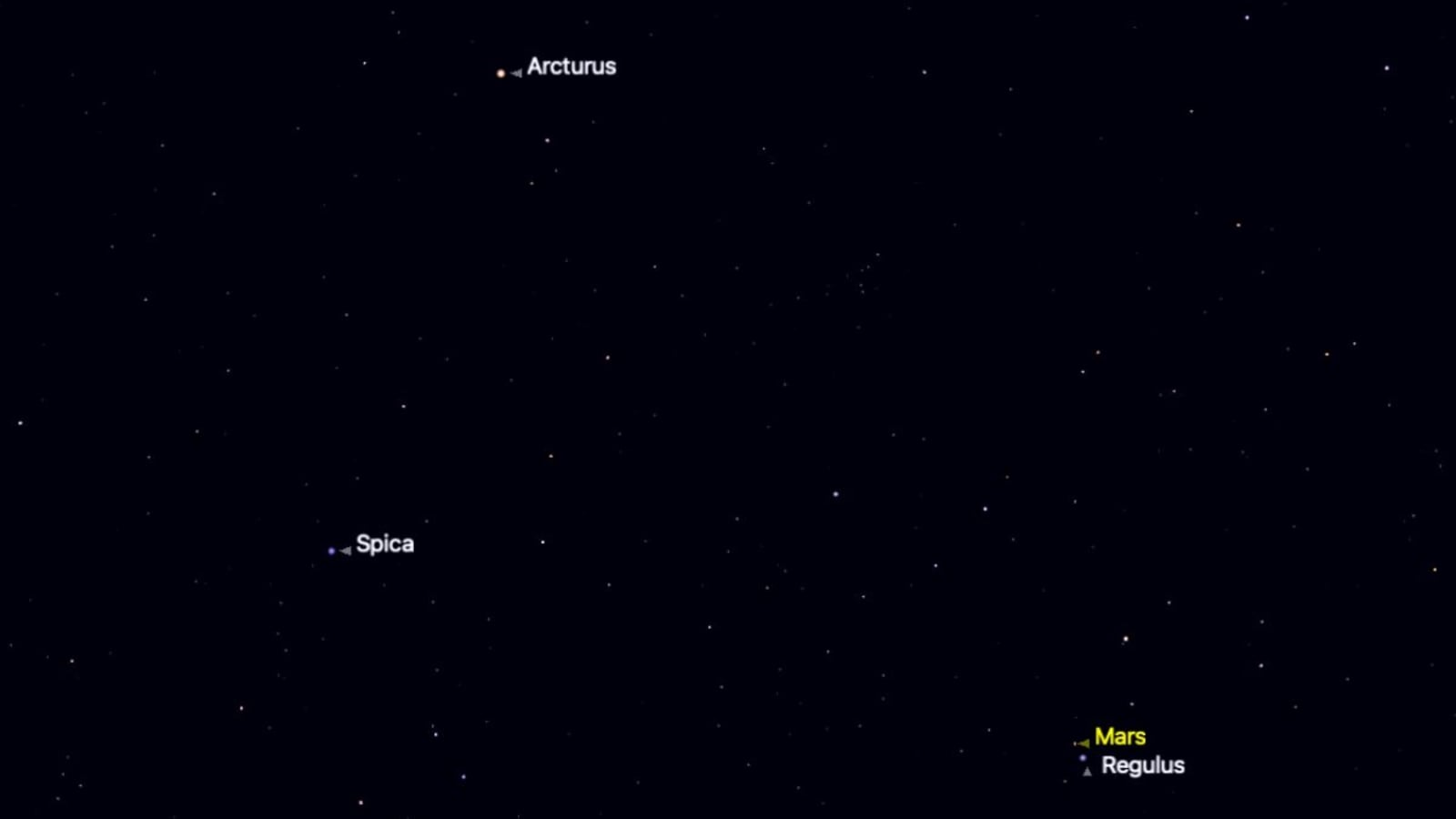
In June 2025, Mars will be visible in the night sky with notable events including a close conjunction with the star Regulus on June 17 and a near pass with the crescent moon on June 29, offering exciting opportunities for skywatchers to observe the Red Planet's movements and interactions with other celestial objects.

"Stargazers Alert: Witness the Rare Encounter of Mercury and the 'Little King' Star!"

Originally Published 2 years ago — by Forbes

Featured image for "Stargazers Alert: Witness the Rare Encounter of Mercury and the 'Little King' Star!"
Source: Forbes

The planet Mercury will be visible in the post-sunset sky this week, appearing close to the bright star Regulus in the constellation Leo. On July 28, 2023, Mercury will be just a tenth of a degree away from Regulus, making it a great opportunity to observe with binoculars. Regulus, Leo's brightest star, is actually a quadruple star system and will soon be lost in the sun's glare. Mercury, which orbits the sun every 88 days, is usually lost in the sun's glare but occasionally becomes visible in the early evening or pre-dawn sky.

Planetary Spectacle: Mars and Regulus Illuminate the Night Sky

Originally Published 2 years ago — by Space.com

Featured image for Planetary Spectacle: Mars and Regulus Illuminate the Night Sky
Source: Space.com

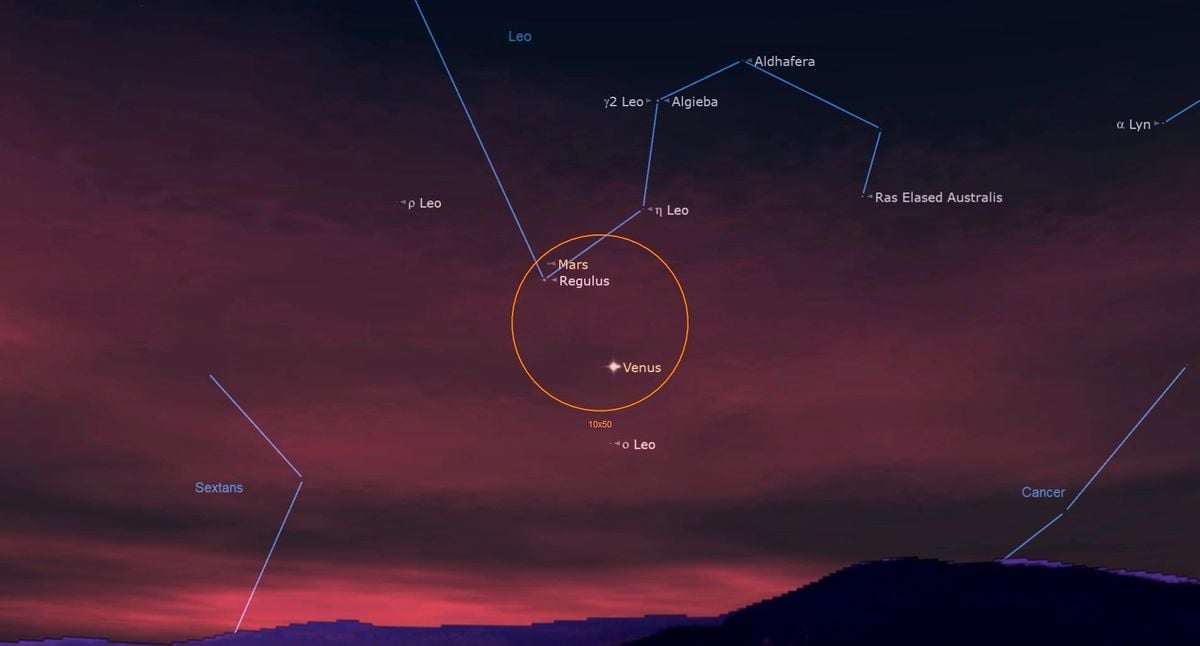
Tonight, stargazers can observe the Red Planet Mars shining above the blue star Regulus in the western skies shortly after sunset. To locate them, first spot the bright orb of Venus and then look just above and to the left of it to find Regulus. Mars will be just above the star, appearing as a steady orange light. Regulus, the brightest star in the Leo constellation, is actually part of a quadruple star system and rotates much faster than most stars.

"Goodbye Mars and Venus: Catch a Glimpse of Antares and Martha's Vineyard News"

Originally Published 2 years ago — by Space.com

Featured image for "Goodbye Mars and Venus: Catch a Glimpse of Antares and Martha's Vineyard News"
Source: Space.com

July marks the final month of evening visibility for Mars and Venus, two bright planets in the night sky. Venus, the most brilliant of the two, is swiftly approaching the sun and will become harder to view as the month progresses. Mars, on the other hand, appears as a featureless dot and is sulking away. In addition, the bright star Regulus in the constellation of Leo will be in the vicinity of these planets. The moon will also interact with Mars, Venus, and Regulus on July 20, marking the last gathering of these celestial objects visible in evening skies this year.

Celestial Spectacles: Venus, Mars, and Regulus Unite in July's Sky

Originally Published 2 years ago — by EarthSky

Featured image for Celestial Spectacles: Venus, Mars, and Regulus Unite in July's Sky
Source: EarthSky

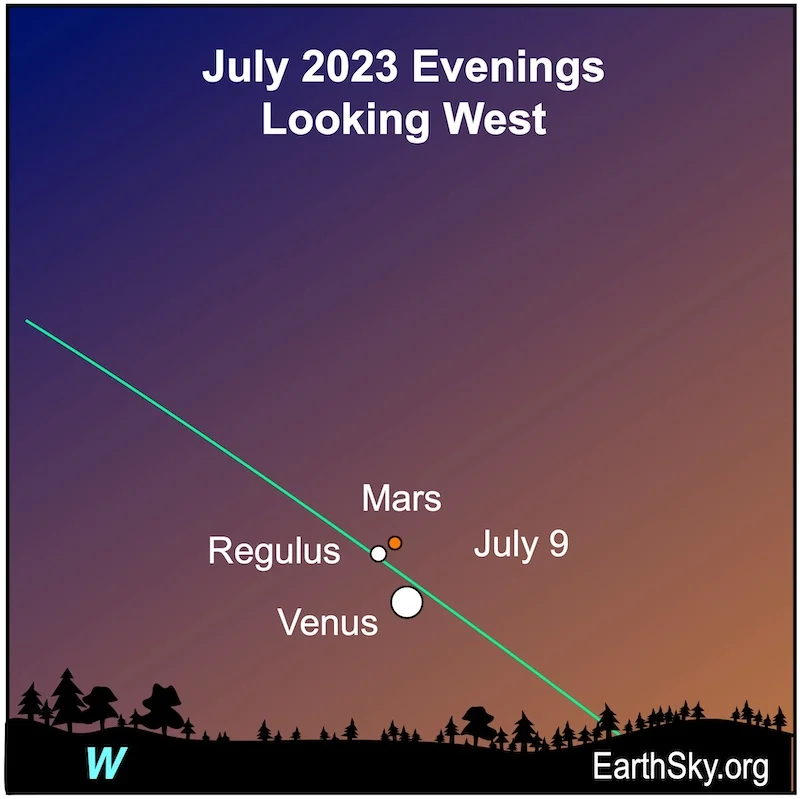
On July 9 and 10, 2023, Venus, Mars, and Regulus will be visible close together in the night sky. Venus, the brightest point of light, will be the first light visible after sunset. With binoculars, one can see the crescent phase of Venus, as well as the white and red points of light representing Regulus and Mars, respectively. Mars will appear steady while Regulus may twinkle due to its distance. The trio will fit within a 5-degree field, with Mars and Regulus getting as close as 0.7 degrees apart.