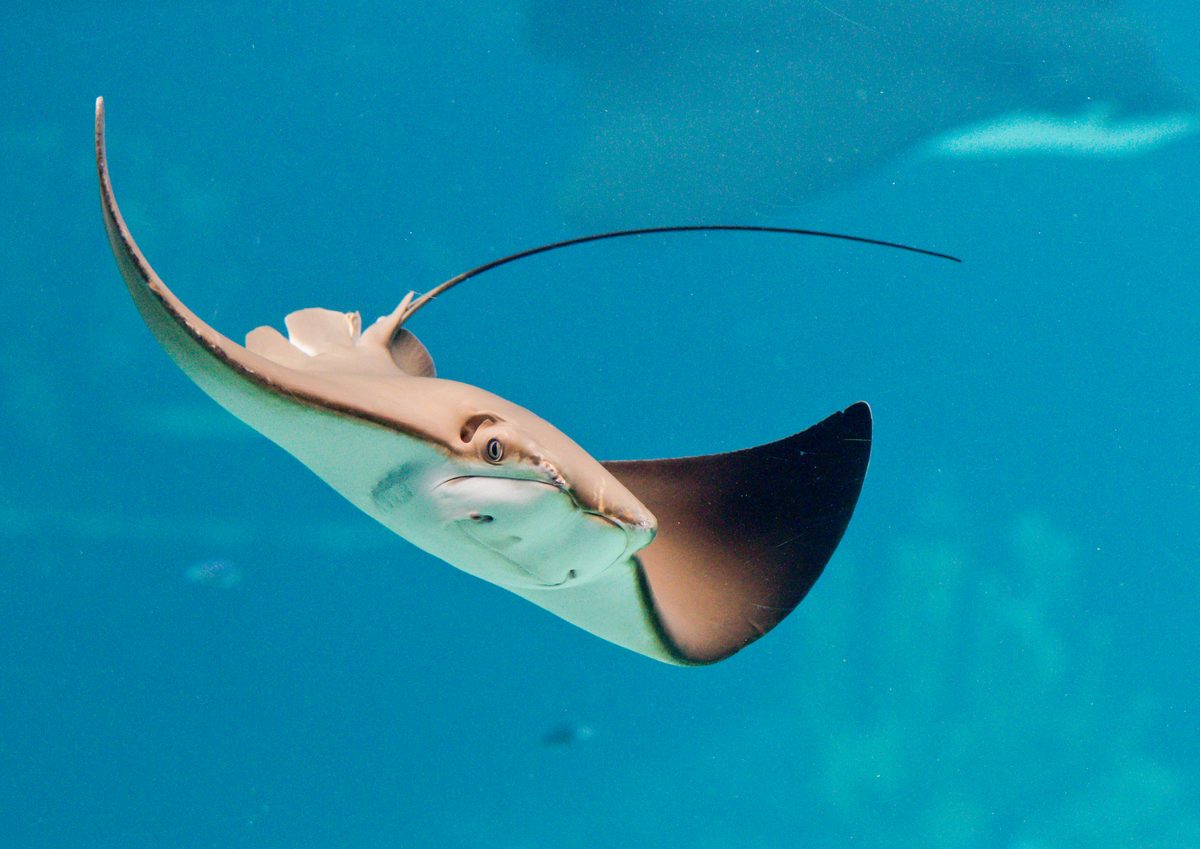
Stingrays are flat, disc-shaped fish related to sharks, known for their venomous spines on their tails. They are generally harmless but can be dangerous if threatened, as famously exemplified by Steve Irwin's death. These animals live in warm, shallow waters worldwide, often buried in sand, and reproduce via live birth. Despite their peaceful nature, they face threats from human activities, and some species are critically endangered.
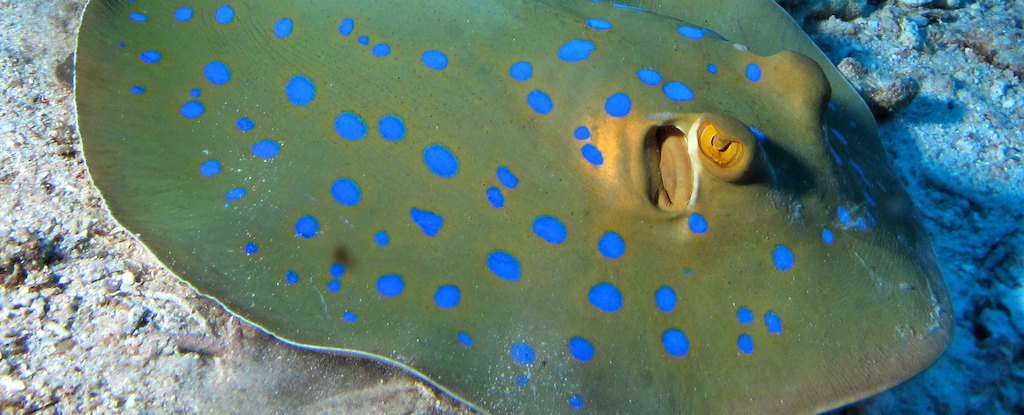
Researchers have discovered that bluespotted ribbontail rays produce their vivid blue spots through unique nanostructures that scatter light, rather than pigments. This structural color is unusually bright and angle-independent, achieved by a disordered array of scattering elements and a melanin layer that absorbs other colors. This finding not only advances our understanding of natural coloration but also has potential applications in creating chemical-free colors for textiles and displays.
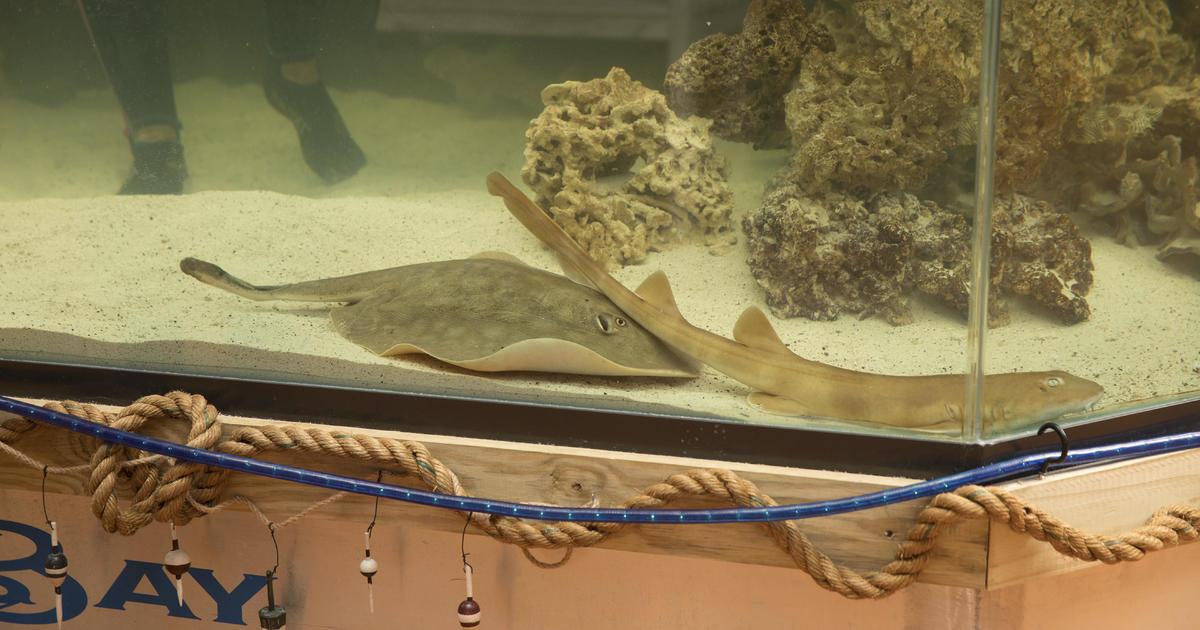
A stingray named Charlotte at a North Carolina aquarium is pregnant despite not being around a male ray for 8 years. Speculation arose about the father of her pups after she was found covered in shark bites, leading to viral commentary suggesting a shark may be the father. However, experts say this is not possible due to anatomical and genetic differences. Instead, the aquarium believes Charlotte's pregnancy is a rare case of parthenogenesis, a process where smaller cells separate from the mother's eggs and merge to create offspring. Charlotte is due within two weeks, and her caretakers are excited about the unique situation.
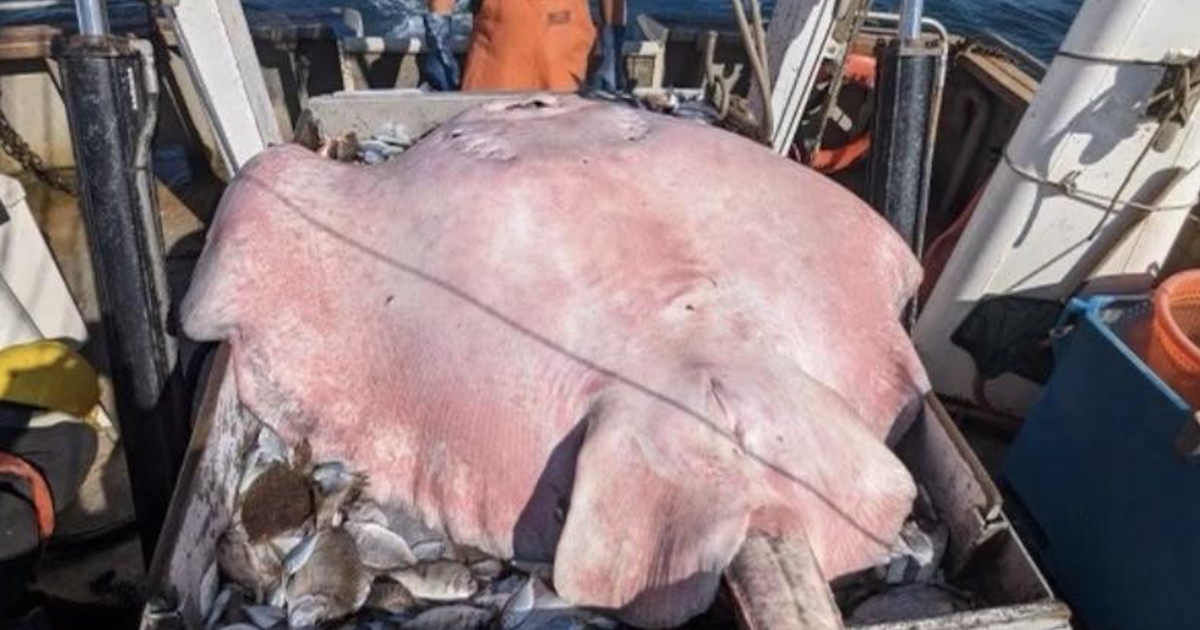
Connecticut Fish and Wildlife officials made a "relatively rare" sighting in the Long Island Sound when they discovered a massive 400-pound stingray, measuring over six feet long and five feet wide. The roughtail stingray, typically found along the Atlantic coast from New England to Florida, is not aggressive and does not frequent nearshore waters. The officials also caught a cobia, a predator usually seen farther south in the Atlantic, but increasingly appearing in northern waters due to climate change. The Long Island Sound Trawl Survey is documenting the impact of climate change on the region.
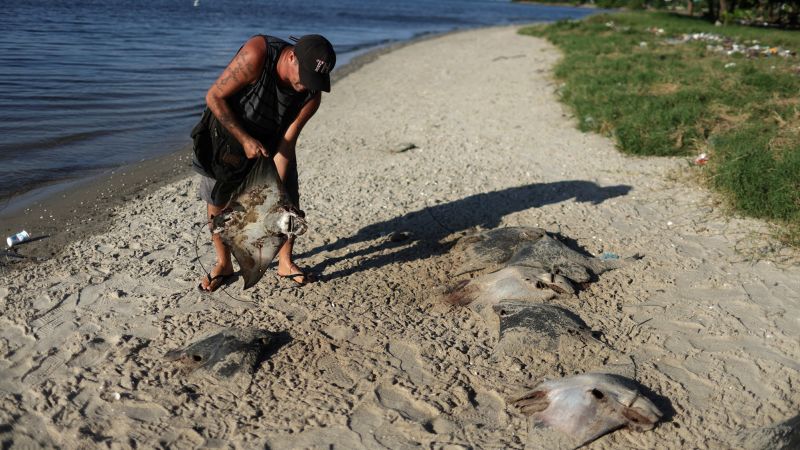
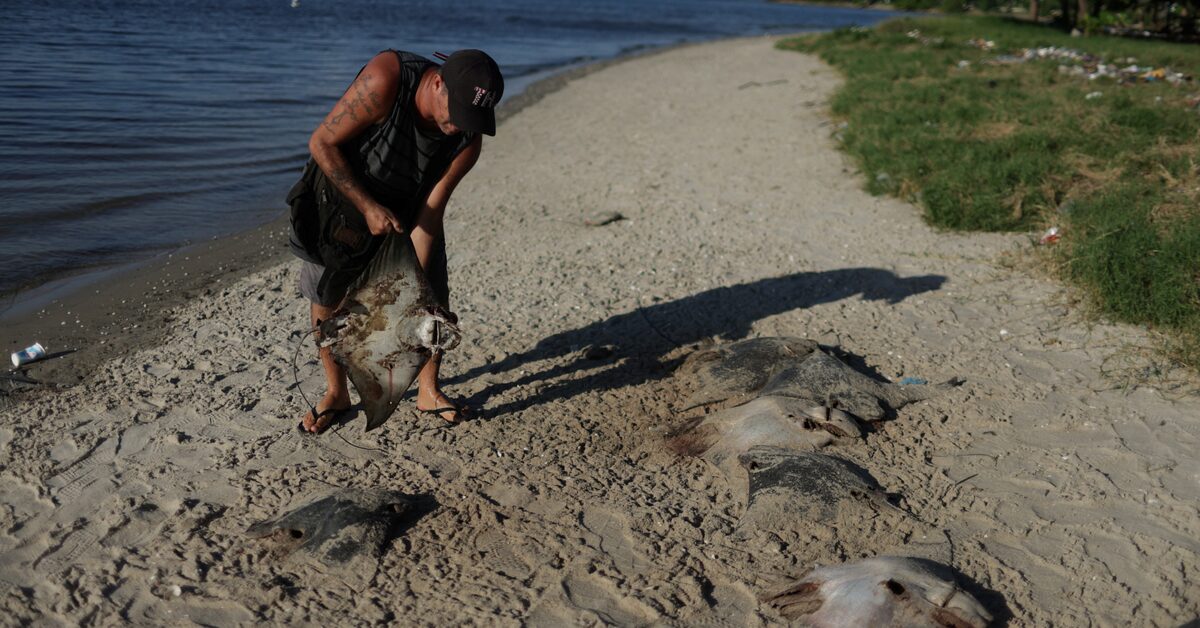
Dozens of dead stingrays were found on a beach in Rio de Janeiro, Brazil, causing concern among locals. Biologists suggest that trawling, a fishing technique that involves pulling a net through the water, may be responsible for the incident, as no other dead species were found on the beach. The absence of pollutants or lack of oxygen in the water also supports this hypothesis. Environmentalists are calling for action to prevent similar incidents from happening in the future.
Dozens of dead stingrays were found on a beach in Rio de Janeiro, Brazil, causing concern among the local community. The absence of other dead species on the beach suggests that the incident was likely caused by trawling, a fishing technique that involves pulling a net through the water behind one or more boats. Environmentalists and biologists are calling for an investigation into the incident.