Researchers have achieved a breakthrough in high-order harmonic generation using topological insulators and nanostructures, enabling the production of both even and odd terahertz frequencies, which could revolutionize terahertz technology for communications, imaging, and quantum computing.

Researchers have discovered that peacock feathers contain nanostructures that function as biological lasers, emitting specific wavelengths of light, which may play a role in their dazzling displays and could inspire advances in laser technology.
Scientists have discovered that blue sharks possess nanostructures in their skin that not only produce their characteristic blue color but may also enable them to change color like chameleons, potentially enhancing their camouflage abilities in response to environmental changes.
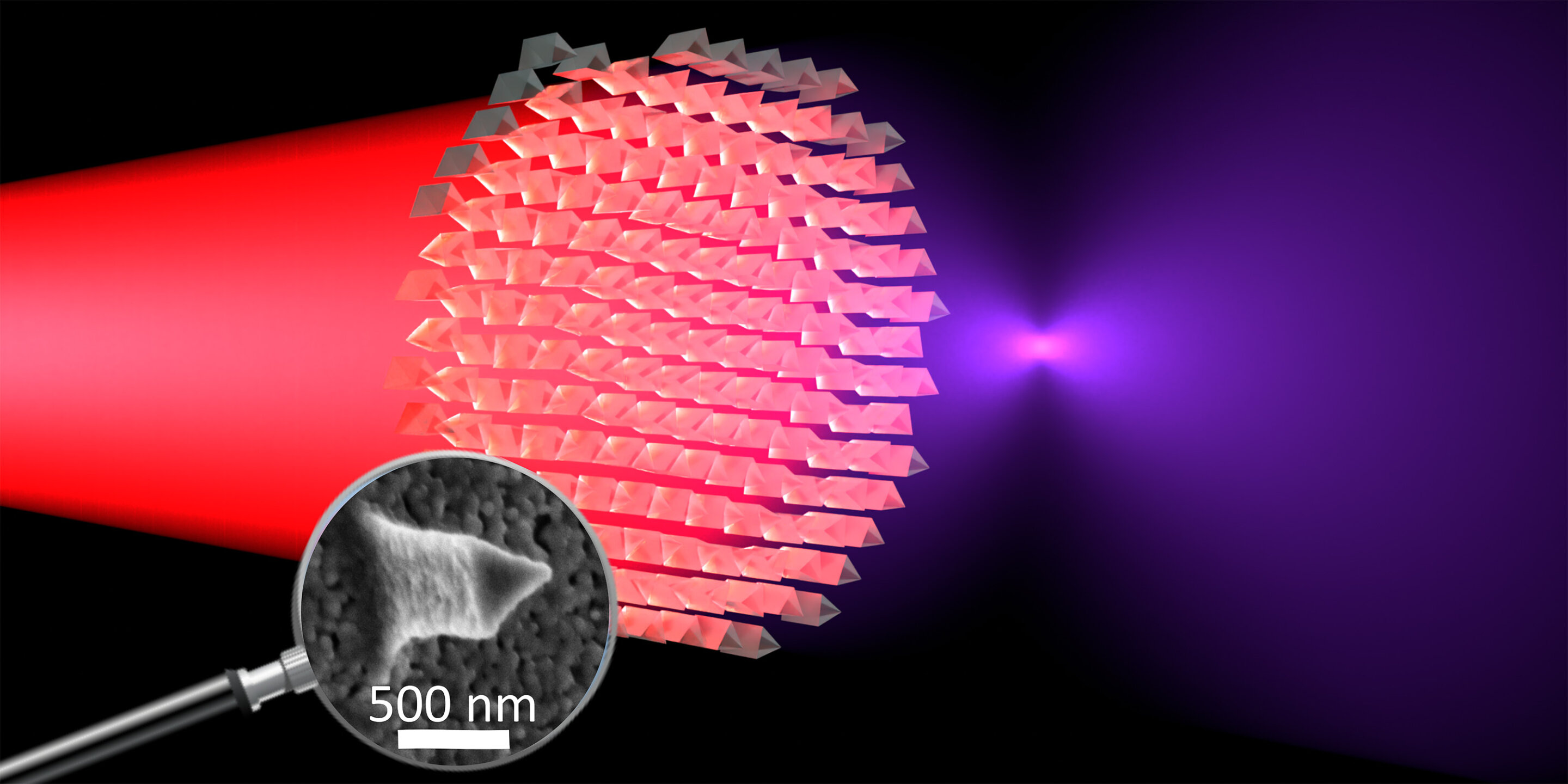
ETH Zurich researchers have developed ultra-thin metalenses made from lithium niobate that can convert infrared light into visible light by halving its wavelength, using nanostructures and nonlinear optical effects, with potential applications in security, imaging, and electronics.
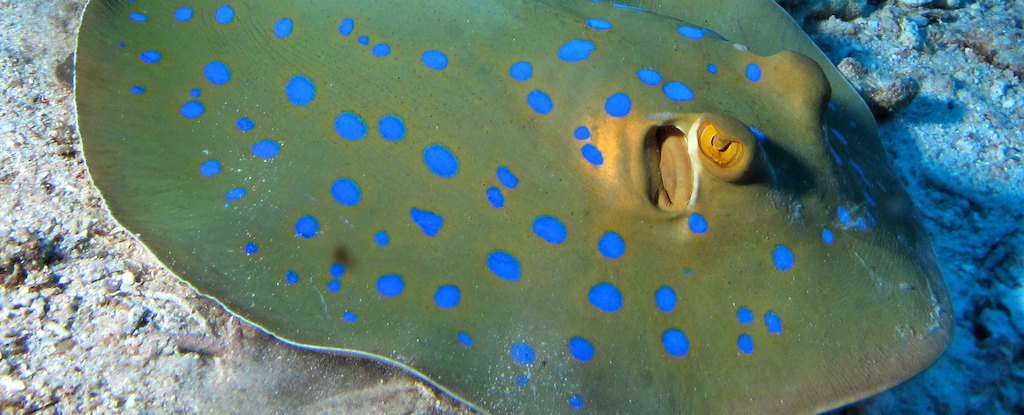
Researchers have discovered that bluespotted ribbontail rays produce their vivid blue spots through unique nanostructures that scatter light, rather than pigments. This structural color is unusually bright and angle-independent, achieved by a disordered array of scattering elements and a melanin layer that absorbs other colors. This finding not only advances our understanding of natural coloration but also has potential applications in creating chemical-free colors for textiles and displays.
Researchers at the University of Minnesota Twin Cities have discovered that electron beams can heal microscopic fractures in crystals, contrary to previous assumptions that they would cause further damage. The beams were found to fill in nanofractures by causing atoms to move towards each other and form a bridge, effectively healing the fracture. This unexpected finding opens up the possibility of using electron beams to engineer novel nanostructures atom-by-atom, a breakthrough in materials science. The researchers now aim to refine and improve the technique for future applications.
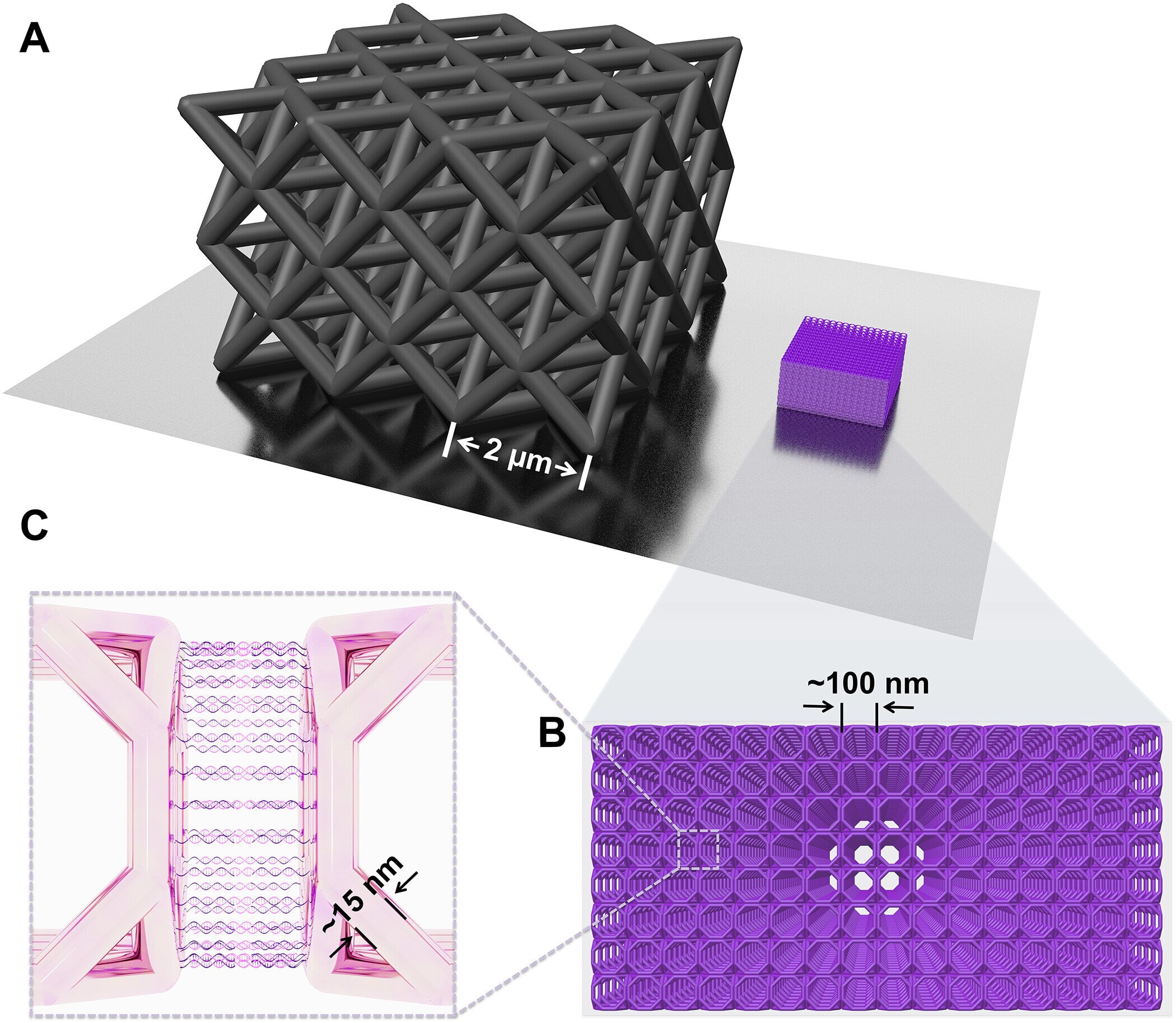
Researchers at Northwestern University have developed a super-strong colloidal crystal metamaterial by using DNA as glue to hold together metal nanostructures. By constructing metallic nanoparticles in various shapes and applying strands of DNA as glue, the researchers were able to create colloidal crystal metamaterials with different properties and shapes. The resulting metamaterials were found to be ultra-strong, stiff, and capable of maintaining their shape under extreme pressure. This development could have applications in space-based products and the creation of lighter and more efficient electronic devices, particularly in medical applications.
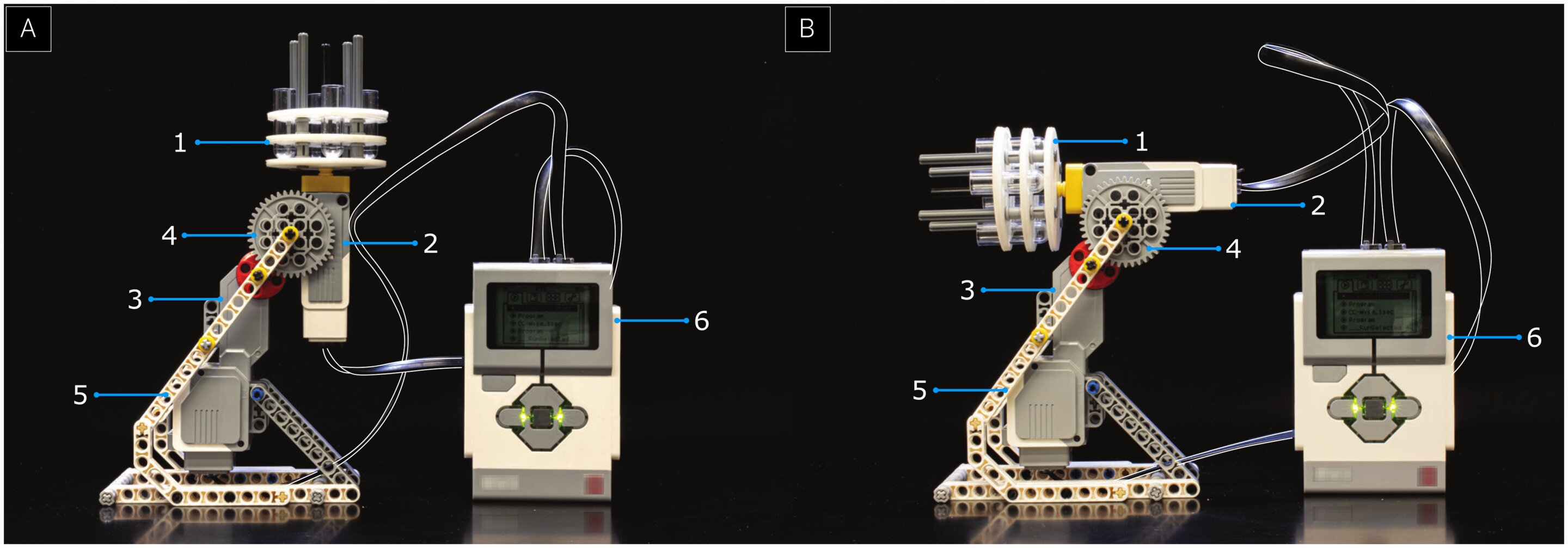
Bioengineers at Arizona State University have developed a LEGO robot as a gradient mixer to purify DNA origami nanostructures. The mixer, made using off-the-shelf LEGO kits, spins material inside cylindrical tubes to create a gradient. The robot performed as well as commercial versions but at a lower cost. The researchers suggest that this approach could be used to create other expensive lab machines.
Researchers at the Max Born Institute in Berlin have successfully performed X-ray Magnetic Circular Dichroism (XMCD) experiments in a laser laboratory for the first time. XMCD makes it possible to decode magnetic order in nanostructures and to assign it to different layers or chemical elements. Until now, access to the required x-ray radiation has only been possible at scientific large-scale facilities, such as synchrotron-radiation sources or free-electron lasers (FELs), and has thus been strongly limited. The work demonstrates that laser-based x-ray sources are catching up with large-scale facilities.
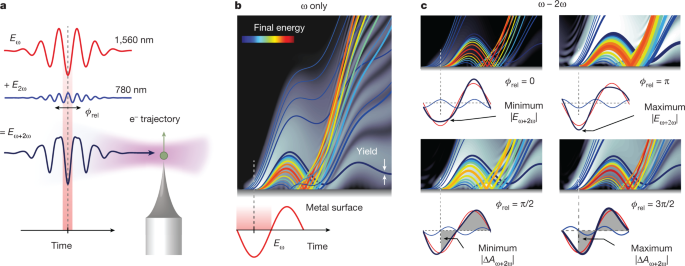
Researchers have measured the quantum dynamics of electron emission from solids with attosecond precision using two-colour modulation spectroscopy of backscattering electrons. The experiment measured photoelectron spectra of electrons emitted from a sharp metallic tip as a function of the relative phase between the two colours. The emission duration was found to be 710 ± 30 attoseconds, opening the door to the precise active control of strong-field photoemission from solid state and other systems.
Researchers at Vienna University of Technology have found a way to control the geometry of tiny gold particles by bombarding them with highly charged ions, which knock electrons away from the gold, altering the particles’ electronic structures and causing their atoms to move. The size and shape of the particles can be changed, creating new kinds of nanostructures, including quantum dots. The effects of the ion bombardment can be studied in an atomic force microscope, and improved control and deeper understanding of such processes is important for making a wide variety of nanostructures.