As 2025 concludes, the Standard Model of particle physics and cosmology remains robust despite numerous puzzles and challenges, with recent experiments reinforcing its predictions and no definitive evidence yet for physics beyond it. Key mysteries like dark matter, dark energy, and the matter-antimatter asymmetry persist, but current data strongly support the existing framework, emphasizing the need for continued investment in experimental and observational science to uncover deeper truths.
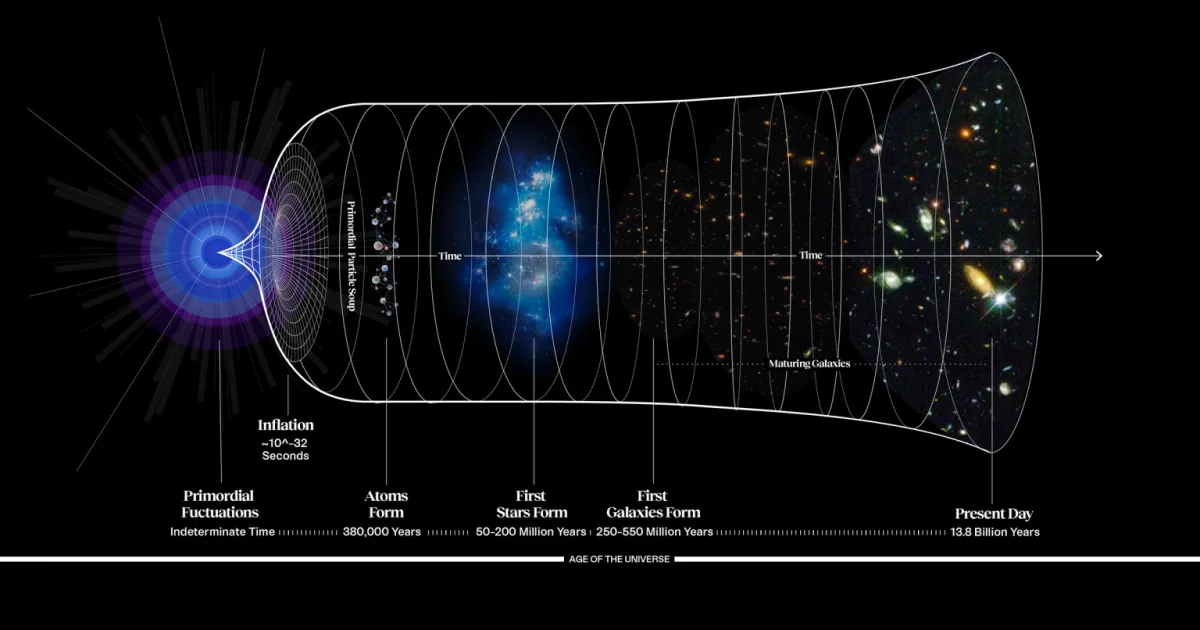
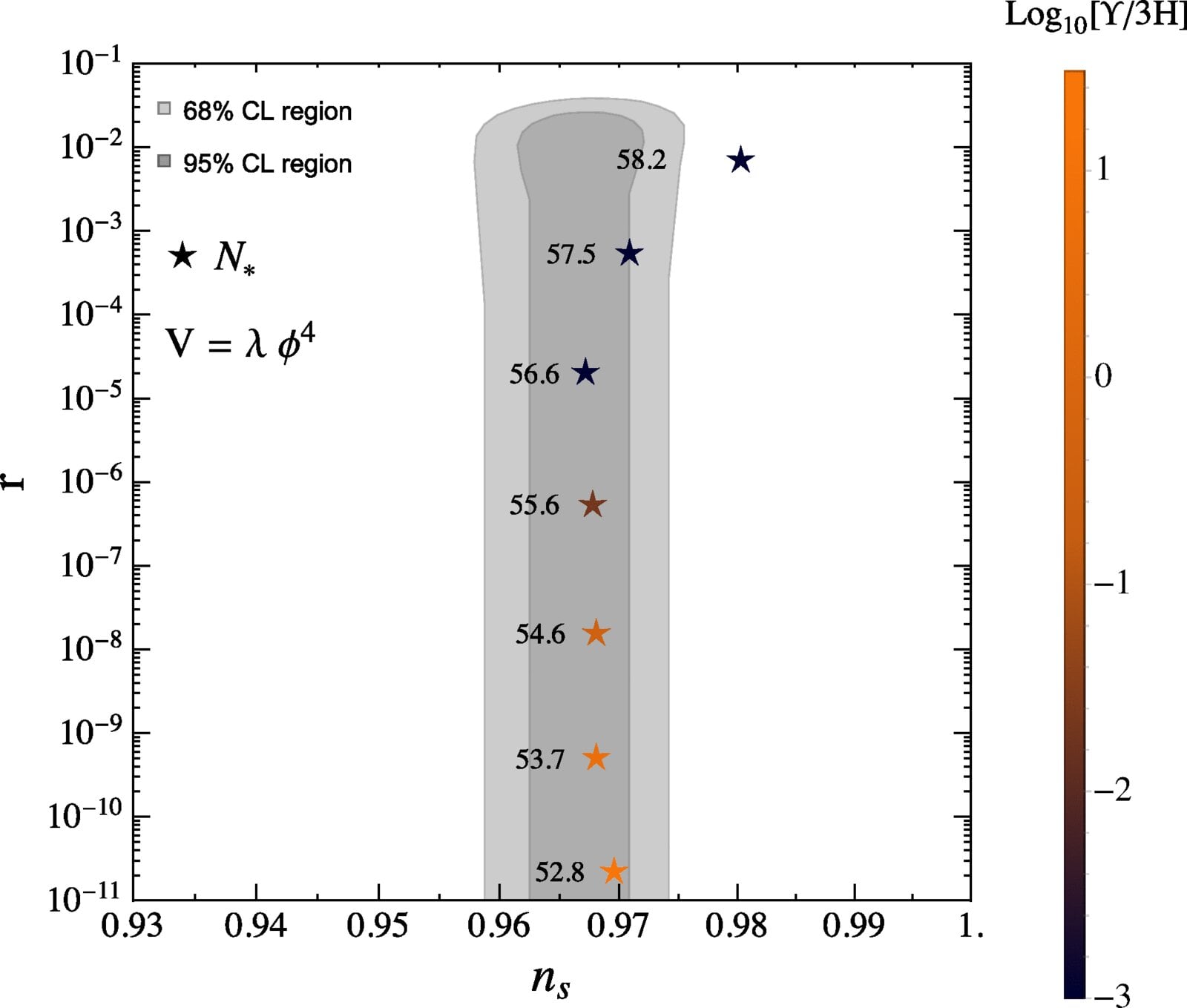
A new model suggests that the universe's rapid early expansion, or inflation, occurred in a warm environment filled with known elementary particles, primarily involving the strong force and hypothetical axion-like particles, making it testable with current experiments like MADMAX.
Chen-ning Yang, a Nobel Prize-winning physicist renowned for his work on the Yang–Mills theory which is fundamental to the Standard Model of particle physics, has died at age 103 in Beijing.
Scientists are exploring the possibility of a hidden layer of reality called the 'zeptouniverse' at scales smaller than those currently accessible by the Large Hadron Collider, using indirect methods like studying rare particle decays, which could reveal new physics beyond the Standard Model within the next decade.
Scientists from Shanghai Jiao Tong University have theorized that CP violation effects in charmed baryon decays could be much larger than previously thought, potentially providing new insights into why matter dominates antimatter in the universe. Their work emphasizes the role of final-state re-scattering and suggests that upcoming experiments, including China’s Super Tau-Charm Facility, could verify these predictions, advancing our understanding of fundamental physics.
Physicists have found potential evidence for a fifth fundamental force inside atoms, based on deviations in atomic transition measurements in calcium isotopes, which could suggest the existence of a new force mediated by a Yukawa particle, although further research is needed to confirm this discovery.
The LHCb experiment at the LHC has achieved a highly precise measurement of the Z boson mass, finding it to be approximately 91.184 GeV with an uncertainty of 9.5 MeV, aligning with previous measurements and the Standard Model prediction, paving the way for future high-precision studies at the LHC and beyond.
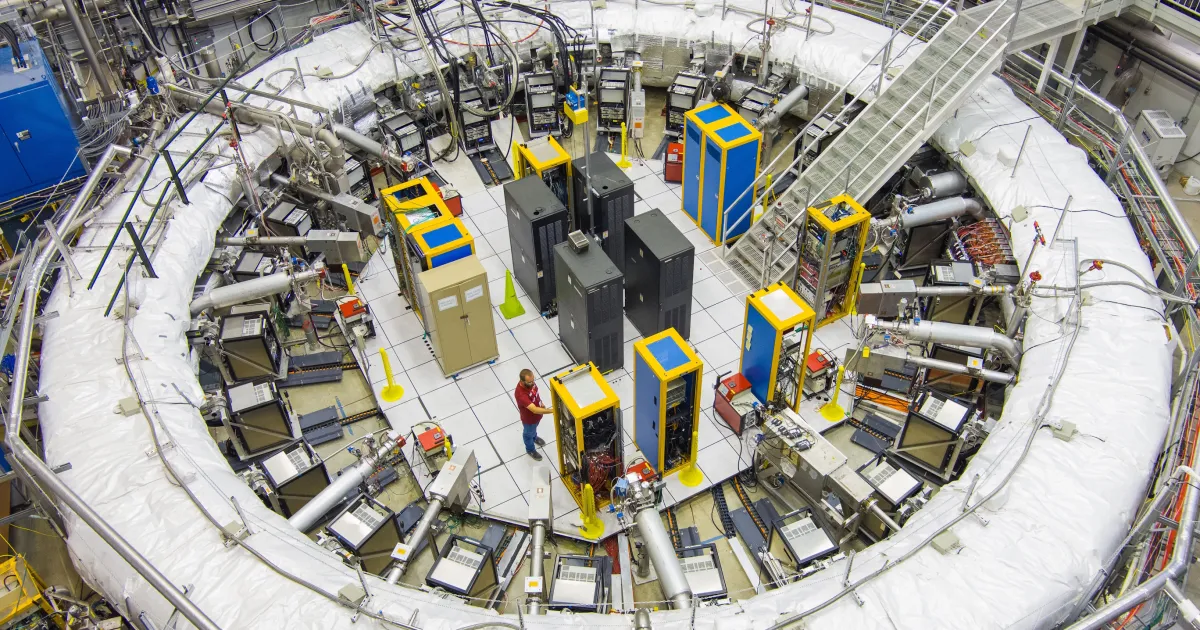
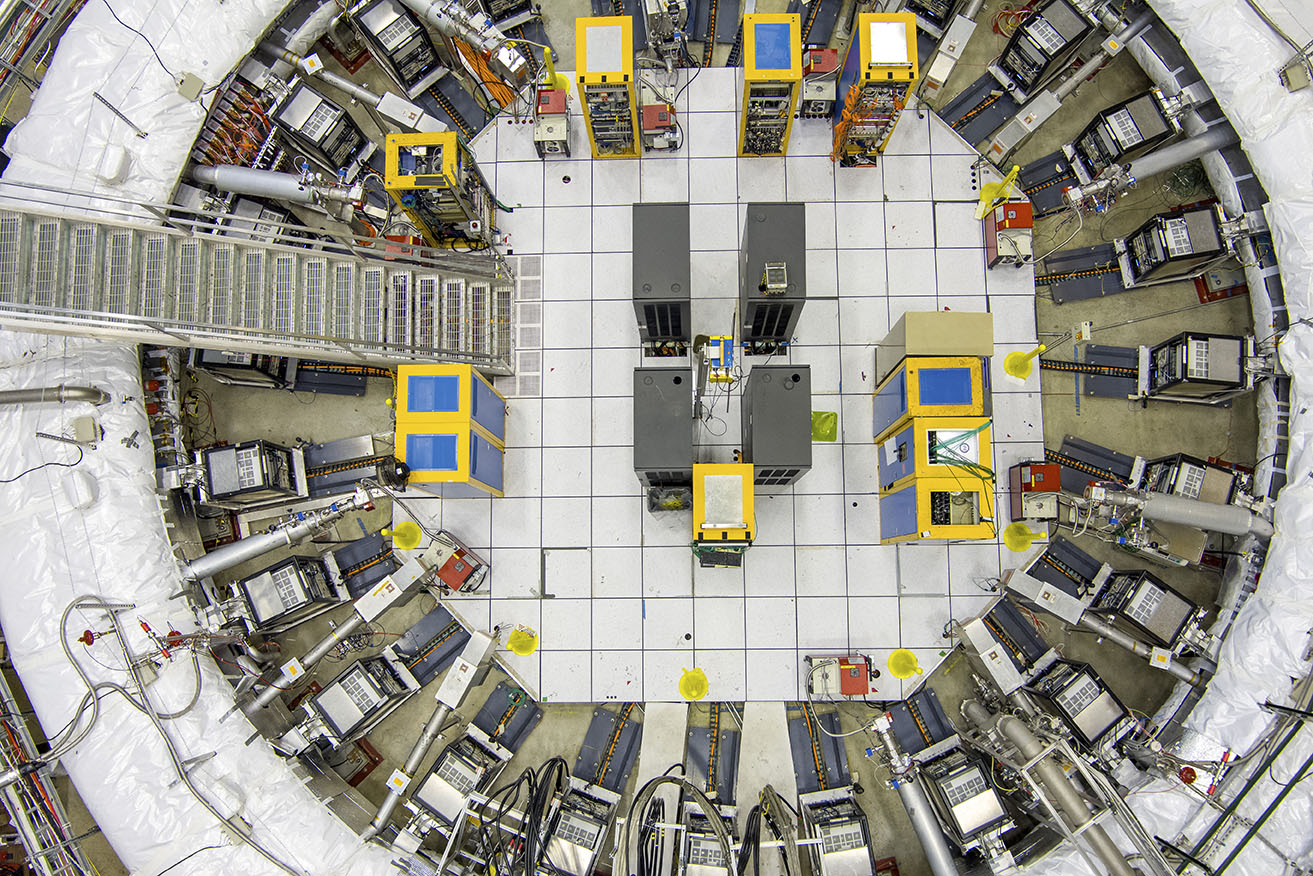
Fermilab's precise measurement of the muon's magnetic 'wiggle' aligns closely with the Standard Model, suggesting no new exotic physics is involved, though the muon's behavior continues to be a key probe for potential new particles or forces.
The longstanding discrepancy between the theoretical and experimental values of the muon's magnetic moment (g-2) has been resolved, confirming the Standard Model's predictions and showcasing the importance of precise experiments and advanced computational methods like lattice QCD in understanding fundamental physics.
Scientists at Fermilab have achieved the most precise measurement of the muon magnetic anomaly, confirming previous results with improved accuracy of 127 parts-per-billion, which provides a critical benchmark for testing the Standard Model and exploring potential new physics.
Physicists propose a new, simpler approach to quantum gravity that reformulates gravity using four interrelated fields similar to those in quantum field theory, avoiding extra dimensions and additional particles, and aligning with known physics, though experimental verification remains challenging.
Researchers at the Max Planck Institute have announced new findings on the Higgs boson, enhancing our understanding of its interactions with W and Z bosons, which are crucial to the Standard Model of particle physics. These discoveries, presented at the International Conference on High Energy Physics, confirm theoretical predictions and set the stage for future research at the High-Luminosity Large Hadron Collider. The findings not only validate existing theories but also open possibilities for discovering new particles or forces, potentially reshaping our understanding of the universe.
Physicists are investigating discrepancies in quark mixing predictions within the Standard Model, which currently do not sum to 100%, suggesting potential new physics. Researchers, including Jordy de Vries, have developed a new framework to more accurately calculate quark mixing, particularly between up and down quarks, using precise measurements from nuclear beta decays. This work aims to refine theoretical models and reduce uncertainties, potentially revealing new physics beyond the Standard Model.
Researchers at the Max Planck Institute have made significant advancements in understanding the Higgs boson's interactions with other particles, particularly W and Z bosons, using data from the Large Hadron Collider. These findings, presented at the ICHEP 2024, confirm theoretical predictions of the standard model and enhance our understanding of particle mass acquisition. The results also set the stage for future research at the High-Luminosity LHC, potentially uncovering new physics beyond the standard model.
A recent experiment at CERN's Large Hadron Collider observed an unexpectedly frequent ultra-rare decay of kaons, challenging the predictions of the standard model of physics. The NA62 experiment detected this decay 13 times out of 100 billion kaons, suggesting potential flaws in the current model. While further data and replication are needed, this finding could significantly impact our understanding of particle physics.