Tag

Solar Sails

All articles tagged with #solar sails

science-and-technology4 months ago

Scientists Develop Advanced Solar Sail Technology for Fuel-Free Space Travel

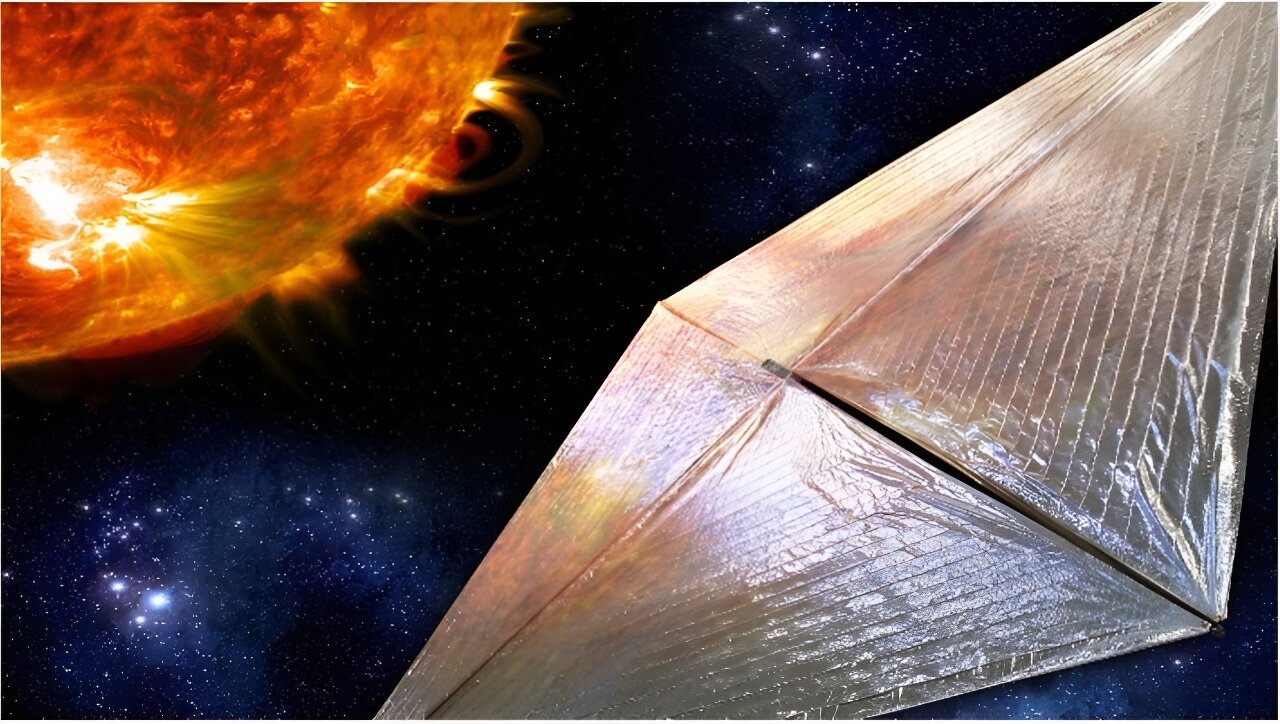
Researchers from the University of Nottingham have developed innovative transmissive solar sail technology that uses sunlight bending through microscopic patterns for fuel-free spacecraft propulsion, with potential applications in deep space exploration, climate intervention, and space debris removal, paving the way for more sustainable and versatile space missions.

space-exploration1 year ago

"Exploring Europa's Potential Life with Solar Sails"

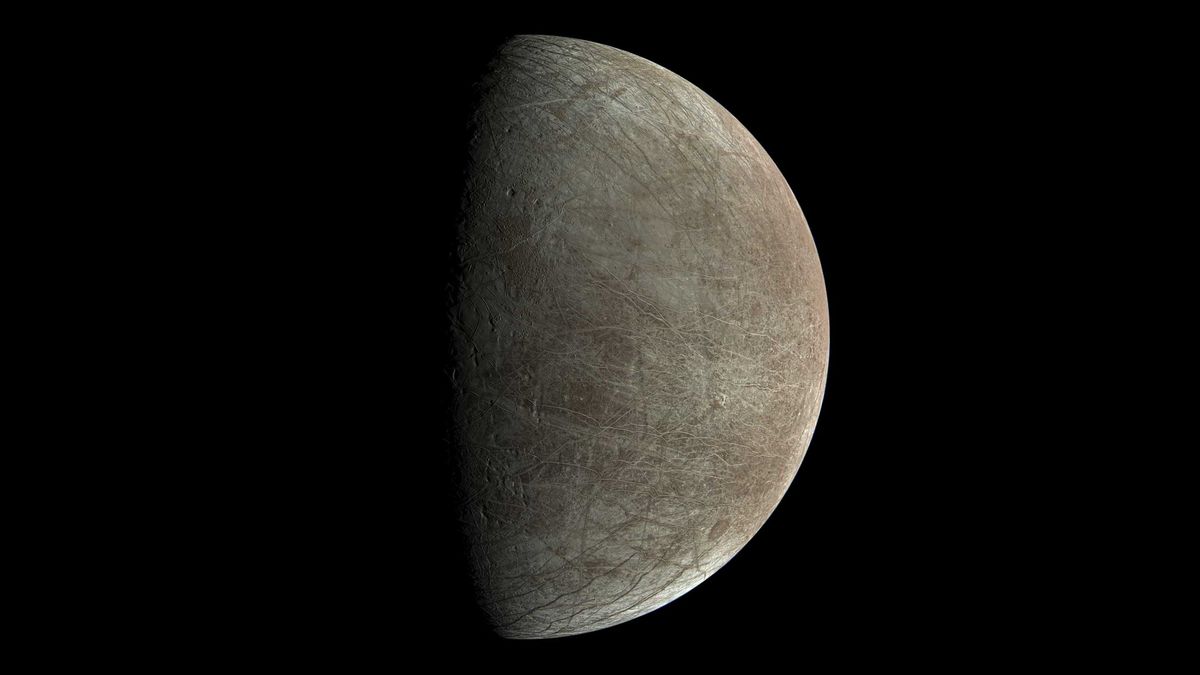
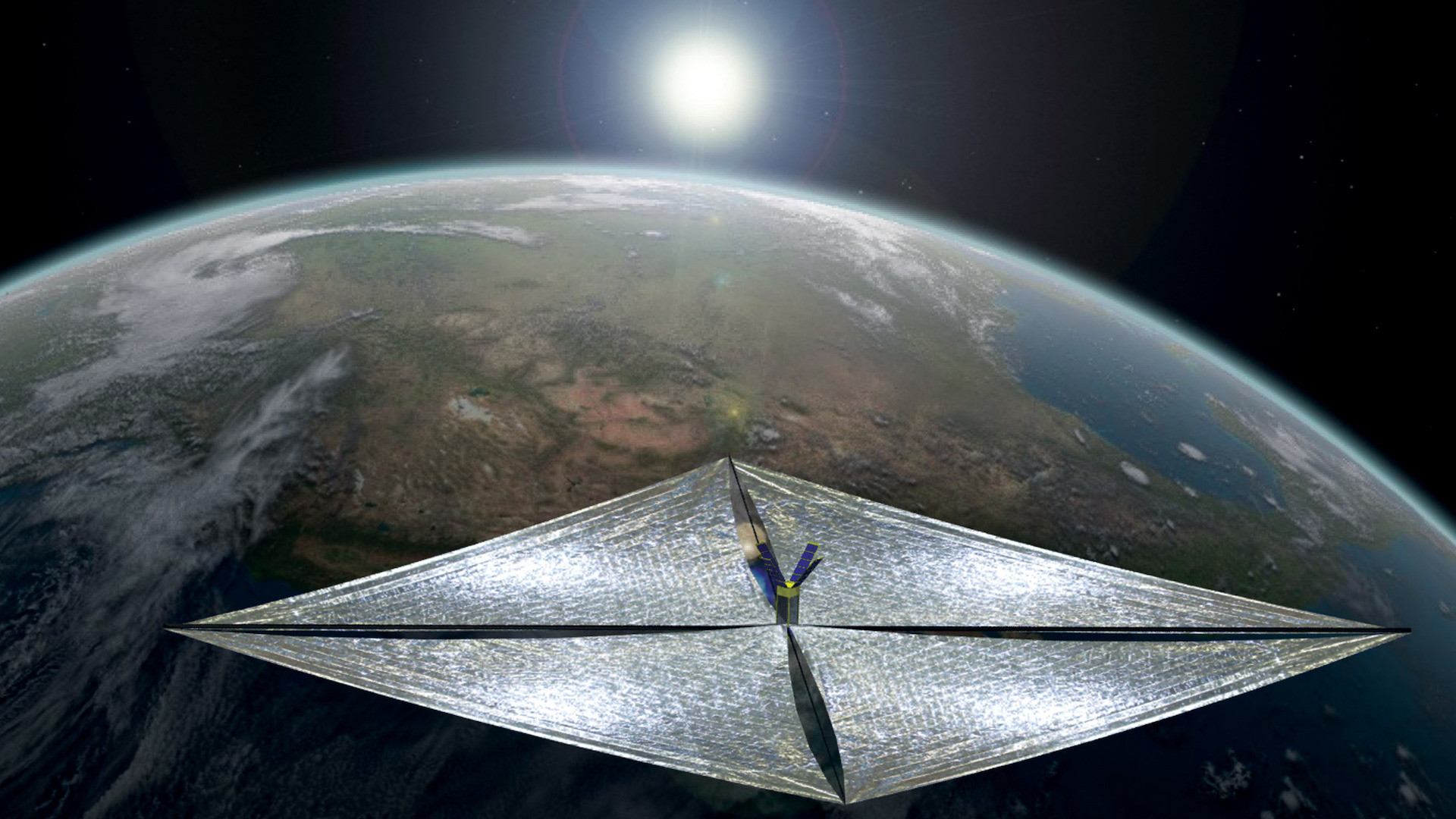
Solar sails, which use sunlight for propulsion, could be used to explore Jupiter's moon Europa and Saturn's moon Enceladus in the search for alien life. These sails could reach the moons in just a few years and potentially sample plumes that may contain biomolecules without destroying them. Solar sail technology could revolutionize space exploration and may even be used for interstellar missions in the future.

space-exploration2 years ago

"Revolutionary Solar Sail Technology Propels Mars Missions in Record Time"

Scientists have explored the potential of using aerographite as a material for solar sails, which could enable spacecraft to reach Mars and even travel to interstellar space. In a study, researchers simulated trips to Mars and beyond using solar sails made with aerographite, achieving impressive speeds. The solar sail spacecraft, weighing up to 2.2 pounds and equipped with 25 ounces of aerographite, demonstrated the ability to raise a small CubeSat's orbit by 1.9 miles solely using the propulsive force of photons from the Sun.

space2 years ago

"Revolutionary Solar Sails Slash Mars Travel Time to 26 Days"

A recent study explores the potential of using aerographite solar sails for faster and more efficient space travel to Mars and interstellar space. Solar sails, which use sunlight for propulsion, could dramatically reduce travel time and fuel requirements. Simulations showed that a solar sail made of aerographite could reach Mars in just 26 days and the heliopause (interstellar medium) in 5.3 years. The low density and mechanical properties of aerographite make it an advantageous material for solar sails. However, deceleration upon arrival at the destination remains a challenge that requires further study.

space2 years ago

Solar Sails: The Key to Interplanetary Travel and Exoplanet Imaging at Low Resolution

An international group of researchers led by NASA Jet Propulsion Laboratory physicist Slava Turyshev has proposed using solar sails and smallsats to explore the outer solar system and beyond. The team has developed potential craft that could reach speeds of up to 33 kilometers per second, or around seven astronomical units per year, without any propellant, greatly reducing weight and volume of potential spacecraft. The researchers say they've developed potential craft that could be built for between $30-$75 million, as opposed to the $2-$5 billion cost "of a typical flagship-type deep space mission." The ultimate goal is to photograph exoplanets in relative detail, as the solar gravitational lens offers intense brightness amplification and angular resolution.

science-and-technology2 years ago

New Study Shows Solar Sails as Potential Interplanetary Guides.

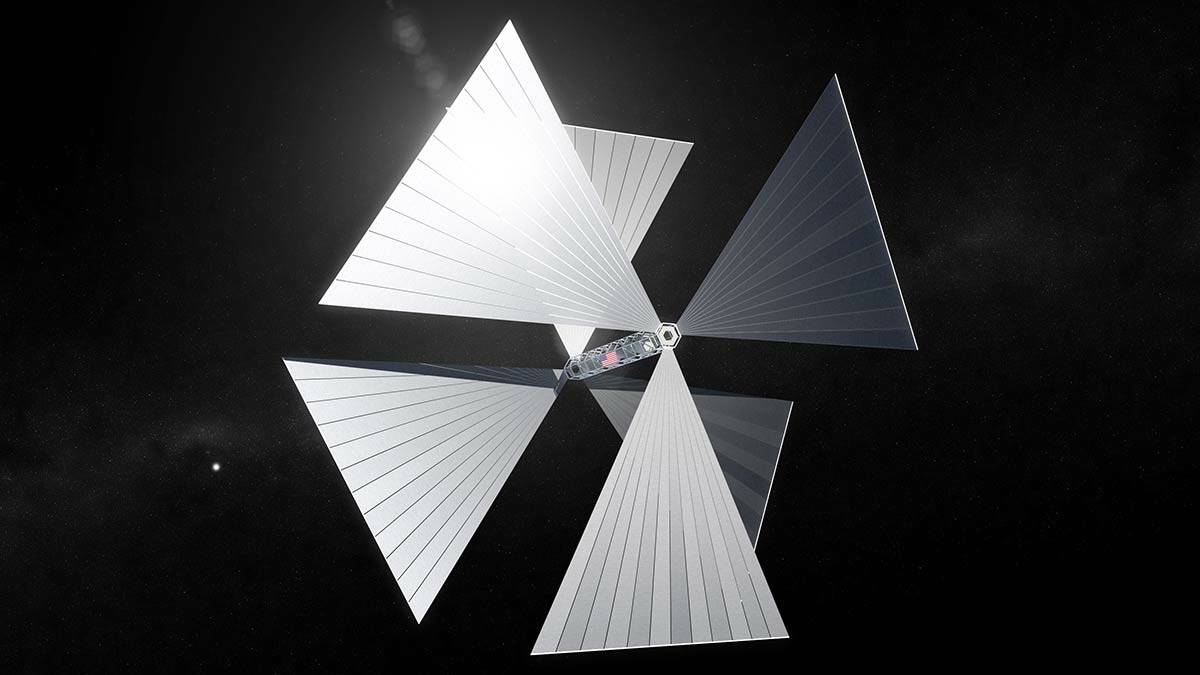
Scientists have proposed merging miniature satellite units with solar sails to create a fast, inexpensive, and lightweight mode of travel for interplanetary missions. Solar sails obtain thrust by using highly reflective, lightweight materials that reflect sunlight to propel a spacecraft while in space. The Sundiver Concept, as the researchers refer to it, combines solar sails and miniaturization to enable affordable missions to reach farther and faster into the outer regions of our solar system, with great promise for heliophysics, planetary science, and astrophysics.

science-and-technology2 years ago

Interplanetary travel could be guided by solar sails.

A team of scientists led by Slava Turyshev of the Jet Propulsion Laboratory at the California Institute of Technology has proposed merging miniature satellite units with a solar energy process to create a fast, inexpensive, lightweight mode of travel for space exploration. The researchers refer to the merging of these two technologies as the Sundiver Concept. With enhanced maneuverability, the spacecraft can easily deliver small payloads to multiple destinations if required, and can dock with related modular craft. The reliance on the sun and the miniaturization of the carrier, which requires no dedicated launch site, will prove to be significant cost savers.