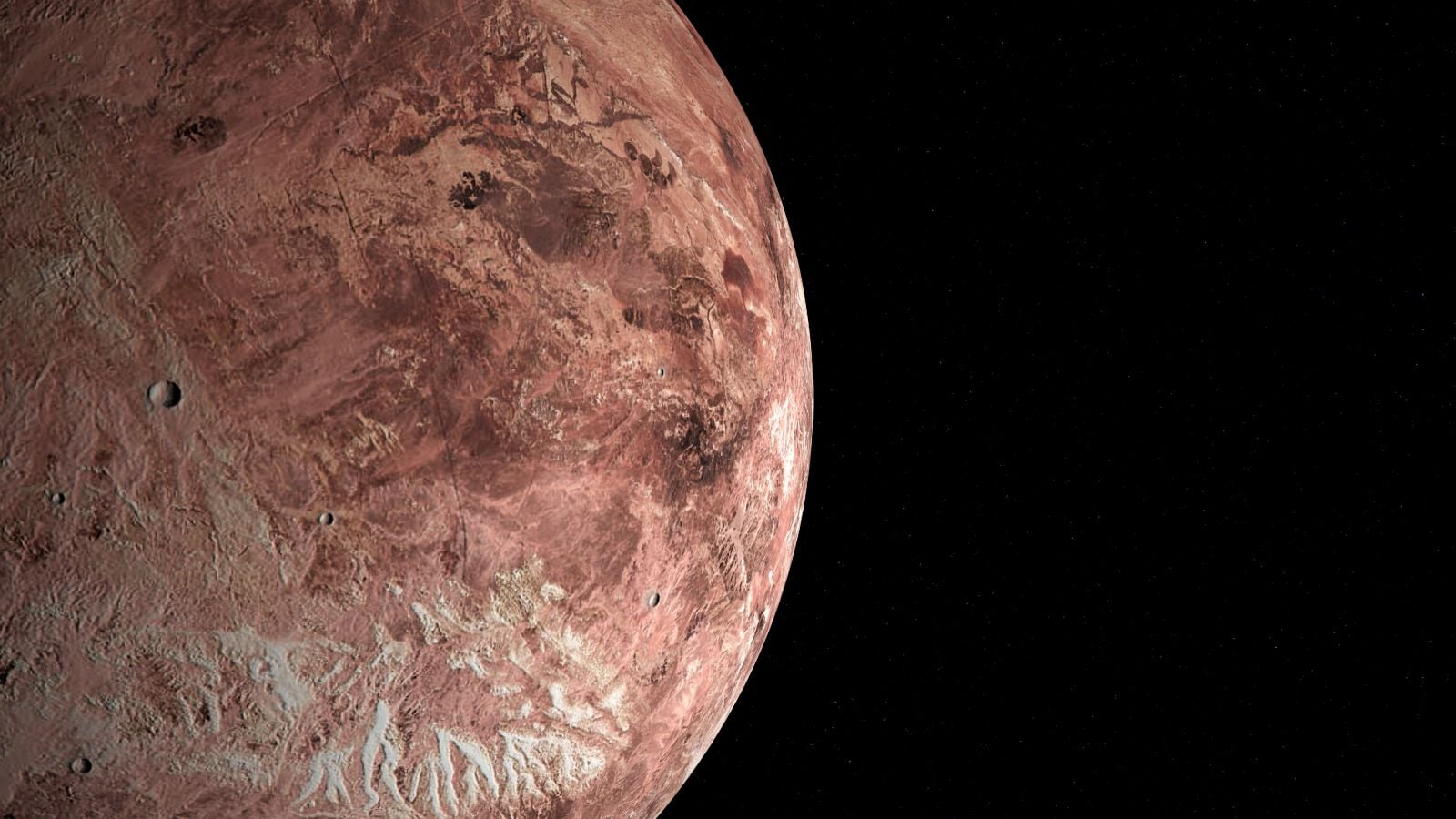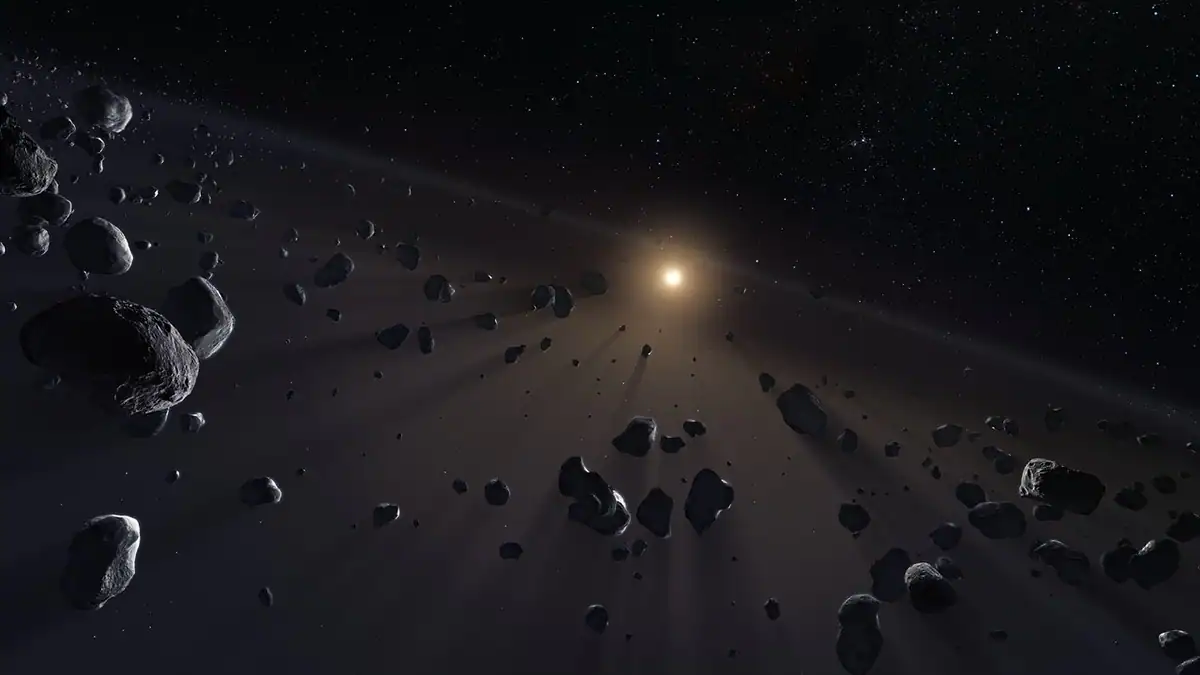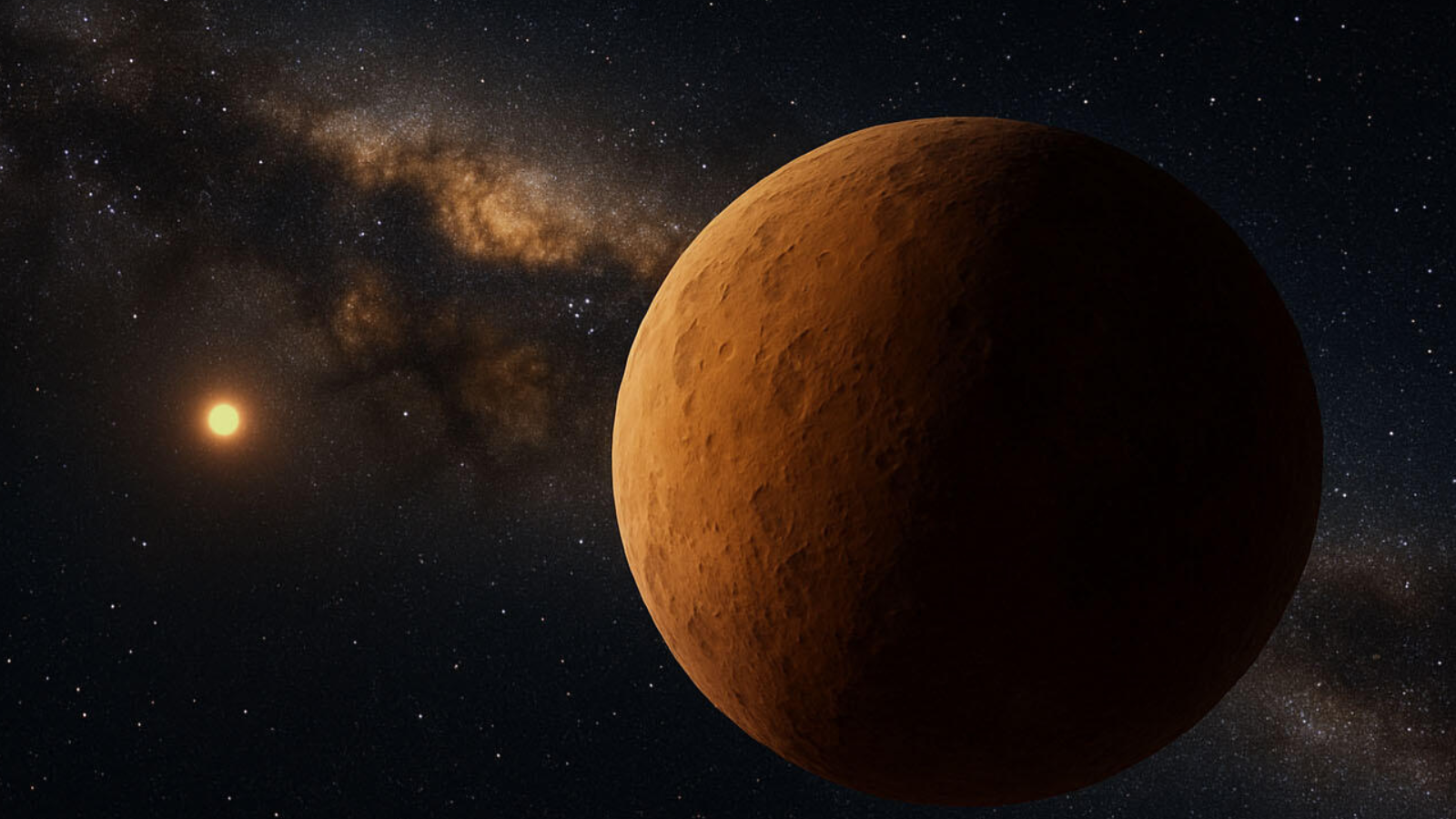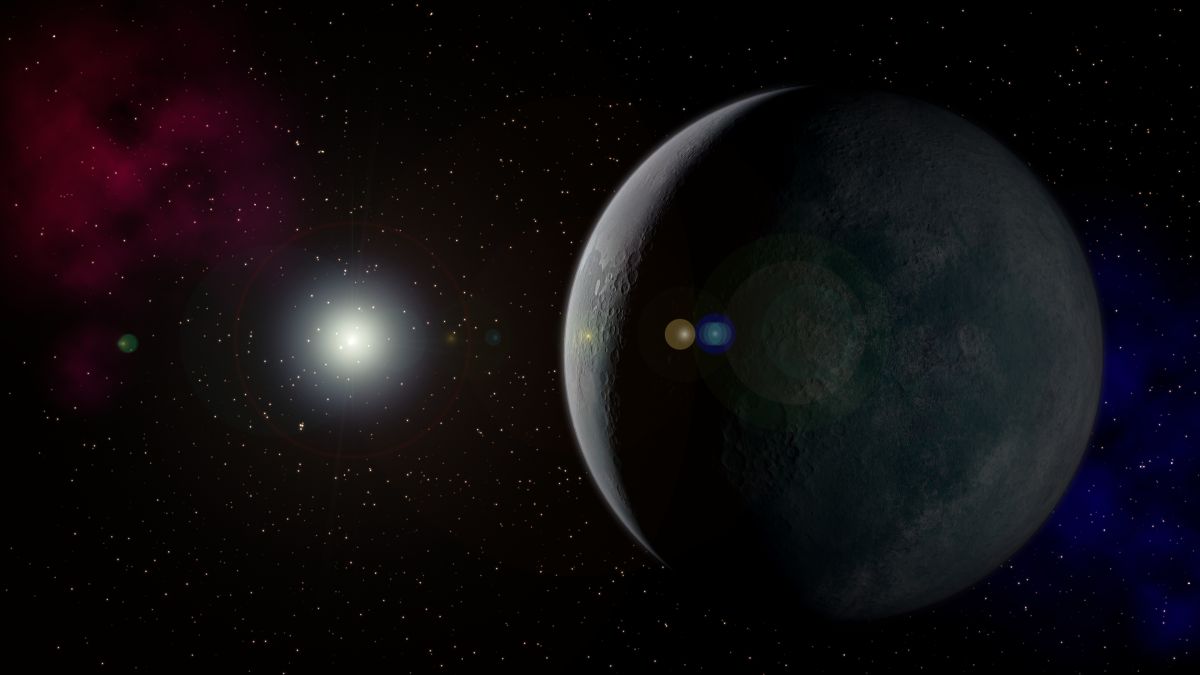
A recent study suggests the possible existence of a small, Earth-sized planet, dubbed 'Planet Y', in the outer Solar System, inferred from a 15-degree tilt in the Kuiper Belt objects' orbital plane, which could explain gravitational influences in that region. The discovery is not confirmed but provides a promising direction for future planetary searches.
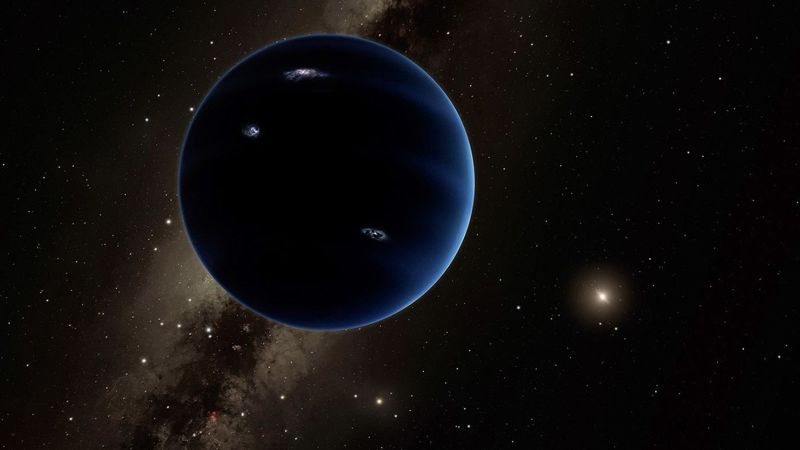
Astronomers propose the existence of a new potential planet, dubbed Planet Y, inferred from the tilted orbits of objects in the Kuiper Belt, with upcoming observations from the Vera Rubin Observatory expected to provide more definitive evidence.
Scientists using the James Webb Space Telescope have detected faint traces of fluorescent methane gas around the dwarf planet Makemake, suggesting it is more active than previously thought and challenging the idea of it being a dormant icy body in the outer solar system.
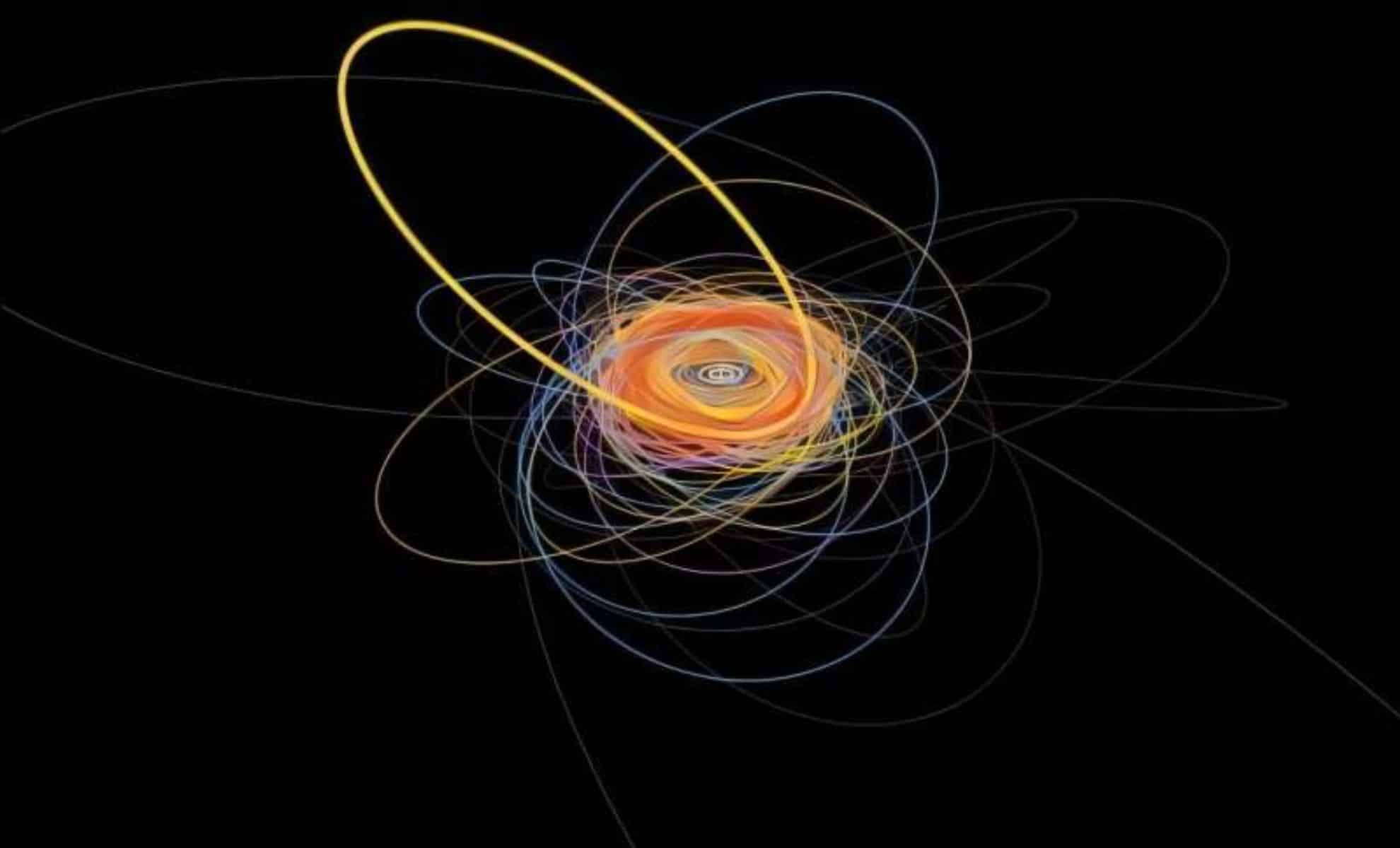
Scientists analyzing the orbits of Kuiper Belt objects have found evidence suggesting the existence of a hidden planet, called Planet Y, which could be at least 25 times more massive than Pluto and located 100-200 times Earth's distance from the Sun. This discovery is based on the warped orbital plane of distant Kuiper Belt objects, and upcoming surveys like the LSST may confirm its existence.
Scientists continue to investigate the possibility of a massive undiscovered planet, 'Planet Nine', influencing the orbits of distant objects in the Kuiper Belt, though recent discoveries and limited observational data make its existence uncertain. The search relies on telescopic observations, as space travel to the outer solar system would take over a century.
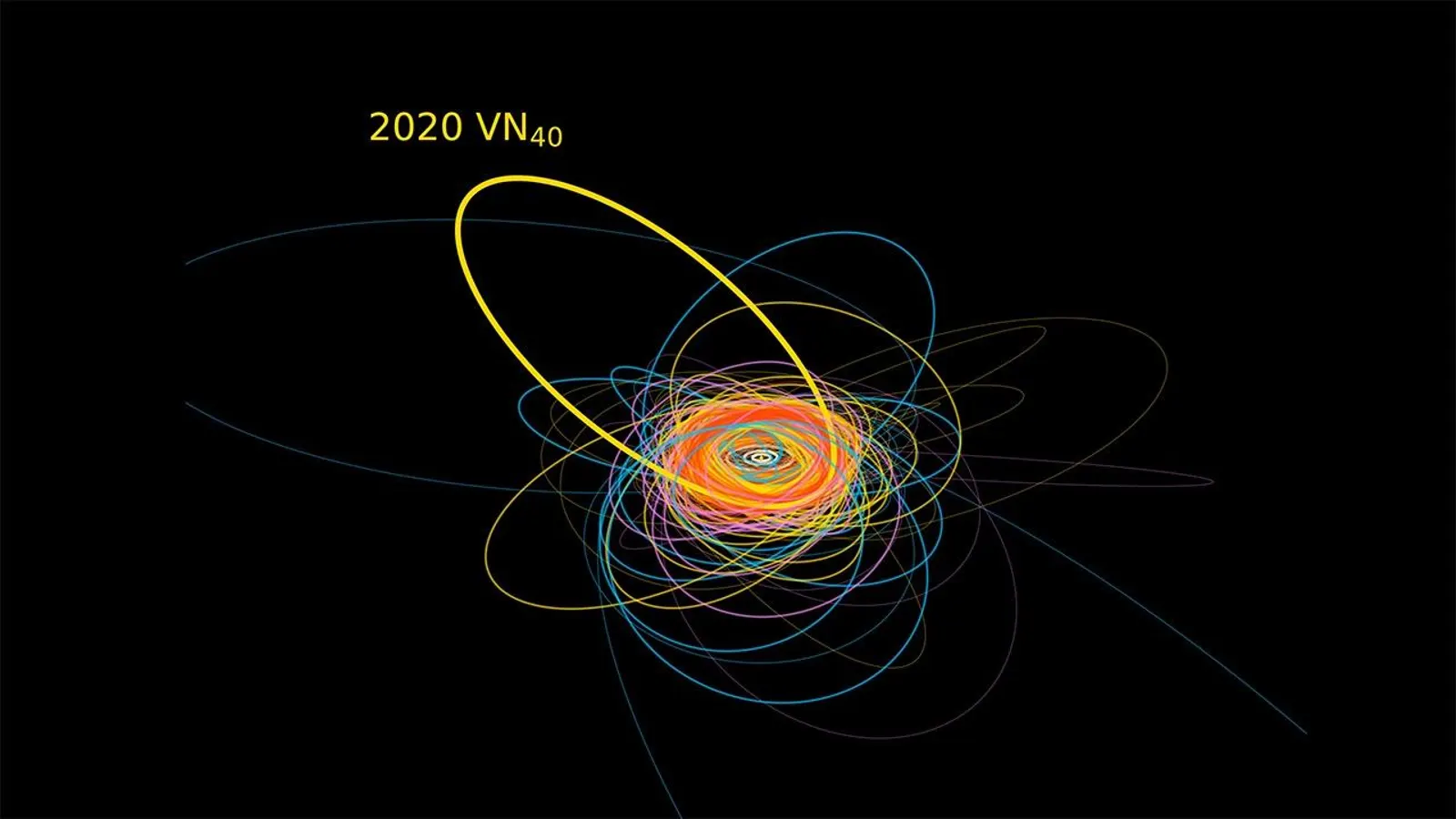
Astronomers have discovered a rare object, 2020 VN40, in the outer solar system that moves in a unique 10:1 resonance with Neptune, challenging existing ideas about the movement and evolution of distant solar system objects. This discovery, along with others like 'Ammonite,' provides new insights into the gravitational influences and history of our solar system's outer regions.
Taiwanese astronomers have found promising evidence for the existence of Planet 9, a hypothesized distant planet beyond Pluto, by analyzing infrared data from the IRAS and AKARI satellites. They identified a slow-moving object consistent with the expected characteristics of Planet 9, though further observations are needed for confirmation.
A meteorite from the outer solar system suggests that rocky planets like Earth and icy bodies may have formed simultaneously around 4.564 billion years ago, challenging the previous belief that inner planets formed first. This discovery could reshape our understanding of planetary formation both in our solar system and beyond.
Astronomers have discovered a rare, highly tilted trans-Neptunian object called 2020 VN40 that orbits the Sun once for every ten Neptune orbits, revealing a unique gravitational resonance and offering new insights into the dynamics and evolution of the outer solar system.
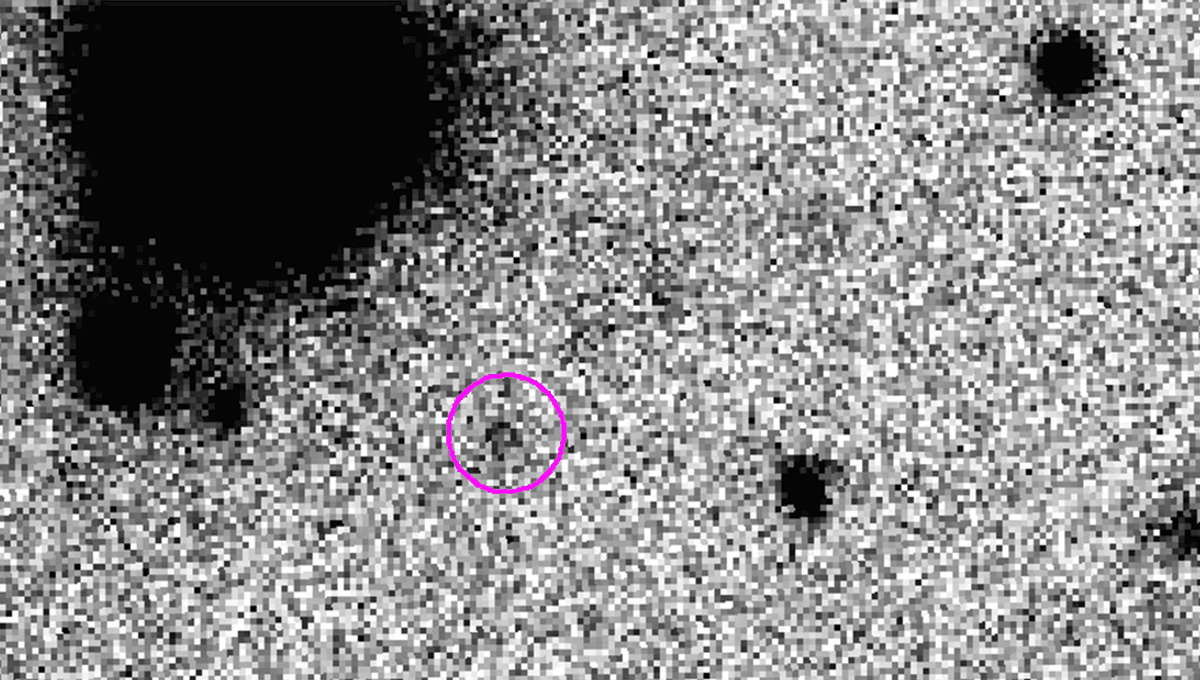
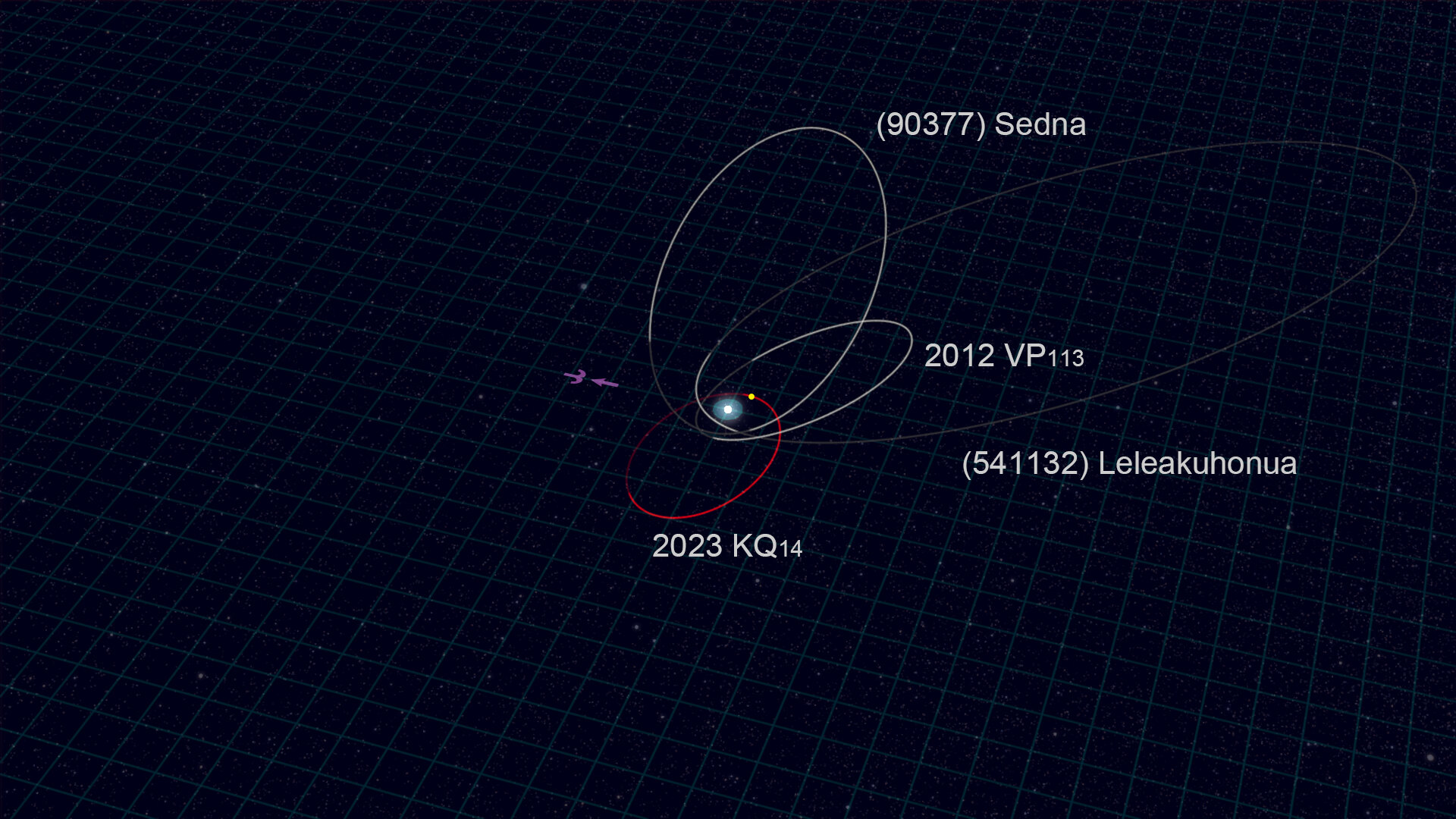
Astronomers have discovered a new distant object called 2023 KQ14 or 'Ammonite' beyond Pluto, which has an unusual orbit that challenges the existence or location of the hypothesized 'Planet Nine' and suggests a more complex history of the outer solar system.
Astronomers have discovered a rare trans-Neptunian object, 2020 VN40, in a unique orbital resonance with Neptune, providing new insights into the dynamics and evolution of the outer solar system, with ongoing surveys expected to reveal more such objects.
A new object named Ammonite, estimated to be between 220 and 380 kilometers in diameter, has been discovered in the outer reaches of our Solar System, providing insights into the early history and dynamics of the solar neighborhood. Its orbit suggests it has been stable for over 4.5 billion years and may challenge the existence of Planet Nine, offering clues about the forces shaping the distant solar system.
The Subaru Telescope discovered a new distant object, 2023 KQ14, classified as a sednoid, which provides new insights into the complexity and history of the outer solar system and challenges existing theories about Planet Nine.
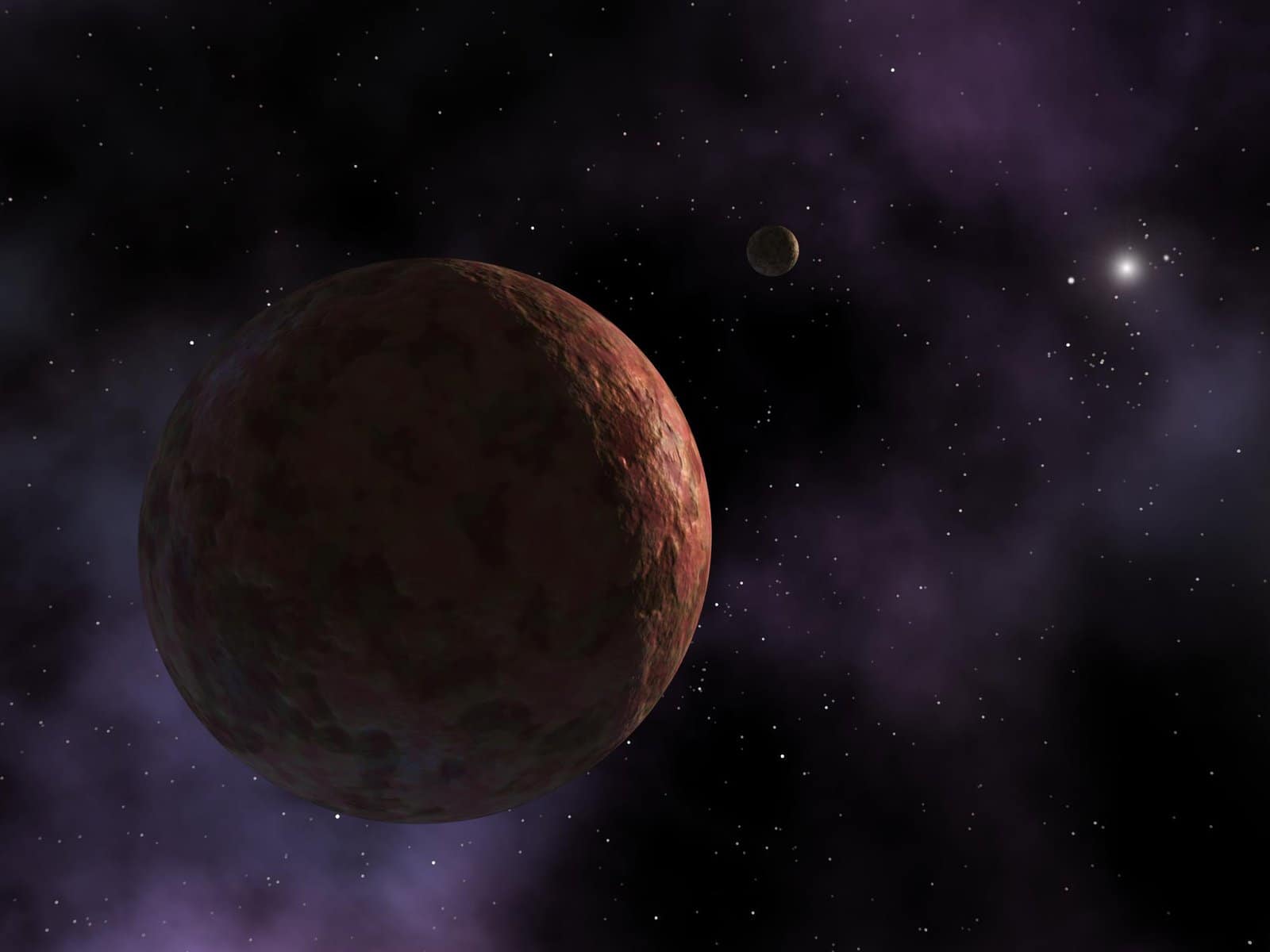
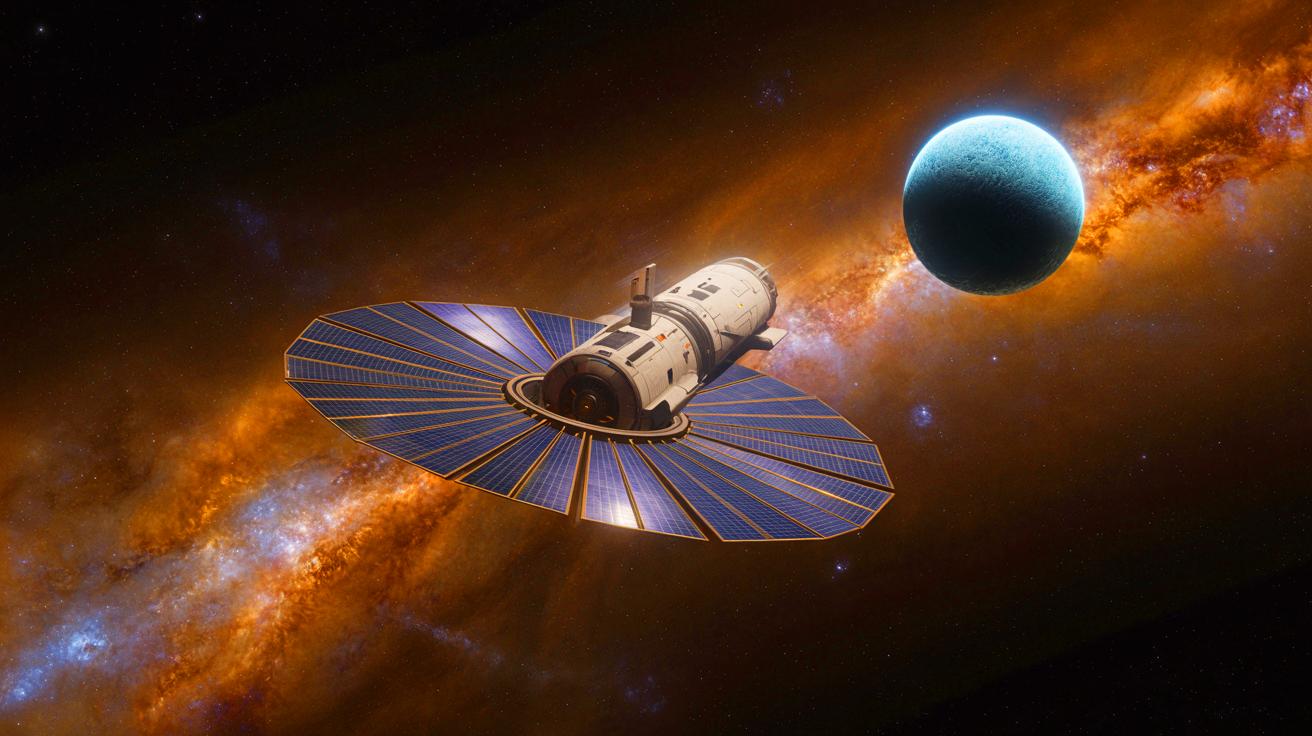
Scientists are racing to send a spacecraft to Sedna, a distant dwarf planet on an elongated orbit that will be closest to the Sun in 2076, to study its composition and origins before it moves away again. Due to the extreme distance, innovative propulsion methods like solar sails or fusion drives are being considered, but both face significant technical challenges. A successful mission could provide valuable insights into the early Solar System and potentially extraterrestrial material, but timing and technological development are critical.
Scientists are developing nuclear fusion and solar sail propulsion methods to reach the distant dwarf planet Sedna in just seven years, aiming to explore the outer solar system and gain insights into its formation, despite engineering challenges.