Tag

Sensory Neurons

All articles tagged with #sensory neurons

neuroscience1 year ago

"Uncovering the Role of Proteasomes in Sensory Signaling"

Researchers have discovered a new role for proteasomes in nerve cells, suggesting that these structures, traditionally known as the cell's waste processors, may act as signal messengers in sensory neurons, aiding in the differentiation between pain and itch sensations. By blocking proteasomes with specific inhibitors in mice, significant changes in sensory response were observed, highlighting the potential for proteasomes to be targeted for therapeutic interventions in sensory disorders. This study redefines our understanding of proteasome functions and opens new avenues for treating sensory disorders.

neuroscience1 year ago

"Unveiling Elkin1: The Key to Understanding Human Touch Perception"

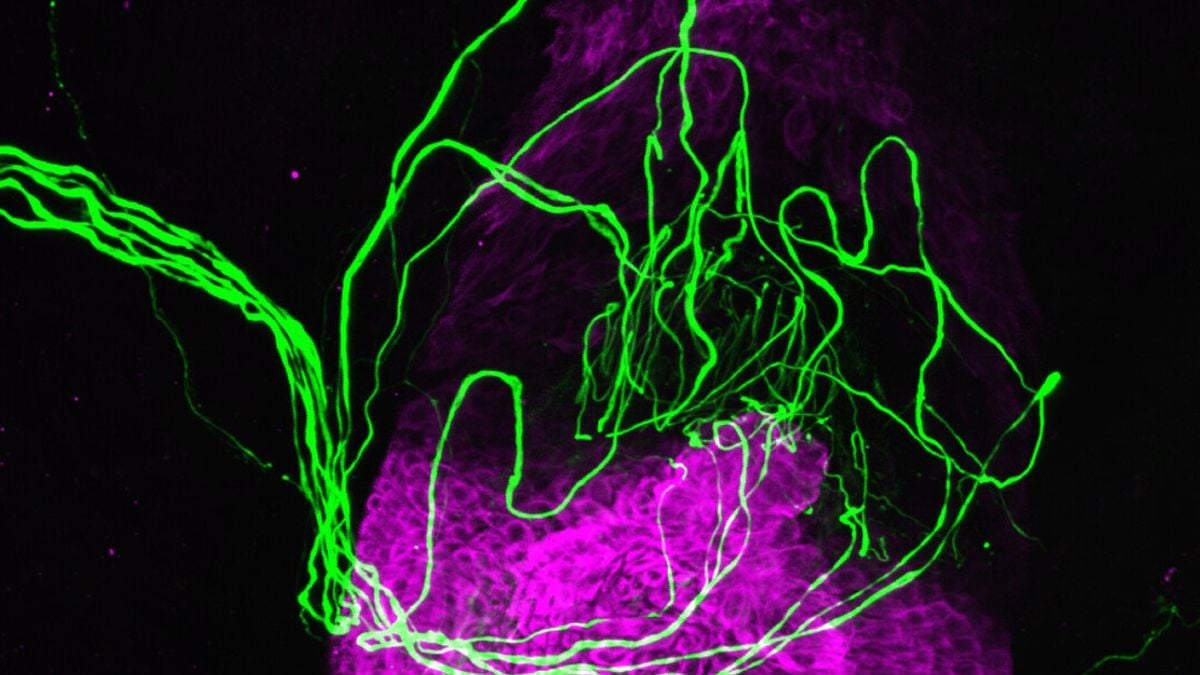
Researchers have identified a new ion channel, Elkin1, as crucial for touch perception, complementing the role of Piezo2 in sensing mechanical stimuli. Genetically modified mice lacking Elkin1 showed reduced touch sensitivity, and studies on human sensory neurons suggest its importance in human touch perception. This discovery not only deepens our understanding of touch sensation but also opens new possibilities for treating chronic pain by targeting Elkin1.

science2 years ago

Unveiling a Novel Human Sensation: The Hairy Truth Behind Touch

Scientists have discovered a previously unknown way that humans feel touch. Cells within the outer layer of hair follicles can detect touch and release neurotransmitters that activate nearby sensory neurons, which relay information to the brain. This expands the known ways humans sense touch and may have implications for understanding skin diseases such as eczema. The research is still in its early stages, but it could open up new therapeutic avenues.

health2 years ago

Unveiling the Neural Links Between Heart and Brain in Fainting

Scientists have discovered a neural pathway involving a group of sensory neurons that connect the heart to the brainstem, shedding light on the causes of fainting. By activating these neurons in mice, researchers observed symptoms similar to human syncope, including rapid pupil dilation and reduced heart rate and blood pressure. The study suggests that understanding this neural pathway could lead to new treatment approaches for cardiac causes of syncope. Additionally, researchers found that inhibiting or stimulating a specific region in the hypothalamus affected the duration of fainting episodes and the subsequent recovery.

neuroscience2 years ago

The Impact of mRNA Transport on Neuronal Well-being

Researchers have discovered a link between mRNA transport and the survival and pathology of sensory neurons. They found that the Dynein Roadblock 1 (Dynlrb1) subunit of the dynein protein complex is critical for neuron survival and the transport of vital molecules. They also identified the role of FMRP in mRNA transport, which offers a more energy-efficient method than transporting proteins. Dysfunctions in this system could provide insights into certain neuropathologies.

neuroscience2 years ago

Unveiling the Sensory Power of Hair Follicles

Researchers at Imperial College London have discovered a previously unknown mechanism within hair follicles that allows us to detect touch. Hair follicle cells, in addition to nerve endings in the skin, can sense touch and release neurotransmitters histamine and serotonin in response. This finding may provide insights into the role of histamine in inflammatory skin conditions like eczema. The study was conducted using cell cultures and further research is needed to confirm the findings in living organisms.

neuroscience2 years ago

"Neuroscience News: Unveiling Perception's Pathways in Top 5 Advances"

This week's top neuroscience news includes a promising Alzheimer's vaccine targeting senescence-associated glycoprotein, the unveiling of the cGAS/STING pathway's role in chronic inflammation and aging, the identification of sensory neurons in the colon, a study showing that nightly aromatherapy enhances cognitive capacity in older adults, and a challenge to the long-standing Libet paradigm of free will, suggesting that the readiness potential may not directly correlate with conscious decision-making. These discoveries deepen our understanding of neuroscience and its impact on conditions like Alzheimer's, inflammation-related aging, gastrointestinal disorders, cognitive decline, and human autonomy.

health2 years ago

Decoding the Gut-Brain Connection: Unveiling the Secrets of Colon Neurons

Researchers at Harvard Medical School have identified five distinct types of sensory neurons in the colon that send varying signals to the brain. These neurons respond to different stimuli, with some detecting gentle movements and others reacting to intense forces or inflammation. The findings, if confirmed in humans, could lead to more targeted therapies for gastrointestinal conditions. Understanding the function of these neurons may provide insights into how mechanical forces are converted into electrical signals in the nervous system.