The article explores how studying sea slug neurons can shed light on the nature of consciousness, suggesting that the perceived wall between the physical and mental may be a matter of perspective rather than an insurmountable barrier, and that subjective experience might be an extension of objective processes.
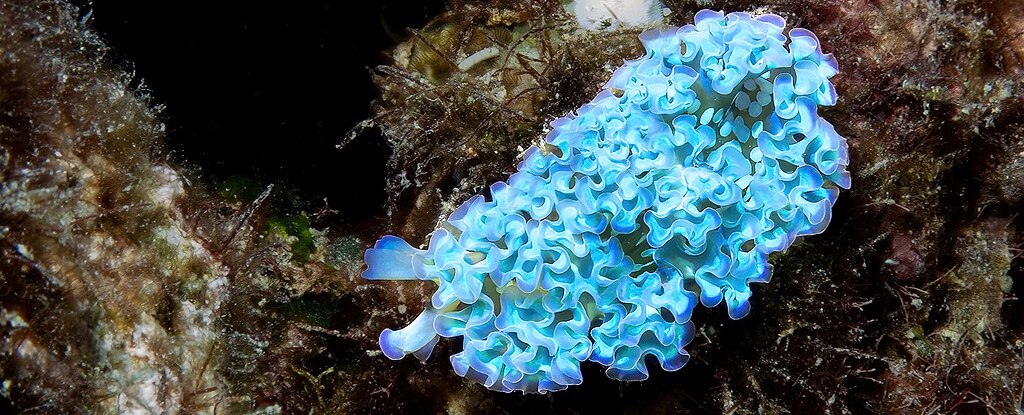
Sea slugs of the species Elysia crispata can steal and utilize chloroplasts from algae to generate energy from sunlight, a process called kleptoplasty, which may serve multiple functions like energy production, camouflage, or defense, revealing complex biological interactions and potential insights into symbiosis and evolution.
A new study finds that the brain architecture that drives locomotion in sea slugs is similar to that of more complex segmented creatures with jointed skeletons and appendages. The study suggests that the insects, crustaceans, and even vertebrates like mammals adapted a network of neurons, a module, that guided locomotion and posture in much simpler organisms. The circuits driving locomotion in animals with complex bodies and behaviors "have close functional analogies in the simpler gastropod mollusks and may share a common inheritance."
Chemists from the University of Nebraska-Lincoln have discovered that the orientation of a single amino acid in a peptide can dictate the likelihood that the peptide activates one neuron receptor versus another. This finding points to another means by which a brain or nervous system can regulate the communication among its cells. The team discovered the phenomenon in a species of sea slug, but the findings should apply to a range of animals, potentially even humans. The discovery could open up new therapeutic avenues in terms of that specific target.
Chemists at the University of Nebraska-Lincoln have discovered that the orientation of a single amino acid in a sea slug can determine which neuron receptor is activated, leading to different types of neuronal activities. This finding sheds light on how the brain can regulate communication between cells in different ways. The study reveals that the orientation of a single amino acid in a peptide can dictate the likelihood that the peptide activates one neuron receptor versus another, pointing to another means by which a brain or nervous system can regulate communication among its cells.