Tag

Scientific Analysis

All articles tagged with #scientific analysis

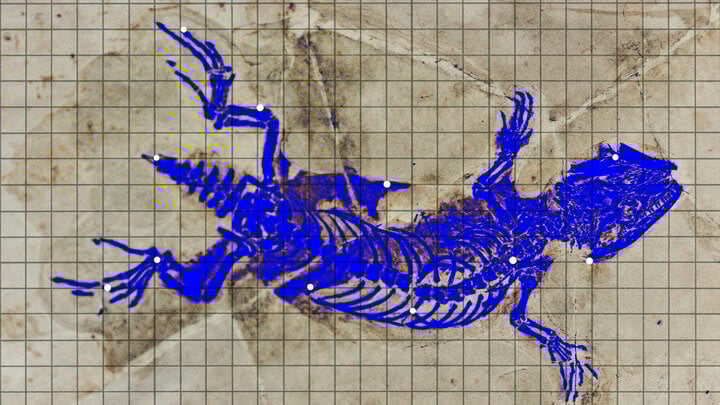
"Scientific Fraud Uncovered: 280-Million-Year-Old Fossil Revealed as Paint"

Originally Published 1 year ago — by The Daily Beast

Featured image for "Scientific Fraud Uncovered: 280-Million-Year-Old Fossil Revealed as Paint"
Source: The Daily Beast

A 280-million-year-old fossil of a lizard-like creature, previously believed to be a significant find in understanding early reptile evolution, has been found to be mostly paint upon new scientific analysis. The black shading surrounding the fossil, thought to be carbonized soft tissue, was revealed to be a paint used in mechanical preparation, casting doubt on the veracity of the creature's assigned taxon and the accuracy of its observed body parts.

"Challenging Homo Naledi Burial Claims: Rethinking Human Ancestry"

Originally Published 1 year ago — by SciTechDaily

Featured image for "Challenging Homo Naledi Burial Claims: Rethinking Human Ancestry"
Source: SciTechDaily

A recent study challenges previous claims that Homo naledi deliberately buried their dead and created rock art in Rising Star Cave, South Africa, with experts calling for more rigorous scientific analysis and documentation. The evidence presented so far was deemed not compelling enough to support the deliberate burial of the dead by Homo naledi, nor that they made the purported engravings, leading to a reevaluation of the findings. The critique emphasizes the need for additional documentation and scientific analyses before ruling out natural agents and post-depositional processes as responsible for the accumulation of bodies and to prove intentional excavation and filling of pits by Homo naledi.

"The Enigmatic Centaur Head: A Scientific Puzzle"

Originally Published 2 years ago — by Phys.org

Featured image for "The Enigmatic Centaur Head: A Scientific Puzzle"
Source: Phys.org

Despite intensive scientific analyses, the brown film on the centaur head from the Parthenon temple at the National Museum of Denmark remains a mystery. The film, first examined in 1830, contains oxalates, but its origin is unknown. Recent investigations found no traces of biological matter or paint, and the film consists of two distinct layers with different chemical compositions. The centaur head, brought to Denmark in 1688, has been indoors since before modern industrialization, making air pollution an unlikely cause. The mystery of the brown film persists, leaving researchers puzzled.

NASA's Mission to Retrieve Ancient Asteroid Sample Hits Unexpected Obstacle

Originally Published 2 years ago — by USA TODAY

Featured image for NASA's Mission to Retrieve Ancient Asteroid Sample Hits Unexpected Obstacle
Source: USA TODAY

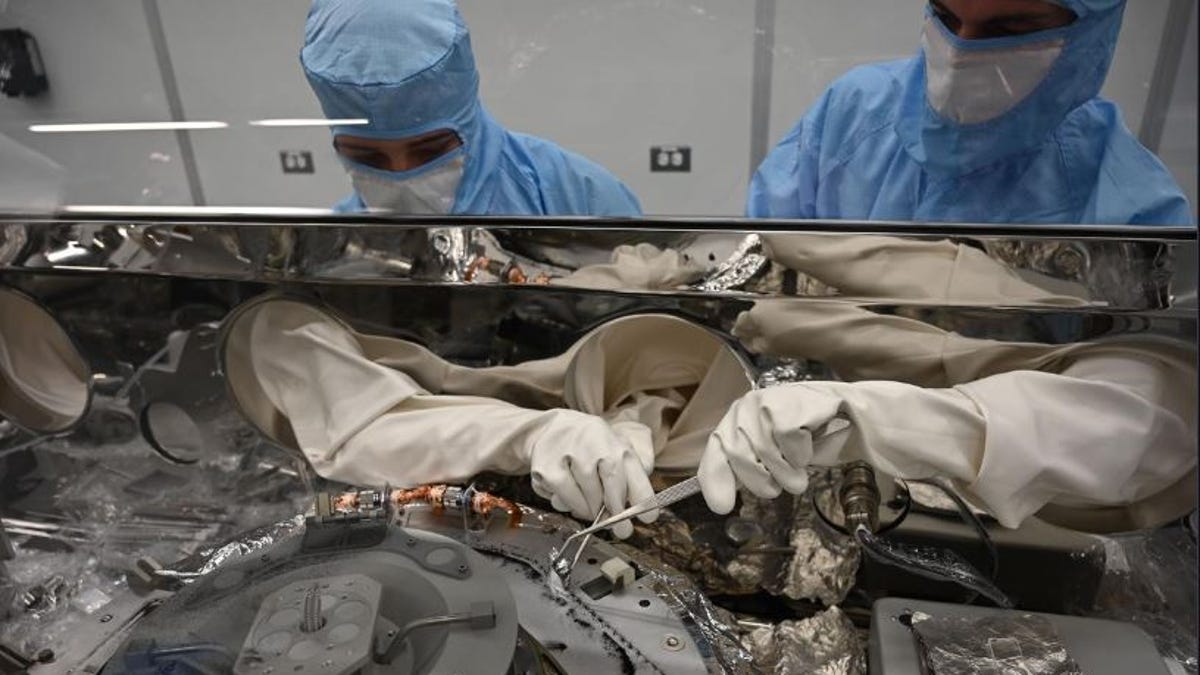
NASA successfully brought back an asteroid sample from the OSIRIS-REx mission, but is now working on retrieving the rest of the sample from the TAGSAM head. Scientists have already collected 70.3 grams of rock and dust from the sampler hardware, surpassing NASA's goal. Preliminary studies show that the sample contains high-carbon content and water, potentially providing insights into the formation of the solar system and the origins of life on Earth. NASA is actively working on solutions to access the remaining sample while ensuring the scientific integrity of the collection.

NASA Successfully Delivers OSIRIS-REx Asteroid Sample

Originally Published 2 years ago — by SpaceNews

Featured image for NASA Successfully Delivers OSIRIS-REx Asteroid Sample
Source: SpaceNews

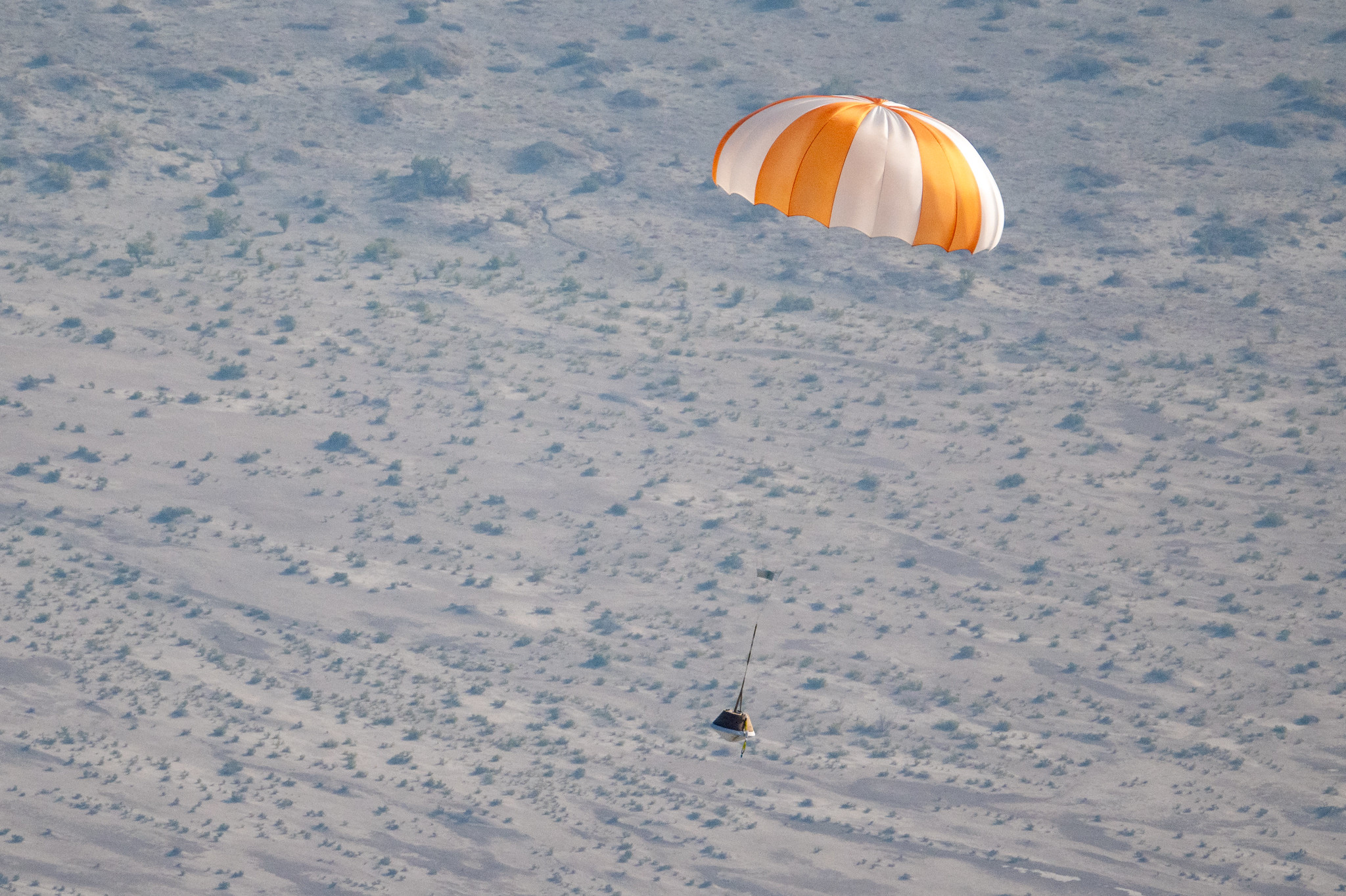
NASA conducted a dress rehearsal for the recovery of the sample return capsule from the OSIRIS-REx mission, which is set to bring back samples from the asteroid Bennu in September. The capsule, carrying an estimated 250 grams of material, will land at the Utah Test and Training Range and be transported to NASA's Johnson Space Center for analysis. The mission aims to provide new insights into the formation of the solar system.

"Harvard Professor Leads Groundbreaking Search for Extraterrestrial Life"

Originally Published 2 years ago — by CNN

Featured image for "Harvard Professor Leads Groundbreaking Search for Extraterrestrial Life"
Source: CNN

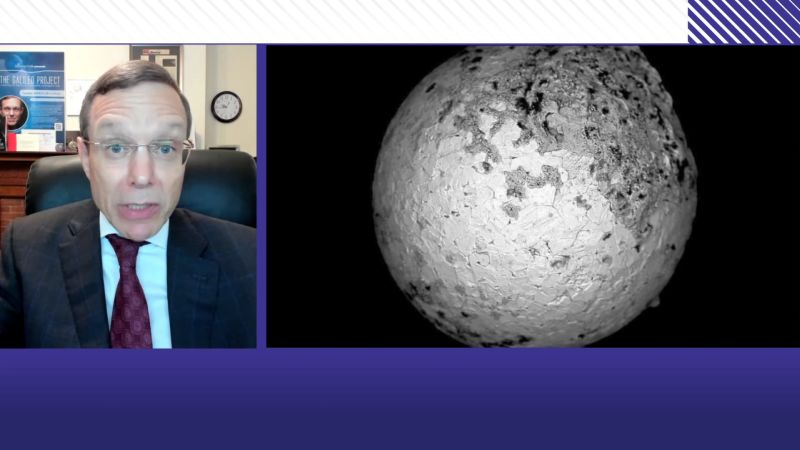
Harvard astrophysicist Dr. Avi Loeb has analyzed meteor particles retrieved from the Pacific Ocean to determine their origin, stating that it is a matter for scientists to investigate rather than science fiction or political discussions.

ExoMars rover undergoes deep testing.

Originally Published 2 years ago — by European Space Agency

Featured image for ExoMars rover undergoes deep testing.
Source: European Space Agency

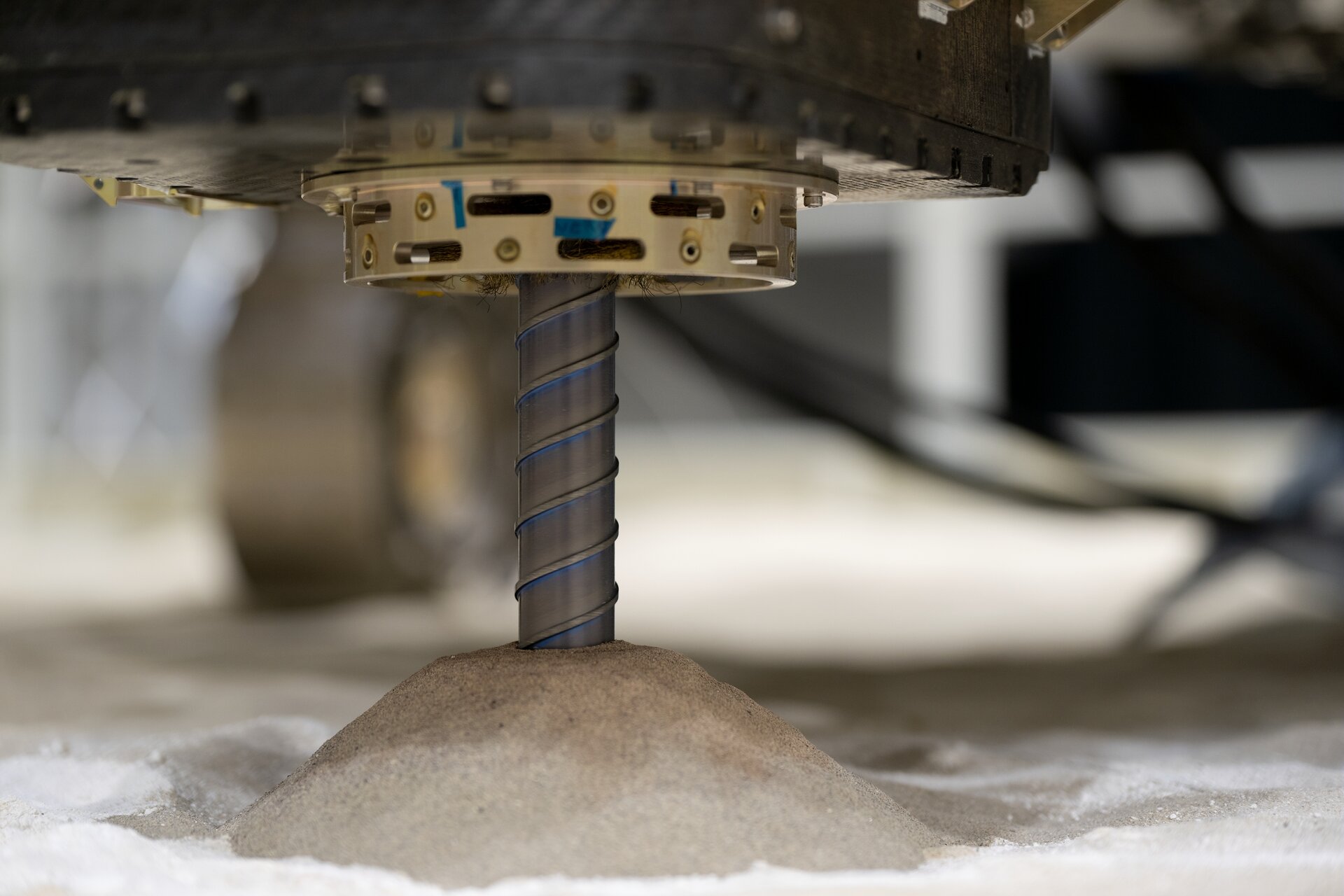
The European Space Agency's ExoMars Rosalind Franklin rover has successfully drilled down 1.7 meters into a martian-like ground in Italy, collecting samples for scientific analysis. The rover's deep drilling capabilities are crucial to answering the question of whether there was, or is, life on Mars. The targeted landing site for the rover, Oxia Planum, is an area where sediments might preserve traces of an ancient water-rich Mars environment. The mission is set to launch in 2028.