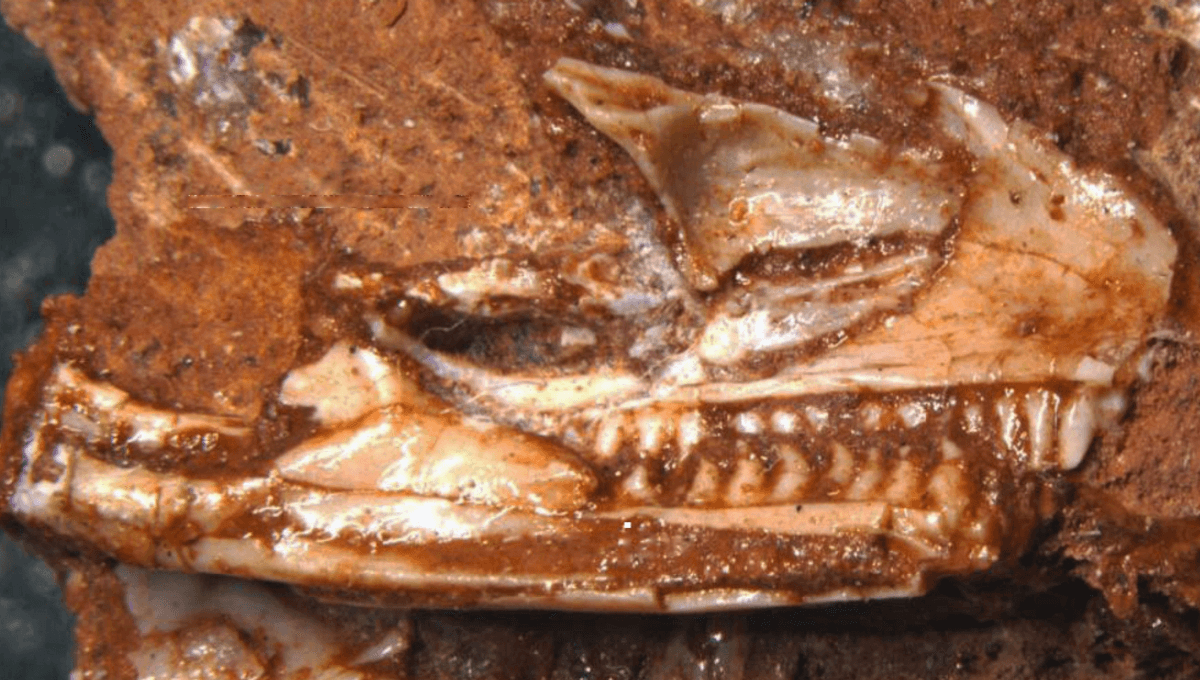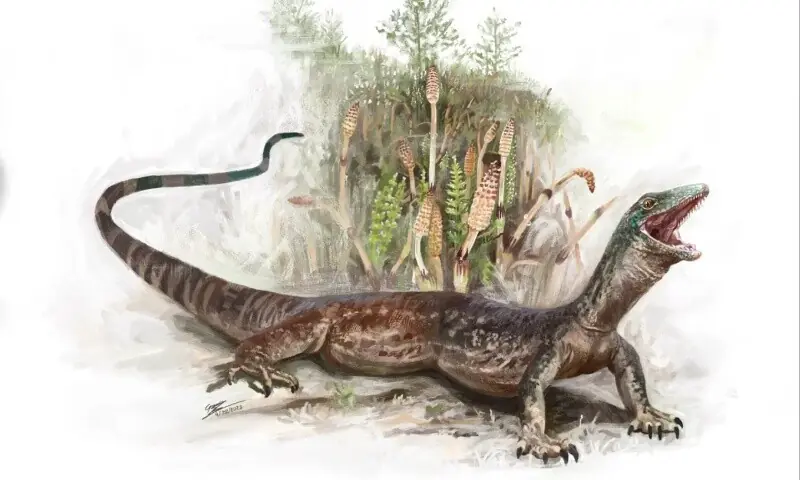
A 167-million-year-old fossil from Scotland, named Breugnathair elgolensis, exhibits a mix of snake-like and lizard-like features, challenging current understanding of reptile evolution and possibly representing an early ancestor of snakes or an evolutionary oddball, highlighting the complexity of squamate evolution.
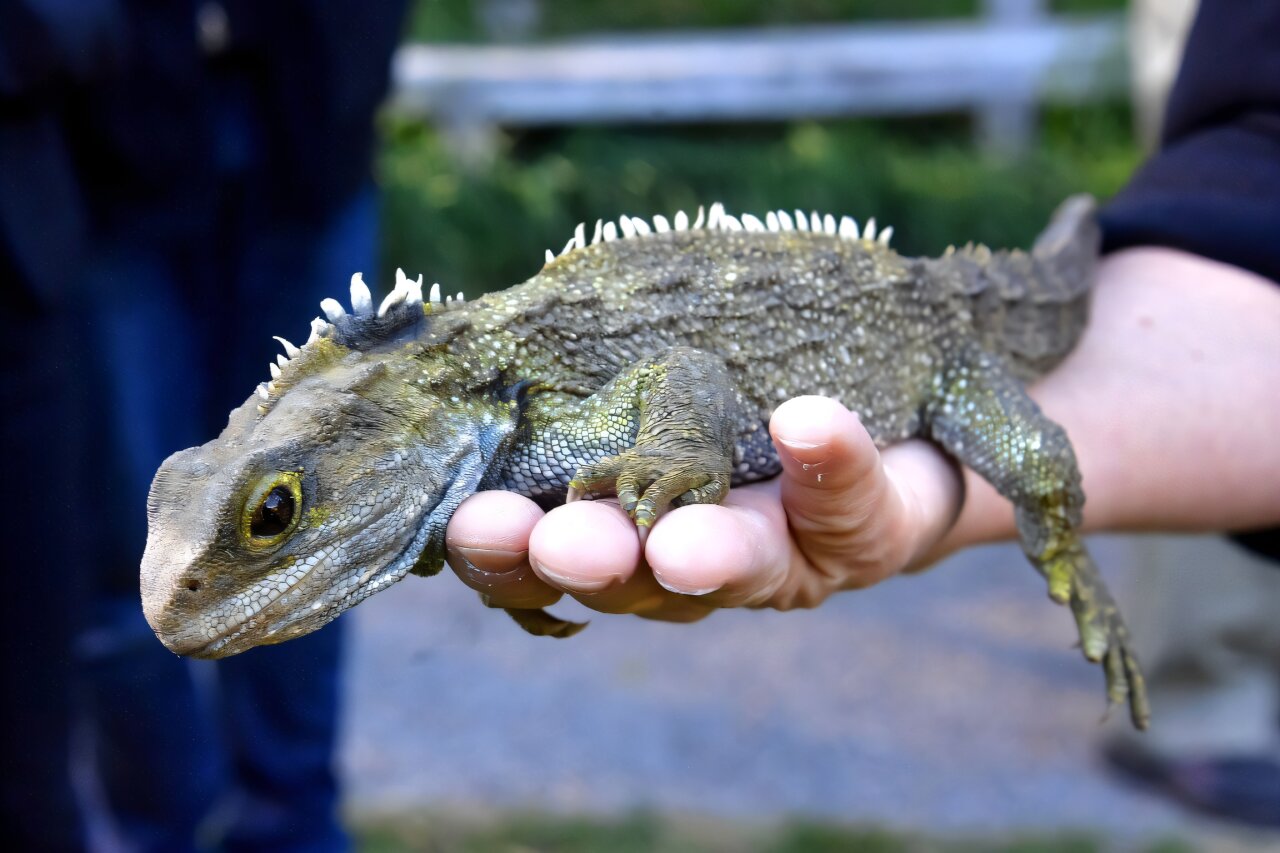
Scientists discovered the oldest known lizard ancestor in southwest England, dating back 242 million years, which challenges previous assumptions about reptile evolution and shares features with the modern tuatara.
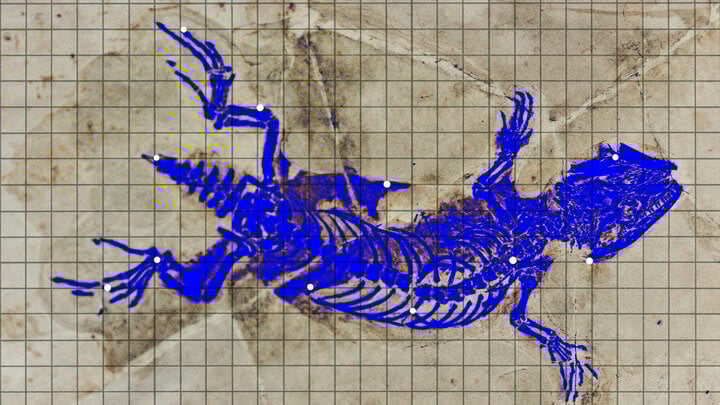
A 205-million-year-old reptile, Cryptovaranoides microlanius, discovered in a quarry near Bristol, UK, has been confirmed as the world's oldest modern-type lizard. Initially identified in a 2022 study, the finding faced skepticism from other scientists who suggested it might be an archosauromorph, related to crocodilians and dinosaurs. However, further analysis, including X-ray and CT scans, reaffirmed its classification as a lizard, pushing back the emergence of these animals by 30 million years. The study is published in Royal Society Open Science.
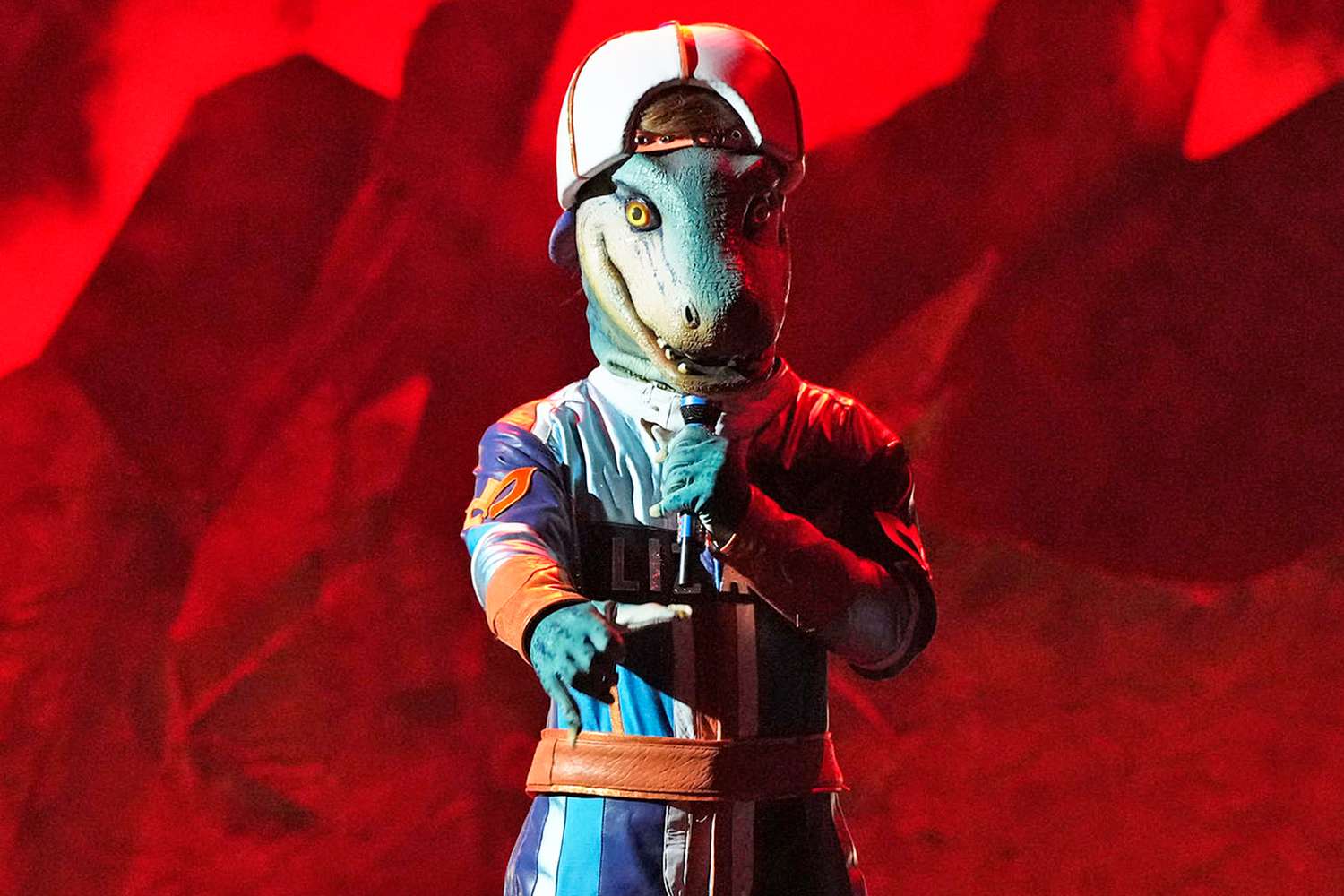
In the latest episode of The Masked Singer, Lizard was revealed to be chart-topping artist Sisqo, known for hits like "Thong Song" and "Incomplete." Despite a bold song choice, Lizard was eliminated, while Clock and Poodle Moth battled it out, with Clock emerging as the winner. The panelists made guesses about Poodle Moth's identity, with Rita Ora ultimately saving her from elimination. The upcoming quarterfinals will feature performances from Clock and Poodle Moth, while Group A will return for Transformers Night in the next episode.
In Season 11, Episode 5 of "The Masked Singer," Sisqó was revealed as the Lizard after being eliminated from the competition, while Clock secured a spot in the finale as the Group C champion. Poodle Moth was saved from elimination, leading to a double elimination being avoided. The episode featured performances by the remaining contestants, including themed episodes such as "Shower Anthems Night." The show also revealed the identities of previous unmasked celebrities and the panelists' guesses for the remaining contestants.
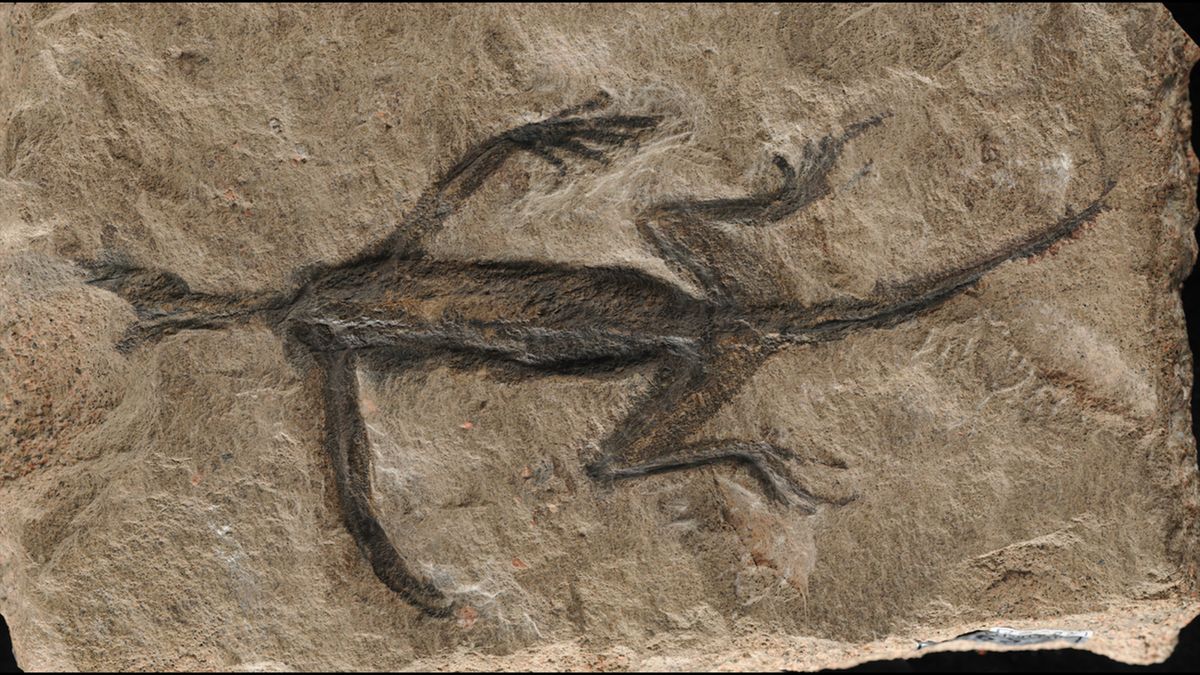
A 280-million-year-old fossil of a lizard-like creature, previously believed to be a significant find in understanding early reptile evolution, has been found to be mostly paint upon new scientific analysis. The black shading surrounding the fossil, thought to be carbonized soft tissue, was revealed to be a paint used in mechanical preparation, casting doubt on the veracity of the creature's assigned taxon and the accuracy of its observed body parts.
A rare 280 million-year-old fossil resembling a lizard-like creature, named Tridentinosaurus antiquus, was found to be mostly a carved rock painted black, with only genuine hind-limb bones and tiny bone scales preserved in the rock. The discovery was made when researchers reexamined the fossil with modern techniques, revealing that the dark coloration previously thought to be preserved skin was actually paint. The study's lead author, Valentina Rossi, believes the additional carving and paint may have been poor fossil preparation in years past, rather than an outright forgery. The fossil's identity remains uncertain, but the presence of osteoderms leads researchers to believe it was a reptile-like animal of some kind.
A new species of lizard, named Laodracon carsticola or the Khammouane karst dragon, has been discovered in Laos. The medium-sized lizard, reaching about 1 foot in length, has a triangular head, bluish-gray eyes, and a black body with white bands and speckles. It is well-camouflaged and blends into the rocky karst formations where it resides. The species has only been found in one karst formation in Khammouane Province and is believed to have evaded earlier discovery due to its specific habitat preferences. The construction of a nearby elevated walkway and zip line course aided in its observation.