A recent study using satellite radar data detected ground uplift at Iran's Taftan volcano, indicating pressure buildup that could precede an eruption, prompting the need for increased monitoring and preparedness, though no eruption is imminent.
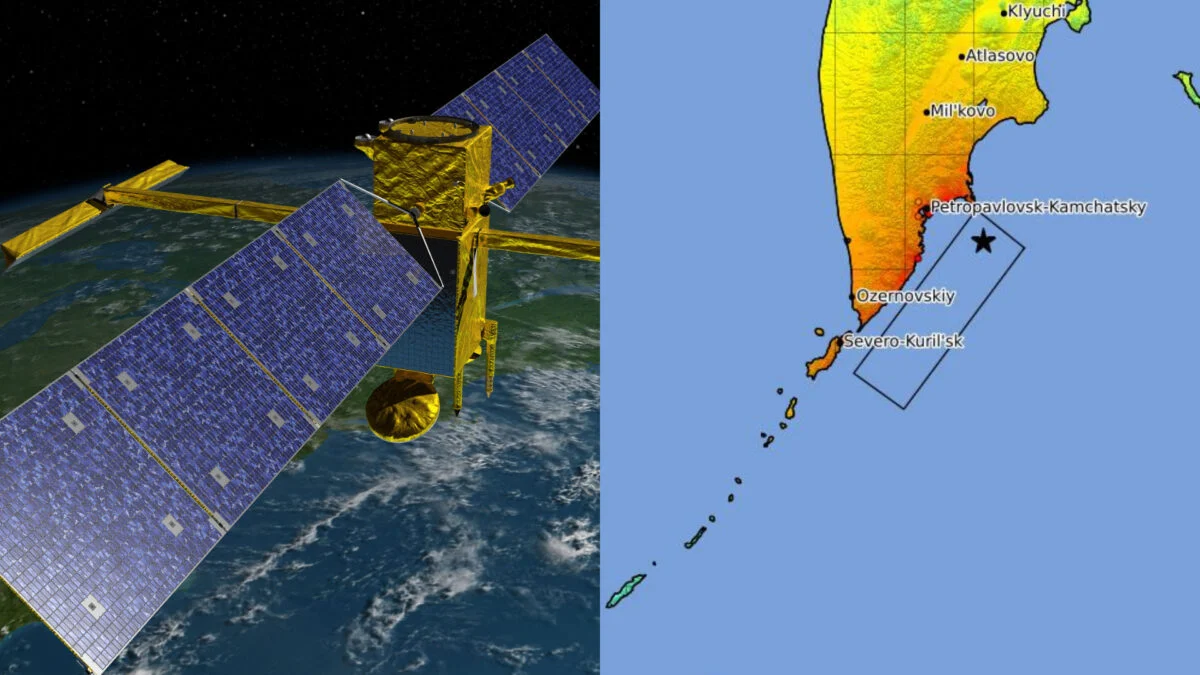
A massive earthquake in Russia triggered a tsunami that was captured in unprecedented detail by the SWOT satellite, revealing complex wave interactions that challenge traditional models and refining the understanding of the quake's rupture length, highlighting the importance of integrating diverse data sources for accurate tsunami prediction.
A study using 20 years of satellite data reveals that Earth's seasonal cycles are more complex and often out of sync across different regions, especially in biodiversity hotspots, which has significant implications for ecology, evolution, agriculture, and climate change understanding.
Recent satellite observations reveal subtle signs of swelling at Mount Taftan, a dormant volcano in Iran, indicating potential magmatic activity and raising concerns about an imminent eruption, prompting calls for increased monitoring and reassessment of regional volcanic hazards.
Recent satellite data reveal that the Earth's Northern Hemisphere is absorbing more sunlight than the Southern Hemisphere, breaking the long-standing symmetry. This shift is attributed to melting snow and ice, reduced pollution, and increased water vapor, potentially impacting global climate patterns. The study highlights the complex interactions between clouds, aerosols, and surface changes in Earth's energy balance.
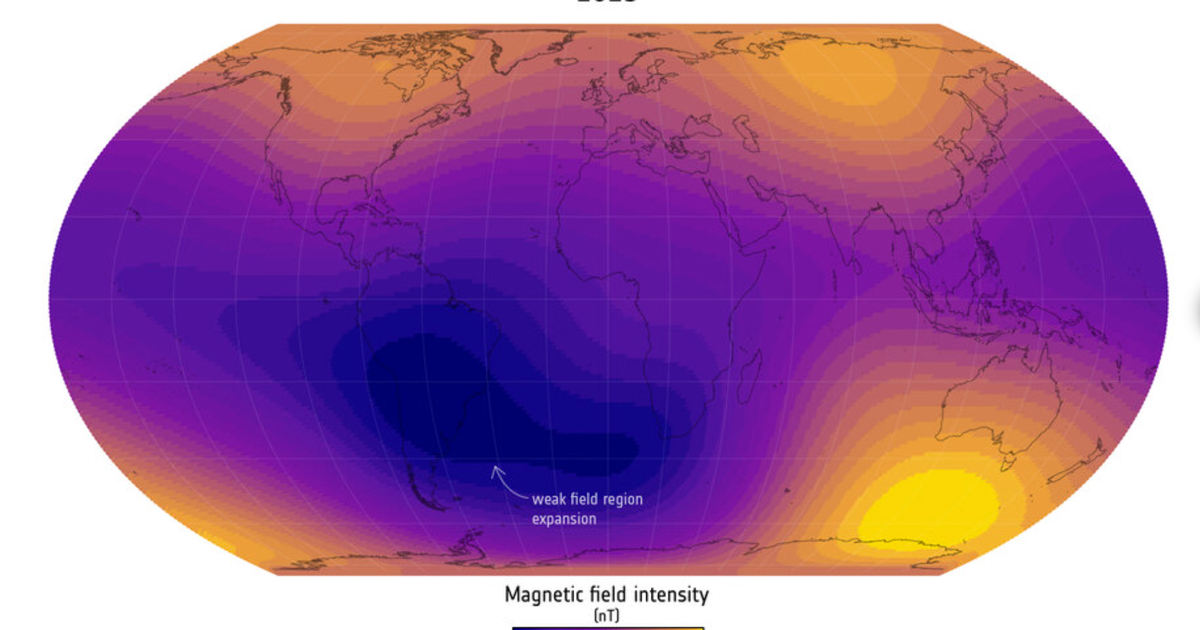
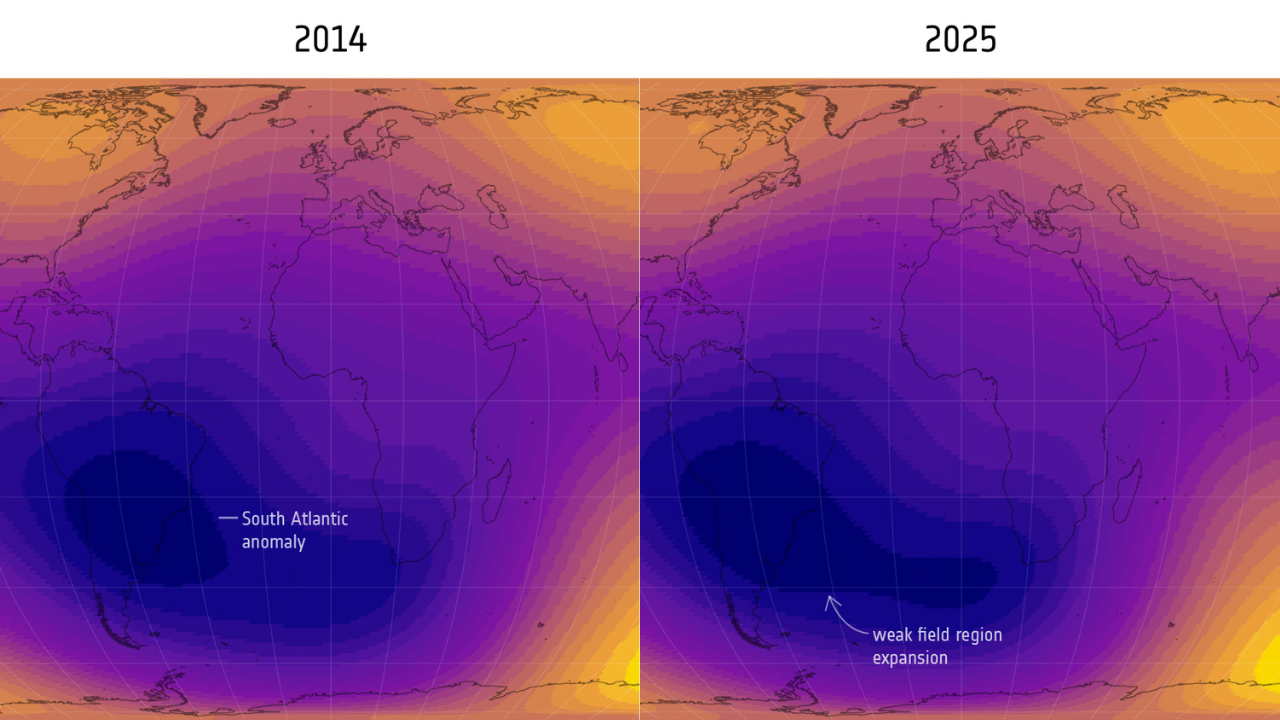
Satellite data over 11 years reveal that the South Atlantic Anomaly, a weak spot in Earth's magnetic field, is expanding and weakening more rapidly since 2020, with regional variations indicating complex changes in Earth's magnetic dynamics, which could impact satellite operations and Earth's protection from cosmic radiation.
A significant and growing weak spot in Earth's magnetic field, known as the South Atlantic Anomaly, has expanded since 2014, posing risks to satellites and spacecraft. This growth is linked to complex flux patterns at Earth's outer core, with changes also observed over Canada and Siberia, indicating ongoing shifts in Earth's magnetic dynamics.
A 24-year NASA satellite study reveals that Earth is gradually getting darker, with the Northern Hemisphere darkening faster than the Southern Hemisphere, and indicates ongoing hemispheric differences in warming and atmospheric conditions, highlighting complex changes in Earth's climate system.
Satellite data over 24 years reveal the Northern Hemisphere is gradually absorbing more solar energy due to reduced reflectivity from melting ice, decreased aerosols, and cloud changes, disrupting Earth's energy balance and potentially accelerating regional and global warming. This hemispheric asymmetry challenges existing climate models and underscores the need for refined predictions and policies.
Scientists using satellite data have discovered 85 new active lakes beneath Antarctica's ice, bringing the total to 231. These lakes periodically drain and refill, influencing glacier movement and potentially impacting global sea levels, which enhances understanding of ice sheet behavior and climate change effects.
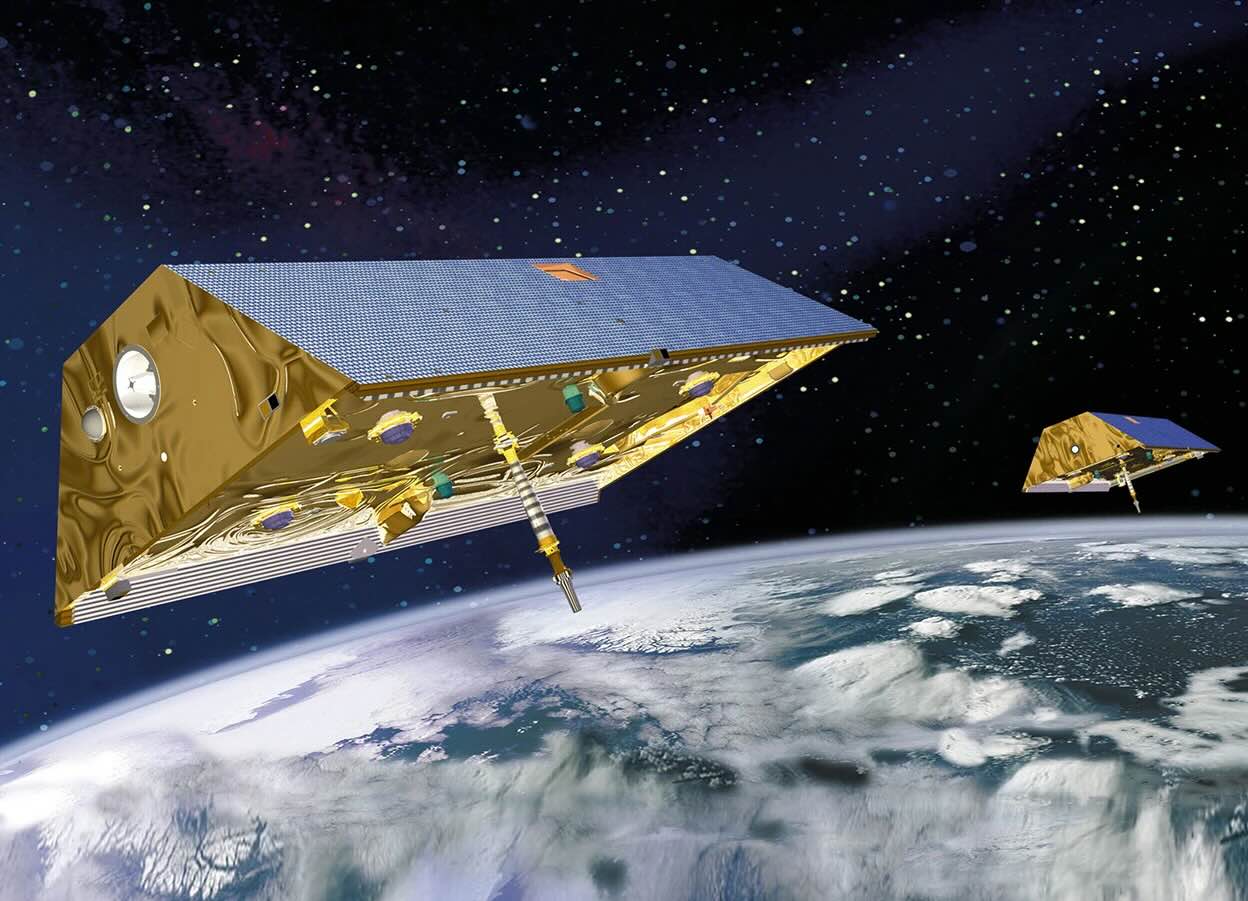
Recent analysis of satellite data from GRACE reveals that processes deep within Earth's mantle, possibly involving mineral phase transitions, are causing changes in the planet's gravity field, with potential implications for understanding Earth's internal dynamics and magnetic field variations.
New research demonstrates that dust significantly influences cloud freezing, with satellite data showing regions with more dust have more ice-topped clouds, which could impact climate models by affecting how clouds reflect sunlight and trap heat.
Scientists using two decades of satellite data have discovered that Earth's seasons are no longer synchronized globally, revealing localized variations and 'hotspots' of asynchrony that challenge existing ecological models and may impact biodiversity and evolution.
A satellite-based study reveals that Earth's seasonal cycles are increasingly out of sync across different regions, with significant ecological and economic implications, especially in areas with complex climates like the Mediterranean and tropical zones, highlighting the need to rethink traditional models of plant and ecosystem behavior.
A recent study confirms that climate projections from the mid-1990s accurately predicted global sea-level rise over the past three decades, though they underestimated ice melt contributions. Satellite data has been crucial in tracking these changes, revealing that sea levels are rising faster than initially thought, with regional variability influenced by ice sheet dynamics. The findings underscore the importance of refining localized forecasts to better prepare vulnerable regions for future sea-level rise.