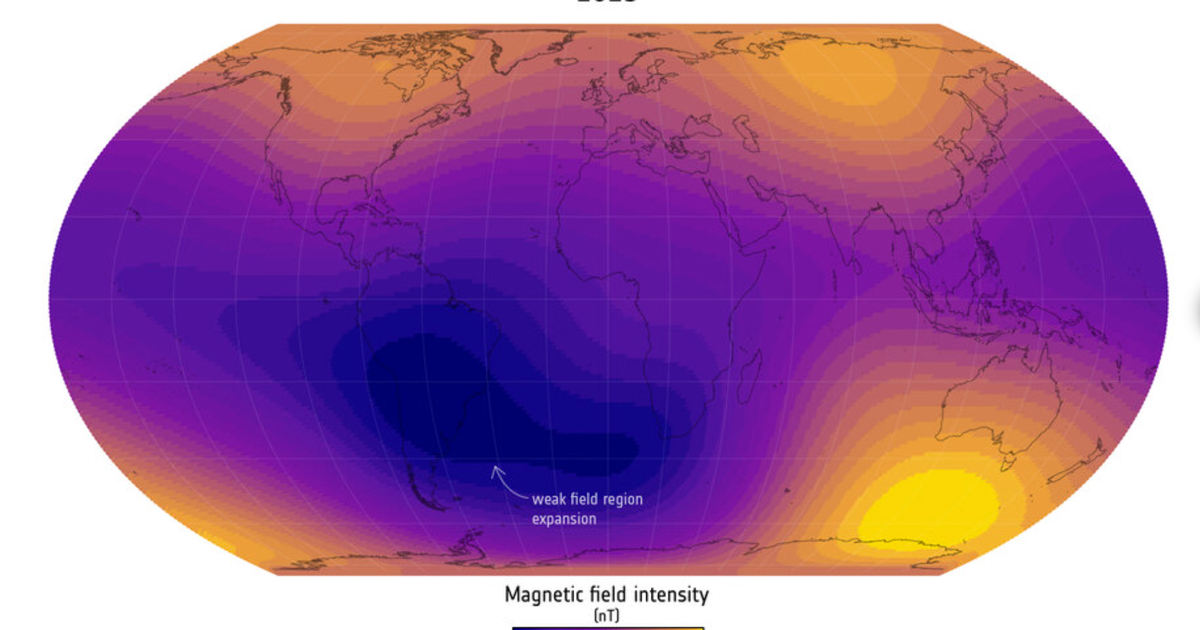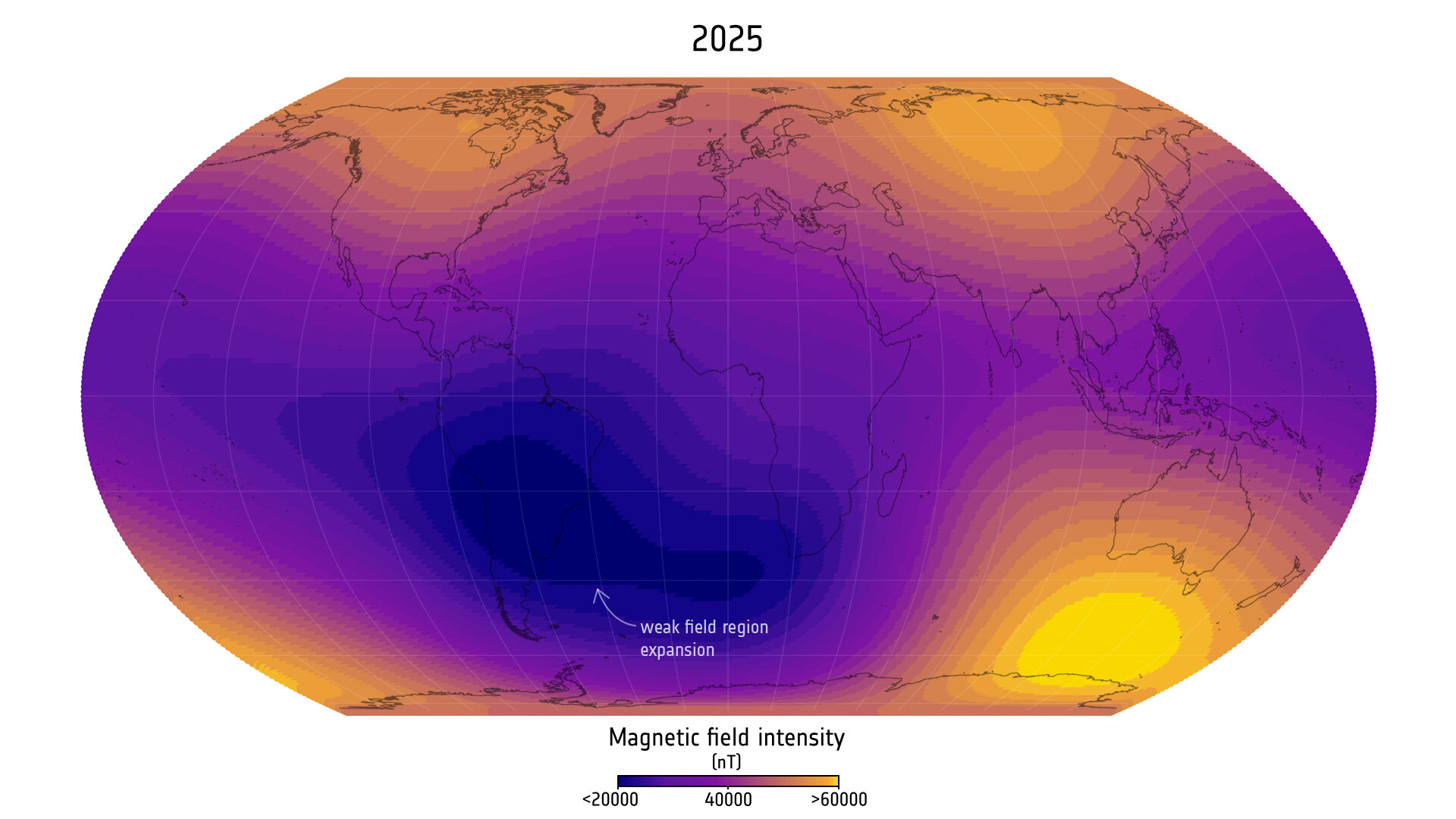
Long-term data from ESA's Swarm satellites reveal that the South Atlantic Anomaly, a weak spot in Earth's magnetic field, has expanded significantly since 2014, driven by complex processes in Earth's core, with implications for space safety and navigation.
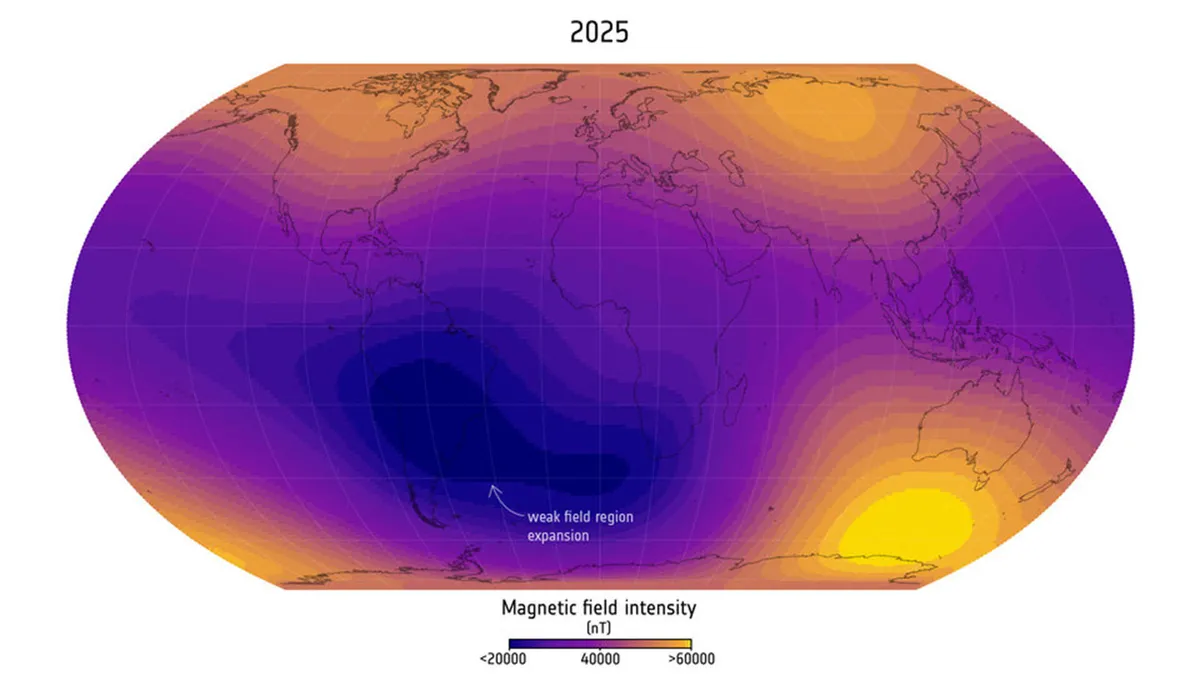
The Earth's magnetic field is experiencing an expansion of its weak spot, the South Atlantic Anomaly, due to unusual behaviors in Earth's core, which poses risks to satellites but not humans. The ESA's Swarm mission has been monitoring this change, which is within normal variation but important for future space technology planning.
The South Atlantic Anomaly, a weak spot in Earth's magnetic field over the South Atlantic, has expanded significantly over the past 11 years, as revealed by ESA's Swarm satellites. This region's weakening is linked to complex patterns at Earth's liquid core boundary, and it poses risks to space missions by exposing satellites to higher radiation levels. The study highlights ongoing changes in Earth's magnetic field, which is vital for protecting the planet from cosmic and solar radiation.
Satellite data over 11 years reveal that the South Atlantic Anomaly, a weak spot in Earth's magnetic field, is expanding and weakening more rapidly since 2020, with regional variations indicating complex changes in Earth's magnetic dynamics, which could impact satellite operations and Earth's protection from cosmic radiation.
Using 11 years of data from ESA's Swarm satellites, scientists have found that the South Atlantic Anomaly, a weak spot in Earth's magnetic field, has expanded significantly since 2014, with faster weakening near Africa since 2020, which poses risks for satellites and space safety. The study also highlights dynamic changes in Earth's magnetic field over Siberia and Canada, linked to complex processes in Earth's core.