A study using 20 years of satellite data reveals that Earth's seasonal cycles are more complex and often out of sync across different regions, especially in biodiversity hotspots, which has significant implications for ecology, evolution, agriculture, and climate change understanding.
Scientists using 20 years of satellite data have discovered that Earth's seasons are often out of sync across different regions, even neighboring areas, which has significant implications for ecology, evolution, and climate models, highlighting the planet's complex and diverse seasonal patterns.
Scientists using two decades of satellite data have discovered that Earth's seasons are no longer synchronized globally, revealing localized variations and 'hotspots' of asynchrony that challenge existing ecological models and may impact biodiversity and evolution.
A satellite-based study reveals that Earth's seasonal cycles are increasingly out of sync across different regions, with significant ecological and economic implications, especially in areas with complex climates like the Mediterranean and tropical zones, highlighting the need to rethink traditional models of plant and ecosystem behavior.
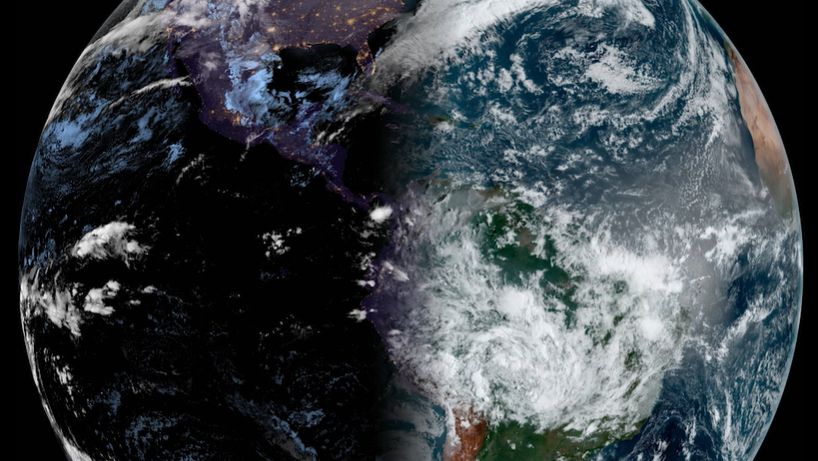
NOAA's GOES-East satellite captured a year's worth of daily snapshots of Earth's surface, showing the changing seasons from space. The video reveals the terminator, the line separating night and day, shifting throughout the year due to Earth's 23.5-degree tilt. The vernal equinox, marking the start of spring in the northern hemisphere, was observed on March 19, with the sun shining directly above the equator. The high-speed video provides a stunning perspective of Earth's seasonal changes from space.