Tag

Rna Editing

All articles tagged with #rna editing

science-and-technology1 year ago

"Enhancing Cancer-Fighting Cells with MEGA-CRISPR"

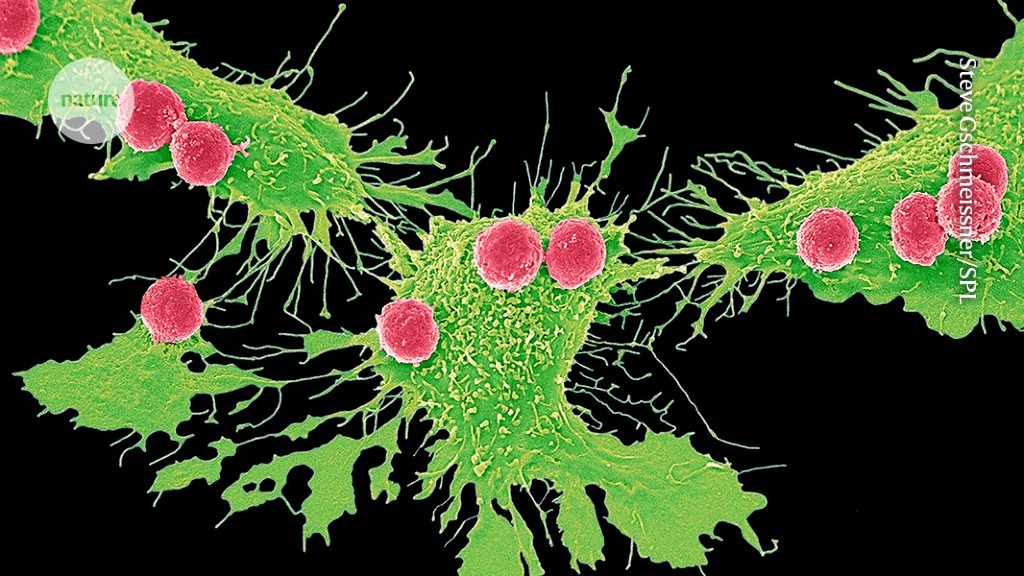
A new CRISPR-based system called MEGA (multiplexed effector guide arrays) targets a cell’s short-lived messenger RNA instead of DNA, providing a more precise and reversible way of designing cell therapies. This system, developed by researchers at Stanford University, uses an RNA-cutting enzyme called Cas13d to shut down the production of multiple proteins, effectively turning off up to ten genes at a time. By targeting mRNA molecules involved in T-cell exhaustion, the system rejuvenates exhausted CAR T cells, making them more effective at shrinking tumors in mice. The ability to tune gene expression with MEGA allows scientists to vary the levels of a wide array of mRNAs, revealing how different combinations of genes work together to carry out cellular functions.


science-and-technology2 years ago

Advancements in RNA Editing Revolutionize Viral Engineering and Patient Treatment

Researchers have developed a new RNA editing tool that utilizes a type III Crispr system to modify RNA viruses. This breakthrough could revolutionize the development of RNA therapies, accelerate the engineering of human viruses, and facilitate drug testing. The system allows for precise editing of RNA viruses, enabling scientists to study the effects of genetic modifications on virulence and drug resistance. Additionally, it holds potential for treating single-base DNA disorders and restoring mutant proteins. While further improvements are needed for wider adoption, this RNA editing approach marks the beginning of a new era in genome engineering at the RNA level.

health2 years ago

Reevaluating the Cause of Alzheimer's: Insights from a Mouse Study

A new study on mice challenges the prevailing theory that the buildup of beta-amyloid clumps in the brain is the primary cause of Alzheimer's disease. Instead, the study suggests that breaks in the connections (synapses) between brain cells may be the critical problem. By manipulating RNA editing processes in mice, researchers prevented the breakdown of synapses and restored memory without removing the protein clumps associated with the disease. This finding provides a new understanding of Alzheimer's and a potential approach to address memory loss in patients. The study highlights the importance of RNA editing in regulating nerve cell connections and offers new possibilities for understanding and treating the disease.

science-and-technology2 years ago

Unveiling RNA Editing in Disease-Causing Parasite: Scientists Reveal New Insights

Scientists at Boston University, along with collaborators from UCLA, UCI, and ShanghaiTech University, have published a paper in Science detailing the architecture of the molecular machines involved in RNA editing in the disease-causing parasite Trypanosoma brucei. This breakthrough could provide crucial information for treating African sleeping sickness, a deadly disease spread by tsetse flies. By understanding the protein structures unique to RNA editing in Trypanosoma, researchers hope to identify enzymes that can inhibit the editing process, killing the parasite without harming human cells. The study utilized cryo-electron microscopy and molecular approaches to uncover the mechanisms of RNA editing, which involve a protein complex called the editosome.

science2 years ago

Octopuses Edit Their Own RNA to Rewire Their Brains

Octopuses can rapidly recode key proteins in their nerve cells by editing their RNA on the fly, an ability found in some species of octopuses, squids, and cuttlefish. Scientists believe that it may be widely adopted throughout the world of cephalopods. The editing seemed to be in response to acclimating to cold, rather than warm water, affecting neural proteins that are sensitive to cold temperatures. The changes occur very quickly, within less than a day, and within four days, they were at the new steady-state levels that you find them in after a month.

science2 years ago

Octopuses Edit RNA to Adapt to Temperature Changes

Octopuses can recode proteins in their nerve cells through RNA editing to protect their brains from changes in temperature, according to a new study. RNA editing allows octopuses to produce different neural proteins in warm and cool environments, helping them to adapt to fluctuations in temperature. The study found that RNA editing occurs quickly and is widespread among octopus species and squid. The discovery could help explain other facets of octopus behavior, including their ability to camouflage and solve puzzles.

science2 years ago

Octopuses Adapt to Cold Water by Rewiring Their Brains with RNA Editing

Octopuses have the ability to edit their RNA on the fly, allowing them to rapidly recode key proteins in their nerve cells in response to changing temperatures. This strategy ensures critical neurological activities remain functional when temperatures drop dramatically. RNA editing is a widespread strategy among cephalopods to stay alive as their environment changes, and scientists plan to investigate how it is used in greater detail.

science2 years ago

Octopuses use RNA editing to adapt to changing ocean temperatures.

Octopuses can edit the RNA in their brains on a massive scale, allowing them to adapt to changes in their environment. Researchers found that more than 60% of RNAs in the brains of octopuses and their relatives get edited, affecting over 20,000 different locations on various proteins. This adaptation is likely to help octopuses keep their brains functioning properly in both warm and cool waters. The study sheds new light on the adaptability of these creatures and may help scientists design therapeutics for problematic mutations in humans.