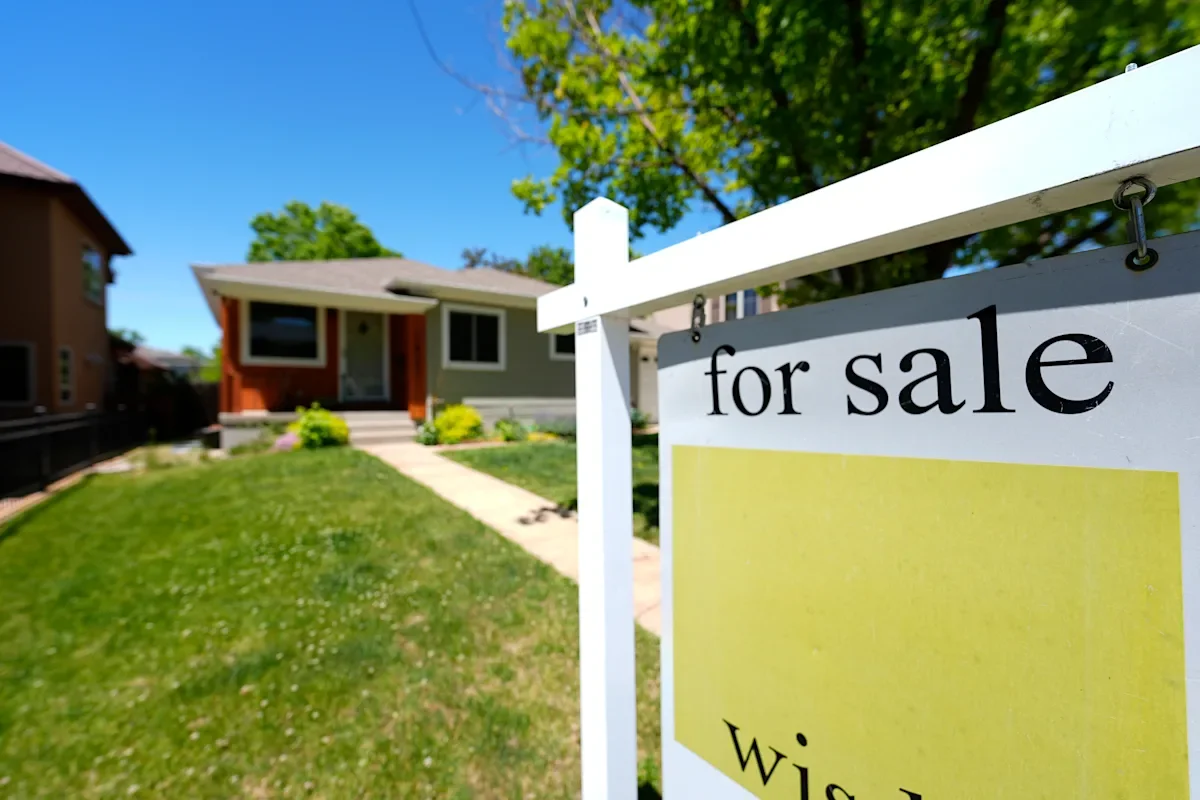
To secure the lowest mortgage rates in 2026, improve your credit score, reduce your debt-to-income ratio, make a larger down payment, consider buying discount points or a buydown, and shop around with different lenders. Additionally, explore options like ARMs or shorter-term fixed loans, and stay vigilant for refinancing opportunities when rates dip.
Netflix has refinanced part of a $59 billion bridge loan to support its potential acquisition of Warner Bros Discovery's assets, including a $5 billion revolving credit and two $10 billion term loans, as it prepares to finalize one of the largest media deals in history, with the deal expected to close in late 2026 after Warner Bros spins off its Global Networks unit.
The average US 30-year mortgage rate increased slightly to 6.22% after four weeks of decline, influenced by bond yields and Federal Reserve policies, impacting homebuyers and refinancing activities amid a sluggish housing market.
Following recent Fed rate cuts, the average 30-year fixed mortgage rate is now 6.17%, leading to a monthly payment of approximately $4,273.67 on a $700,000 loan, which is lower than earlier rates and can result in significant savings for borrowers. Shorter-term 15-year loans and refinancing options are also discussed as ways to potentially reduce costs further.
Mortgage rates have fallen to their lowest in over a year, leading to a significant increase in refinancing activity and a 5% rise in home purchase applications, despite ongoing economic uncertainties and high home prices.
The average 30-year U.S. mortgage rate has dropped to 6.19%, its lowest in over a year, boosting refinancing activity and potentially aiding a sluggish housing market, amid expectations of further rate cuts by the Federal Reserve.
Due to recent rate drops, monthly payments on a $550,000 mortgage have decreased significantly, with a 30-year loan now costing around $3,419 and a 15-year loan about $4,535, offering substantial savings and more affordability for homebuyers and refinancers.
Mortgage rates have dropped from 6.93% to 6.34%, reducing monthly payments on a $700,000 loan from about $4,624 to $4,351, saving roughly $273 per month and nearly $100,000 in interest over 30 years. Refinancing options are also more attractive, with lower rates available for shorter terms, though closing costs should be considered.
The average 30-year US mortgage rate increased slightly to 6.34% for the second consecutive week, influenced by economic reports and Federal Reserve signals, with rates still near their lowest in nearly a year, potentially encouraging refinancing but remaining above levels that would make it broadly attractive for homeowners.
The Federal Reserve's recent 25 basis point rate cut has lowered 30-year fixed mortgage rates to 6.13%, resulting in significant monthly savings for new homebuyers and those refinancing, with a $300,000 mortgage now costing about $180 less per month compared to earlier rates, potentially saving thousands in interest over the life of the loan.
Despite the Federal Reserve cutting interest rates by 25 basis points, mortgage rates increased slightly due to market expectations and the 10-year Treasury yield trending higher, indicating ongoing volatility and uncertainty about future rate movements.
The average 30-year U.S. mortgage rate has decreased to 6.26%, the lowest since early October, influenced by declining Treasury yields and the Federal Reserve's rate cut, which is expected to support a modest recovery in home sales and increase refinancing activity.
Mortgage rates have decreased to their lowest in nearly a year following the Federal Reserve's rate cut, leading to a surge in refinancing applications. However, future rate movements remain uncertain due to market volatility and economic factors, with some borrowers turning to adjustable-rate mortgages amid concerns about housing affordability and economic slowdown.
The average 30-year mortgage rate in the U.S. has decreased to 6.26%, the lowest since early October, driven by falling Treasury yields and expectations of a Federal Reserve rate cut, which has boosted refinancing activity and mortgage applications.
The Federal Reserve's recent quarter-point rate cut has led to a slight decrease in mortgage rates, but they are not expected to drop as significantly as last year due to various economic factors, including inflation and bond market expectations. While lower rates could improve affordability and stimulate the housing market, high home prices and other economic uncertainties continue to pose challenges for buyers and sellers alike.