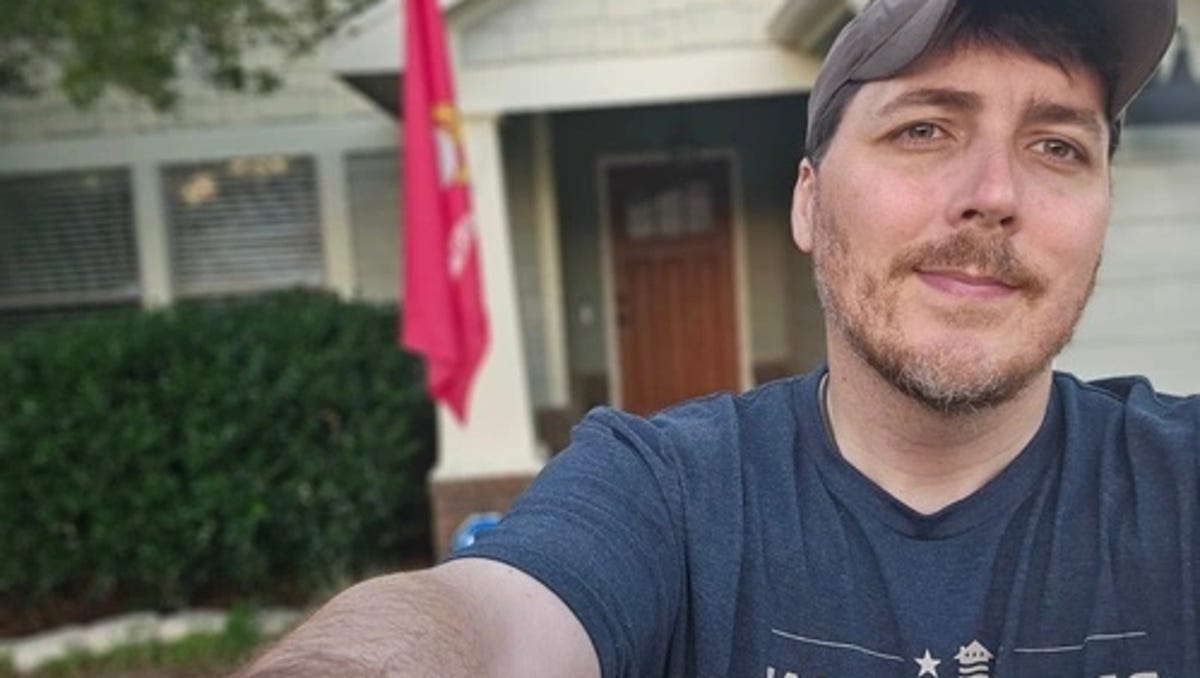
James Van Der Beek's rep says the Texas ranch down payment was secured through a trust with help from friends to transition the family from renting to owning; the family moved to the ranch in 2020, and the GoFundMe fundraiser has reached about $2.6 million to cover medical expenses after his death from colorectal cancer at 48, leaving six children.
Before his death from stage 3 colorectal cancer, James Van Der Beek secured a down payment on a Texas ranch for his family through a trust with help from friends, and a GoFundMe raised over $2.2 million to cover living expenses and his children’s education.
President Donald Trump is set to unveil a plan allowing savers in 401(k) retirement plans to use some of their money for down payments on a home. While supporters see increased flexibility for would-be buyers, advisers warn of long-term retirement risks, potential benefits skewed toward wealthier savers, and questions about whether this actually helps those in greatest need. Details remain unclear as the policy is developed.
To secure the lowest mortgage rates in 2026, improve your credit score, reduce your debt-to-income ratio, make a larger down payment, consider buying discount points or a buydown, and shop around with different lenders. Additionally, explore options like ARMs or shorter-term fixed loans, and stay vigilant for refinancing opportunities when rates dip.
Zillow's analysis reveals that due to rising home values and mortgage rates, the traditional 20% down payment is no longer sufficient for most buyers. Median-income households now need to put down around 35.4% to afford monthly payments comfortably, with even higher percentages required in expensive markets like Los Angeles and San Jose. This shift is making homeownership increasingly challenging, especially for first-time buyers who often rely on financial help from family.
United Wholesale Mortgage has launched a "Zero Down Mortgage" program to help homebuyers who can't afford a down payment by providing up to $15,000 as an interest-free second mortgage. While the program has attracted many buyers, some real estate experts are concerned about potential risks if the housing market declines. However, stricter loan qualification guidelines compared to the 2008 crisis may mitigate these risks.
More than a third of millennials and Gen Zers planning to buy a home expect their parents to help with their down payment, whether through cash gifts, inheritance, or living with family to save money, due to soaring home prices and tight supply. Redfin's chief economist coined the term "nepo homebuyers" for these individuals. While family assistance is increasingly common, it also exacerbates the generational disadvantage faced by those without family money, making homeownership more challenging for them.
The California Housing Finance Agency is offering no-interest, no-monthly-payment loans to help lower-income residents come up with a down payment and fees to buy their first home. The program, called California Dream for All Shared Appreciation Loans, has tightened its requirements and will choose qualified applicants by lottery. The loans, limited to covering the down payment and closing costs on a first home, max out at $150,000 or 20% of the home’s purchase price, and do not accrue interest. Applicants must meet specific criteria, including being first-time, first-generation homeowners and meeting income limits. The application process will begin in April, and approved applicants will receive vouchers for the loans, but finding a suitable home and qualifying for a mortgage loan are still necessary.
With soaring home prices and high mortgage rates, many potential homebuyers are struggling to afford a house. As a result, more buyers are turning to alternative lenders, namely their parents, for financial assistance. Roughly 40% of buyers now tap into the "bank of mom and dad," up from one-third pre-pandemic. Younger house hunters are increasingly relying on family money to bridge the affordability gap, with nearly 40% of recent homebuyers under age 30 using cash gifts or inheritances for their down payment. Affordability remains a significant obstacle for would-be homeowners, with housing being less affordable today than in recent history. However, there are options available, such as government programs and loans with lower down payment requirements.
Many veterans are unaware of the benefits of VA home loans, which allow them to purchase a home with no down payment and attractive interest rates. Only 3 in 10 veterans know about this option, according to a survey. The VA home loan program, created in 1944, has helped over 24 million veterans become homeowners. However, only around 24% of eligible homeowners are utilizing their VA loan benefits. Lack of awareness and misconceptions about longer closing times may be contributing factors. VA loans have helped narrow the homeownership gap for communities of color.
The National Association of Home Builders CEO, Jim Tobin, warns that first-time homebuyers are increasingly relying on financial assistance from their parents to afford a home due to high demand and limited supply. A survey by Redfin found that 38% of recent homebuyers under 30 used cash gifts or inheritance from family for down payments. Tobin believes that in the current housing market, "anything goes" to get deals done, and underwriters are more concerned with repayment ability than the source of the down payment. The CEO also highlights the need for the Federal Reserve to halt interest rate hikes and increase housing supply to address rising home prices.
The average US mortgage rate is currently at its highest level in 23 years, but individual rates can vary significantly depending on the borrower's financial attributes and risks. Factors such as credit score, debt-to-income ratio, employment history, payment track record, and down payment amount all play a role in determining the mortgage rate. Borrowers with higher credit scores, lower debt ratios, stable employment, and larger down payments are generally considered lower-risk and can secure lower rates. Shopping around and obtaining quotes from multiple lenders can help borrowers find the best rate, and buying down the rate with discount points or making a larger down payment can also reduce monthly costs. Lenders are prohibited from considering factors such as race, religion, and age when determining mortgage rates.
Wells Fargo Home Lending is offering $10,000 Homebuyer Access grants to eligible homebuyers in eight metropolitan areas, including Minneapolis-St. Paul, Philadelphia, Dallas-Fort Worth, Washington D.C., Baltimore, Atlanta, Charlotte, and New York/Newark-Jersey City. The grants will be applied towards the down payment and are part of Wells Fargo's efforts to increase homeownership among minority families and support economic growth.
Contrary to popular belief, most first-time homebuyers do not need to put down a 20% down payment. According to Jessica Lautz, deputy chief economist at the National Association of Realtors, the typical first-time buyer actually puts down around 6% or 7% on their first home. In fact, during the first quarter of 2023, the typical down payment on a single-family home represented 7.5% of the median price. There are also various programs available, including federal government-supported programs and financial institutions, that offer lower down payment options. Additionally, some states, cities, and organizations provide grants to help cover down payment or closing costs for eligible homebuyers.
Zillow is addressing the affordability crisis in the housing market by offering prospective homebuyers the option to put a 1% down payment on a house. The program, currently available in Arizona, aims to reduce the time needed for consumers to save for a down payment. While this may help some buyers, smaller down payments lead to larger monthly mortgage payments and do not solve the overall affordability issue. Zillow's expansion into real estate services and home loans comes after the company ended its home flipping business.