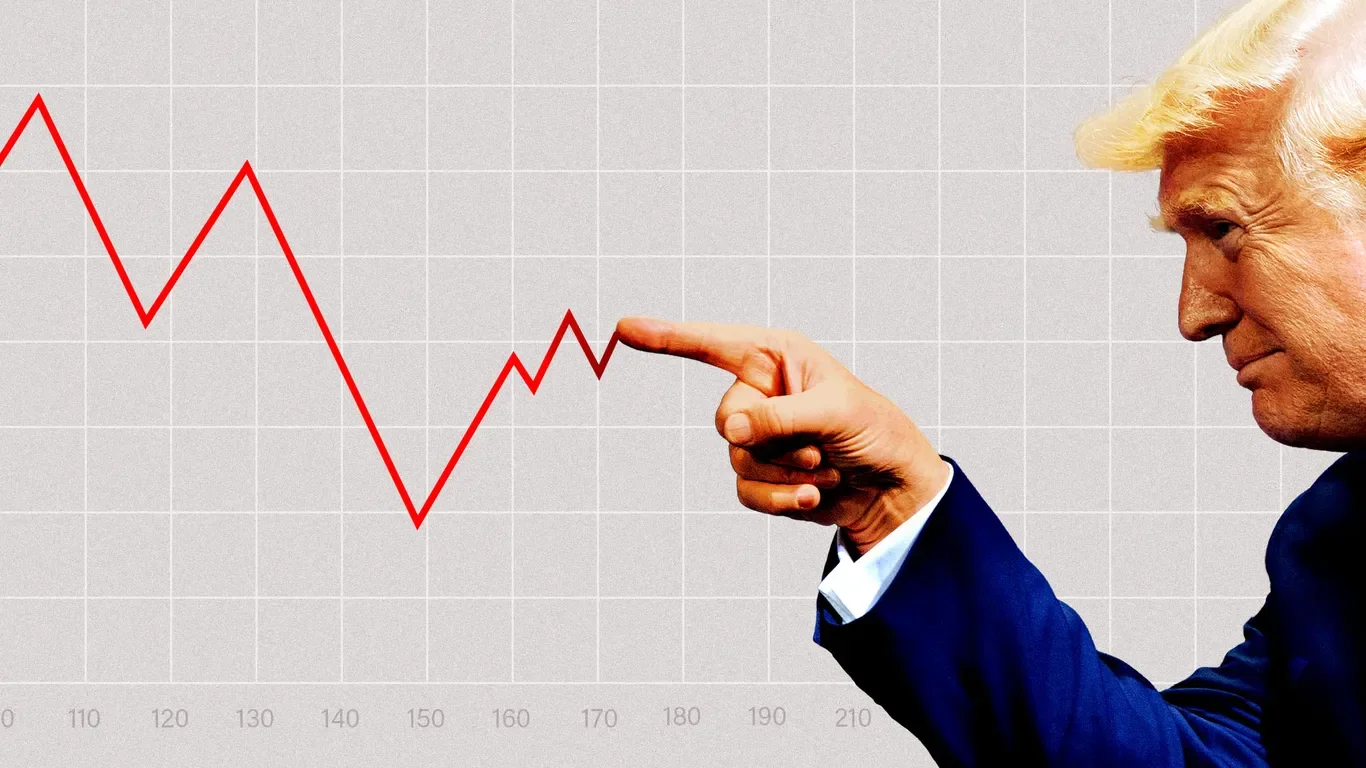
President Trump says his representatives will buy about $200 billion in mortgage bonds to push down mortgage rates and make home buying more affordable, funded from liquidity on Fannie Mae and Freddie Mac’s balance sheets rather than Fed/Treasury money. FHFA Director Bill Pulte said the two agencies can execute the purchases, noting liquidity exists even though their reported cash on Q3 filings was under $17 billion, with higher liquidity implied by assets like securities repurchases. The plan’s potential impact is likely modest compared with the Fed’s QE, possibly cutting rates by roughly 10–15 basis points, and timeline details were not disclosed. Trump also signaled more housing initiatives for Davos and has floated limiting institutional single-family home purchases.
Pulte reassures that their mortgage underwriting is secure and criticizes concerns about Fannie Mae and Freddie Mac's liquidity, while also addressing political allegations related to mortgage fraud referrals against various politicians.
President Trump ordered Fannie Mae and Freddie Mac to buy $200 billion of mortgage bonds, marking a significant assertion of executive power in financial markets and potentially influencing mortgage rates, while raising concerns about political interference in traditionally independent monetary policy.
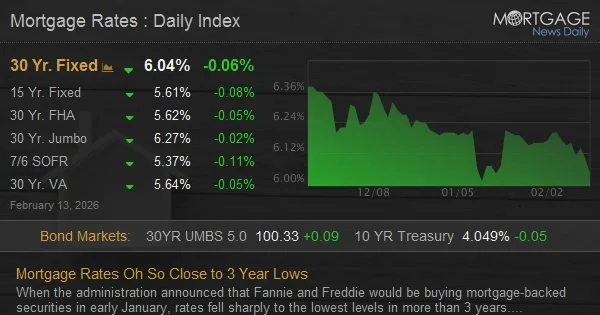
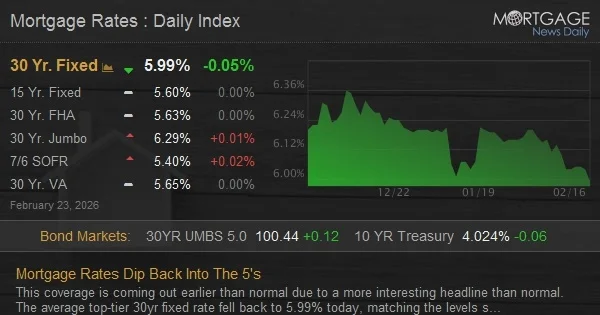
Mortgage rates have been relatively stable but could decrease below 6% if government mortgage agencies buy $200 billion in bonds, with current averages around 6.16% for 30-year fixed mortgages. Experts predict rates will stay near these levels through 2026 and into 2027, with some variation depending on economic factors.
Mortgage rates have dropped to their lowest in nearly three years following President Trump's directive for Fannie Mae and Freddie Mac to buy $200 billion in mortgage bonds, which is expected to lower rates by 25-50 basis points and potentially boost homebuyer affordability and demand.
President Trump announced via social media that he has instructed his representatives to purchase $200 billion in mortgage bonds to lower interest rates and make homeownership more affordable, leveraging the financial strength of Fannie Mae and Freddie Mac, though the specifics of the implementation remain unclear.
Mortgage rates in the U.S. have fallen to their lowest in 2025, with the 30-year rate dropping to 6.15%, boosting prospects for homebuyers despite ongoing affordability challenges and economic uncertainties.
The average US 30-year mortgage rate has decreased to 6.15% in 2025, the lowest this year, signaling potential relief for homebuyers amid ongoing economic uncertainties and a slight slowdown in home sales, with rates influenced by Federal Reserve policies and bond market trends.
The average US 30-year mortgage rate slightly decreased to 6.18% this week, remaining in a narrow range over the past two months, influenced by Federal Reserve policies and bond market trends, while home affordability and sales face ongoing challenges.
The average US 30-year mortgage rate increased slightly to 6.22% after four weeks of decline, influenced by bond yields and Federal Reserve policies, impacting homebuyers and refinancing activities amid a sluggish housing market.
FHFA Director Bill Pulte indicated that Fannie Mae and Freddie Mac could go public as early as 2025, with the Trump administration evaluating an IPO to potentially release these government-sponsored enterprises from federal control, which have over $7 trillion in assets and play a key role in funding U.S. home loans.
The average 30-year US mortgage rate decreased slightly to 6.3%, reaching its lowest point in about a year, influenced by Federal Reserve policies and bond market trends, with short-term rates also easing.
Mortgage rates for 30-year fixed loans have dropped to 6.50%, the lowest since October 2024, driven by recent market movements and Federal Reserve speeches, with actual rates varying based on lender and borrower specifics.