Tag

Red Giant Star

All articles tagged with #red giant star

astronomy1 year ago

"Discovery of Ancient 'Old Smoker' Stars in Milky Way Galaxy"

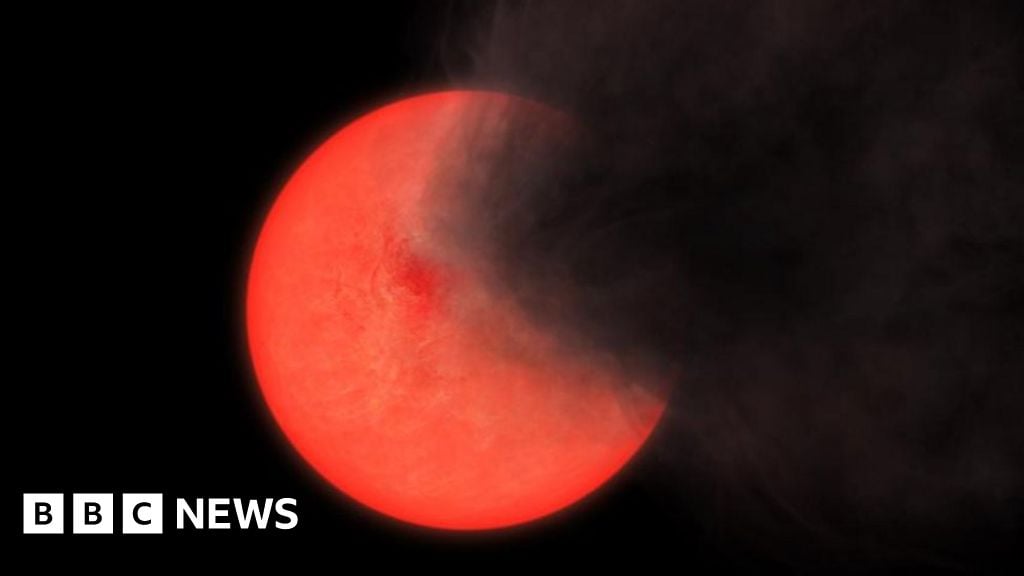
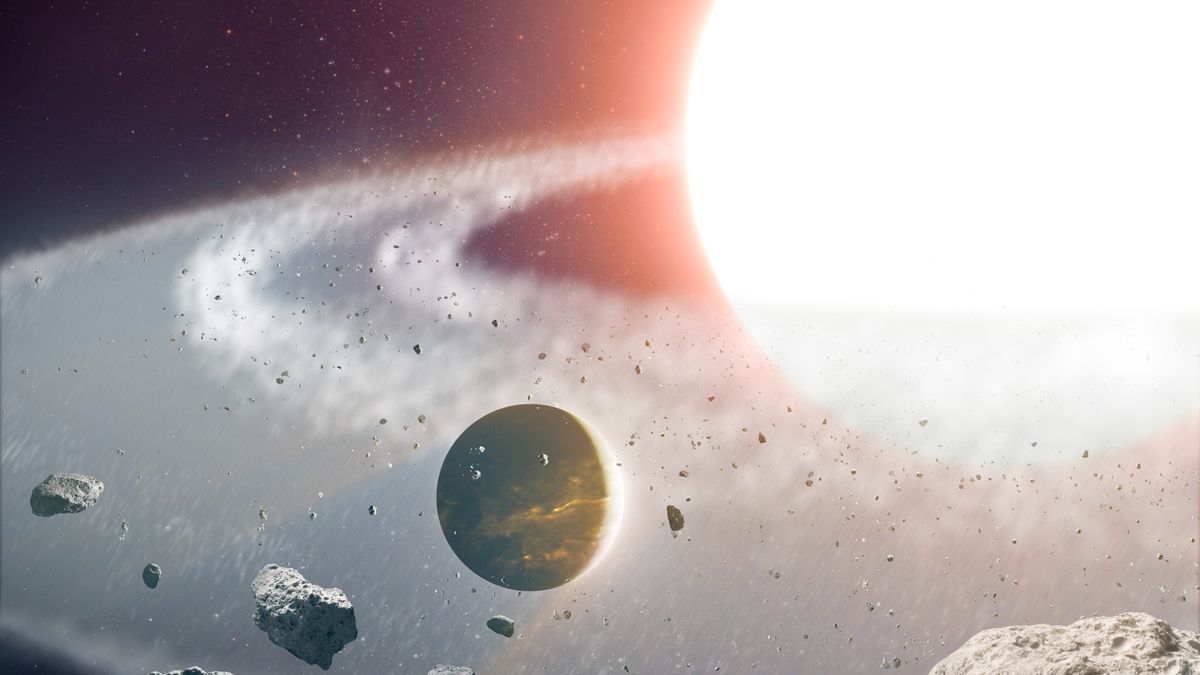
Astronomers from the University of Hertfordshire have discovered a new type of red giant star, nicknamed "an old smoker," near the center of the Milky Way during a 10-year study of almost a billion stars. Using an infrared telescope, the team also detected dozens of rarely seen newborn stars, known as protostars, hidden from view in visible light by large amounts of dust and gas. The discoveries could potentially change our understanding of how elements are distributed across space and have wider significance for the spread of heavy elements in other galaxies.

astronomy2 years ago

The Mystery of Betelgeuse's Rotation: Unraveling the Truth

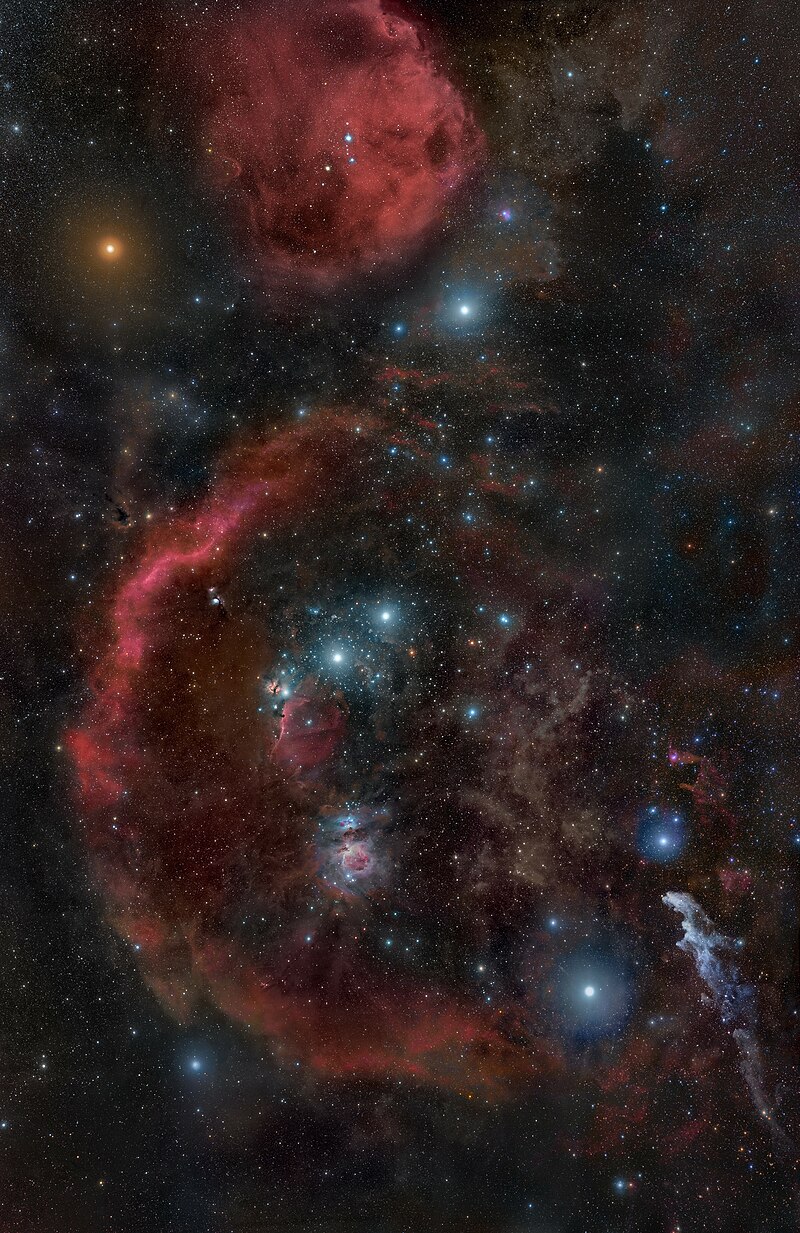
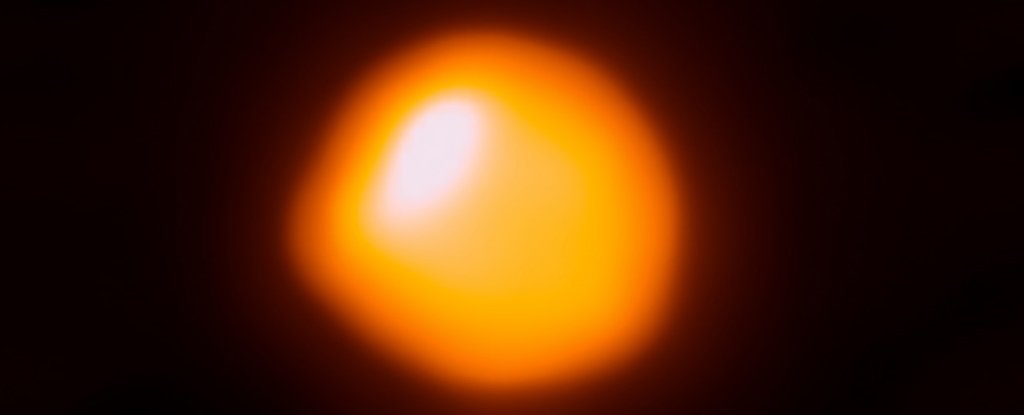
A recent study using the Atacama Large Milimeter Array (ALMA) has shown that Betelgeuse, the well-known red giant star, is rotating faster than expected. While current theory predicts slower rotation speeds for red supergiants, observations have revealed faster rotation in some giant stars. The measurements of Betelgeuse's rotational velocity were compared to previous observations, suggesting a possible cause could be a merger with a low mass companion star. However, complications arise from potential false signals picked up from convective plasma at the star's surface. Higher resolution observations are needed to accurately measure the rotational speed of Betelgeuse and other red supergiants.

astronomy2 years ago

Stunning Telescope Footage Reveals Red-Giant Star's Dazzling Final Act

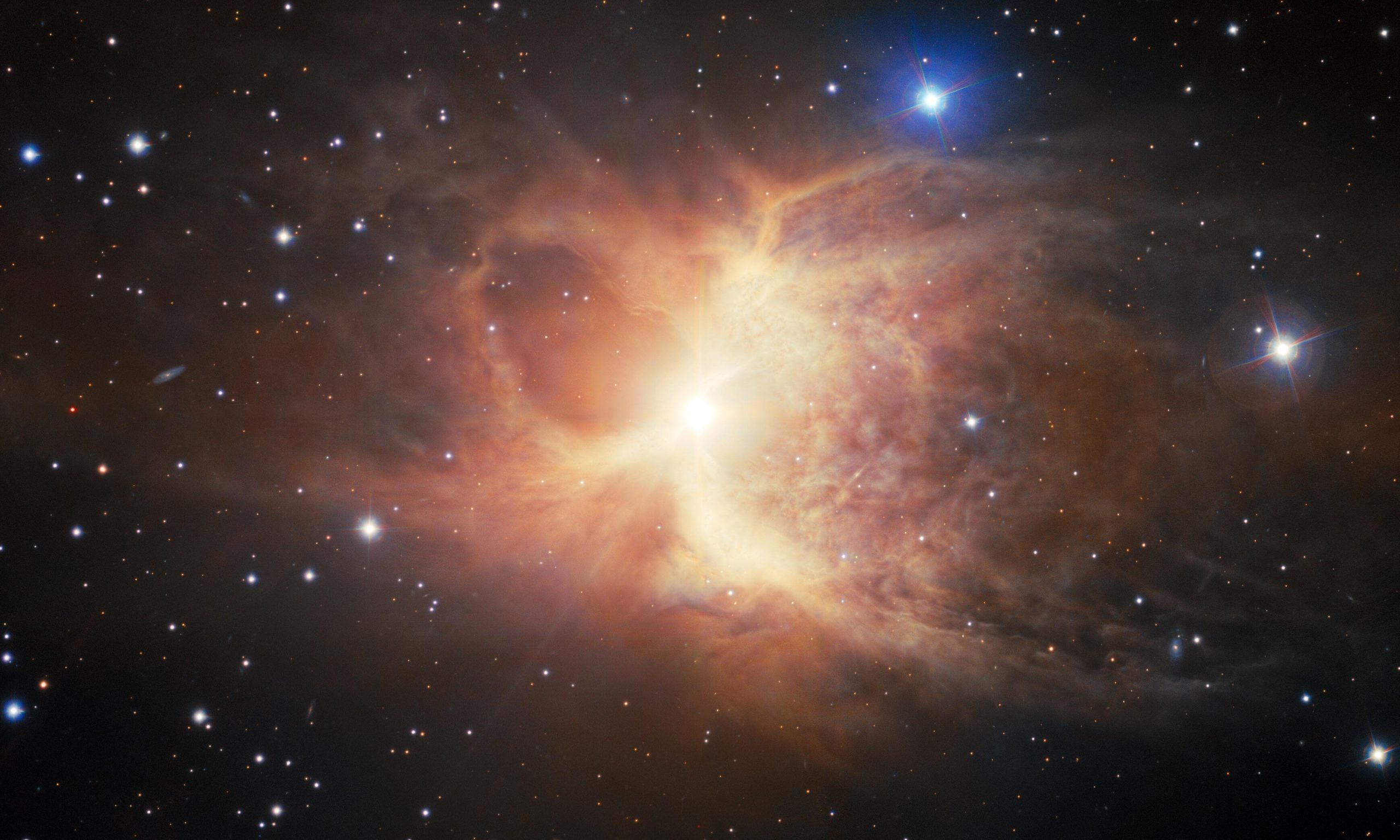
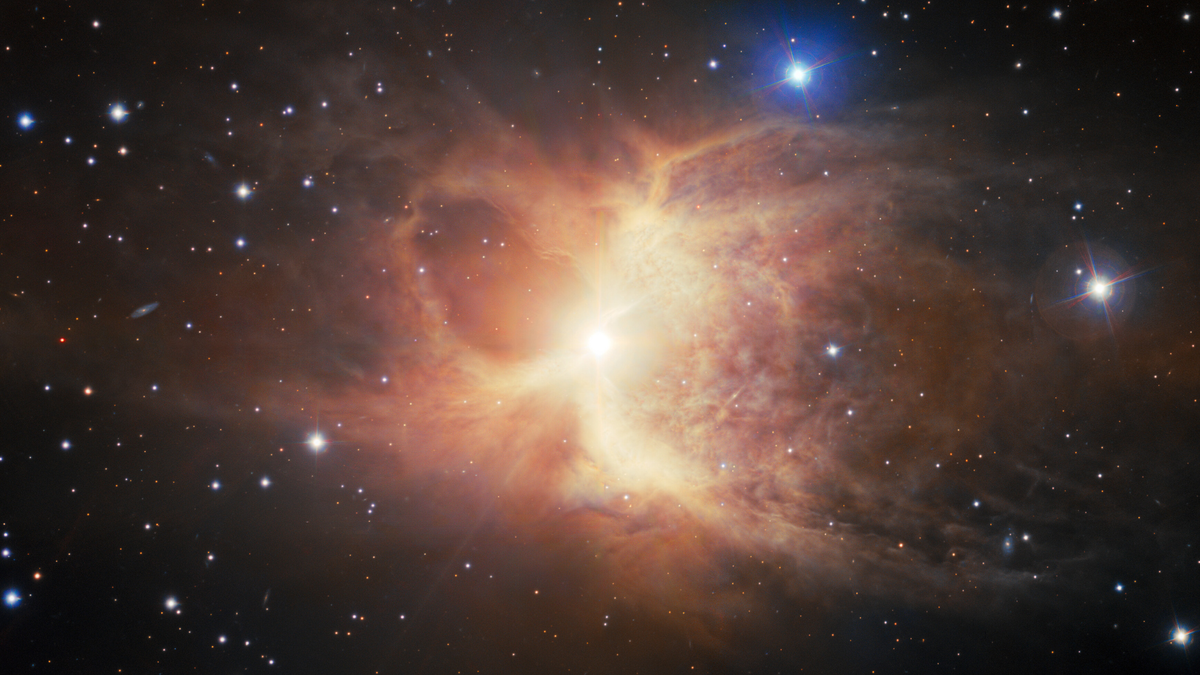
The Gemini South telescope has captured a stunning image of the Toby Jug Nebula, a rare bipolar reflection nebula resembling an old English jug. Located 1,200 light-years away in the constellation Carina, this nebula offers valuable insights into the evolution of red giants, including our Sun's future transformation. The nebula's structure and glowing heart provide astronomers with unique information about the end-of-life phase of red giants and the cosmic structures they form. The Toby Jug Nebula is believed to have formed through interactions between the dying red giant and a shredded companion star. This discovery has implications for understanding the future evolution of our own Sun.

science-and-astronomy2 years ago

"Rare 'Bipolar' Nebula Formed by Dying Red Giant Star's Spectacular Demise"

The Gemini South telescope has captured a stunning image of a rare double-lobed planetary nebula, officially designated IC 2220 but nicknamed the Toby Jug Nebula. The nebula, located around 1,200 light-years away, was created by a dying red giant star called HR3126. This particular type of nebula is short-lived and rarely sighted, making it of great value to scientists studying stellar evolution. The absence of a companion star suggests that it has been shredded and its material dispersed in the nebula. Planetary nebulas are formed when intermediate-mass stars exhaust hydrogen at their core, causing the star to expand and create vast clouds of gas and dust.

science-and-astronomy2 years ago

"Betelgeuse: The Impending Explosion That Could Shake Our Lifetime"

A new study suggests that the red giant star Betelgeuse may explode in a supernova within the next few hundred years. The study proposes that Betelgeuse is larger than previously believed, based on its pulsations and variations in brightness. However, other astronomers have criticized the study, stating that the measurements used to support the theory may be influenced by dust and gas clouds surrounding the star. The paper has not yet been peer-reviewed or published.

astronomy2 years ago

"Betelgeuse: The Impending Explosion That Could Shake Our Lifetime"

A new study suggests that the red giant star Betelgeuse may explode in a supernova within the next few hundred years, contrary to the beliefs of most astronomers. The study proposes that Betelgeuse is larger than previously thought, based on its pulsations and irregular behavior. However, other astronomers criticize the study for selectively choosing measurements and argue that the star's apparent size is influenced by surrounding dust and gas clouds. The paper has not yet been peer-reviewed or published, and the current brightening of Betelgeuse does not necessarily indicate an imminent explosion.

astronomy2 years ago

"Scientists Uncover Mysterious Planet Defying Death by Its Star"

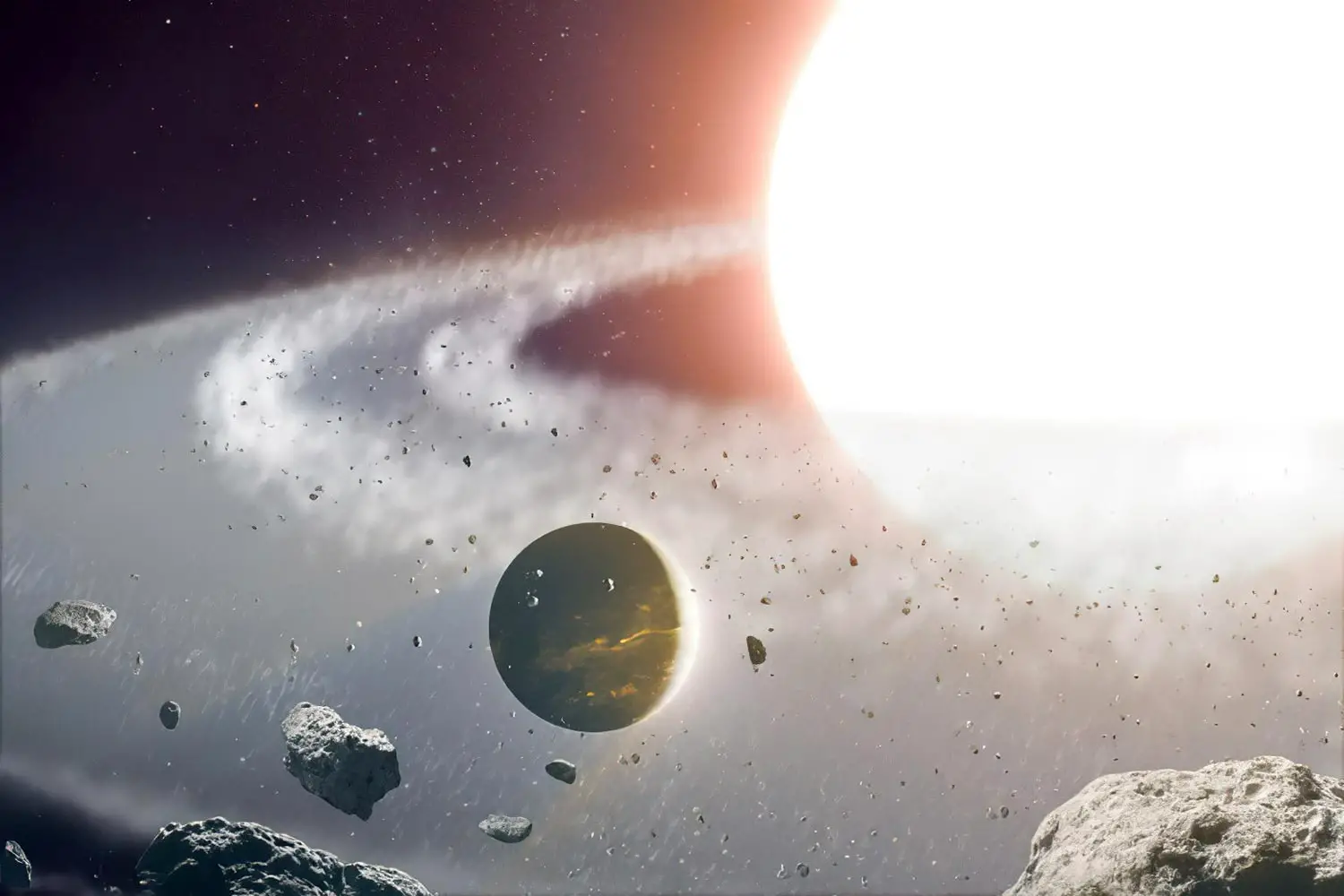
Astronomers from the University of Hawaii have discovered a planet named Halla that survived the expansion of its host star, Baekdu, into a red giant. This defies expectations as most planets in similar situations are engulfed by their stars. The survival of Halla raises theories about planetary evolution, including the possibility of binary star origins or Halla being a newly formed "second generation" planet. Observations from Maunakea observatories confirmed the planet's existence and stable orbit, leaving scientists intrigued about how it managed to survive.

science-and-astronomy2 years ago

Astronomers Discover Forbidden Planet That Defied Death

Astronomers have discovered a "forbidden planet" called Halla, which has survived orbiting a red giant star named Baekdu at a distance of 46 million miles, indicating that some planets can survive the death throes of stars. The giant exoplanet, 1.7 times the mass of Jupiter, should have been destroyed, but its existence challenges previous assumptions about the survival of planets in close orbits around red giants. Possible explanations for Halla's survival include a change in Baekdu's evolution due to a merger with a white dwarf binary partner or the formation of the planet from material pulled out from the dying star by a binary companion. The discovery suggests that planet formation may be more resilient than previously thought.

astronomy2 years ago

The Strange Behavior of Betelgeuse Continues.

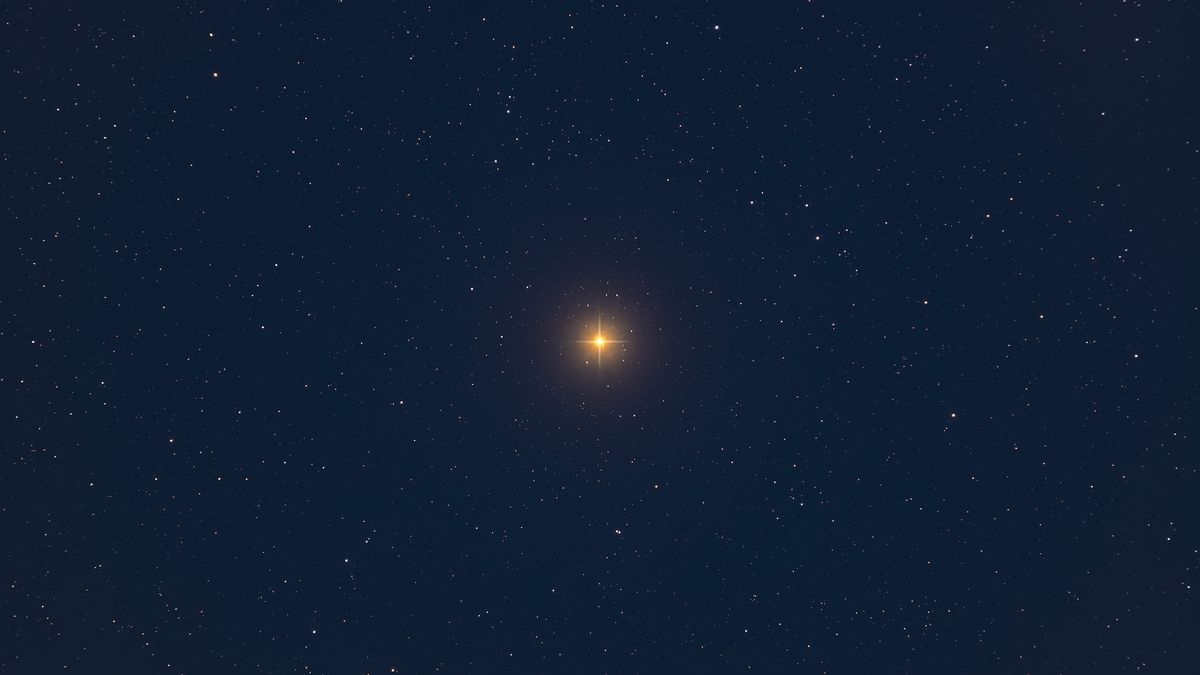
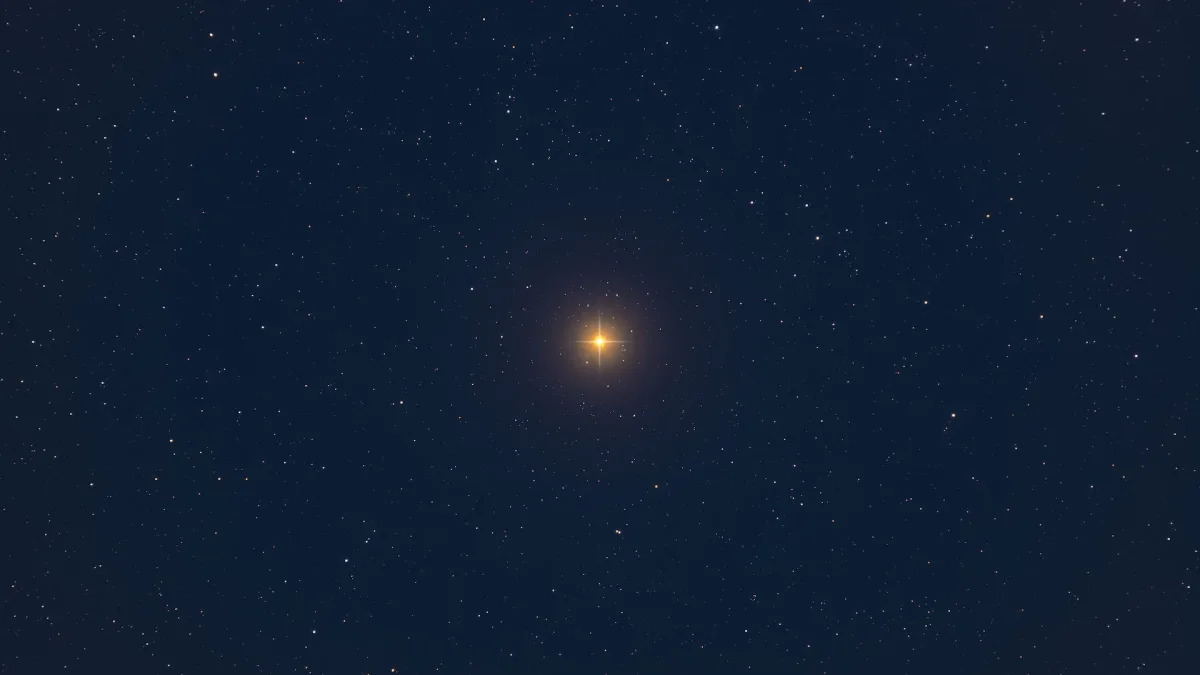
Betelgeuse, the red giant star, has grown uncharacteristically bright since the Great Dimming event in 2019. It has been fluctuating back and forth on a small scale but on a steady upward trend for months and is currently the 7th brightest star in the sky. However, scientists believe that its current behavior is more likely a bit of ongoing wobbliness following the 2019 dimming, and the star will return to normal within a decade. Betelgeuse is on the brink of death in cosmic timescales, but on human timescales, its supernova could be 100,000 years away.

astronomy2 years ago

The Strange Behavior of Betelgeuse Continues.

Betelgeuse, the red giant star, has been growing uncharacteristically bright since the Great Dimming event in 2019. It has hit a recent peak of 156 percent of its normal brightness, triggering speculation of an imminent supernova. However, scientists believe that its current behavior is more likely a bit of ongoing wobbliness following the 2019 dimming, and the star will return to normal within a decade. Betelgeuse is one of the most interesting stars in the sky, located around 700 light-years from Earth, and is expected to continue to live out its twilight millennia relatively peacefully for some time to come.

astronomy2 years ago

The Fate of Earth's Moon: Will it Ever Disappear?

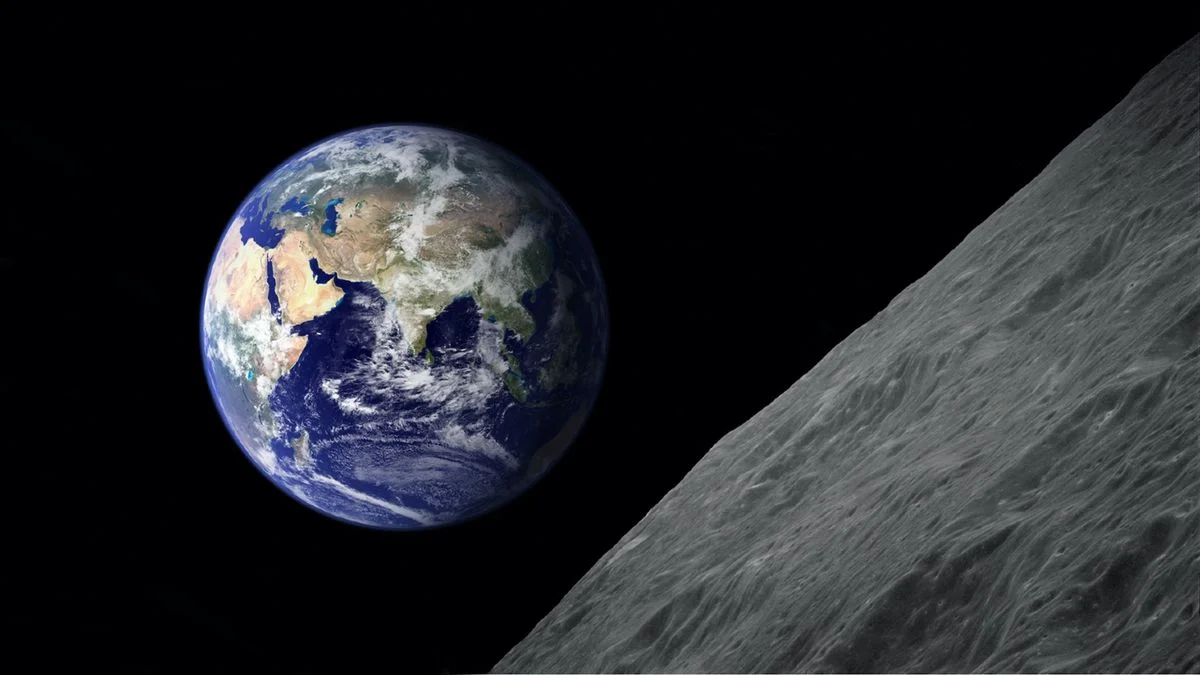
The moon is slowly drifting away from Earth at a rate of about 1.5 inches per year due to the gravitational effects of each on the other. Tidal forces are also slowing the rate at which the moon rotates on its axis, resulting in the moon "tidally locking" with Earth. In about 50 billion years, Earth's slowing rotation would make it tidally lock with the moon so that Earth would permanently show just one side to the moon. However, in about 5 billion years, as the sun begins to die, it will swell to become a red giant star, "at which point the Earth-moon system will almost certainly be disrupted and destroyed."

astronomy2 years ago

The Fate of Earth's Moon: Will it Disappear?

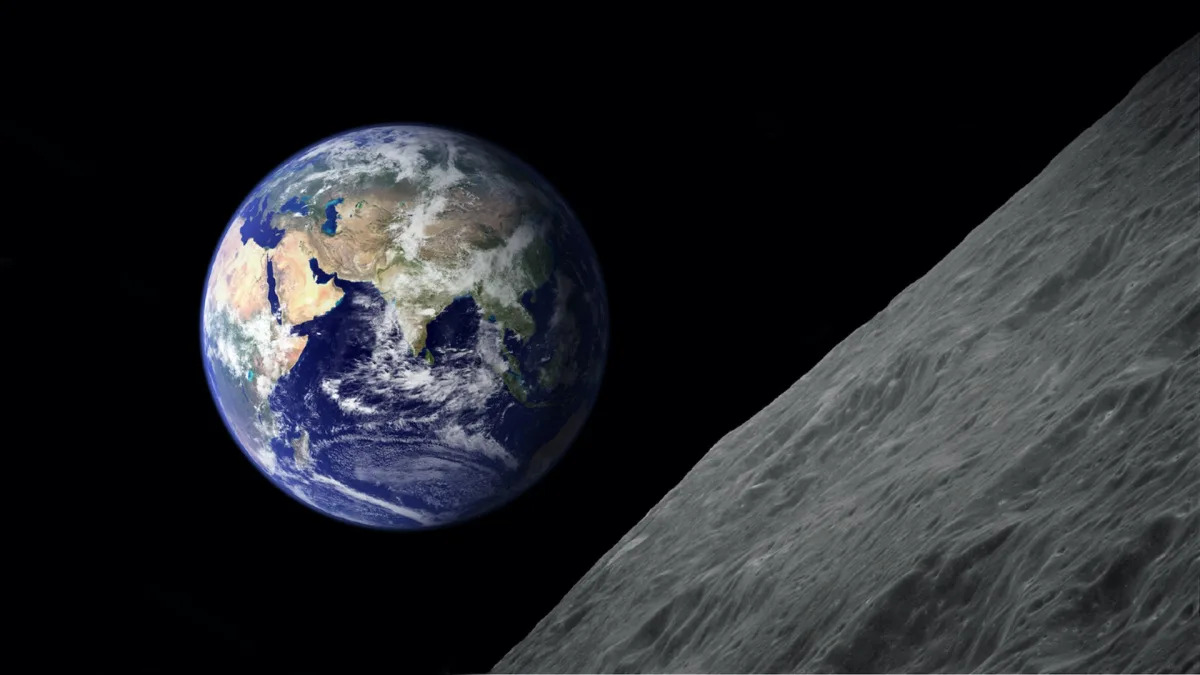
The moon is slowly drifting away from Earth at a rate of about 1.5 inches per year due to the gravitational effects of each on the other. Tidal forces are also slowing the rate at which the moon rotates on its axis, resulting in the moon "tidally locking" with Earth. In about 50 billion years, Earth's slowing rotation would make it tidally lock with the moon so that Earth would permanently show just one side to the moon. However, in about 5 billion years, as the sun begins to die, it will swell to become a red giant star, "at which point the Earth-moon system will almost certainly be disrupted and destroyed."