Tag

Infrared Telescope

All articles tagged with #infrared telescope

space1 year ago

NASA's NEOWISE Ends Mission with Fiery Re-Entry, Legacy Lives On

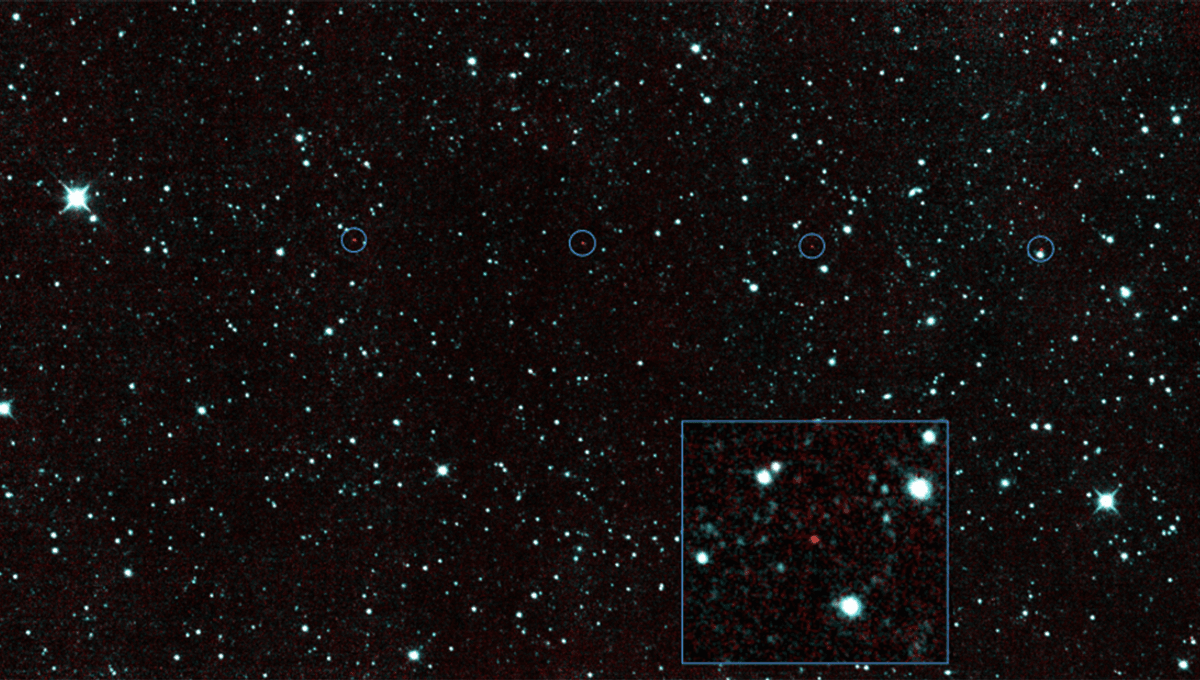
NASA's Near-Earth Object Wide-field Infrared Survey Explorer (NEOWISE) telescope has concluded its mission by burning up in Earth's atmosphere after over a decade of monitoring asteroids and comets. Originally launched as WISE in 2009, the telescope was repurposed in 2013 to focus on planetary defense, identifying 215 near-Earth objects. NEOWISE's end was due to increased solar activity affecting its orbit. Despite its demise, the mission laid the groundwork for future planetary defense efforts, with its successor, NEO Surveyor, planned for launch after 2027.
science-and-technology1 year ago

Astronomers Plan 14-Meter Infrared Space Telescope

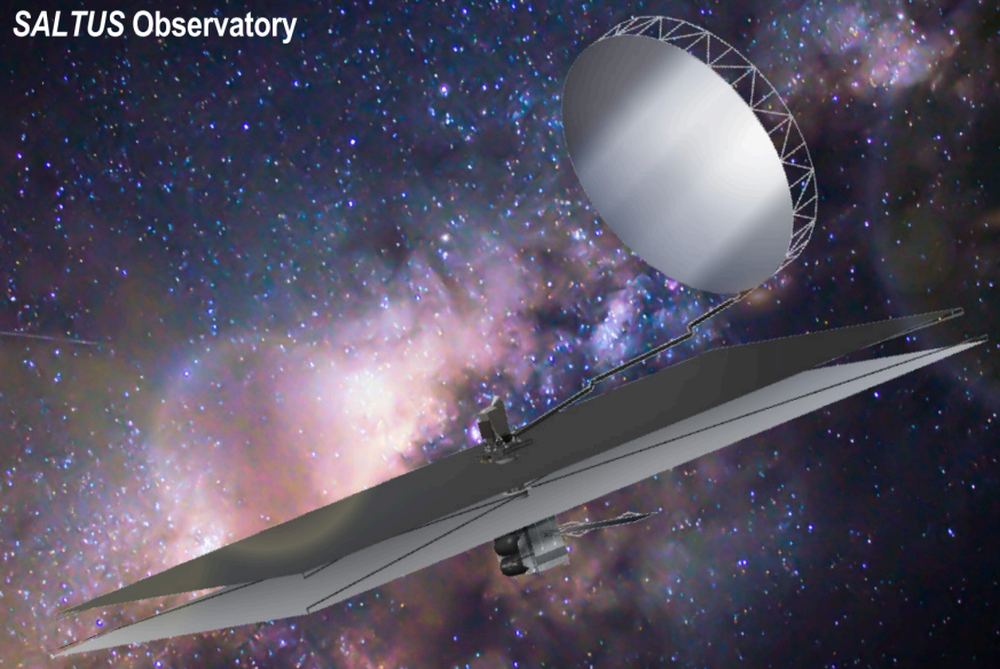
Astronomers from the USA and Europe propose a new 14-meter infrared space telescope named SALTUS to explore the Universe's origins and the development of habitability in planets. SALTUS will cover far-infrared wavelengths unavailable to current observatories, providing high sensitivity and spatial resolution to study protoplanetary disks, galaxy formation, and the co-evolution of galaxies and supermassive black holes. The mission aims to address key questions in astrophysics and is designed to meet the future needs of the astronomical community.

astronomy1 year ago

"Unveiling the True Colors of James Webb Space Telescope Images"

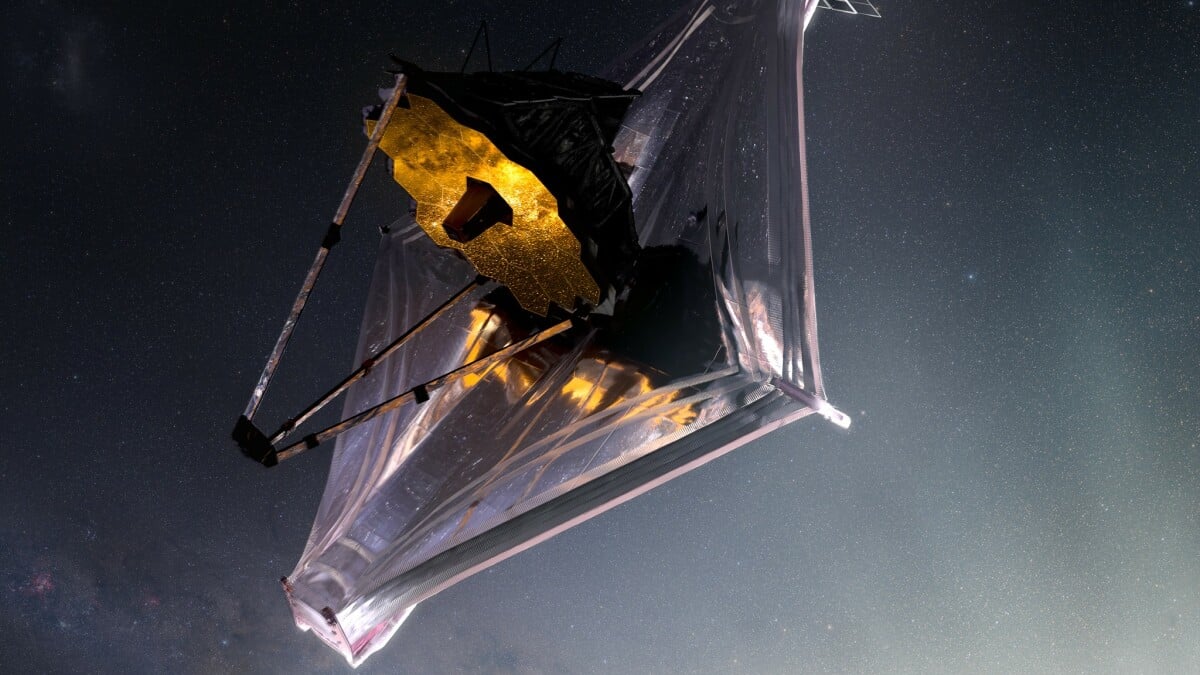
The James Webb Space Telescope captures stunning images of the universe in brilliant colors, but these colors are not necessarily what the human eye would see. The telescope operates in infrared wavelengths, and its images are processed using filters to create full-color composites. The colors are chosen to enhance scientific understanding and engagement, and to illustrate certain findings. A comparison of images from the James Webb Space Telescope and the Hubble Space Telescope shows differences in color and details, highlighting the unique capabilities of the infrared telescope.

astronomy1 year ago

"Discovery of Ancient 'Old Smoker' Stars in Milky Way Galaxy"

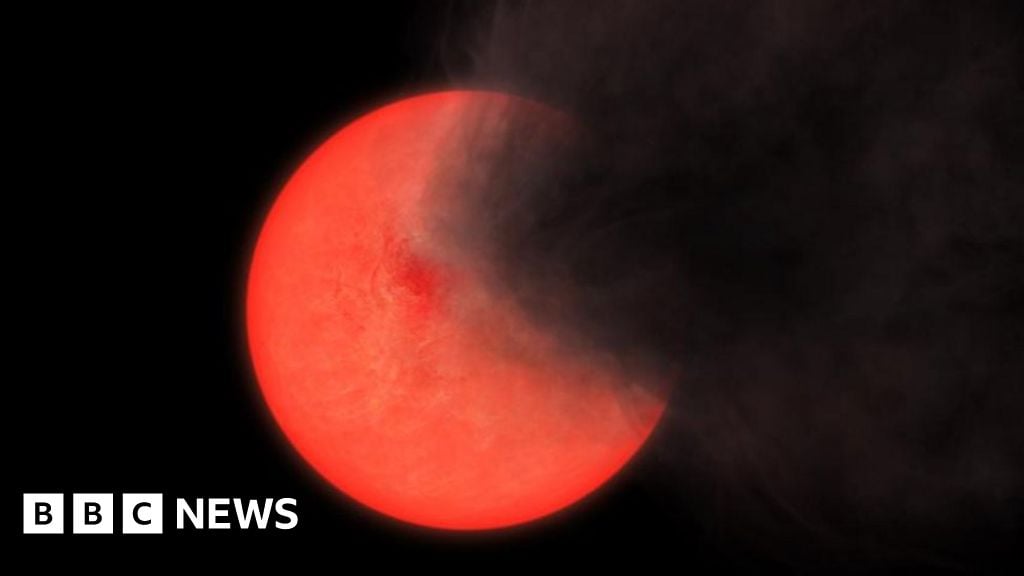
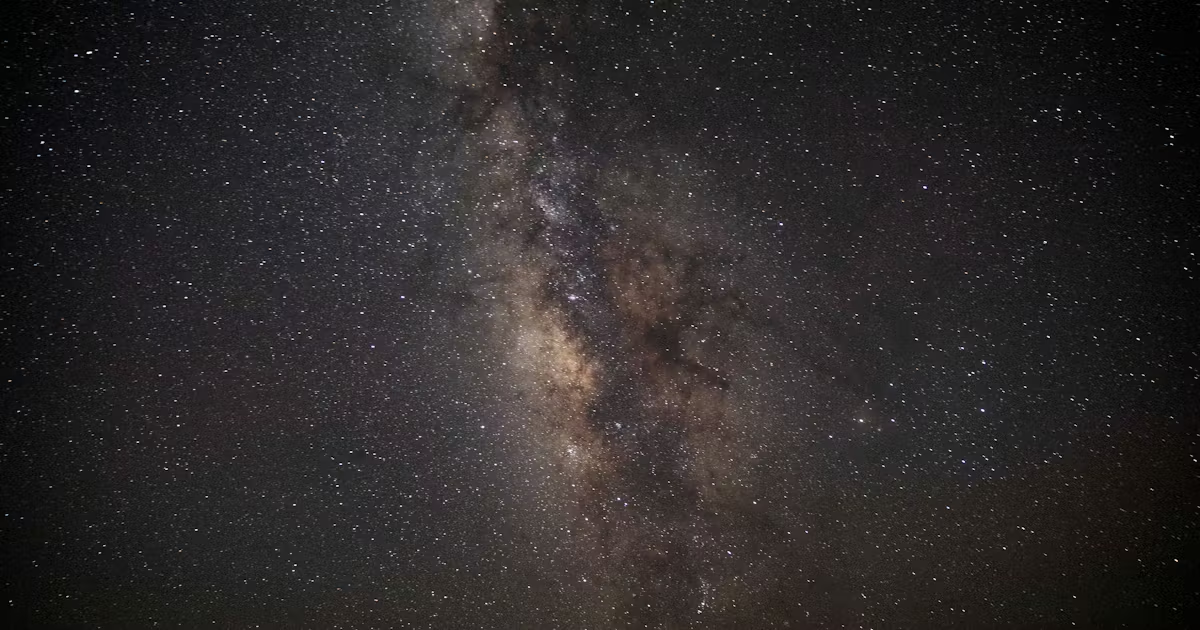
Astronomers from the University of Hertfordshire have discovered a new type of red giant star, nicknamed "an old smoker," near the center of the Milky Way during a 10-year study of almost a billion stars. Using an infrared telescope, the team also detected dozens of rarely seen newborn stars, known as protostars, hidden from view in visible light by large amounts of dust and gas. The discoveries could potentially change our understanding of how elements are distributed across space and have wider significance for the spread of heavy elements in other galaxies.

astronomy2 years ago

Unveiling the Enigma of Early Galaxies: Webb Telescope's Revelation

The James Webb Space Telescope has unraveled a cosmic mystery by revealing that the inexplicable light previously observed from early galaxies is actually emitted by groups of galaxies colliding and merging with one another, creating an active cosmic environment that allows the light to escape into space. This discovery challenges previous hypotheses and provides new insights into the formation of early galaxies. Equipped with a powerful mirror and infrared view, the Webb telescope is poised to revolutionize our understanding of the early universe and distant exoplanets.

astronomy2 years ago

"The Webb Telescope's Surprising Discovery: Unveiling the Enigma of 'The Brick' in Our Galaxy"

The James Webb Space Telescope (JWST) accidentally discovered large quantities of carbon monoxide ice while searching for newly forming stars in a dark patch of the Milky Way center. Carbon monoxide ice is the second-most common molecule in the universe and can freeze into particles of ice in cold space conditions. The discovery raises questions about the existence of carbon monoxide ice in other galaxies' cores and provides insights for future JWST users on adjusting infrared wavelengths for studying star formation.

astronomy2 years ago

"Embark on a Mini-Marathon with Your Own James Webb Space Telescope"

The James Webb Space Telescope (JWST) has been capturing stunning images of various celestial objects since its launch. To celebrate its achievements, astronomers are encouraged to observe some of the targets that JWST has captured. These targets include Jupiter, Neptune, the Pillars of Creation in the Eagle Nebula, and Stephan's Quintet. With a small backyard telescope or even binoculars, observers in the Northern Hemisphere can enjoy these sights during the fall and winter months.

astronomy2 years ago

Webb telescope captures image of rare and powerful celestial object.

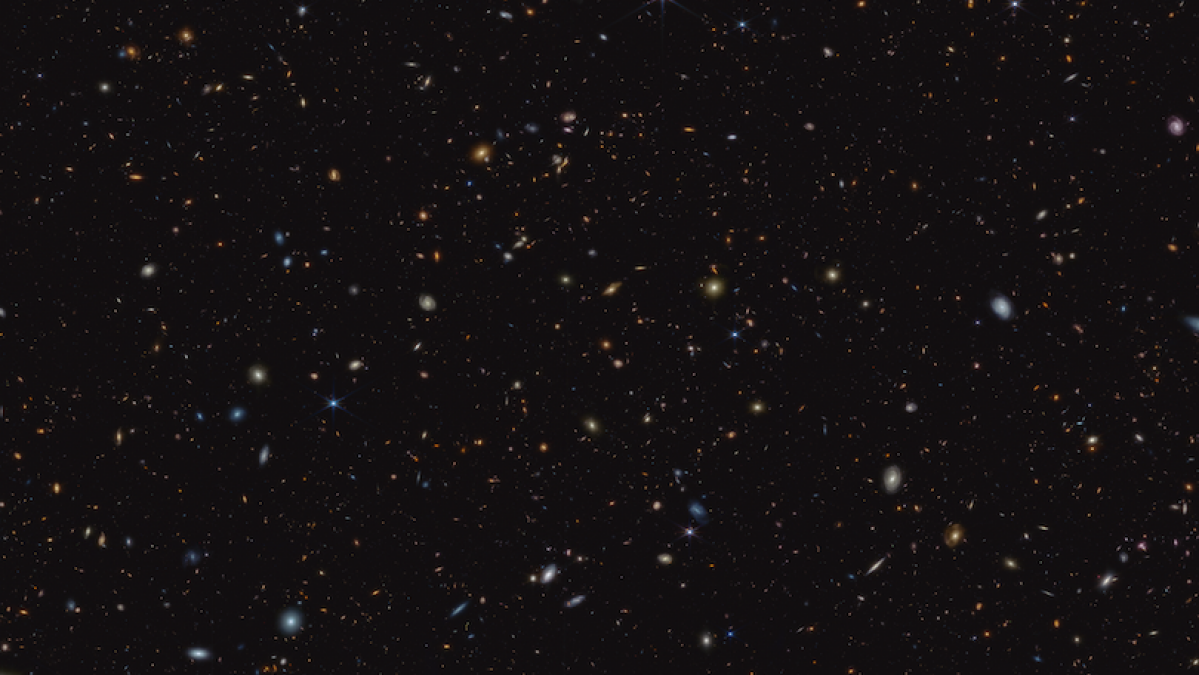
The James Webb Space Telescope captured an image of a quasar, a supermassive black hole at the center of a galaxy, surrounded by around 20,000 galaxies. The image helps researchers understand how the universe evolved over 13 billion years ago, when colossal clouds of murky gas began to clear up. The quasar is millions to billions times brighter than the sun and is ancient, at around 13 billion years old. The Webb telescope is designed to peer into the deepest cosmos and reveal unprecedented insights about the early universe, using its giant mirror, infrared view, and specialized equipment.

astronomy2 years ago

James Webb Telescope captures unprecedented number of galaxies in stunning detail.

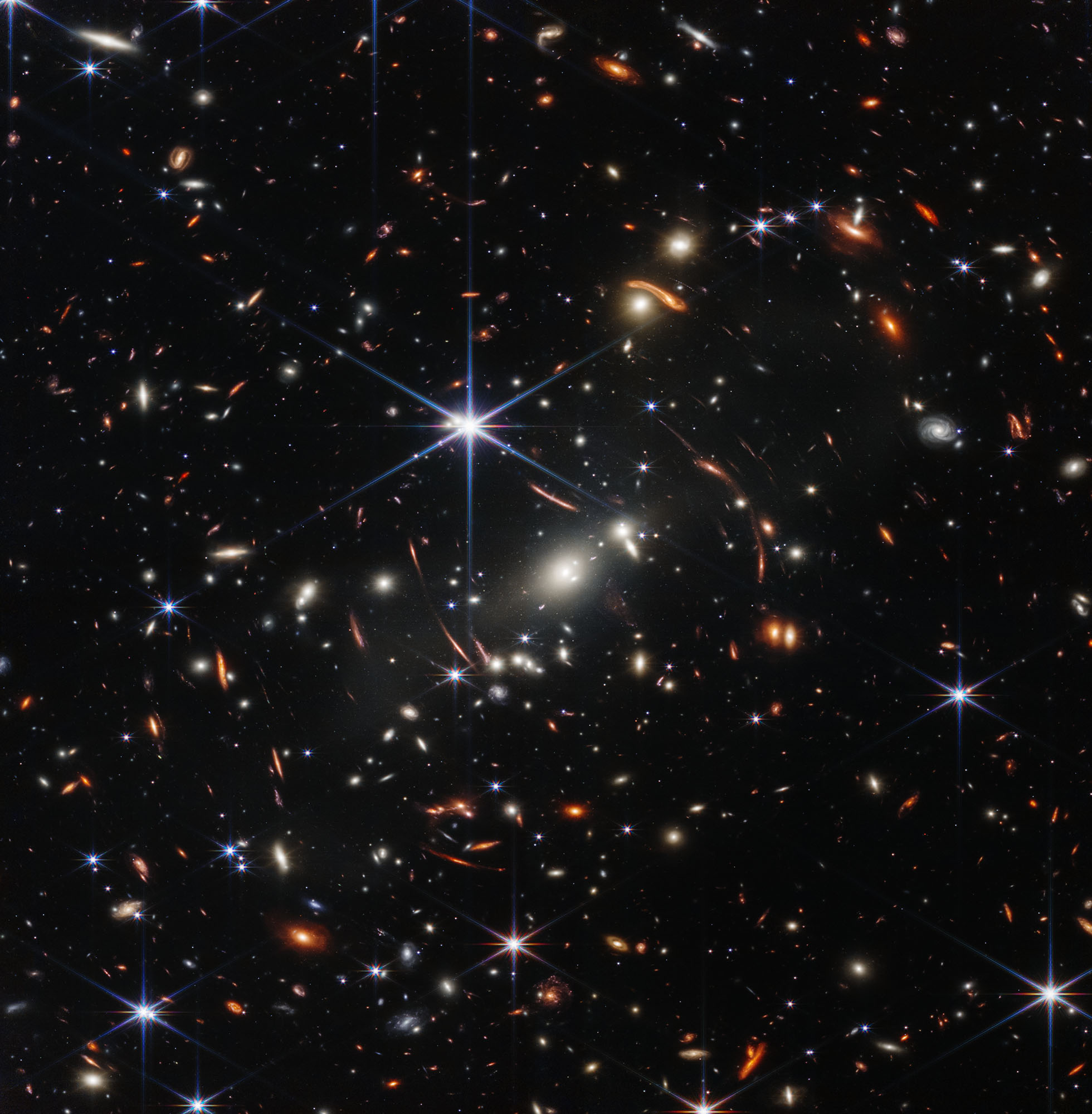
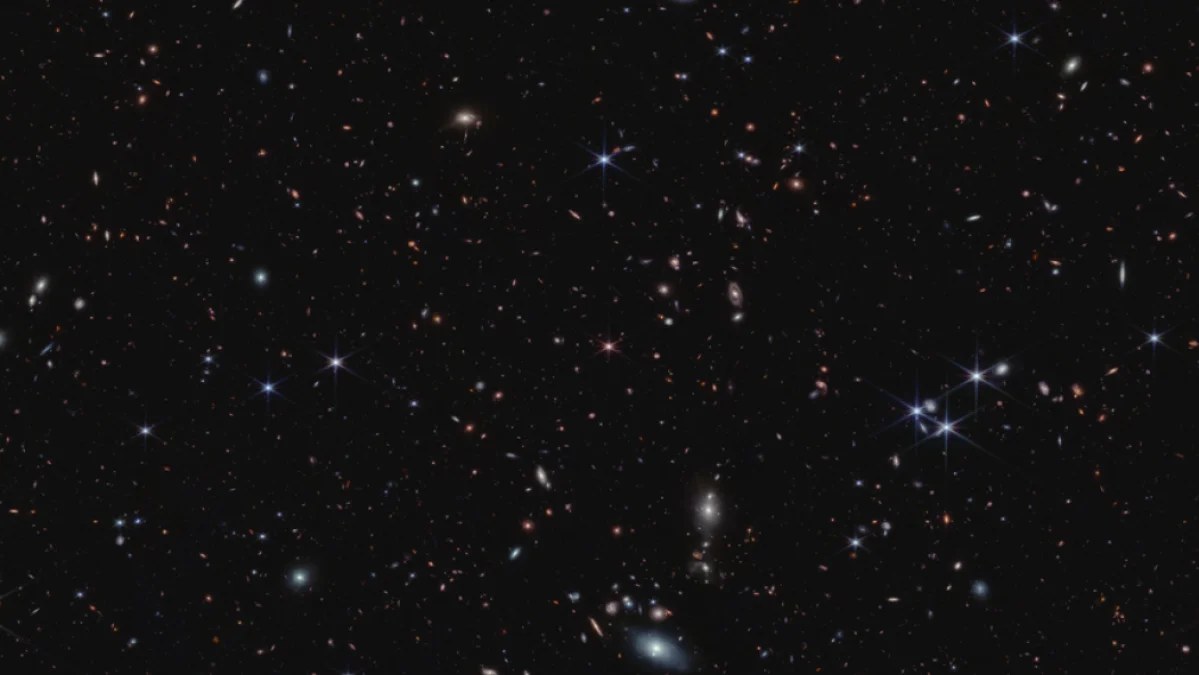
The James Webb Space Telescope has captured an image of tens of thousands of galaxies, including some of the universe's most ancient objects. The telescope's Advanced Deep Extragalactic Survey has found almost a thousand galaxies younger than 650 million years old, and another population of stars born 500 to 850 million years after the Big Bang. The Webb telescope's powerful abilities include a giant mirror over 21 feet across, infrared view, and specialized equipment called spectrometers that can decipher what molecules exist in the atmospheres of distant exoplanets.

science2 years ago

"1 Million Telescope Shots Create Stunning Atlas of Stellar Birthplaces"

Astronomers have created a stunning mosaic of five vast stellar nurseries less than 1,500 light-years away, using more than 1 million images taken over five years by the European Southern Observatory in Chile. The observatory’s infrared survey telescope was able to peer through clouds of dust and discern infant stars, helping researchers better understand how stars evolve from dust. The findings complement observations by the European Space Agency's star-mapping Gaia spacecraft, orbiting nearly 1 million miles away.

science2 years ago

Webb telescope discovers unique features in nearby star system.

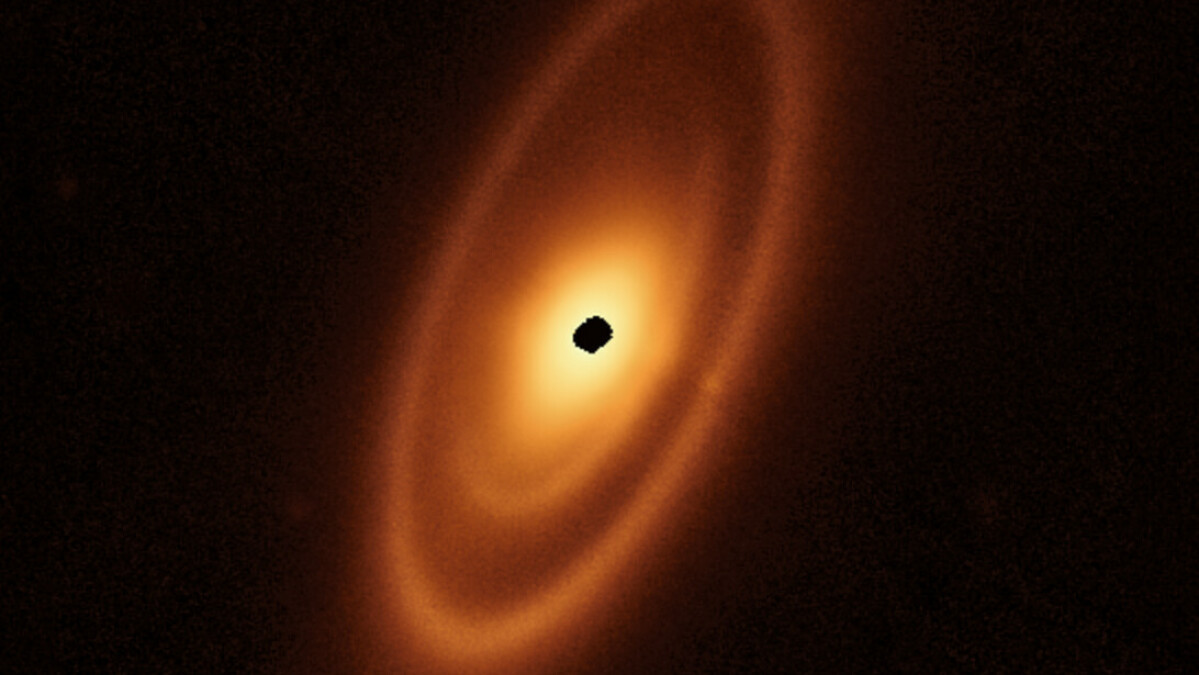
The James Webb Space Telescope has discovered two inner asteroid belts around the young star Fomalhaut, along with a third farther out. The belts are rocky, dusty rings formed by large objects colliding, and their stable ring-like structures reveal the existence of other intriguing objects around the star. The telescope's ability to view infrared light has allowed astronomers to physically resolve the thermal glow from dust in the inner regions, revealing the inner belts that were previously invisible. The belts are most likely carved by the gravitational forces produced by unseen planets, and astronomers believe there is probably a really interesting planetary system around the star.