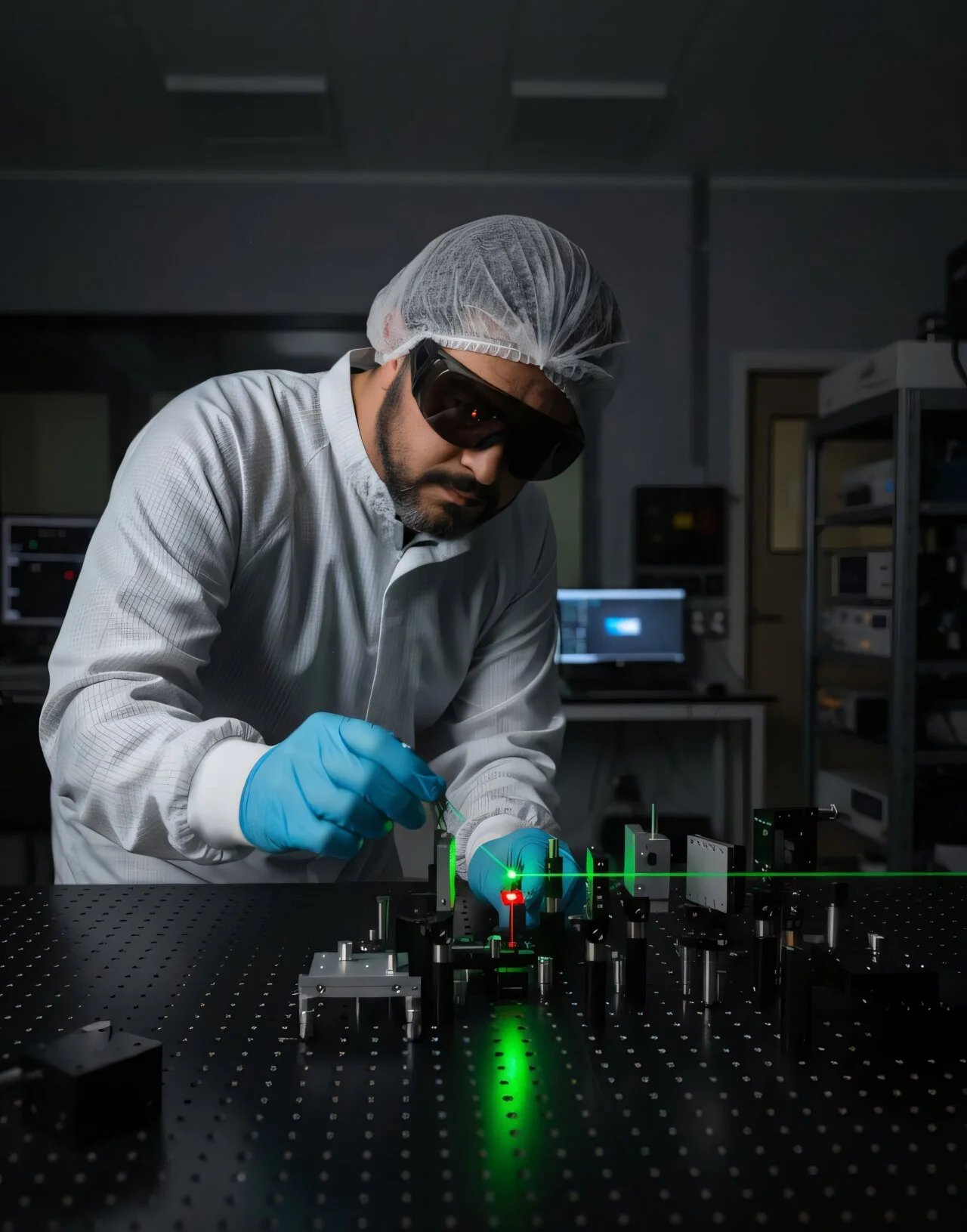
Researchers have developed a new ultra-thin, tunable optical device inspired by butterfly wings, enabling dynamic control of nonlinear optical processes at visible wavelengths, with potential applications in camouflage, biosensing, and quantum computing.
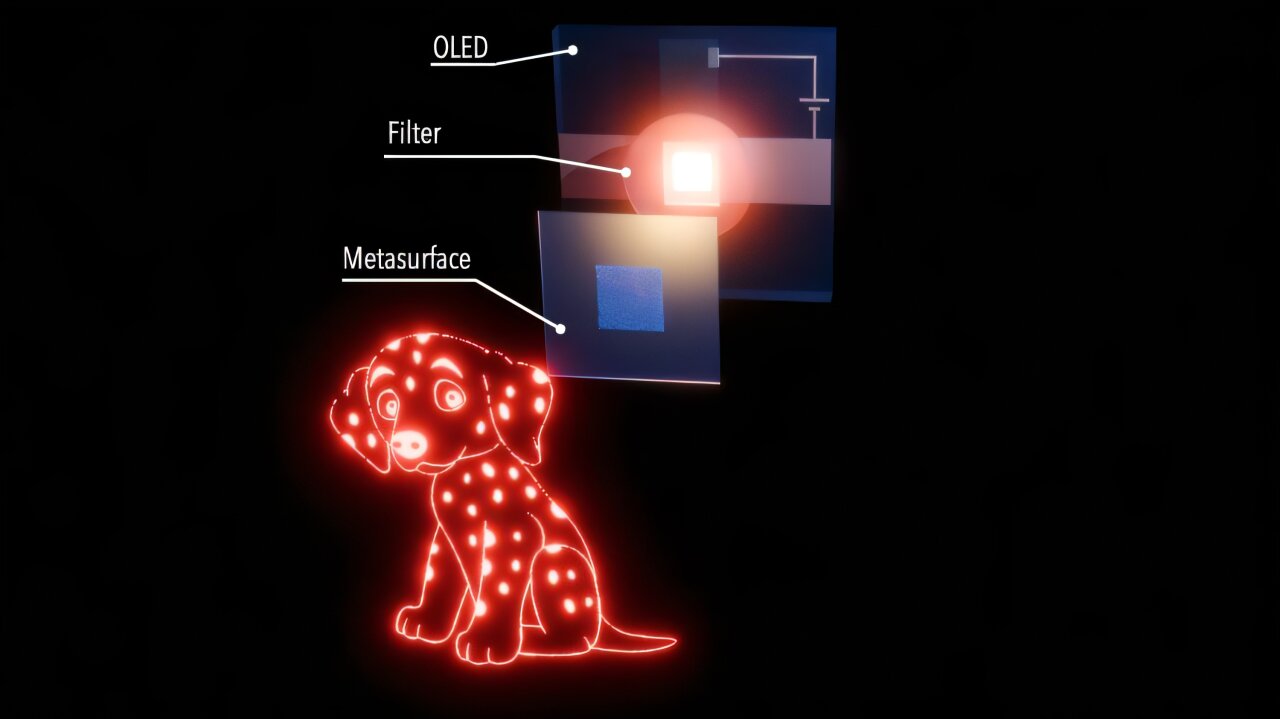
Researchers from the University of St Andrews have developed a new method combining holographic metasurfaces and organic LEDs to create more compact, cheaper, and easier-to-apply holograms, potentially enabling holographic displays in smartphones and other everyday devices.
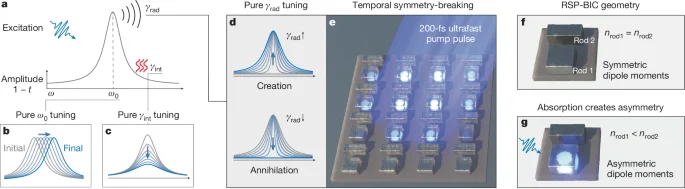
The article reports an experimental demonstration of ultrafast optical control of resonances in symmetry-broken metasurfaces by tuning the radiative loss parameter γrad through selective optical pumping, leveraging restored symmetry-protected bound states in the continuum (RSP-BICs) to achieve dynamic on-off switching of high-Q resonances on subpicosecond timescales, with potential applications in active nanophotonics and ultrafast optical devices.
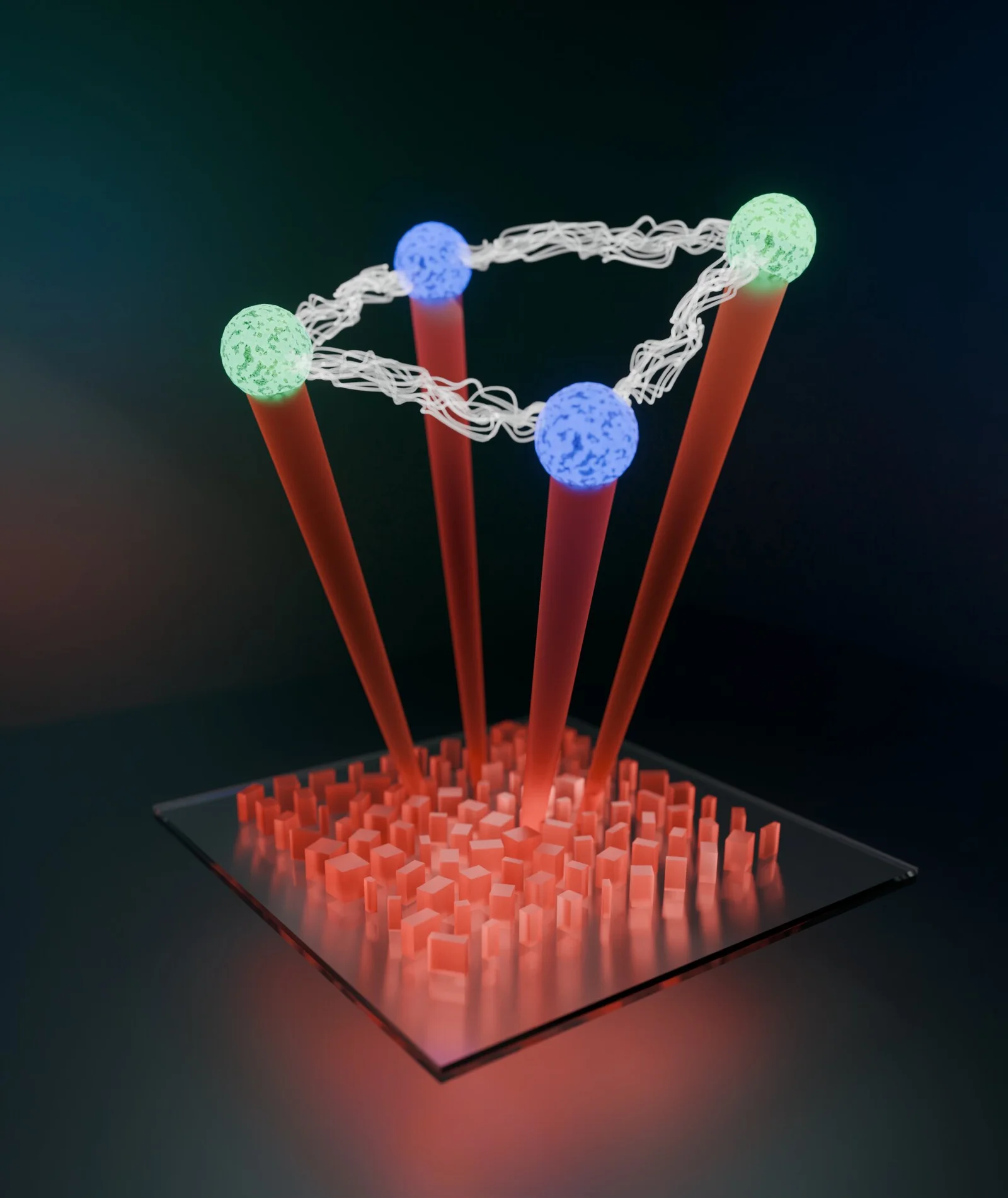
Researchers at Harvard have developed ultra-thin metasurfaces that can manipulate and entangle photons for quantum information processing, potentially replacing bulky optical components and enabling scalable, robust quantum devices at room temperature.
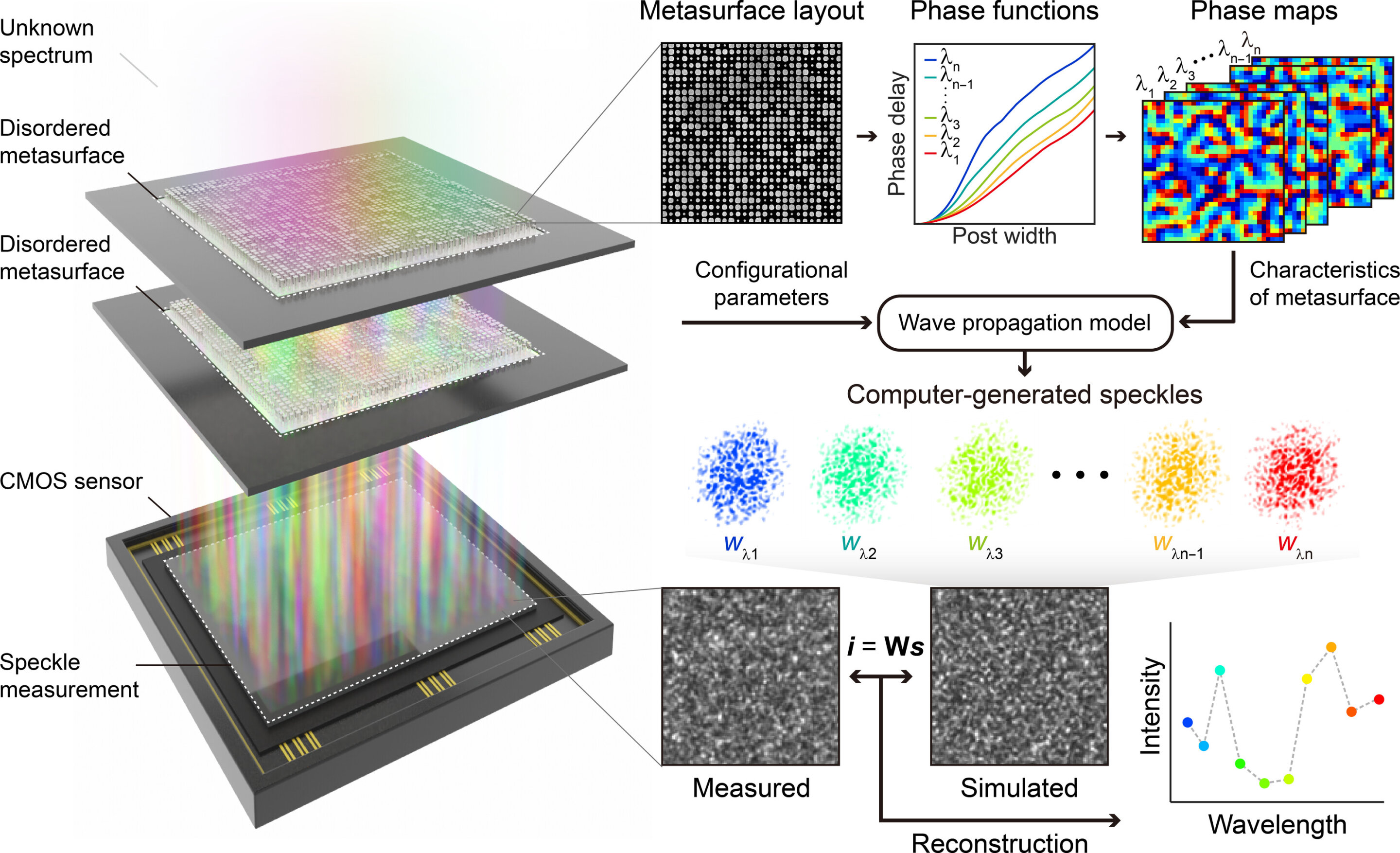
KAIST researchers have developed a compact, high-resolution spectrometer using double-layer disordered metasurfaces, enabling precise light wavelength analysis in devices smaller than a fingernail, with potential applications in daily life and various scientific fields.
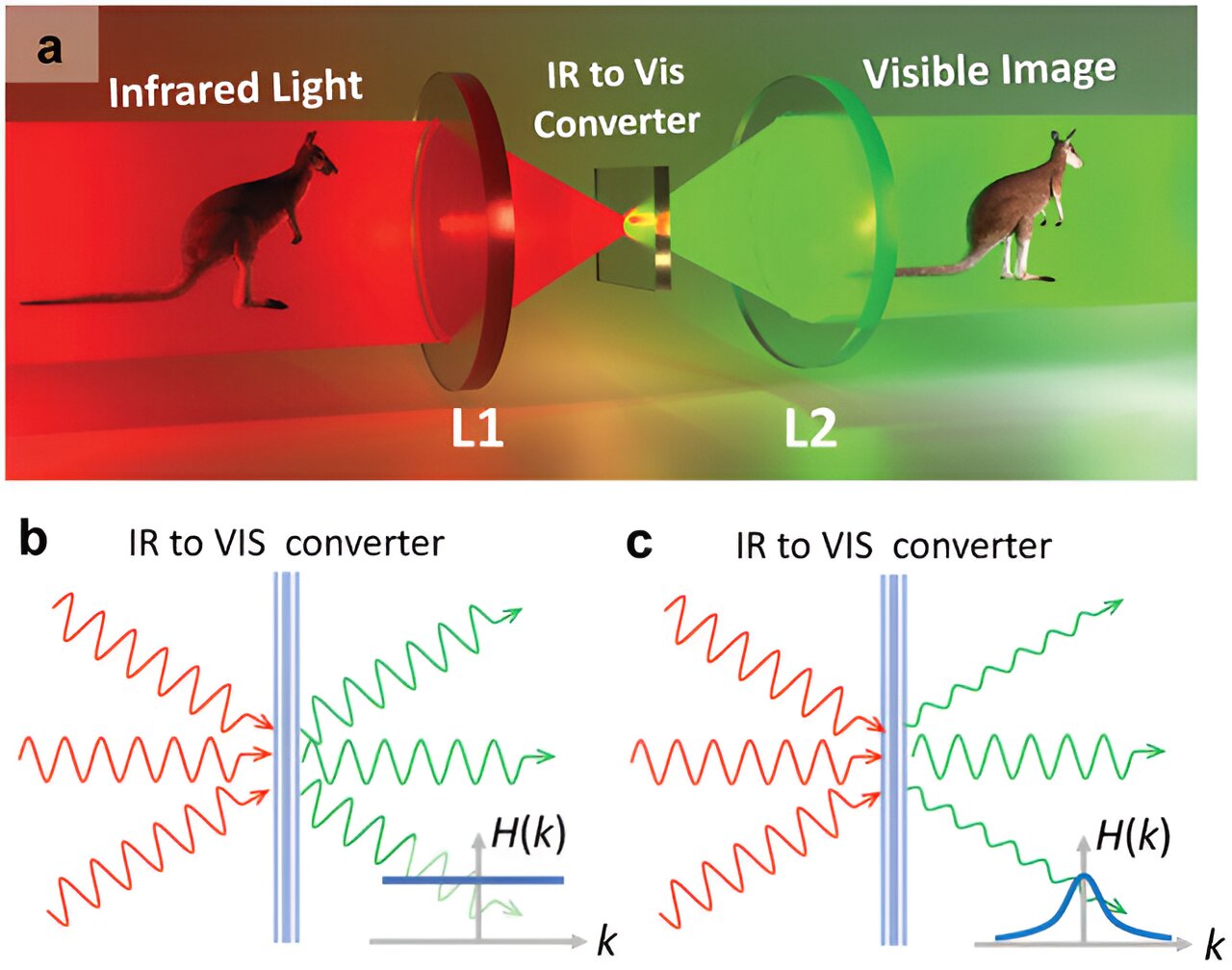
Researchers from TMOS have developed a new, ultra-thin infrared filter using lithium niobate metasurfaces that can be applied to everyday eyewear, potentially revolutionizing night vision technology by making it lightweight and accessible for consumer use. This innovation allows users to see both infrared and visible light simultaneously, promising applications in safer driving, nighttime activities, and various industries.
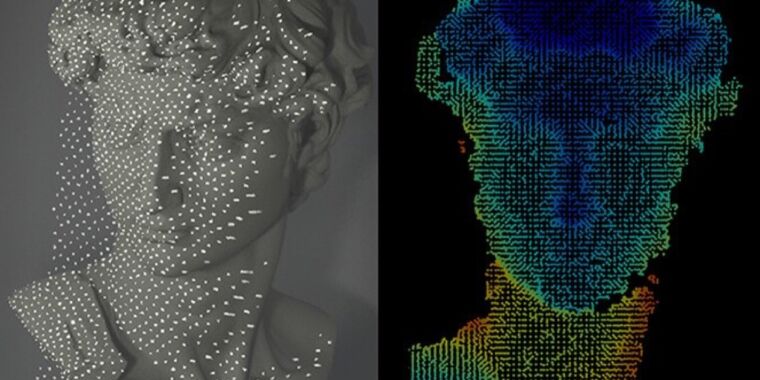
Scientists have developed a new compact facial recognition system that uses flatter, simpler optics and requires less energy than existing 3D imaging systems in smartphones. The system, tested on a replica of Michelangelo's David, employs metasurfaces and a photonic crystal surface-emitting laser to generate customizable and versatile light patterns, making it more energy-efficient and suitable for integration into a single chip. The new system recognized the face as well as existing smartphone facial recognition while using 5-10 times less power.
Scientists from Guangxi University and the Chinese Academy of Sciences have developed a new method to slow down light by more than 10,000 times using a synthetic 2D structure called a metasurface, made from thin layers of silicon. This breakthrough in light manipulation could have significant implications for computing and optical communication, offering better control over how light travels and reducing energy loss compared to existing methods.
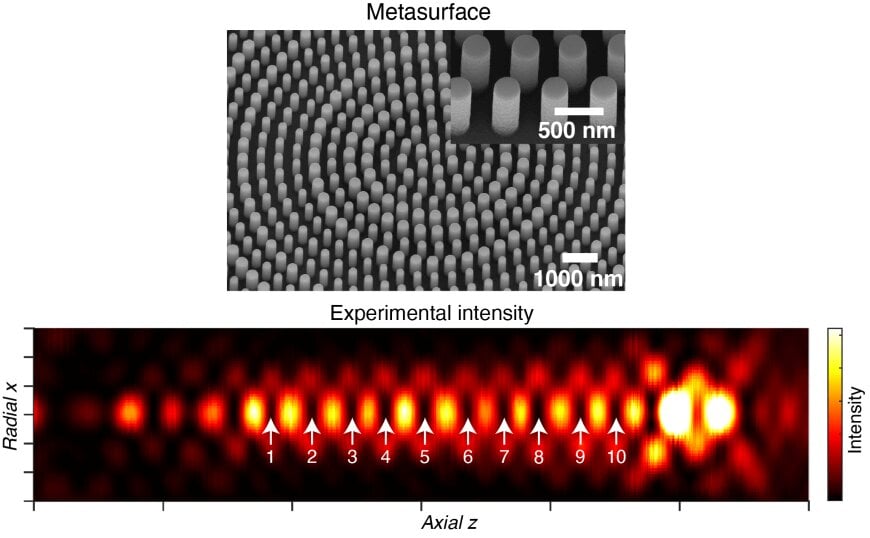
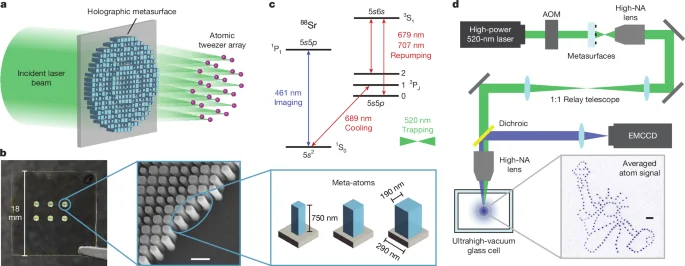
Harvard researchers have developed techniques to control "points of darkness" in light using metasurfaces, allowing for applications in remote sensing, precision measurement, and covert detection. The team created precise dark spots that can capture atoms or act as measurement points for imaging, and developed resilient "polarization singularities," stable dark spots in polarized optical fields. These advancements have implications for improving imaging systems, simplifying optical architecture in atomic physics labs, and enabling the masking of bright sources while imaging scenes.
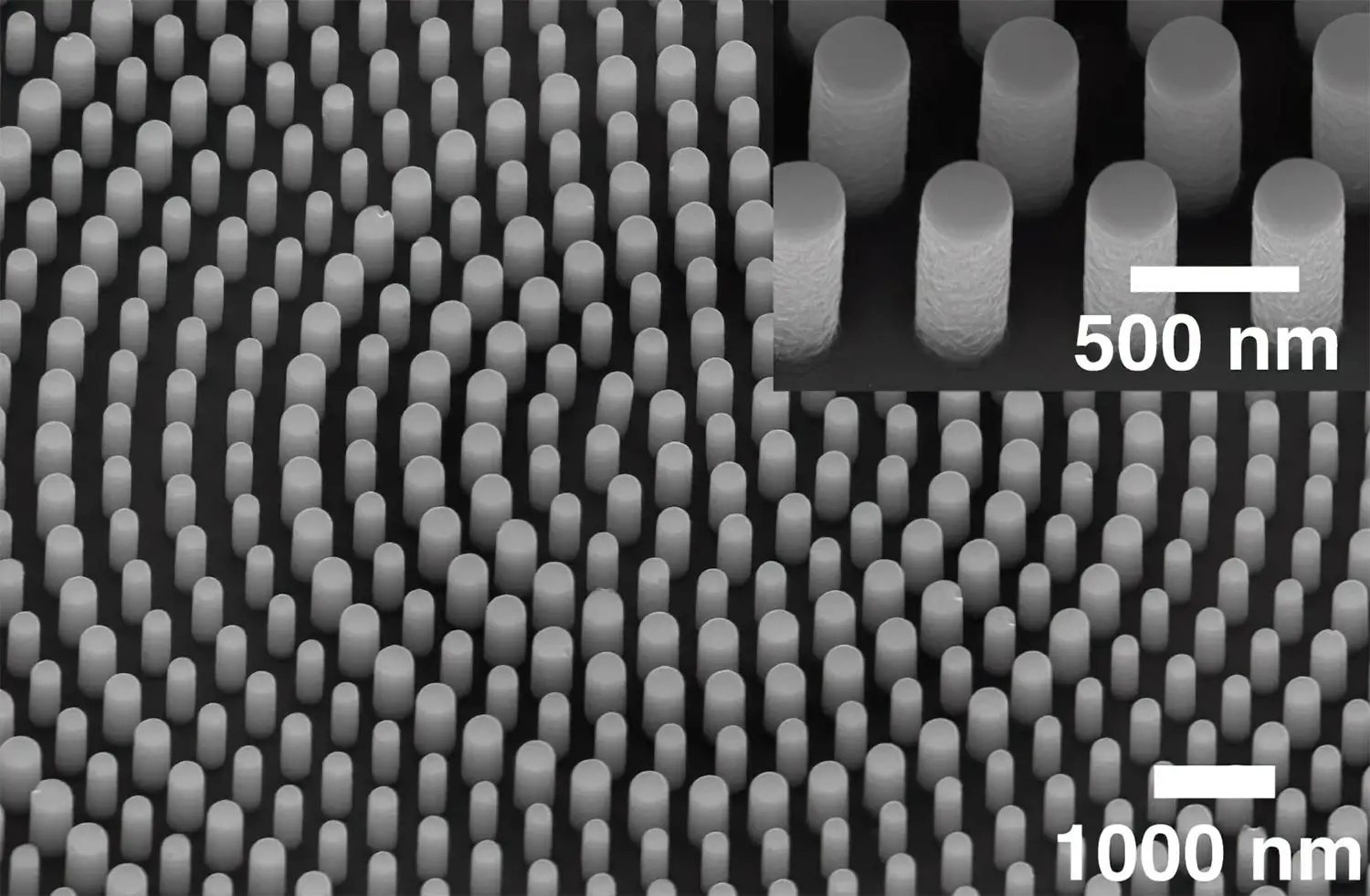
Researchers at the Harvard John A. Paulson School of Engineering and Applied Sciences have developed new techniques using metasurfaces to control points of darkness, or optical singularities. These dark spots have potential applications in remote sensing, precision measurement, and imaging. The team designed metasurfaces with titanium dioxide nanopillars to create an array of optical singularities, which could be used as optical traps for capturing atoms or as reference positions for imaging. They also developed extremely stable points of darkness in a polarized optical field, known as polarization singularities, which are topologically protected and can withstand perturbations. These advancements in optical singularities have implications for remote sensing, covert detection, and creating compact, lightweight optical devices.
Scientists have created a new kind of photonic time crystal that can neaten and amplify electromagnetic waves, which could have potential applications in wireless communication systems, laser development, and electronic circuits. The crystal is made of ultra-thin sheets of artificial materials known as metasurfaces, which makes it easier to produce and examine photonic time crystals. The discovery of electromagnetic wave amplification along surfaces could improve integrated circuits and wireless communications.
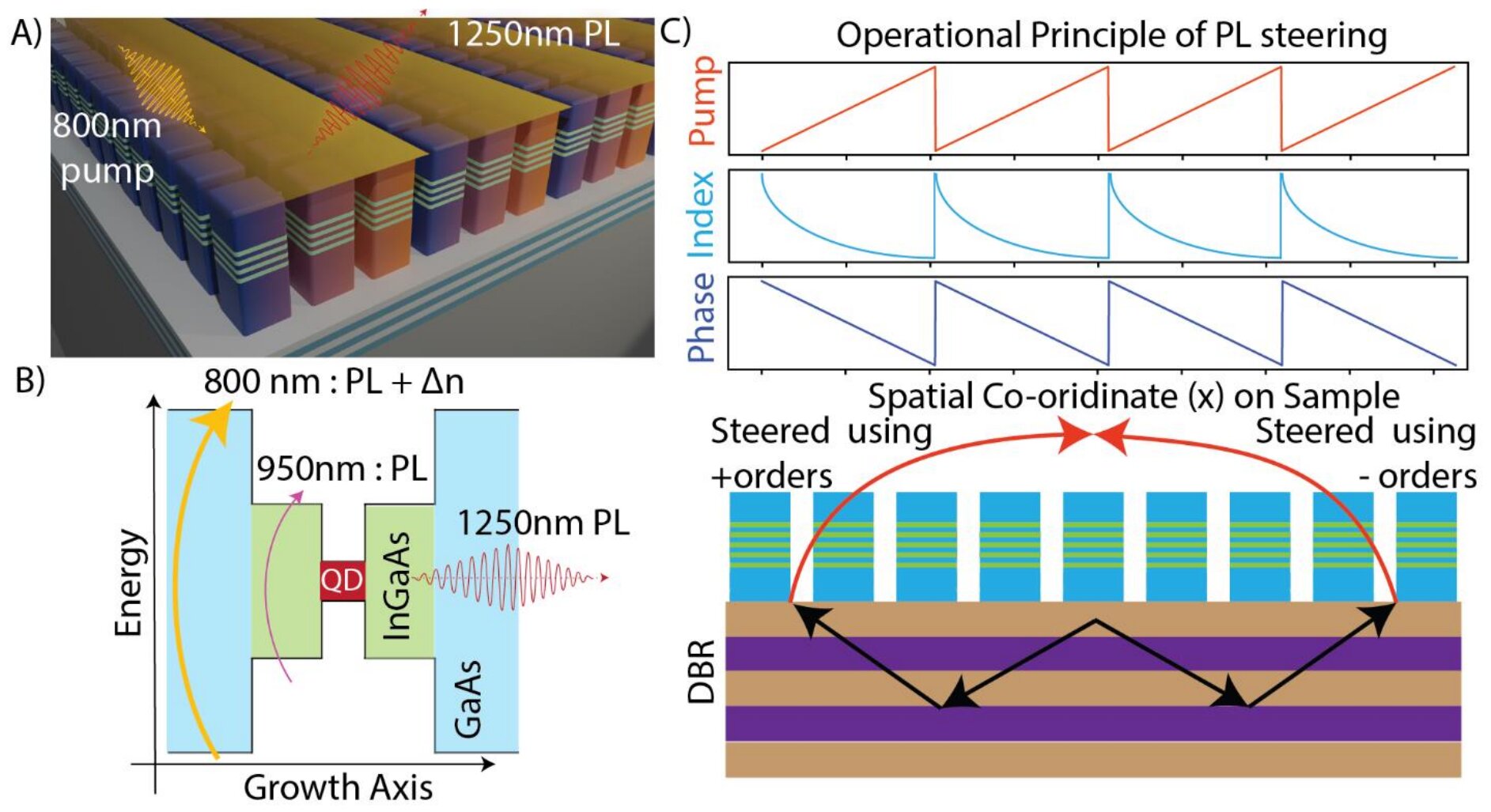
Researchers at Sandia National Laboratories have demonstrated the ability to dynamically steer light pulses from incoherent light sources using artificially structured materials called metasurfaces, made from tiny building blocks of semiconductors called meta-atoms that can be designed to reflect light very efficiently. This breakthrough could allow low-power, relatively inexpensive sources like LEDs or flashlight bulbs to replace more powerful laser beams in new technologies such as holograms, remote sensing, self-driving cars, and high-speed communication.