Tag

Quantum Simulation

All articles tagged with #quantum simulation

Analog and Digital Technologies Compete to Simulate Quantum Reality

Originally Published 4 months ago — by Quanta Magazine

Featured image for Analog and Digital Technologies Compete to Simulate Quantum Reality
Source: Quanta Magazine

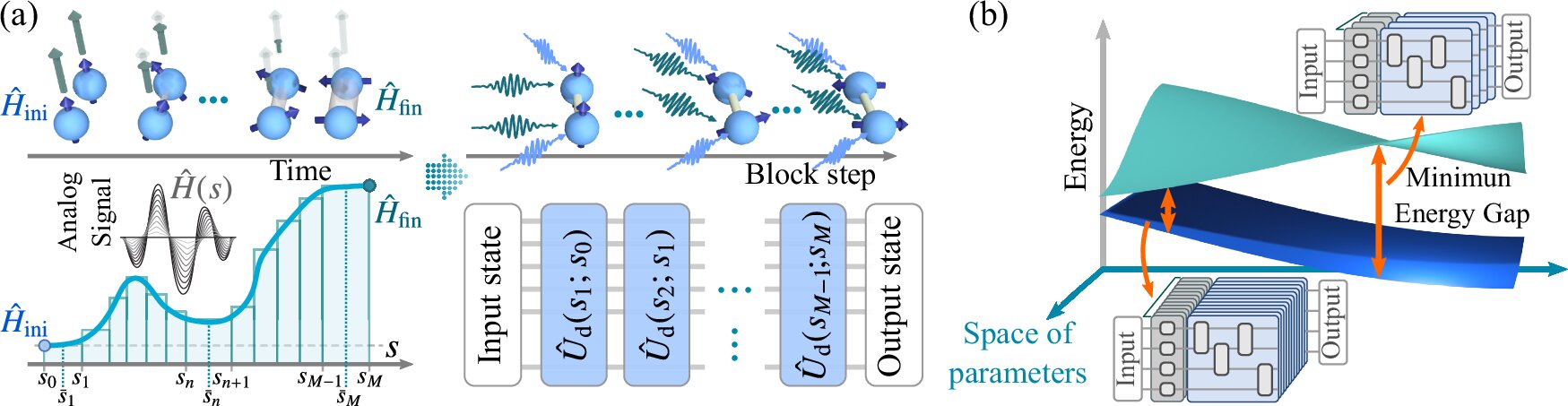
Recent advances in both analog and digital quantum simulations are paving the way for quantum computers to model complex physical phenomena beyond classical capabilities, with efforts focusing on simulating quantum fields, particles, and forces like electromagnetism and the strong force, using innovative approaches such as qubits, qudits, and analog systems, aiming to unlock mysteries of the universe and develop new materials.

Rydberg Atom Lattices Reveal Quantum Spin Liquid Topology

Originally Published 4 months ago — by Phys.org

Featured image for Rydberg Atom Lattices Reveal Quantum Spin Liquid Topology
Source: Phys.org

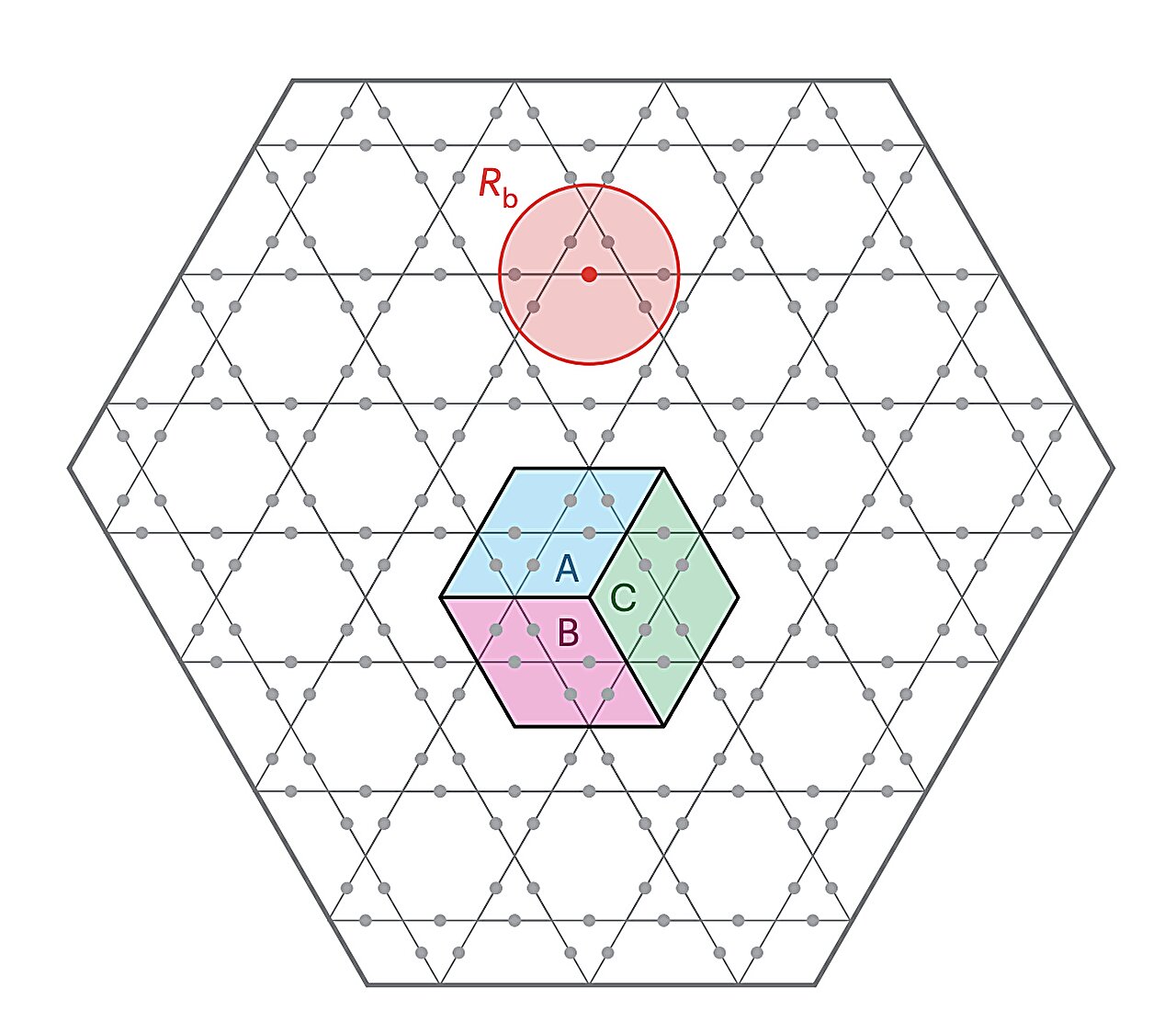
Researchers at EPFL developed a new numerical approach using Rydberg atom lattices to simulate and predict the properties of quantum spin liquids, including topological entanglement entropy, enabling better understanding of these complex quantum states without relying on approximations.

Quantum Computer Demonstrates Zero-Temperature Symmetry Breaking

Originally Published 6 months ago — by Phys.org

Featured image for Quantum Computer Demonstrates Zero-Temperature Symmetry Breaking
Source: Phys.org

An international team successfully used a superconducting quantum processor to simulate spontaneous symmetry breaking at zero temperature, demonstrating quantum computing's potential to explore complex physical phenomena with over 80% fidelity, and providing new insights into phase transitions and quantum entanglement.

Innovative Method to Test Landauer's Principle in Quantum Many-Body Systems

Originally Published 6 months ago — by Phys.org

Featured image for Innovative Method to Test Landauer's Principle in Quantum Many-Body Systems
Source: Phys.org

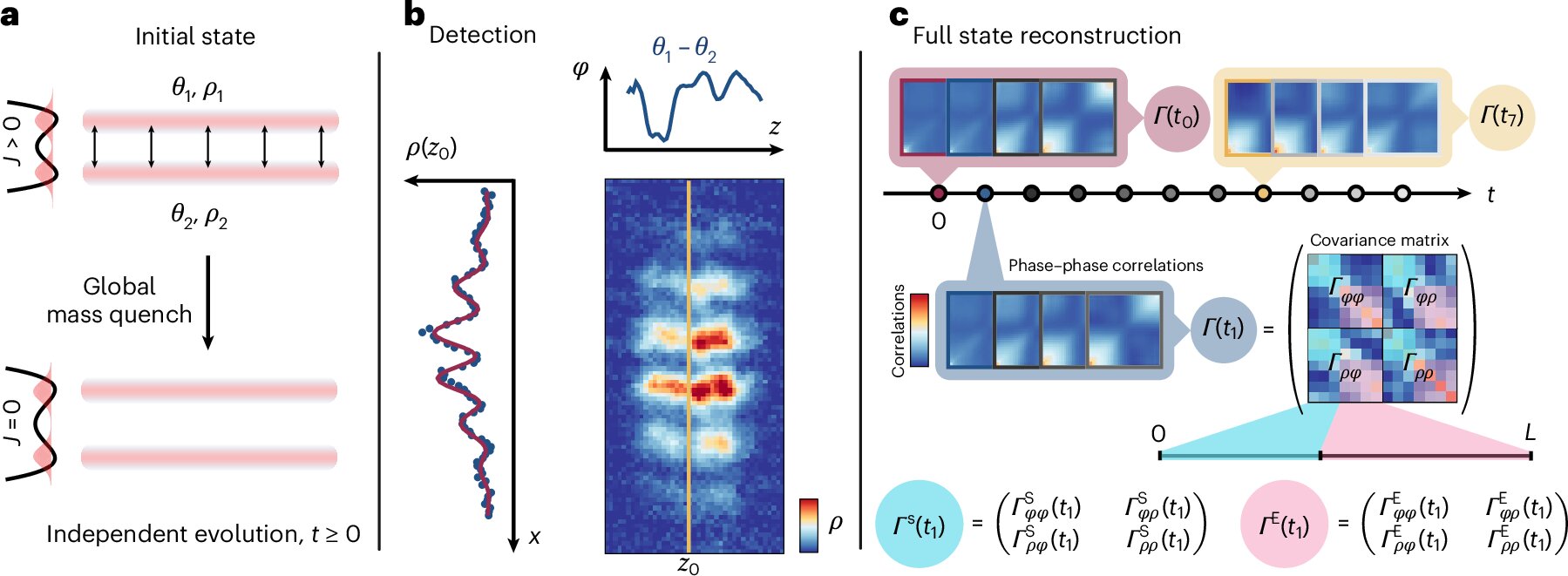
Researchers have experimentally extended Landauer's principle to quantum many-body systems using ultracold atoms and quantum field simulations, providing new insights into the relationship between information erasure and heat dissipation in quantum regimes.

"Resolving the Pseudogap Debate: Quantum Simulator Unveils New Insights in Fermi Gases"

Originally Published 1 year ago — by South China Morning Post

Featured image for "Resolving the Pseudogap Debate: Quantum Simulator Unveils New Insights in Fermi Gases"
Source: South China Morning Post

Chinese scientists from the University of Science and Technology of China have used a quantum simulator to visualize and quantify a phenomenon called a "pairing pseudogap" within a model gas, resolving a two-decade-old debate in physics. This breakthrough could lead to a better understanding of high-temperature superconductors and pave the way for practical applications of superconductivity. The team's findings, published in the journal Nature, could be a significant step towards using quantum simulations to solve important physical problems and uncover the key to practical superconductivity.

Advancements in Quantum Computing: Entangling Individual Molecules

Originally Published 2 years ago — by EurekAlert

Featured image for Advancements in Quantum Computing: Entangling Individual Molecules
Source: EurekAlert

Physicists at Princeton University have successfully entangled individual molecules for the first time, a breakthrough that has significant implications for quantum information processing. Quantum entanglement allows molecules to remain correlated and interact simultaneously, even when separated by large distances. This achievement opens up possibilities for applications such as quantum computers, quantum simulators, and quantum sensors. The researchers used a carefully controlled experiment involving laser cooling and optical tweezers to manipulate and entangle the molecules. This research demonstrates the potential of molecules as a viable platform for quantum science.

Unveiling Quantum Simulation's Entanglement Exploration and Uncharted Phenomena

Originally Published 2 years ago — by Nature.com

Featured image for Unveiling Quantum Simulation's Entanglement Exploration and Uncharted Phenomena
Source: Nature.com

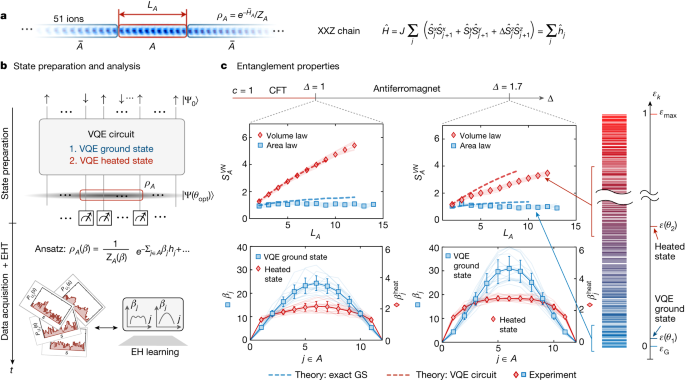
Researchers are exploring large-scale entanglement in quantum simulation, studying the properties of entanglement Hamiltonians and their applications in lattice models and experiments. They investigate the dynamics and behavior of entanglement in various quantum systems, including long-range quantum magnets, trapped ions, Rydberg arrays, and programmable quantum simulators. The study of entanglement Hamiltonians provides insights into the entanglement structure and correlations in many-body systems, paving the way for advancements in quantum information processing and quantum technologies.

"Unlocking the Mysteries of Quantum Phenomena with a Revolutionary Tool"

Originally Published 2 years ago — by Phys.org

Featured image for "Unlocking the Mysteries of Quantum Phenomena with a Revolutionary Tool"
Source: Phys.org

Researchers at the University of Innsbruck and the Institute of Quantum Optics and Quantum Information have developed a new approach to study and understand entanglement in quantum materials. By using a quantum simulator with 51 particles, they were able to recreate a real material and observe effects that were previously only described theoretically. The researchers developed a more efficient method to extract entanglement information from large quantum systems with fewer measurements. They used temperature profiles to determine the degree of entanglement, with "hot" particles indicating strong interaction with the environment and "cold" particles indicating weak interaction. This breakthrough opens the door to studying a new class of physical phenomena and testing new theories using quantum simulators.

"Unleashing Quantum Power: Physicists Harness Imperfect Crystals' Hidden Potential"

Originally Published 2 years ago — by SciTechDaily

Featured image for "Unleashing Quantum Power: Physicists Harness Imperfect Crystals' Hidden Potential"
Source: SciTechDaily

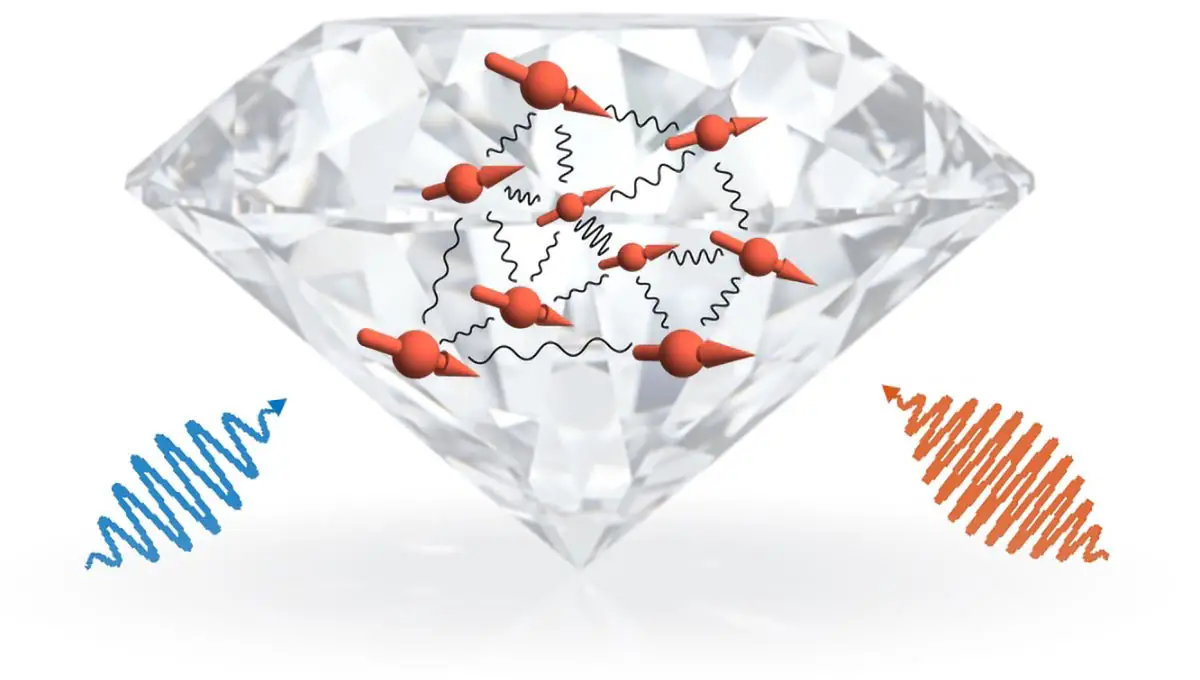
Physicists at Washington University in St. Louis have made significant progress in turning diamonds into quantum simulators by bombarding them with nitrogen atoms to create flaws in the crystal structure. These imperfections can be filled with electrons that possess quantum properties, allowing for the measurement and manipulation of quantum systems. The researchers demonstrated the feasibility of directly simulating complex quantum dynamics using a controllable quantum system, which is difficult to achieve with classical computers. The diamond-based system operated at room temperature and maintained stability by preventing thermalization. This breakthrough opens up possibilities for studying quantum physics, developing sensitive quantum sensors, and exploring interdisciplinary collaborations.

"Physicists Achieve Breakthrough in Simulating Super Diffusion with Quantum Leap"

Originally Published 2 years ago — by SciTechDaily

Featured image for "Physicists Achieve Breakthrough in Simulating Super Diffusion with Quantum Leap"
Source: SciTechDaily

Physicists at Trinity College Dublin, in collaboration with IBM, have successfully simulated super diffusion in a system of interacting quantum particles on a 27-qubit quantum computer. This breakthrough opens up possibilities for deeper insights into condensed matter physics and materials science. The research, published in the journal NPJ Quantum Information, demonstrates the potential of quantum computing in both commercial and fundamental physics inquiries. The team's work focused on simulating the long-time behavior of spin excitations in a Heisenberg chain, revealing the occurrence of super-diffusion governed by the Kardar-Parisi-Zhang equation.

Advancements in Quantum Computing and Photon Manipulation Revolutionize Optical Communication

Originally Published 2 years ago — by Phys.org

Featured image for Advancements in Quantum Computing and Photon Manipulation Revolutionize Optical Communication
Source: Phys.org

Researchers at Duke University have used a quantum simulator, developed from research in quantum computing, to observe a quantum effect called a conical intersection in the way light-absorbing molecules interact with incoming photons. This observation method addresses a fundamental question in chemistry and provides insights into processes such as photosynthesis and vision. The results demonstrate how advances in quantum computing are being used to investigate fundamental science.

"Revolutionary Chessboard Method Unleashes Quantum Dot System's Potential"

Originally Published 2 years ago — by Phys.org

Featured image for "Revolutionary Chessboard Method Unleashes Quantum Dot System's Potential"
Source: Phys.org

Researchers from Delft have developed a chessboard-like method to address multiple quantum dots using a combination of horizontal and vertical lines, enabling the operation of the largest gate-defined quantum dot system to date. This approach is a significant step towards scalable quantum systems for practical quantum technology. The method reduces the number of control lines required for addressing qubits, making it more feasible to scale up the number of qubits in quantum computers. Additionally, the researchers have achieved high-quality qubits with a 99.992% fidelity, opening up possibilities for quantum simulation using quantum dot systems.

Quantum Computer Simulates Super Diffusion

Originally Published 2 years ago — by Phys.org

Featured image for Quantum Computer Simulates Super Diffusion
Source: Phys.org

Trinity College Dublin, in collaboration with IBM Dublin, has successfully simulated super diffusion in a system of interacting quantum particles on a quantum computer. This achievement marks a significant step towards performing complex quantum transport calculations on quantum hardware, which could provide new insights in condensed matter physics and materials science. The research, conducted as part of the TCD-IBM predoctoral scholarship program, utilized a 27-qubit quantum computer located in IBM's lab in New York and programmed remotely from Dublin. Quantum simulation allows for the efficient description of complex quantum systems, overcoming the limitations of classical computers. The team focused on simulating the long-time behavior of spin excitations in a Heisenberg chain, observing super-diffusive transport governed by the Kardar-Parisi-Zhang equation.

"Groundbreaking Discovery: Rydberg Moiré Excitons Unveiled by Scientists"

Originally Published 2 years ago — by Phys.org

Featured image for "Groundbreaking Discovery: Rydberg Moiré Excitons Unveiled by Scientists"
Source: Phys.org

Scientists have discovered Rydberg moiré excitons, which are highly excited Coulomb-bound states of electron-hole pairs trapped in a monolayer semiconductor adjacent to small-angle twisted bilayer graphene. The researchers used low-temperature optical spectroscopy measurements to observe the Rydberg moiré excitons and demonstrated a novel method of manipulating them. This discovery holds promise for applications in sensing, quantum optics, and quantum simulation, and may provide new opportunities for realizing Rydberg-Rydberg interactions and coherent control of Rydberg states in quantum information processing and quantum computation.