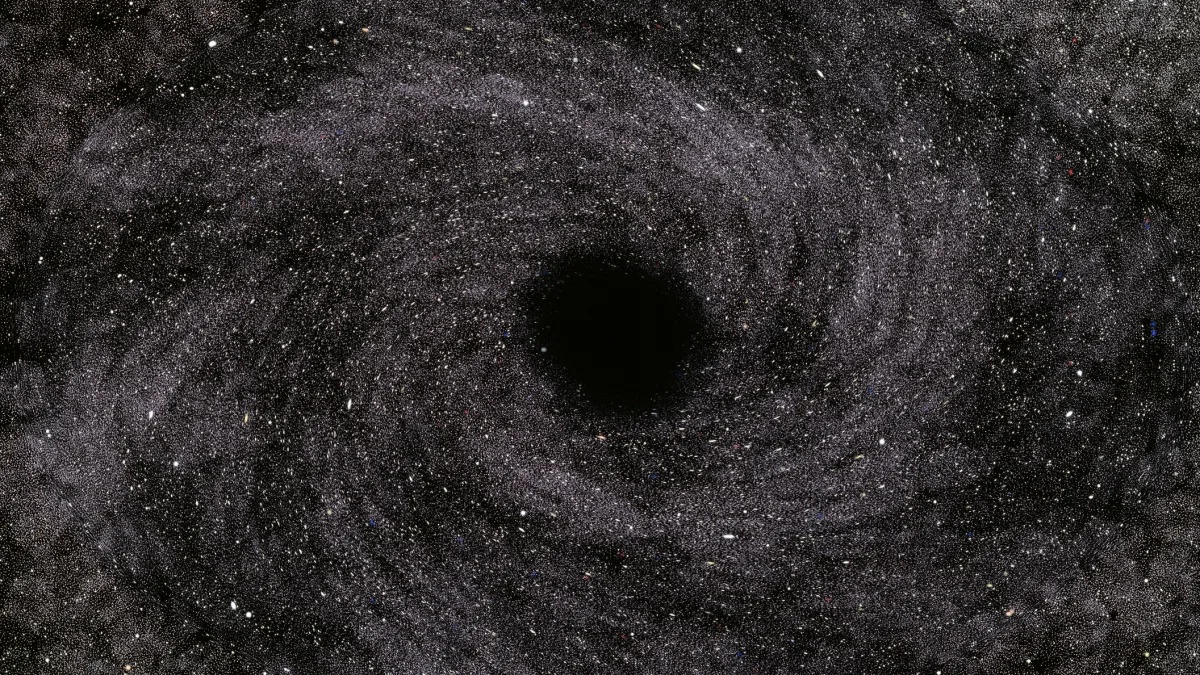
The vacuum of space is not truly empty. While the density of interstellar space is extremely low, it still contains charged particles, hydrogen atoms, and dust. Even in the cosmic voids, the emptiest regions of the universe, there are lightweight particles called neutrinos and the cosmic microwave background radiation. Additionally, quantum fields give rise to particles and have an intrinsic energy known as vacuum energy. So, even if one were to nullify the vacuum energy, they would still be surrounded by space itself, which may have its own existence. The question of whether true nothingness can exist remains unanswered.
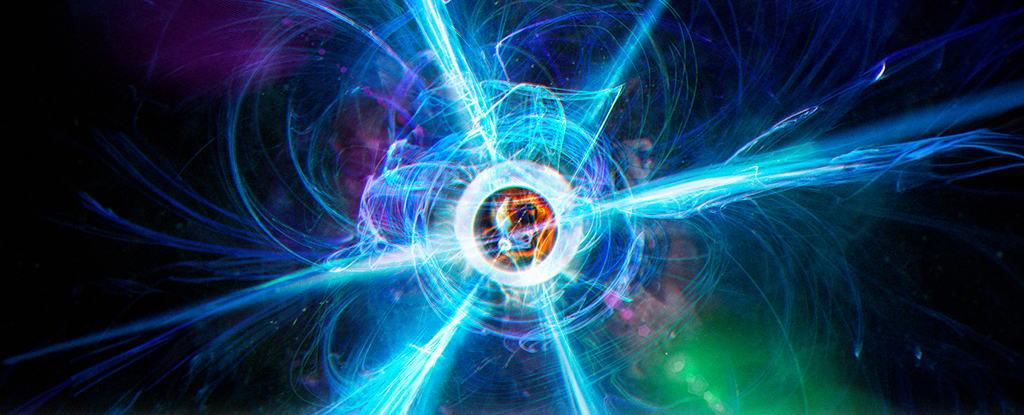
Physicists have observed the formation of "Alice rings," strange loops in the fabric of reality, in a super cold gas. These circular structures, named after Alice from "Wonderland," are a type of one-sided magnetism known as topological monopoles. Monopoles can emerge in quantum fields and can decay into other types, including Alice strings that twist into one-sided magnetic poles and form loops called Alice rings. The observation of Alice rings provides valuable insights into the unstable nature of quantum fields and could contribute to a deeper understanding of the universe, matter, and information.
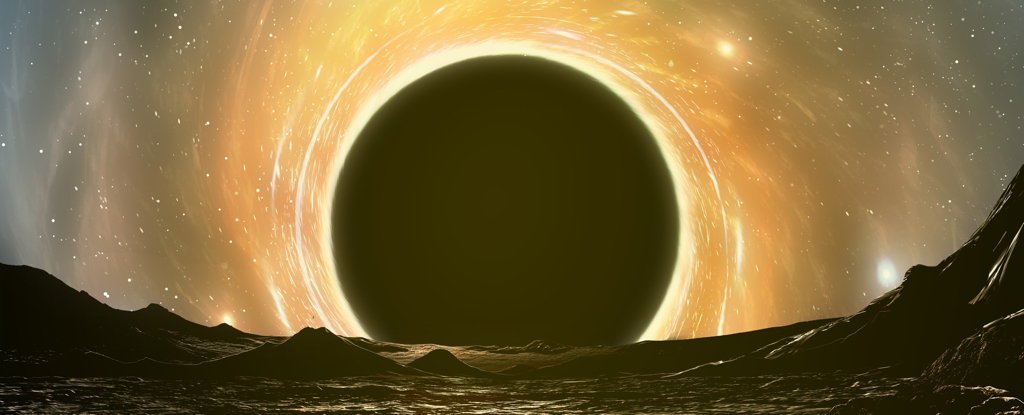
New research by astrophysicists from Radboud University in the Netherlands suggests that a steep enough slope in the curvature of space-time could produce radiation similar to Hawking radiation, meaning that the Universe is very slowly evaporating. This means that objects without an event horizon, such as the remnants of dead stars and other large objects in the Universe, also have this sort of radiation. After a very long period, everything in the Universe will eventually evaporate, just like black holes.
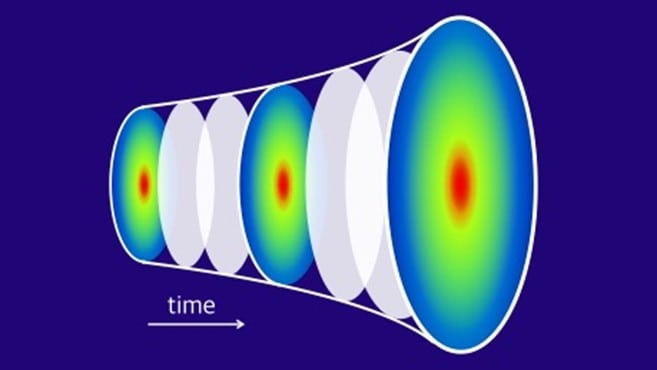
Researchers at Heidelberg University have used a Bose-Einstein condensate (BEC) to simulate an expanding universe and certain quantum fields within it, allowing for the study of important cosmological scenarios. The BEC was used as the "universe" part of the simulator, and phonons, quantized packets of sound energy moving through the fluid, served as analogues to photons and other quantum fields fluctuating in the actual universe. The researchers hope to use these tools to peer back into the earliest moments of the universe and probe the hypothesis that the universe’s large-scale structure has a quantum origin.