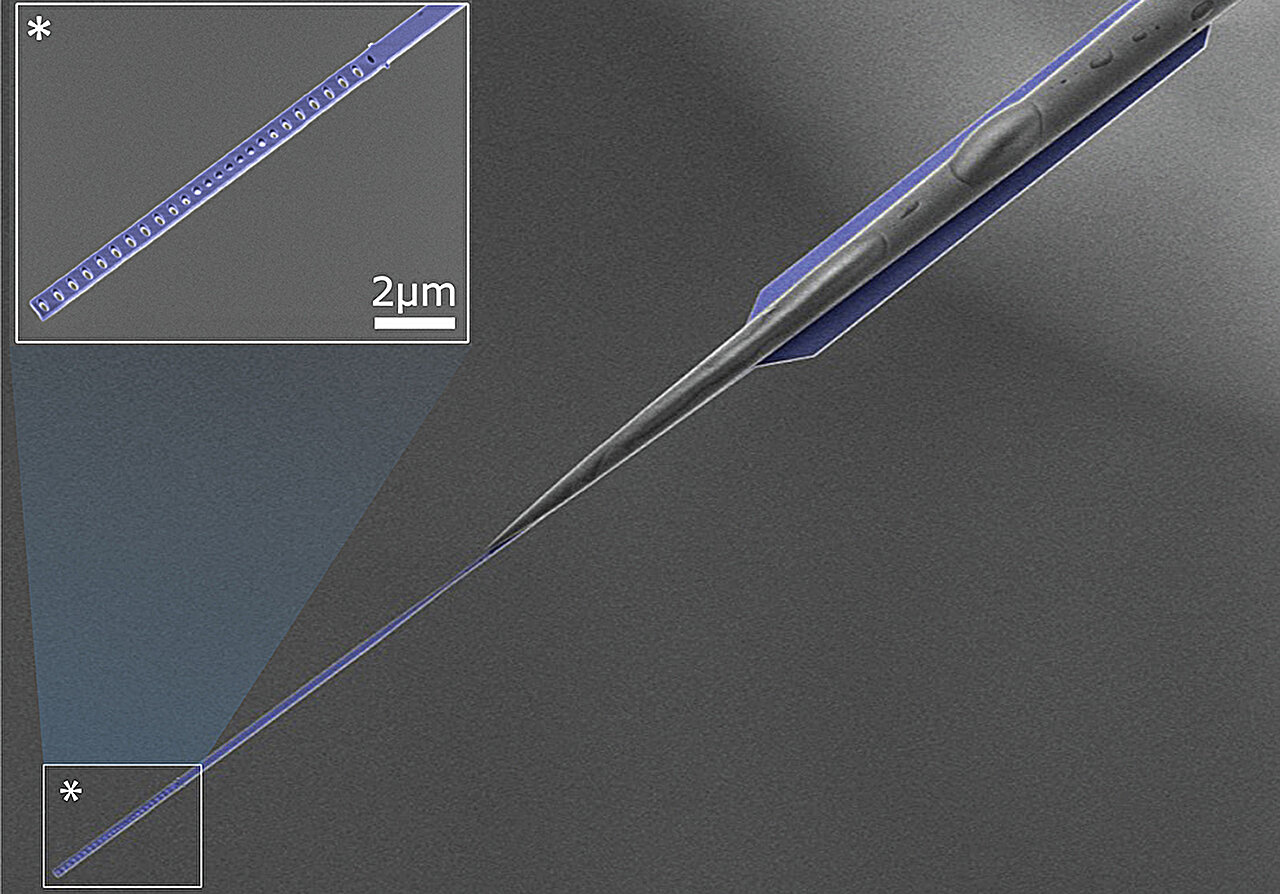
Researchers at the University of Queensland have developed the world's smallest wave tank on a chip, using superfluid helium to observe unique nonlinear wave behaviors, including solitons and shock fronts, with potential applications in understanding complex fluid phenomena and advancing fluid dynamics research.
MIT researchers confirmed the existence of 'second sound,' a wave-like heat transfer in superfluid quantum gases, where heat pulses travel like sound rather than diffusing, revealing new insights into energy flow in exotic states of matter and potential applications in technology and astrophysics.
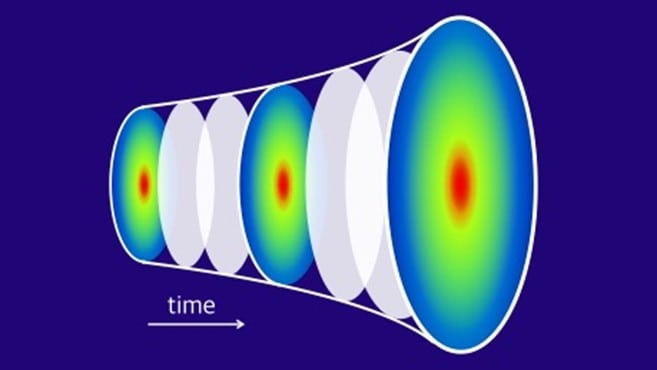
Researchers at Heidelberg University have used a Bose-Einstein condensate (BEC) to simulate an expanding universe and certain quantum fields within it, allowing for the study of important cosmological scenarios. The BEC was used as the "universe" part of the simulator, and phonons, quantized packets of sound energy moving through the fluid, served as analogues to photons and other quantum fields fluctuating in the actual universe. The researchers hope to use these tools to peer back into the earliest moments of the universe and probe the hypothesis that the universe’s large-scale structure has a quantum origin.