Tag

Bose Einstein Condensates

All articles tagged with #bose einstein condensates

Unveiling the Secrets of Spin-Orbit Coupled Bose-Einstein Condensates

Originally Published 2 years ago — by Phys.org

Featured image for Unveiling the Secrets of Spin-Orbit Coupled Bose-Einstein Condensates
Source: Phys.org

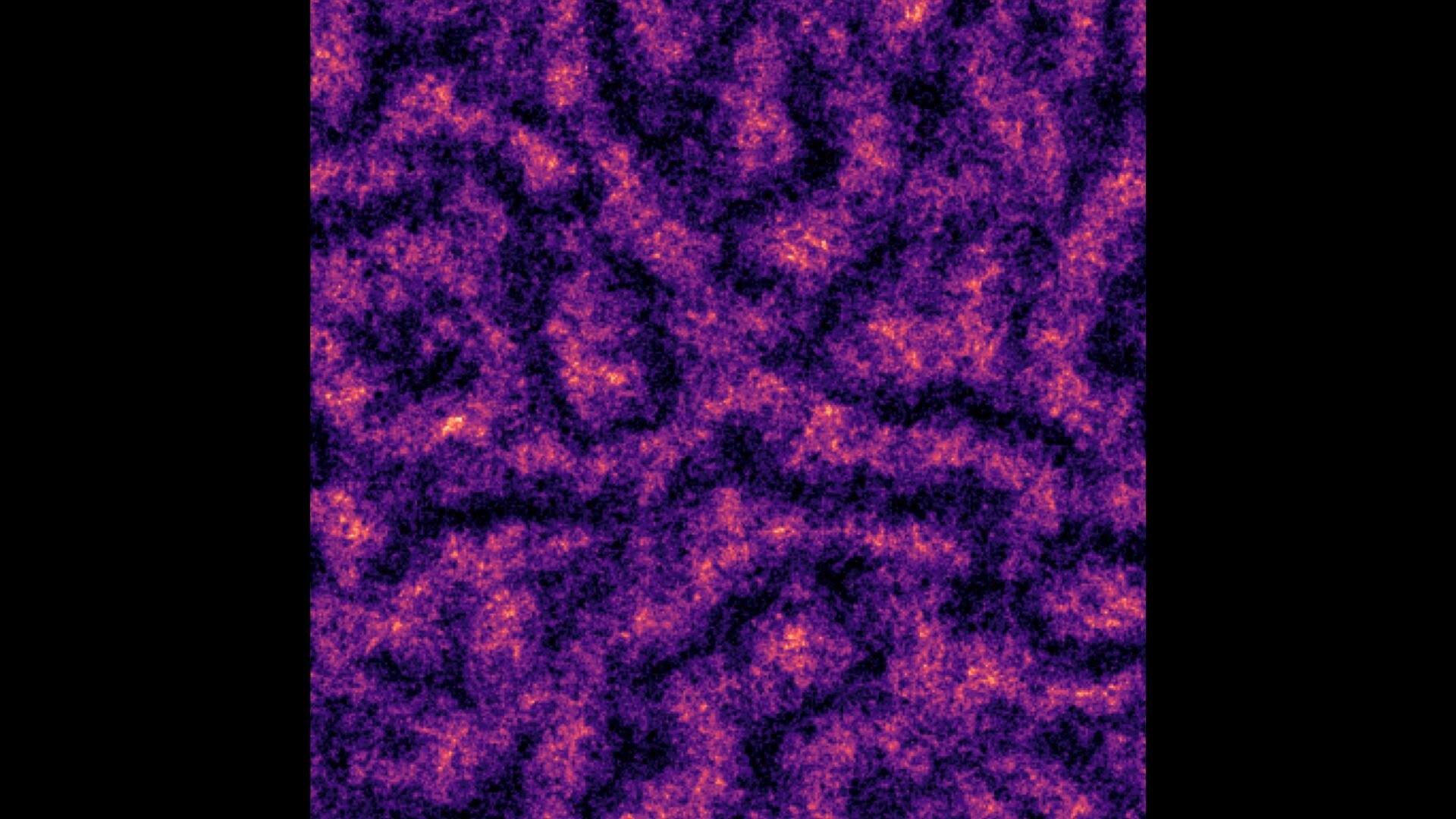
Researchers from the University of California, Santa Barbara, have discovered a spin microemulsion phase in two-dimensional systems of spinor Bose-Einstein condensates. This phase transition is characterized by the loss of superfluidity, complex pseudospin textures, and the emergence of topological defects. The spin microemulsion phase occurs when the motion of each atom is coupled to its internal spin state, resulting in a spin-orbit coupling effect. The findings provide insights into the behavior of two-dimensional systems and have implications for both quantum physics and soft matter systems. Future research will focus on investigating the thermodynamic stability of the spin microemulsion and its response to different system parameters.
Quantum Degenerate Gas Unveils Intricate Many-Body Chemical Reactions

Originally Published 2 years ago — by Phys.org

Featured image for Quantum Degenerate Gas Unveils Intricate Many-Body Chemical Reactions
Source: Phys.org

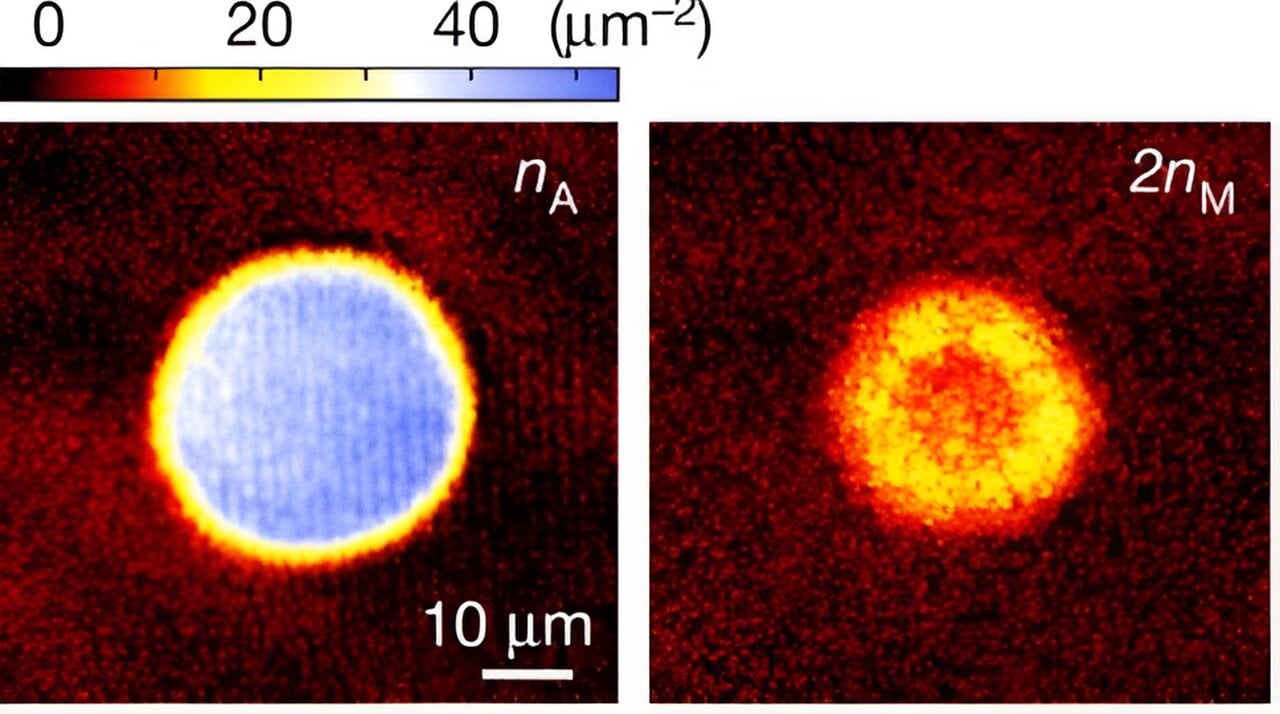
Researchers at the University of Chicago have successfully observed many-body chemical reactions in a quantum degenerate gas, marking a significant step towards understanding and controlling chemical reactions at the quantum level. Using Bose-condensed cesium atoms, the team observed coherent, collective reactions between atoms and molecules, demonstrating macroscopic quantum coherence and Bosonic enhancement. These "super reactions" resemble superconductivity and laser functioning, but with molecules instead of electrons or photons. The findings provide insights into the dynamics of quantum many-body chemical reactions and offer potential applications in precision metrology, quantum information, and quantum control of chemical reactions.

Scaling up the Einstein-Podolsky-Rosen paradox with massive tests.

Originally Published 2 years ago — by Phys.org

Featured image for Scaling up the Einstein-Podolsky-Rosen paradox with massive tests.
Source: Phys.org

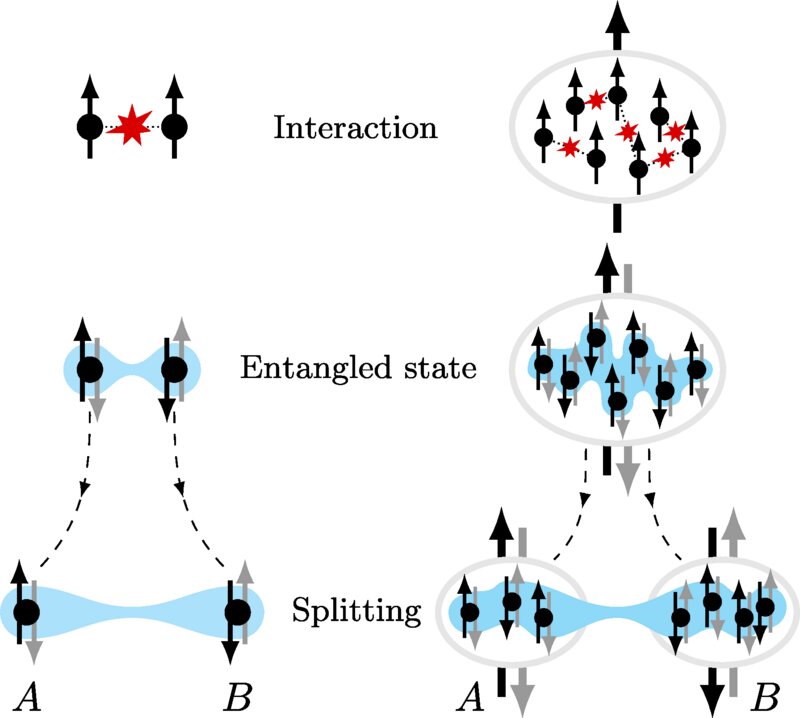
Physicists at the University of Basel have shown that the Einstein-Podolsky-Rosen paradox still holds even when scaled up to a larger system using Bose-Einstein condensates. The experiment involved generating a cloud of rubidium-87 atoms, forcing them to become an entangled Bose-Einstein condensate, and then releasing the condensate into two separate clouds where the pseudospins were entangled. The properties of the two clouds could not be correlated in a way attributable to chance, suggesting that the EPR paradox holds even when scaled up. The experiment could serve as a template for conducting other quantum metrology applications.

"New Insights into Dark Matter's Role in Galaxy Formation"

Originally Published 2 years ago — by Phys.org

Featured image for "New Insights into Dark Matter's Role in Galaxy Formation"
Source: Phys.org

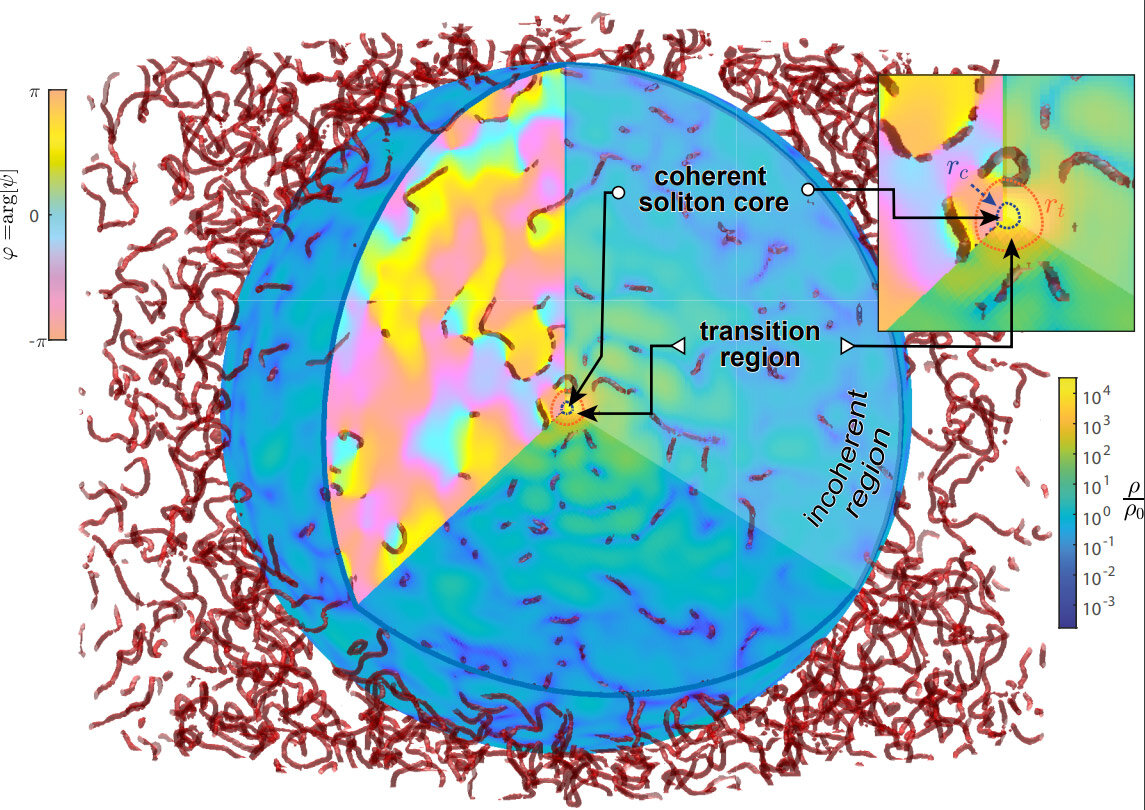
Newcastle University researchers have used insights from ultracold atomic Bose Einstein condensates to analyze the behavior of fuzzy dark matter, a new model for cosmological dark matter. They found that the physical state of the core of fuzzy dark matter halos is the same as that of Bose-Einstein condensates formed in laboratory atomic traps. The fuzzy dark matter surrounding the halo cores is in a turbulent state, with vortices and fluctuations that inhibit coherence across the entire halo. Future research will focus on possible ways to observe such features of fuzzy dark matter, thus placing this model under more detailed observational scrutiny.

Simulating an Expanding Universe in a Quantum Droplet.

Originally Published 2 years ago — by physicsworld.com

Featured image for Simulating an Expanding Universe in a Quantum Droplet.
Source: physicsworld.com

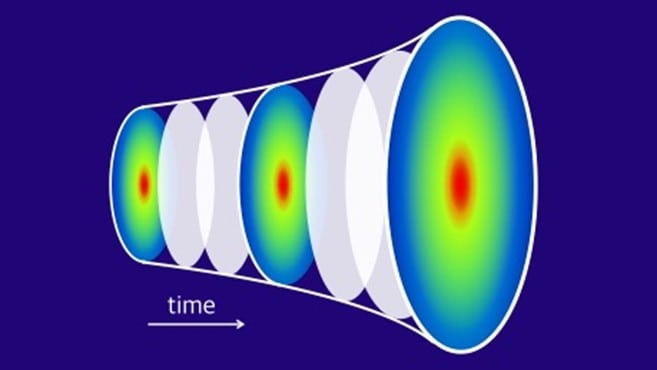
Researchers at Heidelberg University have used a Bose-Einstein condensate (BEC) to simulate an expanding universe and certain quantum fields within it, allowing for the study of important cosmological scenarios. The BEC was used as the "universe" part of the simulator, and phonons, quantized packets of sound energy moving through the fluid, served as analogues to photons and other quantum fields fluctuating in the actual universe. The researchers hope to use these tools to peer back into the earliest moments of the universe and probe the hypothesis that the universe’s large-scale structure has a quantum origin.