Tag

Quantum Field Theory

All articles tagged with #quantum field theory

science4 months ago

Exploring Zero-Point Energy as a Future Power Source

Zero-point energy is a real quantum phenomenon representing the lowest energy state of a system, but harnessing it for limitless, free energy is currently impossible and often associated with scams. While there is evidence of vacuum energy, extracting usable energy without catastrophic consequences or impractical scales remains beyond our reach, making claims of free energy from zero-point energy false and misleading.

science5 months ago

Mirror Worlds and Hidden Particles: New Insights into Dark Matter

Physicist Stefano Profumo proposes two unconventional theories for the origin of dark matter: one involving a mirror universe with dark particles similar to protons and neutrons, and another suggesting dark matter formed at the cosmic horizon during the universe's rapid expansion after the Big Bang. These hypotheses, based on current physics, offer new avenues for understanding dark matter, which remains undetectable directly but influences gravity across the cosmos.

science7 months ago

Scientists Unveil Simplified Approach to Gravity That Could Revolutionize Physics

Physicists have proposed a new, simpler approach to quantum gravity that reformulates gravity using four interrelated fields similar to those in quantum field theory, avoiding the need for extra dimensions or unknown particles, and aligning with the Standard Model, though it remains in early development and untested experimentally.

science1 year ago

New Model Suggests Dark Matter Originated Pre-Big Bang

A new cosmological model suggests that dark matter was produced during a pre-Big Bang inflationary phase, challenging existing theories that it formed later. This model, called Warm Inflation via ultraviolet Freeze-In (WIFI), posits that dark matter was created through rare interactions in a hot environment during cosmic inflation, rather than being 'inflated away.' The theory, proposed by researchers from Texas, could be tested by upcoming cosmic microwave background experiments, potentially offering new insights into the early universe's evolution.

science1 year ago

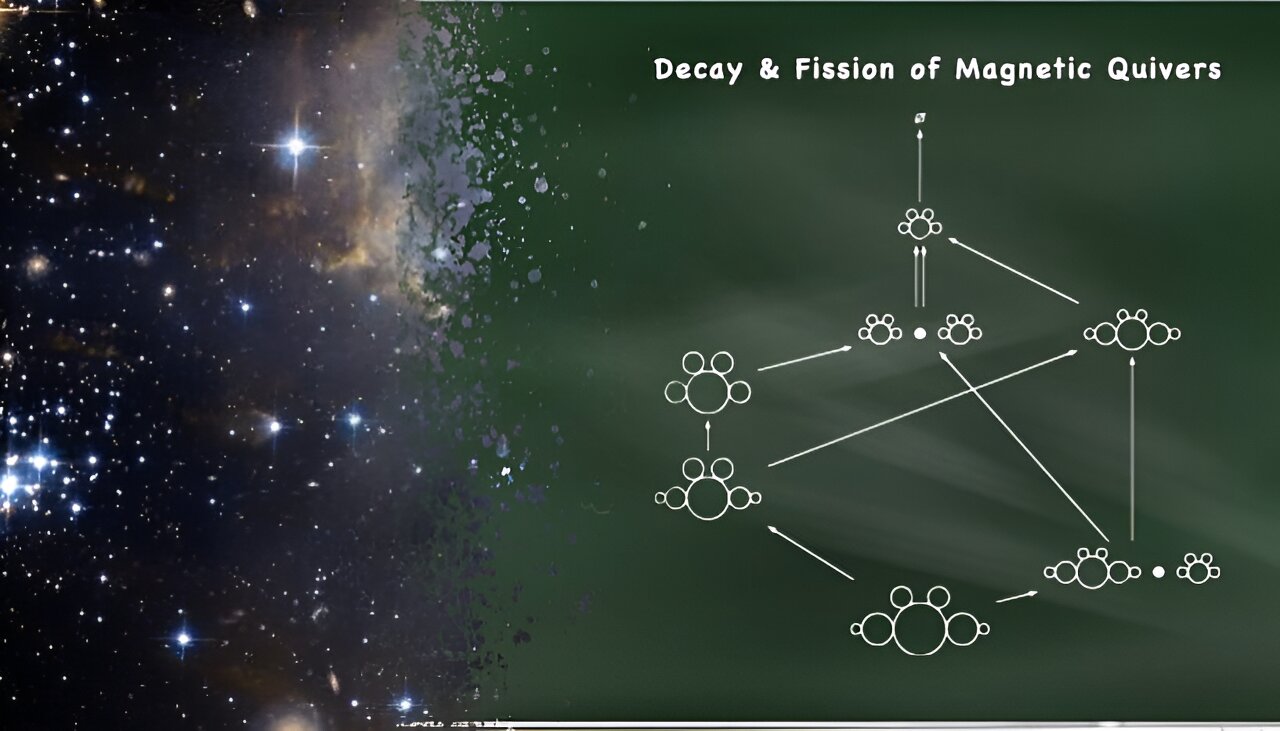
"Magnetic Quivers: Shedding Light on Quantum Structures through Higgs Mechanism"

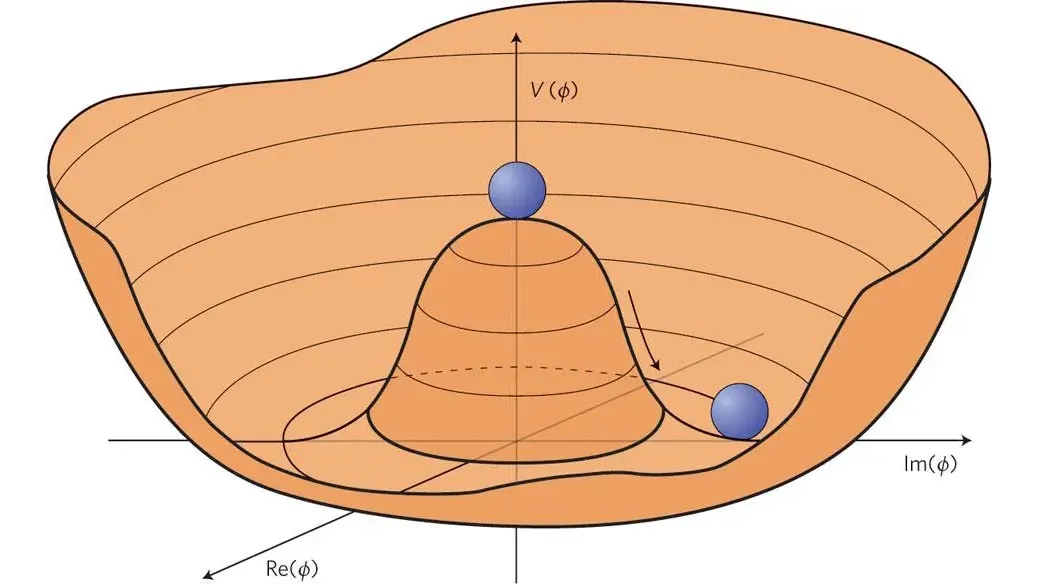
An international research team led by Marcus Sperling has reinterpreted the Higgs mechanism using the concept of magnetic quivers, providing new insights into quantum field theories (QFTs). Their study, published in Physical Review Letters, demonstrates that magnetic quivers can decay or fission, offering a clearer understanding of complex quantum structures and the mass acquisition of elementary particles. This research bridges physics and mathematics, advancing the fundamental understanding of quantum vacua and QFTs.

science1 year ago

"Where Are the Miniature Black Holes from the Big Bang?"

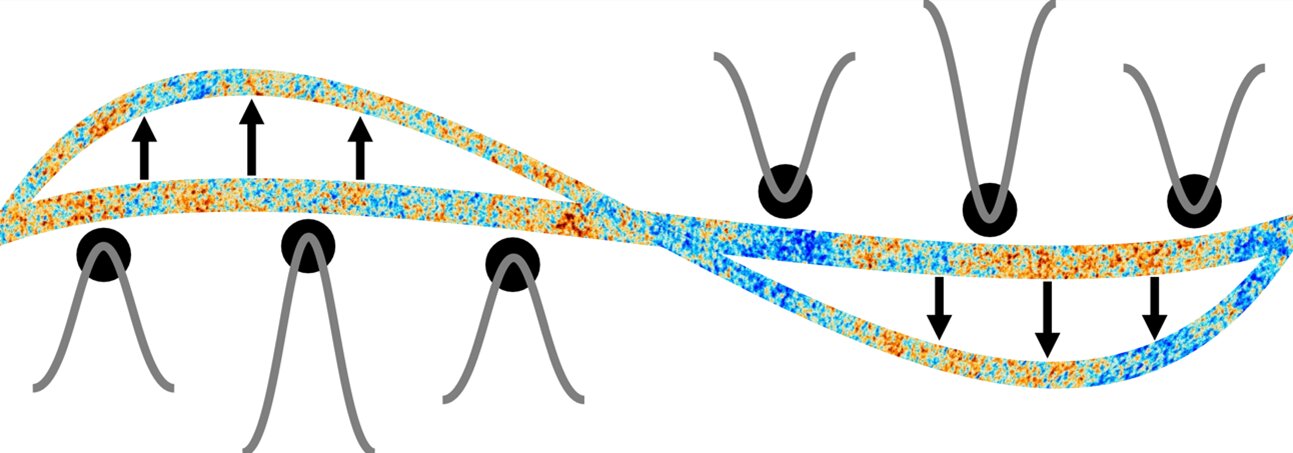
An international team of scientists has applied quantum field theory to the early universe, suggesting that there are far fewer primordial black holes than previously estimated. This finding could rule out these tiny black holes as candidates for dark matter. The research, which combines classical field theory, Einstein's special relativity, and quantum mechanics, indicates that early universe fluctuations could influence large-scale cosmic structures. Future gravitational wave detectors like LISA may help confirm or reject this theory.

science1 year ago

New Model Explains Absence of Early Universe Mini Black Holes

Researchers at the University of Tokyo have developed a new model using quantum field theory to explain the scarcity of miniature black holes in the early universe. Their findings suggest that large amplitude fluctuations on small scales can amplify large-scale fluctuations observed in the cosmic microwave background, leading to fewer primordial black holes than previously thought. This model, which could be verified by upcoming gravitational wave observations, challenges the idea that these black holes are a major component of dark matter.

physics1 year ago

"Exploring Quantum Spin Liquids with Quantum Electrodynamics"

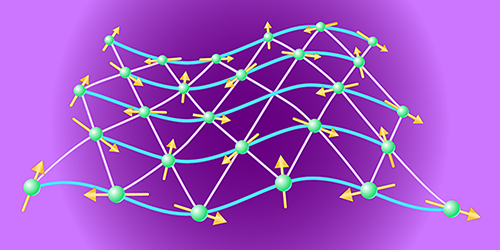
Researchers have found a correspondence between the spectrum of elementary excitations of a quantum spin liquid (QSL) and a quantum field theory, suggesting the possibility of testing particle physics theories with condensed-matter systems. The study focused on a well-studied QSL model, the Heisenberg J1 − J2 triangular antiferromagnet, and found a one-to-one correspondence with quantum electrodynamics in two spatial dimensions plus time (QED3). This discovery opens the prospect of detecting hypothetical elementary particles, such as magnetic monopoles, in a real QSL, and further research is needed to understand how QED3 excitations manifest in the physical response of the frustrated antiferromagnet and its stability to physical perturbations.

science1 year ago

"The Quantum Theory Unveiling the Origin of Our Universe"

Quantum field theory, a fundamental concept in science, explains that all forces and matter are manifestations of the continuous motion of quantum fields. This theory helps to reconcile paradoxes between quantum mechanics and special relativity, shedding light on the origins of the Universe and the role of the inflation field in its rapid expansion. Quantum fluctuations in the inflation field triggered the formation of galaxies, stars, and the fabric of spacetime, leading to the vast cosmic structures observed today. This demonstrates the enduring success of quantum field theory in our quest to understand the cosmos.

physics2 years ago

"Unveiling the Mystery of False Vacuum Decay: New Research Insights"

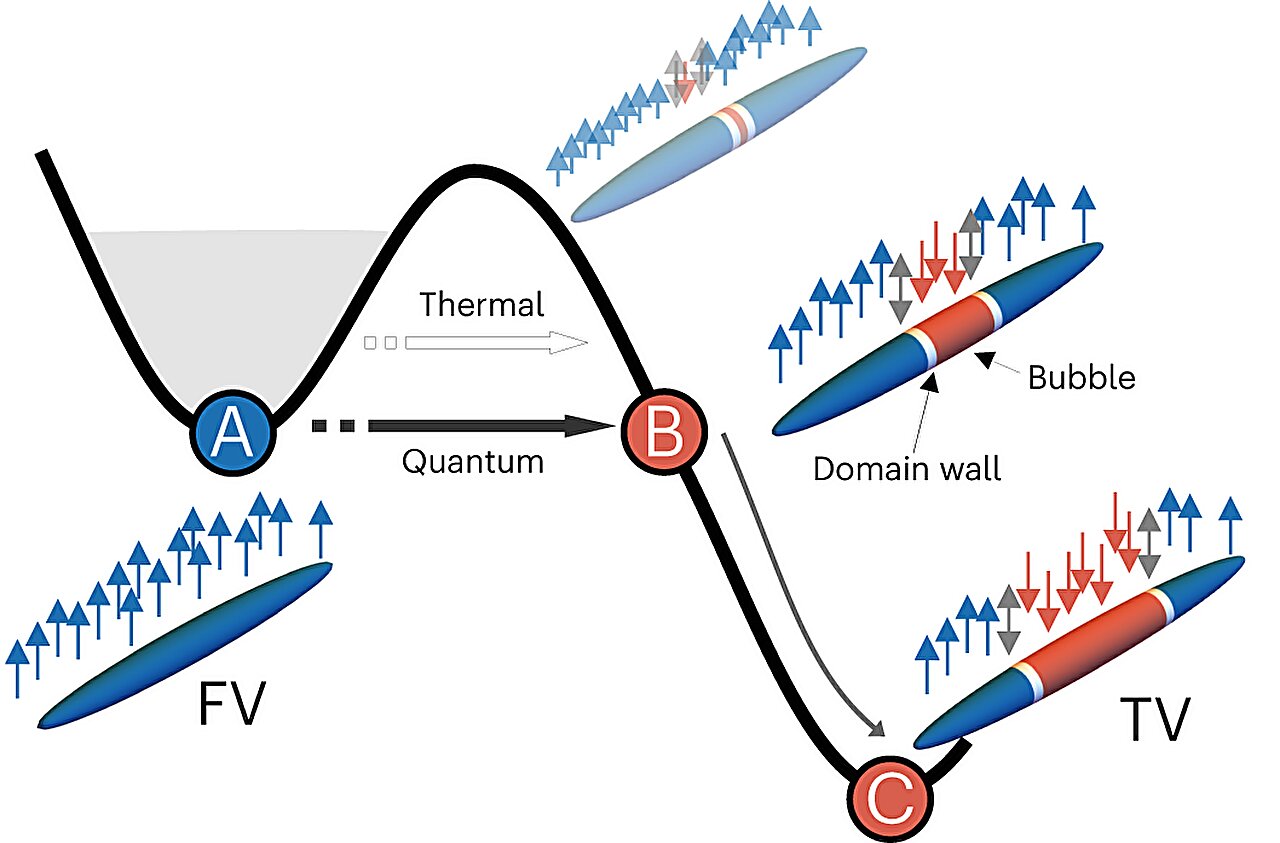
An international research team, with support from Newcastle University, has produced the first experimental evidence of vacuum decay, a phenomenon known as "false vacuum decay," in a carefully controlled atomic system. The experiment, conducted in Italy, observed the formation of bubbles through false vacuum decay in a quantum system, supported by theoretical simulations and numerical models. This groundbreaking research sheds light on the early universe and ferromagnetic quantum phase transitions, with the ultimate goal of exploring vacuum decay at absolute zero temperature driven purely by quantum vacuum fluctuations.

physics2 years ago

"Discovery of Deconfined Quark Matter in Neutron-Star Cores"

An international team of physicists led by Aleksi Vuorinen at the University of Helsinki has used Bayesian inference to conclude that there is an 80–90% likelihood of ultra-dense deconfined quark matter existing in the cores of the most massive neutron stars. This exotic state of matter, which is believed to have dominated the universe in the early moments after the Big Bang, could raise intriguing questions about astrophysical phenomena and the internal structure of neutron stars.