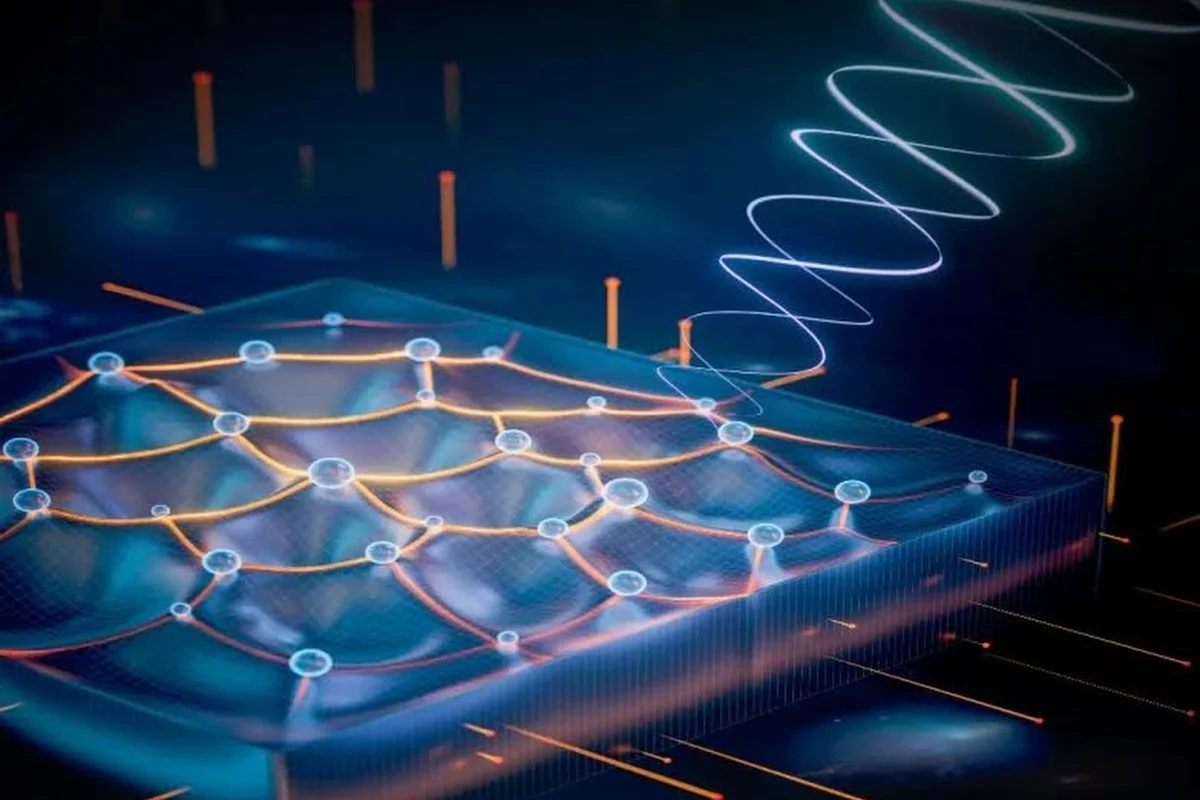
An international team of scientists, led by researchers from Nanjing University, has provided the first experimental evidence hinting at the existence of gravitons, theoretical particles that mediate the force of gravity. By exciting electrons in a semiconductor under extreme conditions, the team observed behavior consistent with predictions about gravitons, marking a significant step towards bridging the gap between quantum mechanics and general relativity. This discovery, published in the journal Nature, opens new avenues for the search for gravitons in laboratory settings and could lead to new insights into the fundamental forces governing the universe.

Scientists from Columbia, Nanjing University, Princeton, and the University of Munster have presented the first experimental evidence of collective excitations with spin called chiral graviton modes (CGMs) in a semiconducting material, bridging the gap between quantum mechanics and Einstein’s theories of relativity. The discovery, published in Nature, could potentially connect high energy physics and condensed matter physics, shedding light on the mysterious nature of gravity. The research, which builds on the legacy of late Columbia professor Aron Pinczuk, marks a significant step toward a better understanding of the universe and its fundamental forces.
Researchers have presented the first experimental evidence of collective excitations with spin called chiral graviton modes (CGMs) in a semiconducting material, marking the first experimental substantiation of the concept of gravitons in a condensed matter system. The discovery was made in a type of condensed matter called a fractional quantum Hall effect (FQHE) liquid, and the ability to study graviton-like particles in the lab could help bridge the gap between quantum mechanics and Einstein's theories of relativity. The findings could potentially connect high energy physics and condensed matter physics, offering new understanding of quantum systems and materials.
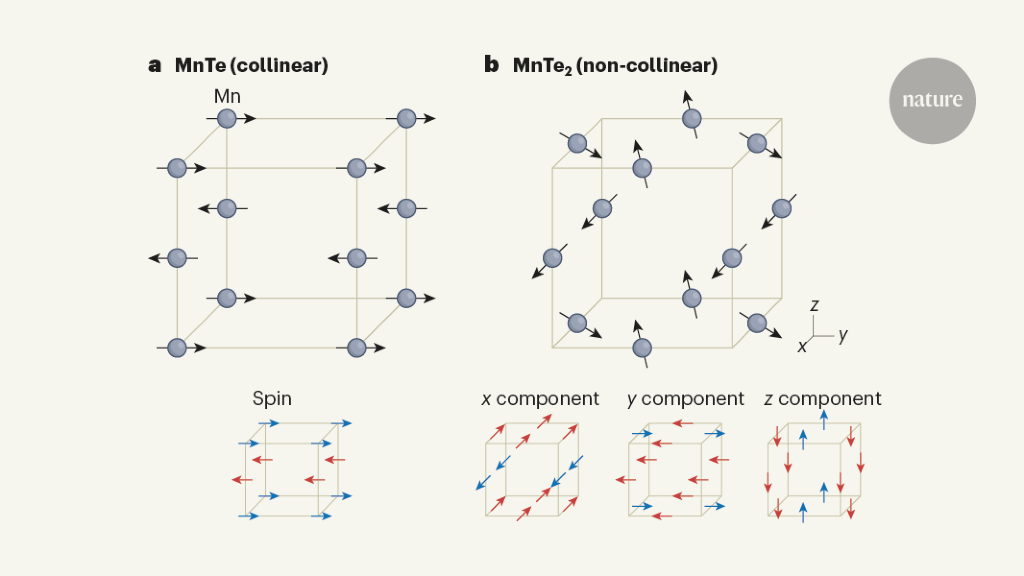
Physicists have discovered a property in altermagnets that further distinguishes them from conventional antiferromagnets, as they have identified spin splitting in materials classified as altermagnets. This spin splitting, which is a key feature of ferromagnetism, has now been experimentally observed in altermagnets, suggesting that these materials could be more advantageous than ferromagnets for certain technological applications.
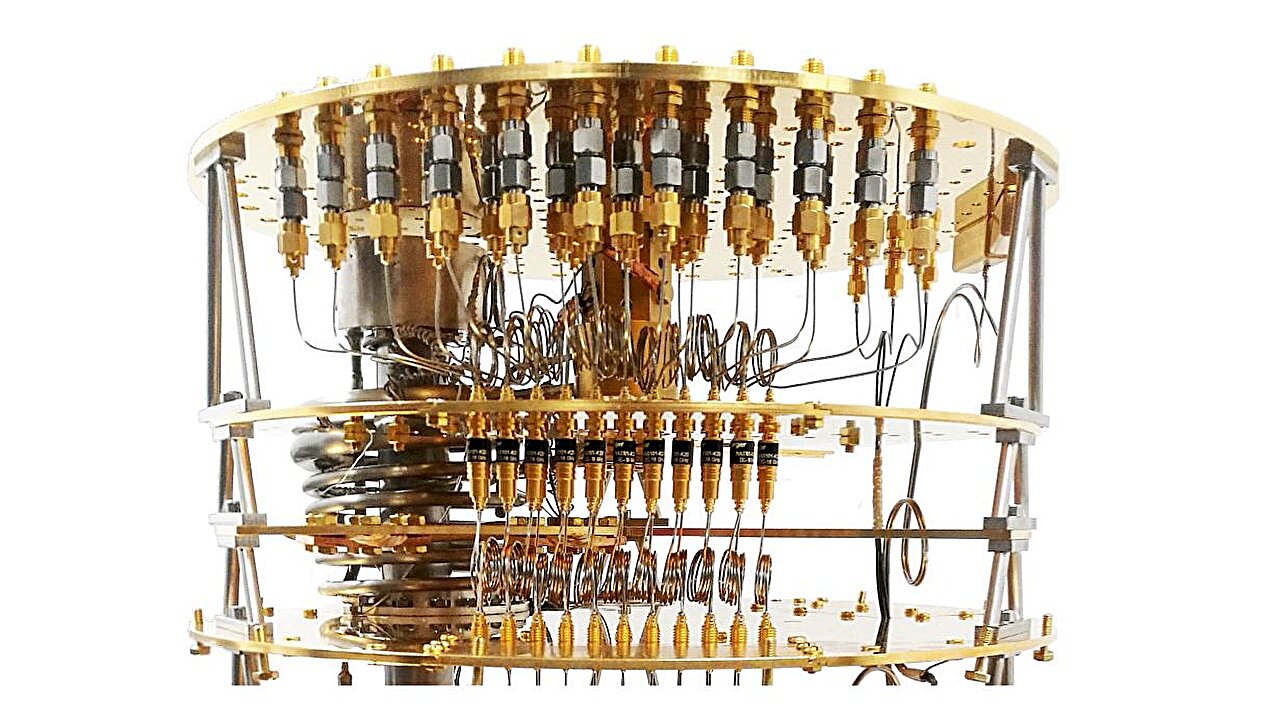
Physicists have discovered that Josephson tunnel junctions, the building blocks of superconducting quantum computers, are more complex than previously thought, with harmonics superimposed on the fundamental mode. This discovery could lead to quantum bits that are two to seven times more stable, potentially reducing errors and bringing us closer to the dream of a fully universal superconducting quantum computer. The researchers support their findings with experimental evidence from multiple laboratories across the globe and propose an extended model including higher harmonics to describe the tunneling current between the two superconductors.
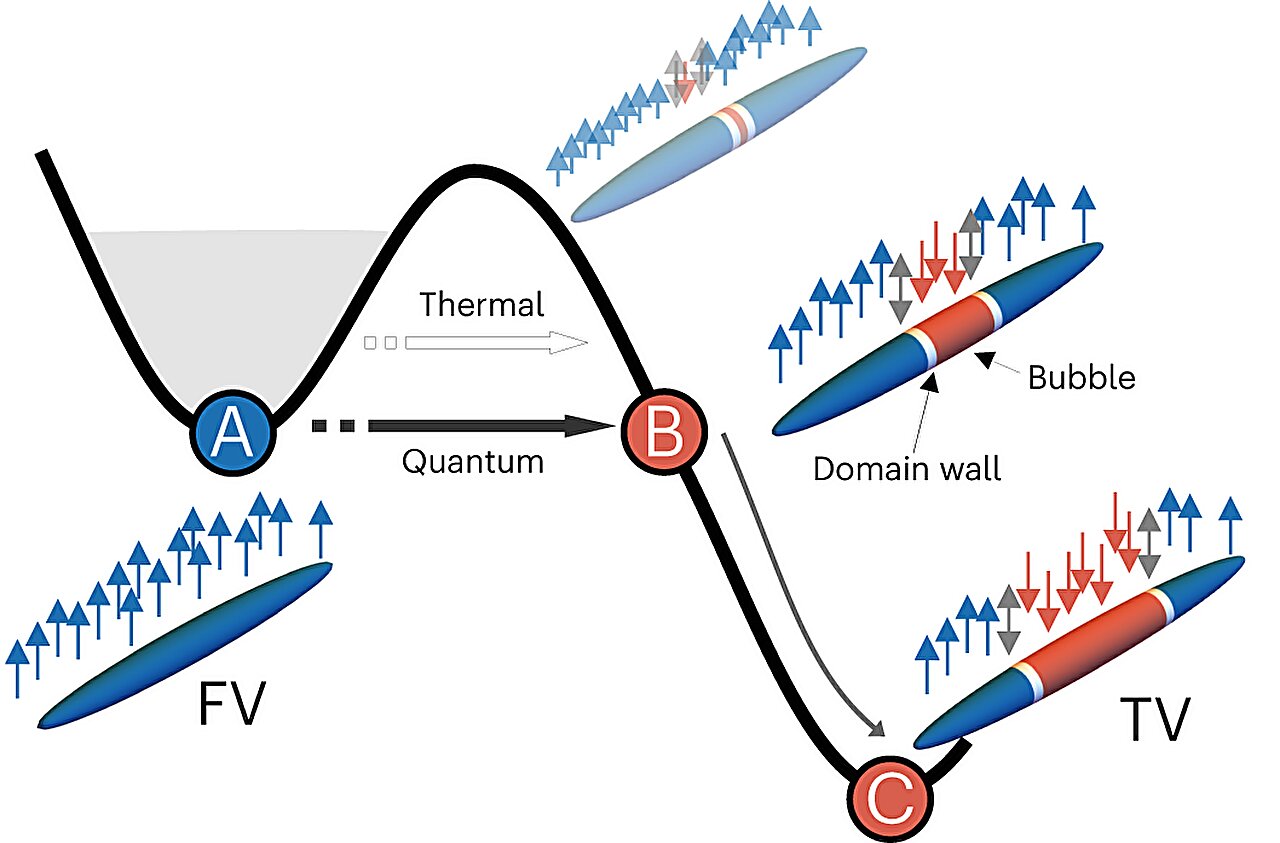
Scientists from Newcastle University, as part of an international team, have produced the first experimental evidence of vacuum decay, a pivotal discovery for understanding the early universe and fundamental physics. This achievement, observed in a supercooled gas near absolute zero, sets the stage for further research in quantum field phenomena and offers new insights into the early universe and ferromagnetic quantum phase transitions. The experiment, published in Nature Physics, provides support for theoretical simulations and numerical models, confirming the quantum field origin of the decay and its thermal activation. This groundbreaking research opens up new avenues in the understanding of the early universe and has the potential to alter the laws of physics, with implications for the creation of space, time, and matter in the Big Bang.
An international research team, with support from Newcastle University, has produced the first experimental evidence of vacuum decay, a phenomenon known as "false vacuum decay," in a carefully controlled atomic system. The experiment, conducted in Italy, observed the formation of bubbles through false vacuum decay in a quantum system, supported by theoretical simulations and numerical models. This groundbreaking research sheds light on the early universe and ferromagnetic quantum phase transitions, with the ultimate goal of exploring vacuum decay at absolute zero temperature driven purely by quantum vacuum fluctuations.
A series of experiments conducted by researchers from Johns Hopkins University suggests that humans can indeed "hear" silence. By using a well-known auditory illusion, the researchers found that participants perceived a single continuous silence as longer than two separate silences, even though the durations were the same. The study suggests that silence is processed in the brain in a similar way to sound, challenging the notion that silence is merely the absence of sound. The findings contribute to our understanding of how our sense of hearing functions and may have implications for the treatment of hearing problems.