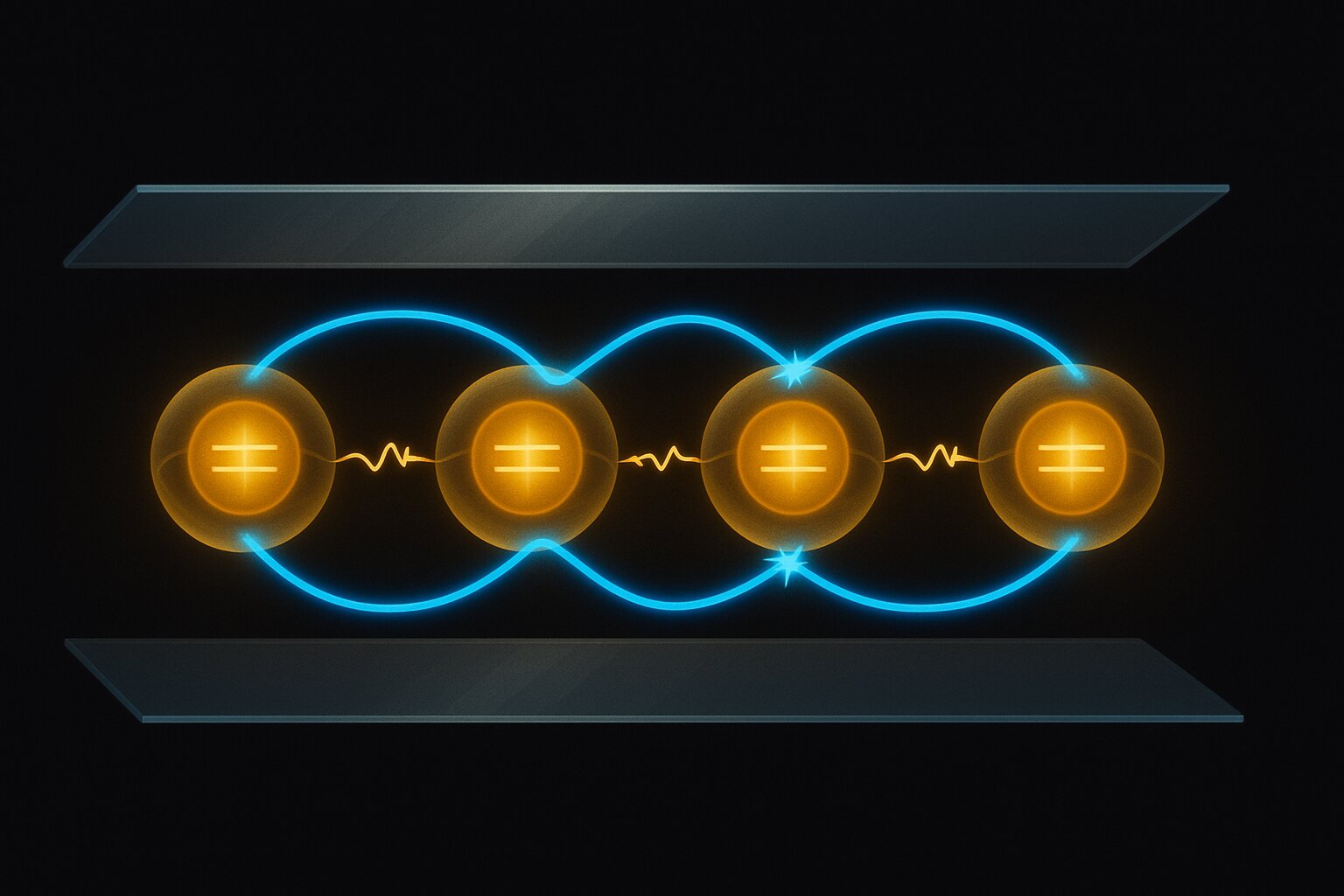
Researchers have proposed a practical method to detect the elusive Unruh effect by using atoms between mirrors to produce a measurable, early flash of light, turning a faint quantum 'glow' into a clear signal, potentially enabling laboratory studies of gravity-related quantum phenomena.
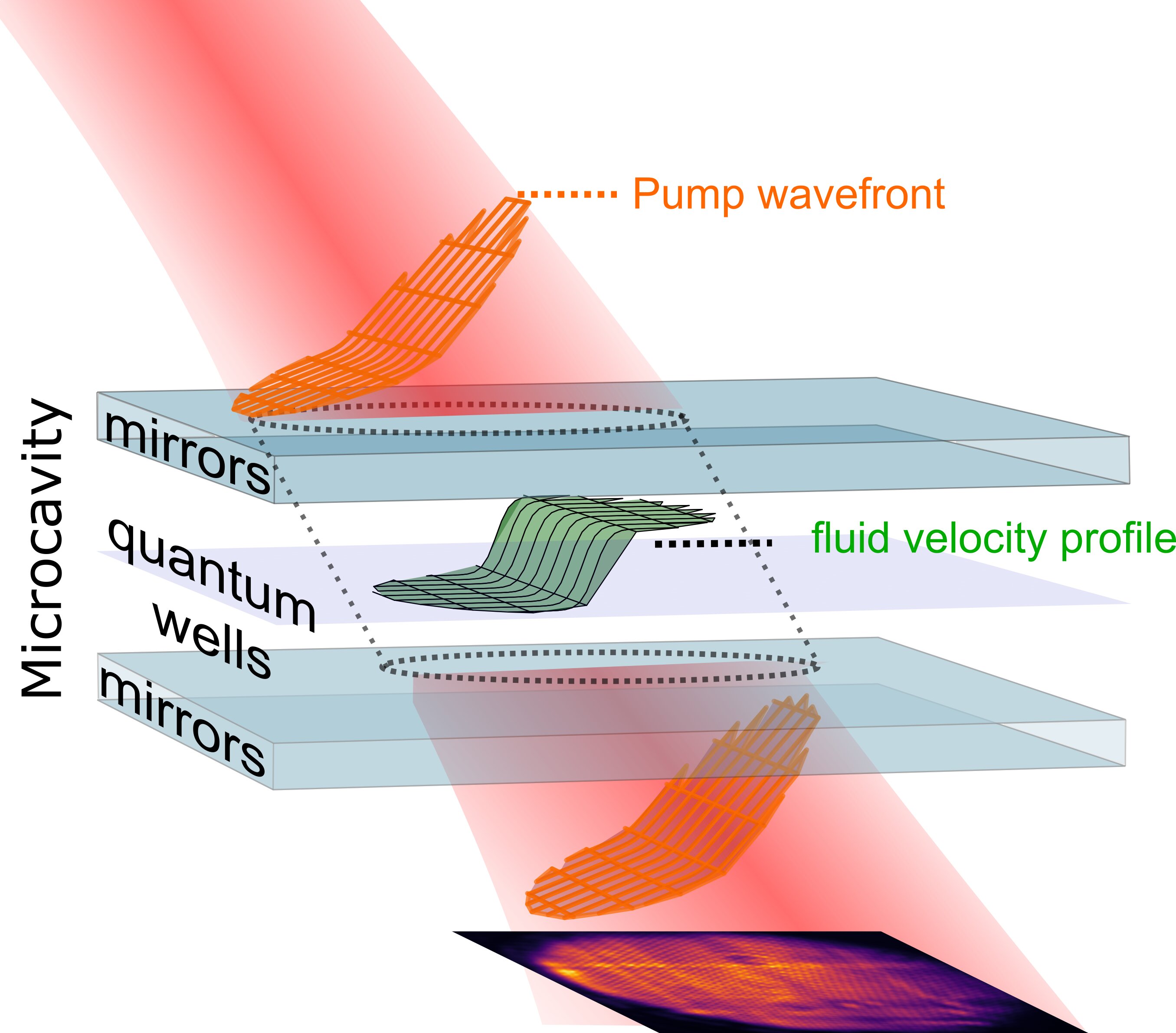
Researchers at Sorbonne University have developed a novel experimental platform using polariton fluids to simulate quantum field theory predictions, including Hawking radiation, in laboratory settings, enabling detailed study of black hole physics and quantum effects.
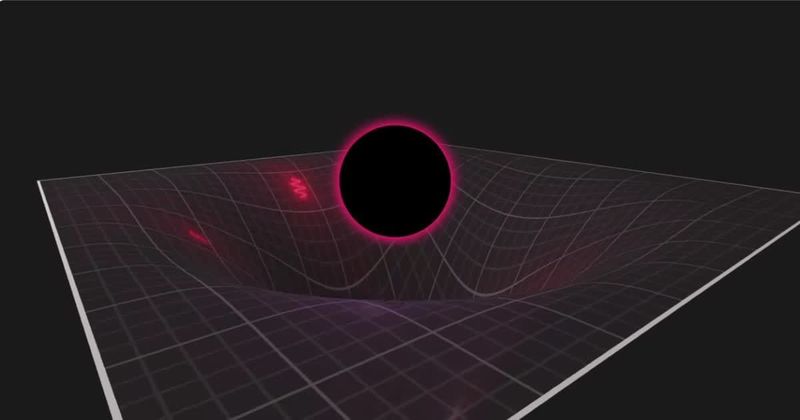
Scientists in the Netherlands have created a simulation of a black hole using a chain of atoms to replicate the event horizon and study the theoretical radiation emitted by real black holes. This simulation aims to bridge the gap between general relativity and quantum mechanics. During their experiment, the black hole analog unexpectedly started glowing, demonstrating the occurrence of Hawking radiation when a part of the chain extended beyond the event horizon. This discovery could provide insights into fundamental quantum-mechanical aspects alongside gravity and curved spacetimes in various condensed matter settings.
Chemists have successfully recreated a compound essential for metabolism in all living cells, shedding light on the chemical puzzle of the origin of life. The compound, pantetheine, is a crucial component of coenzyme A, which plays a vital role in energy production and regulation. The experiment used relatively simple molecules likely present on early Earth, and the success suggests that many key components for life could have simultaneously formed and combined to make living cells. This discovery challenges the idea that biological molecules appeared stepwise and indicates that life's building blocks could have been created simultaneously from the same basic chemicals and conditions.
Researchers from the Georgia Institute of Technology have initiated the first long-term evolution experiment aimed at evolving new kinds of multicellular organisms from single-celled ancestors in the lab. Over 3,000 generations of laboratory evolution, the researchers watched as their model organism, "snowflake yeast," began to adapt as multicellular individuals. In research published in Nature, the team shows how snowflake yeast evolved to be physically stronger and more than 20,000 times larger than their ancestor. This type of biophysical evolution is a pre-requisite for the kind of large multicellular life that can be seen with the naked eye.