Tag

Preterm Birth

All articles tagged with #preterm birth

health-climate-change1 year ago

"Rising Temperatures Linked to Surge in Preterm Births"

New research reveals that climate change is significantly impacting children's health, with an increasing number of infants being born preterm and experiencing respiratory diseases due to temperature extremes and air pollutants. The risk of preterm birth has risen by 60% on average, and climate events like wildfires and droughts are exacerbating respiratory issues. Low- and middle-income countries are particularly vulnerable, and urgent public health policies and efforts to reduce climate change are needed to protect current and future children.

health1 year ago

"No Link Found Between Preterm Birth and Autism, Study Shows"

A new study challenges the controversial notion that preterm births contribute to autism spectrum disorder (ASD) development. Researchers analyzed over 114,000 deliveries in Israel from 2005-2017, finding no significant association between preterm delivery and autism after adjusting for factors like ethnicity and maternal age. The comprehensive study, involving a diverse participant pool, suggests that autism’s causes are likely multifactorial, with no single obstetric factor being a determinant. The findings provide valuable insights into autism’s complex etiology, emphasizing the need for a holistic approach to understanding and addressing this developmental disorder.

health1 year ago

"Rising Preterm Birth Rates Puzzle US Doctors"

The preterm birth rate in the US has increased by 12% between 2014 and 2022, with doctors uncertain about the exact cause. Factors such as health conditions, exposure to chemicals and air pollution, diabetes, high blood pressure, and psychosocial or environmental stressors are believed to contribute to the rise. Research suggests that exposure to "everywhere chemicals" and air pollution, including PM2.5 particles, may play a role in preterm births. However, more research is needed to fully understand the reasons behind the increase in preterm birth rates.

health1 year ago

"Uncovering the Mystery of Rising Preterm Birth Rates in the US"

The rate of preterm births in the US has increased by 12% between 2014 and 2022, with Black and Hispanic mothers being more affected. The reasons for this rise remain unclear, but potential factors include environmental influences, psychosocial stressors, and the overall declining health of the population. Experts also suggest that the trend may be linked to the increase in older mothers and those using IVF, as well as the impact of the Covid-19 pandemic. To address this issue, it's important for individuals to prioritize their health before pregnancy to reduce the risk of early birth.

health-and-science2 years ago

"Unveiling the Placental Microcosm: Single-Cell Atlas of Term Labor"

Researchers supported by the NIH have created a single-cell atlas of the placenta during term labor, offering insight into the communication between maternal and fetal cells during childbirth. The atlas, based on samples from 42 term pregnancies, reveals changes in gene expression patterns among different cell types and identifies cells most affected by labor in the chorioamniotic membranes. The study also suggests that placental biomarkers present in maternal blood may be used to identify pregnancies at risk for preterm birth, although further validation is needed.

health2 years ago

Neurodevelopmental Risks Tied to Moderate Preterm Birth

A comprehensive study analyzing over 75 studies involving more than eight million children reveals that moderate preterm birth (32-38 weeks) is associated with an increased risk of developmental disorders such as cerebral palsy, cognitive impairment, and language delay. While the risks for each child are small, the population-level impact is significant, given the prevalence of moderately preterm births. The study emphasizes the need for better understanding, support, and early intervention for these children, highlighting the role of healthcare professionals and educators in providing tailored assistance.

health2 years ago

The Impact of Prenatal Magnesium on Offspring's Neurodevelopment

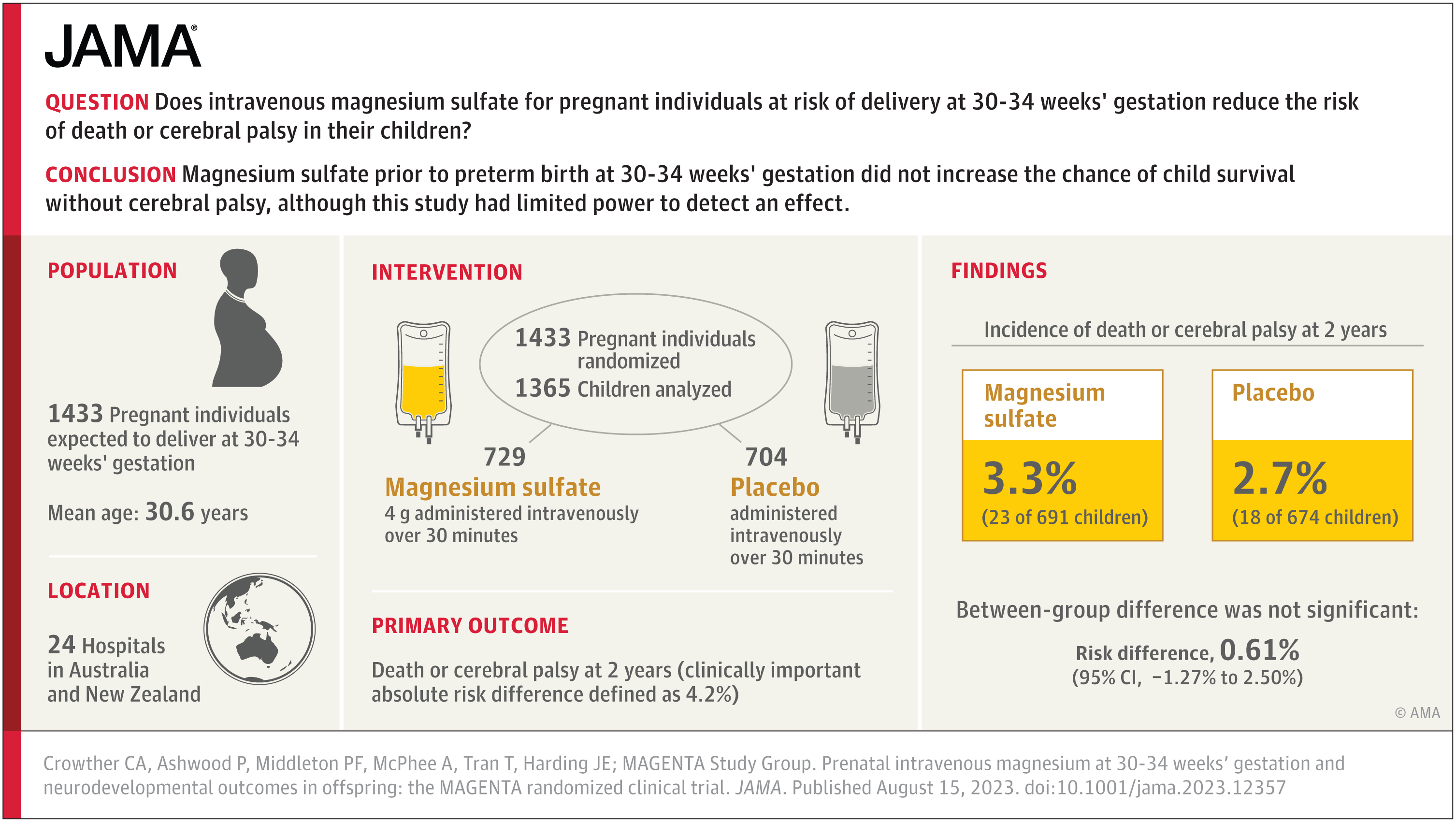
A randomized clinical trial involving 1433 pregnant individuals at risk of preterm delivery and their 1679 infants found that intravenous magnesium sulfate administered between 30 and 34 weeks' gestation did not significantly reduce the risk of death or cerebral palsy in the children at 2 years of age. While the study showed that magnesium sulfate did not increase the chance of child survival without cerebral palsy, it had limited power to detect small differences between the groups.

health2 years ago

Link between Poor Mental Health and Preterm Birth Risk in Women Revealed

A study published in the Lancet Psychiatry reveals that women with poor mental health have a nearly 50% higher risk of preterm births. The research, which examined data from over 2 million pregnancies in England, found that women who had used mental health services had a higher likelihood of preterm birth and giving birth to a baby that was small for its gestational age. The study recommends that pregnant women be thoroughly assessed for mental health issues, as identifying and treating these risk factors could potentially reduce adverse birth outcomes. The study also highlights the need for well-resourced mental health services and improved training for maternity professionals.

healthcare2 years ago

"Empowering Parents: Mobile Education Reduces Preterm Birth Risks"

A recent study published in JAMA Network Open found that a smartphone-based preterm birth education program effectively improved knowledge on preterm birth risks in patients. The program, called Preemie Prep for Parents (P3), utilized short, animated videos to educate pregnant individuals on topics such as breastfeeding, risk-appropriate neonatal intensive care unit (NICU) levels, and factors impacting birth outcomes. Participants in the intervention group who used the P3 program demonstrated higher knowledge levels and improved preparedness for decision-making compared to the control group. The study suggests that mobile antenatal education can be a valuable tool in educating patients about preterm birth risks without increasing anxiety.

health2 years ago

Unborn Babies at Risk: Extreme Heat's Health Threat

As global temperatures rise, there is growing evidence that extreme heat is interfering with pregnancies and posing serious risks to unborn babies. Studies have shown that heat can trigger preterm births, increase the risk of low birth weight, stillbirths, and birth defects. Pregnant individuals are particularly vulnerable to heat stress due to changes in their body's temperature regulation. However, research on the effects of heat on pregnancies is limited, and pregnant people have often been excluded from studies. Public health bodies are starting to include pregnant people in heat warnings, but more targeted advice and practical solutions are needed to protect vulnerable populations from the risks of extreme heat.

health2 years ago

Ineffective Cervical Device Fails to Prevent Preterm Birth Risk

A study funded by the National Institutes of Health found that a device called a cervical pessary, used to reduce the risk of preterm birth in women with a short cervix, is no more effective than usual medical care. The multicenter randomized trial enrolled 544 participants at risk for preterm delivery and found no significant difference in the primary outcome (delivery or fetal death before 37 weeks) between the pessary group and the usual care group. However, the pessary group had a higher risk of fetal or newborn death. The study was stopped early due to futility and concerns about the device's safety.

health2 years ago

The Impact of Fathers' Mental Illness on Preterm Birth Risk

A study conducted by researchers at the Icahn School of Medicine at Mount Sinai and the Karolinska Institutet found that babies are more likely to be born prematurely when either their father or mother has had a psychiatric diagnosis. The risk of preterm birth is higher in infants whose parents have a psychiatric diagnosis, and even higher when both parents have such diagnoses. The study analyzed data on all live births to Nordic parents in Sweden between 1997 and 2016 and observed a trend towards earlier gestational age in offspring of parents with psychiatric disorders. The findings highlight the importance of considering both parents' mental health in assessing the risk of preterm birth and suggest that additional social support and prenatal care for families with a positive psychiatric history could have an impact on gestational age.

health2 years ago

Parental Psychiatric History Linked to Increased Preterm Birth Risk

A study conducted in Sweden found that infants have an increased risk of preterm birth when both parents have psychiatric diagnoses. The research analyzed data from over 1.5 million live births and observed a trend towards earlier gestational age in offspring of parents with psychiatric disorders. The risk of preterm birth was further elevated when both parents had a diagnosis. The study highlights the importance of considering both parents' psychiatric histories and suggests that additional social support and prenatal care for families with a positive psychiatric history could potentially impact gestational age.

health2 years ago

AI predicts premature birth at 31 weeks.

Researchers from Washington University in St. Louis have developed an AI model that can predict preterm births by analyzing electrical activity in a woman's uterus during pregnancy. The model was tested on 159 pregnant women and was able to predict preterm birth up to the 37th week of pregnancy, surprising the researchers. The method is inexpensive and could be adopted by hospitals and obstetricians as part of regular pregnancy check-ups. However, the study has limitations, including a relatively small sample size and the need for additional medical examinations to determine which therapies are more likely to reduce the risk of preterm birth.